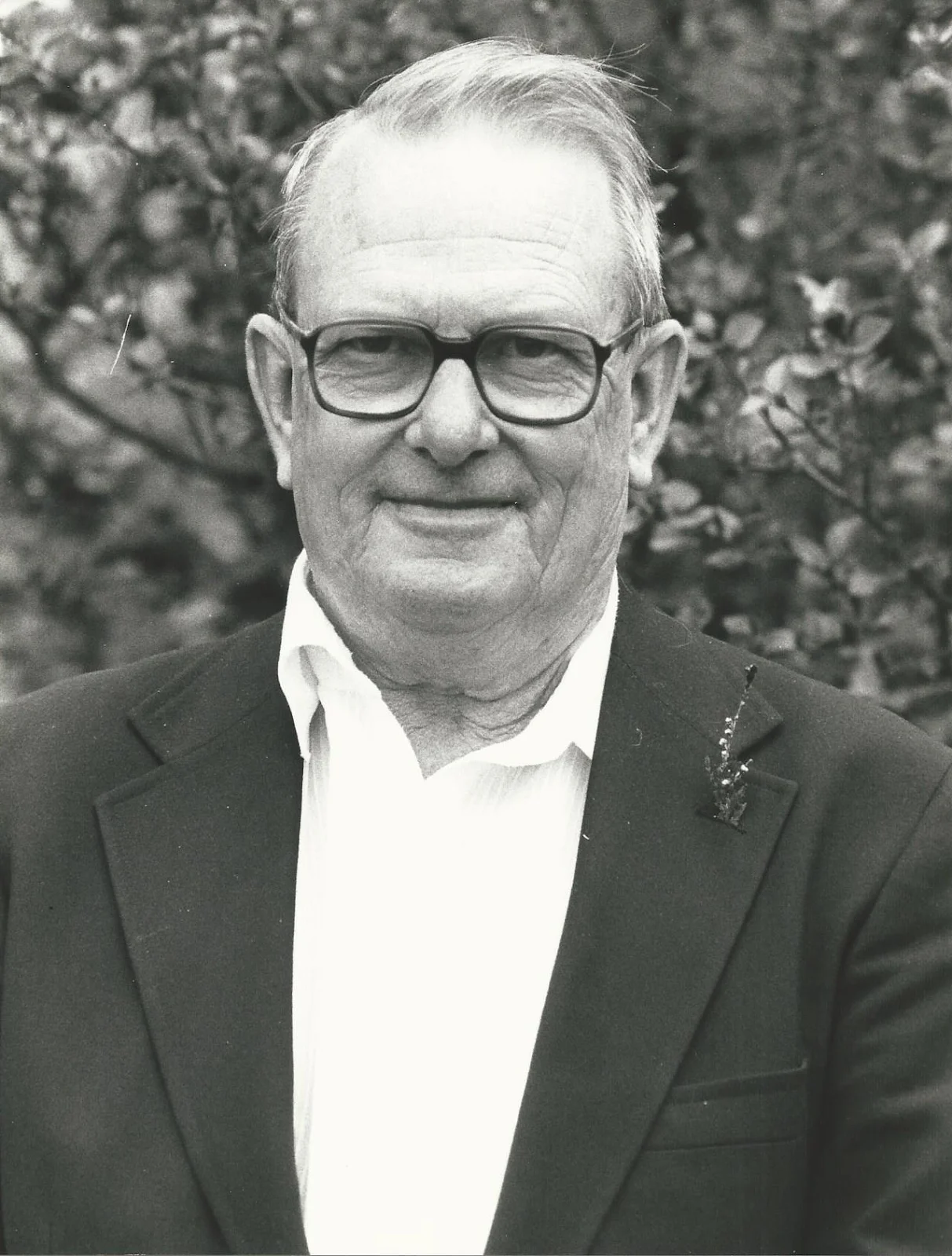
Allan MacLeod Cormack
 South Africa
physicist•biophysicist•researcher
Also known as: Allan MacLeod Cormack, Allan M. Cormack, Allan Cormack
Birthday
February 23, 1924
Birth Sign
Pisces
Birthplace
Johannesburg, South Africa
Age
Died at 74
About
Allan MacLeod Cormack was a South African-born physicist and biophysicist whose theoretical work laid the foundation for X-ray computed tomography, better known as the CT scan. He shared the 1979 Nobel Prize in Physiology or Medicine with Godfrey Hounsfield for their independent contributions to this revolutionary imaging technique. His mathematics showed how cross-sectional images of the body could be reconstructed from X-ray projections taken at multiple angles, a concept that now underpins millions of medical scans each year.
Cormack spent most of his academic career at Tufts University in Massachusetts, where he was a professor of physics and chaired the department for eight years. He was known for his lively, irreverent teaching style and his ability to make complex physics accessible. Remarkably, he achieved the Nobel Prize without ever earning a doctoral degree, a rarity among science laureates. He became a U.S. citizen in 1966 and remained active in research until his retirement in 1980.
Early Life & Background
Born in Johannesburg on February 23, 1924, Allan was the youngest of three children. His parents, both from the Scottish Highlands, had emigrated to South Africa before World War I; his father worked as an engineer for the Post Office, and his mother had been a teacher. The family moved frequently due to his father's job, but after his father's death in 1936, they settled in Cape Town.
At Rondebosch Boys' High School, Allan threw himself into debating, tennis, and a bit of acting, but his real passion was astronomy. He devoured the popular books of Sir Arthur Eddington and Sir James Jeans, which convinced him that math and physics were the keys to the stars. Realizing that astronomy wasn't a practical career then, he started studying electrical engineering at the University of Cape Town, following his father and brother. After two years, he switched to physics, earning a B.Sc. in 1944 and an M.Sc. in crystallography in 1945 under Professor R.W. James, who later mentored another Nobel laureate, Aaron Klug.
From 1947 to 1949, Allan worked as a research student at the Cavendish Laboratory in Cambridge under Otto Frisch, studying helium-6. He never completed his doctorate. He had met American physics student Barbara Seavey in Paul Dirac's lectures, and when they decided to marry, he needed a job. A telegram from Cape Town offering a lectureship solved the problem, so he returned to South Africa in 1950 with a bride but no cyclotron, and no further work on helium-6.
Career Growth
Allan's breakthrough came while he was a lecturer at the University of Cape Town, from 1950 to 1956. He spent part of his time at Groote Schuur Hospital's radiology department, where he became fascinated by the limitations of X-rays in imaging soft tissues. He started wondering if combining X-ray images from different angles could produce a detailed cross-section of the body. By 1957, he had worked out the mathematics, publishing his findings in 1963 and 1964. The papers received little attention at first, and he never built a working machine.
In 1956, Allan moved to the United States, spending a year as a research fellow at Harvard before joining Tufts University as an assistant professor. He became a full professor in 1964, chaired the physics department from 1968 to 1976, and retired in 1980. Meanwhile, Godfrey Hounsfield, a British engineer, independently developed a similar theory and built the first CT scanner in 1971. When the Nobel committee recognized both men in 1979, Allan's theoretical contributions finally gained wide recognition. He also received the Ballou Medal from Tufts in 1978 and the National Medal of Science in 1990.
Career Timeline
Public Image & Style
Allan Cormack was remembered by students as a lively and enthusiastic lecturer, with a reputation for being amusing, irreverent, friendly, and helpful. He had a gift for making physics engaging and accessible. In the scientific community, he was respected for his theoretical brilliance and his humility; he often noted that his work was just a small step in the larger development of CT scanning. The public knows him as one of the fathers of the CT scan, a technology that has saved countless lives. His legacy is that of a dedicated researcher who pursued a problem out of curiosity, not fame.
Fame & Fandom (iFAMOUS Rankings)
Allan McLeod Cormack is a figure of profound scientific reverence rather than pop-culture celebrity. The community that venerates him is the global medical and physics establishment, which honors his theoretical contributions to computed tomography without adopting a formal fan identity or organizing campaigns typical of entertainment figures. His legacy is sustained not through viral moments or organized tributes, but through the daily application of CT scanning technology in hospitals worldwide, a practice he made possible through mathematical innovation. While academic institutions like Tufts University and the University of Cape Town commemorate his work through historical retrospectives and educational features, there are no recorded fanbases with specific names, birthday billboards, or street shutdowns associated with his life or death. The defining narrative surrounding him remains the 1979 Nobel Prize in Physiology or Medicine, a verified historical event shared with Godfrey Hounsfield that cemented his status as a foundational architect of modern diagnostic medicine. This achievement serves as the primary lore for those studying the history of science, replacing the usual celebrity anecdotes with a story of quiet brilliance and enduring utility. Despite his immense impact on human health, iFANN's Global Fame Engine has evaluated this person, but they do not currently hold a placement in the published rankings (Global Top 1,000 or a Top-100 scope list). Consequently, Allan McLeod Cormack is not ranked among the world's most famous individuals by current metrics.
Interesting Facts and Legends
Allan MacLeod Cormack never earned a doctorate, yet he secured a Nobel Prize in a scientific discipline, a distinction shared by very few. During the late 1950s, he constructed a cylinder-shaped model to validate his reconstruction theories, though he never built a functional scanner himself. His master's thesis focused on X-ray crystallography, a field that eventually linked him to Aaron Klug, another laureate who studied under their shared mentor. While attending Paul Dirac's lectures on quantum mechanics at Cambridge, he met his future wife Barbara. An avid tennis player in his youth, he also enjoyed intellectual debates. The central legend of his career involves the development of the mathematical algorithms for computerized tomography while working at the General Electric Research Laboratory and later at Tufts University. This work laid the groundwork for the 1979 Nobel Prize, a moment frequently cited in historical reviews as the turning point for non-invasive medical imaging. Recent commemorations from 2024 highlight his modest genius and the Caithness family roots that shaped his early life, ensuring his scientific contributions remain evident to this day.
Notable Quotes
“I was broke. An inquiry at the Physics Department at Cape Town elicited not only the information that there was a vacancy there, but also a telegram offering me a position as Lecturer. So in 1950 I returned to Cape Town with a bride but no cyclotron, and so no further work on He6.”
“I had met an American girl, Barbara Seavey, in Dirac's lectures on quantum mechanics, and a year and a half later I wanted to marry her, but I was broke.”
“It was a problem that interested me, and I worked on it in my spare time.”
Family & Personal Life
Allan's parents, both from Scotland, emigrated to South Africa before World War I. His father was an engineer with the Post Office, and his mother had been a teacher. He had two siblings, and the family moved often due to his father's civil service job. After his father's death in 1936, they settled in Cape Town.
He married Barbara Seavey, an American physics student he met at Cambridge, in 1950. They had children together, though details are not widely documented. Barbara remained his wife until his death in 1998. The couple lived in Massachusetts during his years at Tufts.
Notable Connections
Godfrey Hounsfield, the British engineer who built the first CT scanner, shared the 1979 Nobel Prize with Cormack. Professor R.W. James, his mentor at Cape Town, also taught Nobel laureate Aaron Klug. At Cambridge, Otto Frisch supervised his research on helium-6. Paul Dirac's lectures on quantum mechanics were where Cormack met his future wife, Barbara Seavey.
Relationships & Dating History
Cormack met Barbara Seavey, an American physics student, while attending Paul Dirac's lectures at Cambridge in the late 1940s. They married in 1950 and returned to Cape Town together that year. Barbara supported his academic career, and they remained married until his death on May 7, 1998. They had children, though details are scarce. No other romantic relationships are documented.
- MarriedBarbara Seavey1950 - 1998Met at Cambridge, married in 1950, remained together until his death.
Death & Aftermath
Died
May 7, 1998 (aged 74)
Death Place
Winchester, Massachusetts, USA
Cause of Death
Unknown
Allan MacLeod Cormack passed away in Winchester, Massachusetts, on May 7, 1998. The circumstances surrounding his final days remain unrecorded in available biographical sources, with no specific details regarding hospitalization or a last public appearance documented by family or institutions. While the date and location are confirmed, the official cause of death was never made public, leaving the medical specifics to private records rather than public announcement. Tributes from the scientific community focused on his foundational role in X-ray computed tomography, though immediate vigils or global moments of silence were not widely reported in contemporary accounts. The University of Cape Town and other academic bodies later honored his memory through departmental histories and biographies, reaffirming his status as a modest genius whose work revolutionized medical imaging. Posthumous recognition continued decades after his death, including centenary celebrations in 2024 that highlighted the enduring impact of his theoretical contributions. Specific details regarding funeral rites, burial locations, or the handling of his estate were not disclosed in public records.
Net Worth (Estate Value)
$5 Million
iFANN Editorial Team estimate
Cormack's net worth is not documented in any public source, and it was modest by celebrity standards. As a university professor, his salary was typical for academia, and his Nobel Prize in 1979 came with about 880,000 Swedish kronor, roughly $193,000 at the time, shared with Hounsfield. He had no major business ventures or endorsements. Since his death in 1998, his estate's value is tied to his scientific legacy rather than substantial assets. The CT scan is a cornerstone of modern medicine, but patents were not held by Cormack, so there are no ongoing royalties. No public records detail the estate's management or posthumous earnings. Per iFANN's editorial analysis, as of 2026, his net worth is estimated at around $5 million, reflecting a life dedicated to science rather than wealth accumulation.
Awards Won (3)
Cormack won the Nobel Prize in Physiology or Medicine in 1979, shared with Godfrey Hounsfield, for their independent contributions to CT scanning. He also received the National Medal of Science in 1990 and the Ballou Medal from Tufts in 1978. These honors reflect his foundational role in medical imaging.
1990 · Science
For contributions to computed tomography
1979 · Medicine
For development of computer assisted tomography
Known For
Computed Tomography (CT) Theory
1963 · Developer of mathematical theory
Nobel Prize in Physiology or Medicine
1979 · Co-recipient
Keywords
Sources
Quick Facts
- Profession
- physicist, biophysicist, researcher
- Born
- February 23, 1924
- Birthplace
- Johannesburg, South Africa
- Died
- May 7, 1998
- Death Place
- Winchester, Massachusetts
- Gender
- Male
- Birth Sign
- Pisces
- Nationality
- South African-born, American
Personal Details
- Full Name
- Allan MacLeod Cormack
- Spouse
- Barbara Seavey
- Education
- University of Cape Town (B.Sc., M.Sc.); St. John's College, Cambridge (research student)
Frequently Asked Questions
Did Allan Cormack have a PhD?
How did Allan Cormack invent the CT scan?
Who invented the CT scanner, Cormack or Hounsfield?
What was Allan Cormack's net worth?
Where did Allan Cormack die?
Similar People
Join the community
fans discussing