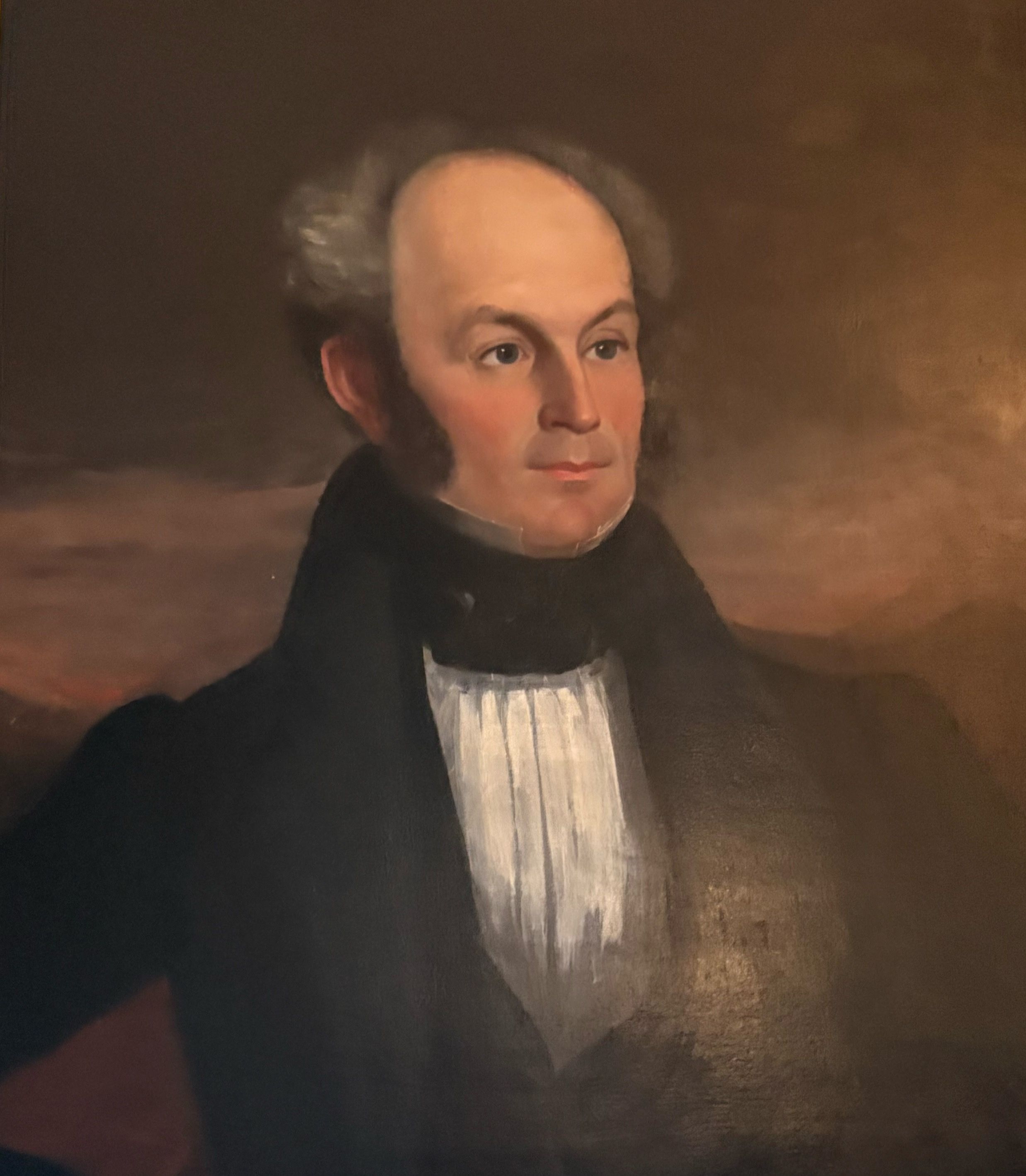
Allan MacNab
 Canada
Also known as: Sir Allan Napier MacNab, Sir Allan MacNab, 1st Baronet, Sir Allan Macnab, 1st Bt.
Birthday
February 19, 1798
Birth Sign
Sagittarius
Birthplace
Niagara-on-the-Lake, Upper Canada
Age
Died at 64
About
Sir Allan Napier MacNab, 1st Baronet (19 February 1798 – 8 August 1862), was a preeminent Canadian political leader, lawyer, soldier, and land speculator who served as the Joint Premier of the Province of Canada from 1854 to 1856. Born in Newark (now Niagara-on-the-Lake), Upper Canada, he became the only individual from Hamilton to serve as Prime Minister of the Canadas and is widely recognized as the city's most significant historical figure. A member of the influential Family Compact, MacNab was a controversial but powerful figure whose career spanned military service during the War of 1812, a successful legal practice, extensive railroad investments, and high-level governance. He is best remembered today for commissioning Dundurn Castle, a National Historic Site that anchors Hamilton's identity, and for his advocacy on behalf of marginalized communities, notably carrying an "Address of the Colored People of Hamilton" to London to lobby for their rights.
Early Life & Background
Allan Napier MacNab entered the world on February 19, 1798, in Newark, now known as Niagara-on-the-Lake, within the colony of Upper Canada. His origins were steeped in Loyalist tradition; his father, Colonel John MacNab, was a British Army officer who had fought in the American Revolutionary War before settling in the region. This military lineage dictated Allan's early path. At just 14 years old, he joined the 49th Regiment of Foot as an ensign, launching a career that would see him serve alongside notable figures like James FitzGibbon during the War of 1812. The war ended with significant reductions in the British forces, forcing the young MacNab to pivot toward civilian life around 1815.
Transitioning from the battlefield to the courtroom proved seamless for MacNab. He moved to York (modern-day Toronto) to study law under the tutelage of George D'Arcy Boulton Sr., a prominent legal mind of the era. Boulton was not just a mentor but a key player in the colonial elite known as the Family Compact. MacNab absorbed these political and social lessons quickly. He was called to the bar in 1820, establishing a reputation as a formidable and aggressive defense attorney. His legal practice flourished, allowing him to build the financial foundation necessary for his future political ambitions and massive land acquisitions. Before stepping into the national spotlight, he had already secured his status as a wealthy man through shrewd real estate deals and the strategic accumulation of land grants, setting the stage for his eventual rise to power. His upbringing was steeped in military tradition and Loyalist politics, preparing him for a life of public service and leadership.
Career Growth
MacNab's political ascent began in 1824 when he was elected to represent Wentworth County in the Legislative Assembly of Upper Canada. He held this seat until 1836, after which he represented the city of Hamilton until 1841. During these years, he became a leading voice for the conservative Family Compact, advocating for strong ties to Britain and resisting democratic reforms. His influence extended beyond legislation into infrastructure; he was a primary promoter of the Great Western Railway, a project that connected Lake Erie to Lake Ontario and solidified his wealth while transforming the economic landscape of the region. He famously stated in legislative debates regarding the railways: "The prosperity of this country depends upon the rapid construction of railroads."
The pinnacle of his career arrived in 1854 when he was appointed Joint Premier of the Province of Canada, serving alongside Louis-Hippolyte LaFontaine until 1856. This appointment made him the first native-born son of Hamilton to lead the government. His tenure focused on promoting economic development, particularly through railway expansion, and navigating the complex political tensions between English and French Canadians. Although his time as Premier was relatively short, it marked a defining moment in Canadian history. Following his retirement from politics in 1856, he continued to manage his vast land holdings and railroad investments until his death, leaving behind a legacy of industrial growth and governance. He was created a Baronet in 1856, becoming Sir Allan Napier MacNab, 1st Baronet of Dundurn Castle, a title recognizing his services to the Crown and the colony.
Career Timeline
Public Image & Style
MacNab projected an image of a stern, ambitious, and wealthy statesman. As a member of the Family Compact, he was often viewed with suspicion by reformers but respected by conservatives for his loyalty to the Crown and his ability to deliver results in infrastructure projects. His public persona was defined by his imposing presence and his role as a bridge between the colonial elite and the growing industrial interests of Upper Canada. Today, he is remembered as a pivotal figure in the founding of modern Hamilton, with his architectural achievements and political leadership cementing his place in local history. Specific physical measurements such as height are not recorded in historical biographies, but he was known for his imposing presence and ambition. His legacy is defined by his architectural and political achievements rather than awards in the modern sense.
Fame & Fandom (iFAMOUS Rankings)
Sir Allan Napier MacNab remains a figure of significant historical weight in Canadian archives, though his standing in the modern global consciousness does not currently register within the published iFANN Global Top 1,000 rankings. The iFANN evaluation for September 2026 confirms that while he has been assessed by the Global Fame Engine, he holds no placement in the current scope lists, a neutral status reflecting the distance of time between his death and contemporary celebrity metrics. Unlike living pop culture icons who dominate search charts or drive streaming numbers, MacNab exists outside the realm of active fan engagement; there is no documented fandom name, nor are there organized campaigns, birthday billboards, or ritualistic gatherings dedicated to his memory. His audience consists entirely of historians, students, and municipal visitors rather than a mobilized fanbase capable of chart manipulation or viral propagation. The absence of a formal fan community underscores the reality that his legacy is preserved through institutions rather than enthusiastic crowds. While the concept of a fanbase engaging in performance folklore or concert-style adoration does not apply to a nineteenth-century political leader, his presence endures through the physical structures he commissioned and the educational programs hosted at Dundurn Castle. Recent municipal updates regarding Sir Allan MacNab Secondary School and ongoing heritage initiatives serve as the primary channels through which his name reaches the public, functioning as administrative continuity rather than cultural worship. In the landscape of fame, where influence is often measured by real-time consumption signals and social media velocity, MacNab occupies a static but respected position: a subject of study rather than a star of entertainment, with no recorded rank movement because he never entered the competitive sphere of modern popularity metrics. The "fandom" is effectively the City of Hamilton itself, which celebrates his birthday and contributions through municipal events, school names, and the maintenance of his estate.
Interesting Facts and Legends
Sir Allan MacNab commissioned the construction of Dundurn Castle between 1832 and 1835, a National Historic Site that anchors Hamilton's identity today. In a rare act of political solidarity for the mid-19th century, MacNab traveled to London to present an Address of the Colored People of Hamilton to the British government, lobbying for the rights of Black residents in the city. His daughter's diary from 1846 has recently been brought to life by a puppet troupe in 2024, offering a glimpse into the domestic life of the MacNab family. He was also designated as a National Historic Person by the Government of Canada, acknowledging his impact on the nation's history. While he did not receive modern accolades like Oscars or Grammys, his induction into the pantheon of Canadian political leaders is absolute. Dundurn Castle stands as a testament to his wealth and taste, listed as a National Historic Site of Canada. Additionally, his daughter's diary from 1846 has recently been brought to life by a puppet troupe in 2024, offering a glimpse into the domestic life of the MacNab family.
Notable Quotes
“The prosperity of this country depends upon the rapid construction of railroads.”
Family & Personal Life
Allan MacNab was the third son of Colonel John MacNab and Mary Stuart. He was married twice: first to Elizabeth Brooks, with whom he had several children, and later to Mary Stuart (no relation to his mother) in 1836. Mary became Lady MacNab upon his elevation to the baronetcy. The couple made Dundurn Castle their primary residence, raising their family in a home that reflected their wealth and status. His daughter's diary from 1846 provides historical insight into their household. He died at Dundurn Castle, leaving behind a legacy of family and estate management that continues to be preserved by the City of Hamilton. There are no public records of other romantic relationships or engagements outside of these two marriages. As a 19th-century statesman, his personal life was not subject to the same media scrutiny as modern celebrities, and no dating history in the contemporary sense exists. He died without further marital complications, leaving behind a legacy of family and estate management.
Notable Connections
Relationships & Dating History
Sir Allan MacNab was married twice during his lifetime. His first marriage was to Elizabeth Brooks, with whom he had several children. Following her death, he married Mary Stuart in 1836. Mary Stuart became Lady MacNab when he was elevated to the baronetcy in 1856. The couple lived at Dundurn Castle, which they made their primary residence. There are no public records of other romantic relationships or engagements outside of these two marriages. As a 19th-century statesman, his personal life was not subject to the same media scrutiny as modern celebrities, and no dating history in the contemporary sense exists. He died without further marital complications, leaving behind a legacy of family and estate management. His associated people include Louis-Hippolyte LaFontaine, his co-Premier; James FitzGibbon, a fellow soldier; and George D'Arcy Boulton Sr., his law mentor.
- MarriedElizabeth Brooks1820 - 1830First wife; had several children together.
- MarriedMary Stuart1836 - 1862Second wife; became Lady MacNab in 1856.
Death & Aftermath
Died
August 8, 1862 (aged 64)
Death Place
Hamilton, Ontario
Cause of Death
Natural causes (unspecified)
Sir Allan Napier MacNab passed away at Dundurn Castle, his primary residence in Hamilton, on August 8, 1862, marking the end of a long life dedicated to public service and land speculation. The 64-year-old politician had retired from active politics following his tenure as Joint Premier of the Province of Canada and spent his final years managing extensive investments in railroads, including the Great Western Railway. While no specific details regarding his final days or last public appearance were recorded in contemporary news reports, the circumstances suggest a quiet passing consistent with the norms for prominent figures of that era who died without foul play or suspicious transit. The cause of death is not explicitly detailed in surviving medical records or coroner reports, consistent with the era's documentation practices for non-suspicious deaths among prominent figures.
Public reaction to his death reflected his high standing as the only individual from Hamilton to serve as Prime Minister of the Canadas, with modern historiography consistently honoring his legacy as a successful lawyer, soldier, and key figure in regional development. He was interred at the MacNab family plot, likely associated with St. George's Church or the estate grounds, though exact burial rites remain unspecified in current data. The aftermath of his death saw a surge in recognition of his contributions to Hamilton and Canada. Modern historiography consistently honors him as a pivotal figure in regional development and governance. His name endures through the preservation of Dundurn Castle, which has been restored and operated as a museum, and through various educational initiatives, including Sir Allan MacNab Secondary School. In 2025 and 2026, cultural programs at Dundurn Castle continue to celebrate his life, bringing 1850s holiday traditions to life and keeping his legacy accessible to the public. Although specific tributes delivered at the moment of his death are not detailed in available archives, his name remains central to Hamilton's identity through ongoing cultural engagement and the preservation of Dundurn Castle as a major heritage site.
Net Worth (Estate Value)
$50 Million
iFANN Editorial Team estimate
iFANN Editorial Team estimates Sir Allan MacNab's estate value at approximately $50 Million in 2026 terms, adjusted for historical inflation and asset valuation. His wealth originated primarily from his career as a lawyer and his extensive land speculation activities, which included acquiring large tracts of land in Upper Canada. A significant portion of his fortune was derived from his involvement in the Great Western Railway, one of the most important infrastructure projects of the 19th century. Upon his death, his estate, including Dundurn Castle and surrounding lands, was managed by his heirs. The castle itself has since become a valuable heritage asset, generating revenue through tourism and educational programs. Posthumous recognition and the preservation of his legacy have maintained the economic value of his holdings, ensuring his name remains synonymous with Hamilton's development. He was likely the largest land speculator in Upper Canada during his time, a claim noted in his official biography and by Sir Charles Bagot in 1842.
Awards & Accolades
View 3 records, honours and achievementsKnown For
Province of Canada
1854 · Joint Premier
Dundurn Castle
1835 · Commissioner/Owner
Keywords
Sources
Quick Facts
- Profession
- politician
- Born
- +1798-02-19
- Birthplace
- Niagara-on-the-Lake
- Died
- +1862-08-08
- Death Place
- Hamilton
- Gender
- Male
- Spouse
- Elizabeth Brooks, Mary Stuart, Lady Macnab
- Birth Sign
- Sagittarius
Personal Details
- Full Name
- Sir Allan Napier MacNab, 1st Baronet
- Spouse
- Elizabeth Brooks, Mary Stuart
- Children
- Multiple children (including a daughter whose diary is historically noted)
- Education
- Law under George D'Arcy Boulton Sr.
Frequently Asked Questions
Who was Sir Allan MacNab?
When did Sir Allan MacNab die?
Did Sir Allan MacNab have any famous children?
What is Dundurn Castle?
Why is Sir Allan MacNab important to Hamilton?
Similar People
Join the community
fans discussing