 Germany
“A transcendently talkative film about care and conversation that proves Hamaguchi has no equal in the modern cinema.”
Peter Debruge
Variety
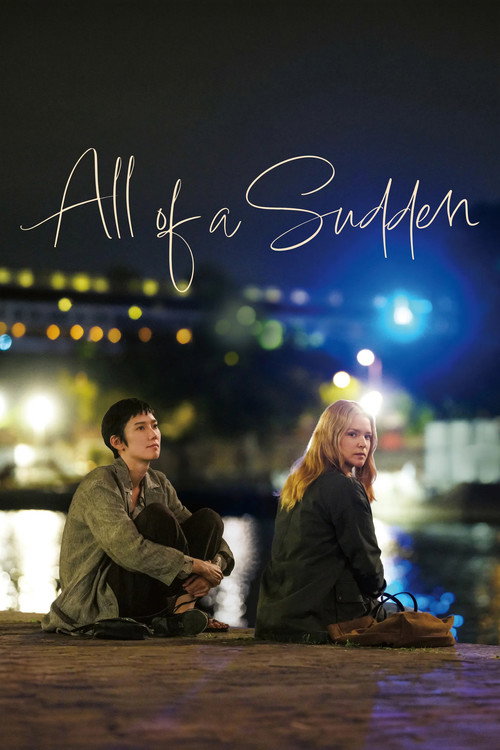
Ryusuke Hamaguchi returns with a sprawling meditation on care, mortality, and the quiet revolutions that happen in conversation. All of a Sudden places us inside a Parisian care facility run by Marie-Lou Fontaine, a director who refuses to let bureaucracy strip her residents of their humanity. Her methods clash with the efficiency-obsessed healthcare system, creating a charged atmosphere where every interaction carries the weight of impending loss.
The story gains momentum when Marie-Lou encounters Mari Morisaki, a renowned Japanese theater director living in exile who has been diagnosed with terminal cancer. Their meeting sparks an unlikely friendship that bridges cultures, languages, and generations. Through long, unscripted-feeling dialogues, they explore the ethics of suffering, the role of art in society, and the terrifying uncertainty of facing death.
This international co-production blends French, Japanese, and English dialogue into a seamless tapestry of human connection. With a runtime of three hours and sixteen minutes, the film prioritizes character depth over plot mechanics, allowing the audience to settle into the rhythm of its protagonists' lives. The result is a work of rare emotional resonance that challenges viewers to reconsider what it means to truly listen.
Rent
In theatres
Availability and pricing can change. Confirm on the provider's site before purchasing.
The film opens in the hallowed halls of a private care facility in Paris, where Marie-Lou Fontaine rules with a mix of fierce idealism and practical necessity. She runs her home not as a warehouse for the dying but as a sanctuary where the elderly retain their agency. Marie-Lou insists on breaking down the walls between staff and patients, encouraging open dialogue and treating residents as individuals with rich histories rather than medical cases. This philosophy immediately puts her at odds with the rigid administrative demands of the healthcare industry and the skepticism of her own staff, who struggle to balance empathy with the logistical realities of running a home for the terminally ill.
Life shifts course when Mari Morisaki arrives on the scene. A celebrated theater director from Japan, Mari lives in Paris under the shadow of a terminal cancer diagnosis. She is a woman of profound intellect and artistic depth, yet she grapples daily with the physical ravages of her illness and the isolation it brings. Their initial encounter is serendipitous, sparked by a shared appreciation for the arts and a mutual recognition of struggles against societal structures that seek to categorize human experience. What begins as polite exchanges quickly evolves into deep, philosophical dialogues that span cultures, languages, and generations.
As the narrative unfolds over a significant period, the boundary between their professional and personal lives blurs. Mari becomes a source of inspiration for Marie-Lou, offering a new perspective on how to care for others without losing oneself. Conversely, Marie-Lou provides Mari with a sanctuary where she can be vulnerable, away from the public eye of the theater world. The story explores themes of burnout, the fragility of the human condition, and the power of conversation to bridge divides. It is a slow-burning drama that relies heavily on the chemistry between its leads and the intricate, often meandering nature of their discussions.
The central conflict arises from the collision of these two distinct worlds. Marie-Lou, who fights for the rights of the voiceless in her care home, finds herself challenged by Mari's presence. Mari forces Marie-Lou to confront her own limitations and the potential futility of her efforts. They navigate the complexities of their respective lives, Marie-Lou dealing with internal politics and the impending loss of her residents, while Mari battles the progression of her disease. The film builds towards a climax not through external action, but through an internal transformation in both characters as they come to terms with the impermanence of life and the importance of connection.
Throughout the journey, the camera lingers on the details of their interactions: the sound of rain against the window, the hum of the care facility, and the silence of hospital rooms. These ambient sounds create an immersive auditory experience that underscores the emotional weight of their conversations. The film asks difficult questions about what it means to truly listen, to care, and to face the end with grace. It is a meditation on the suddenness of life's changes and the enduring impact of the relationships we forge in the time we have.
Official Trailer [Subtitled]
Trailer (English subs)
TIFF Premiere Clip
Critical Consensus
Ryusuke Hamaguchi delivers another masterpiece of empathy and intellectual rigor, weaving a complex tapestry of cross-cultural friendship and existential inquiry. Through the magnetic performances of Virginie Efira and Tao Okamoto, the film transforms long, talkative sequences into moments of profound emotional resonance, exploring the depths of care, art, and mortality with unflinching honesty and a gentle, transcendent spirit.
“A transcendently talkative film about care and conversation that proves Hamaguchi has no equal in the modern cinema.”
Peter Debruge
Variety
“Efira and Okamoto form a magnetic connection that anchors this rich Parisian drama in genuine human emotion.”
Fionnuala Halligan
Screen Daily
“Hamaguchi's latest is the best film of the year, bar none, a testament to the furthest reaches of human compassion.”
The Film Experience
The Film Experience
“An Oscar-worthy performance from Tao Okamoto that elevates a script already brimming with philosophical depth.”
Gold Derby Staff
Gold Derby
“A gentle, quiet, and deeply moving exploration of what it means to truly see another person.”
Anonymous Reviewer
The Hollywood Reporter
Virginie Efira
Marie-Lou Fontaine
Tao Okamoto
Mari Morisaki
Kyōzō Nagatsuka
Gorô Kiyomiya
Kodai Kurosaki
Tomoki Kubodera
Jean-Charles Clichet
Olivier
Marie Bunel
Sophie
Romain Cottard
Damien
Marie Denarnaud
Laurence
Gabriel Dahmani
Djibril
Sephora Pondi
Adidja
Director
Ryusuke Hamaguchi
Writers
Ryusuke Hamaguchi, Léa Le Dimna, Maoko Miyano, Maho Isono
Composer
Samuel Andreyev
Cinematographer
Alan Guichaoua
Producers
David Gauquié, Julien Deris, Kosuke Oshida, Yuji Sadai, Renan Artukmac
Cannes Film Festival (2026)
Best Actress: Won
Cannes Film Festival (2026)
Palme d'Or: Nominated
Toronto International Film Festival (2026)
People's Choice Award: Won
Toronto International Film Festival (2026)
Best Director: Won
Academy Awards (2027)
Best Supporting Actress: Nominated
Academy Awards (2027)
Best Original Screenplay: Nominated
Golden Globe Awards (2027)
Best Motion Picture – Foreign Language: Nominated
Golden Globe Awards (2027)
Best Supporting Actress – Motion Picture: Nominated
Join the community
fans discussing