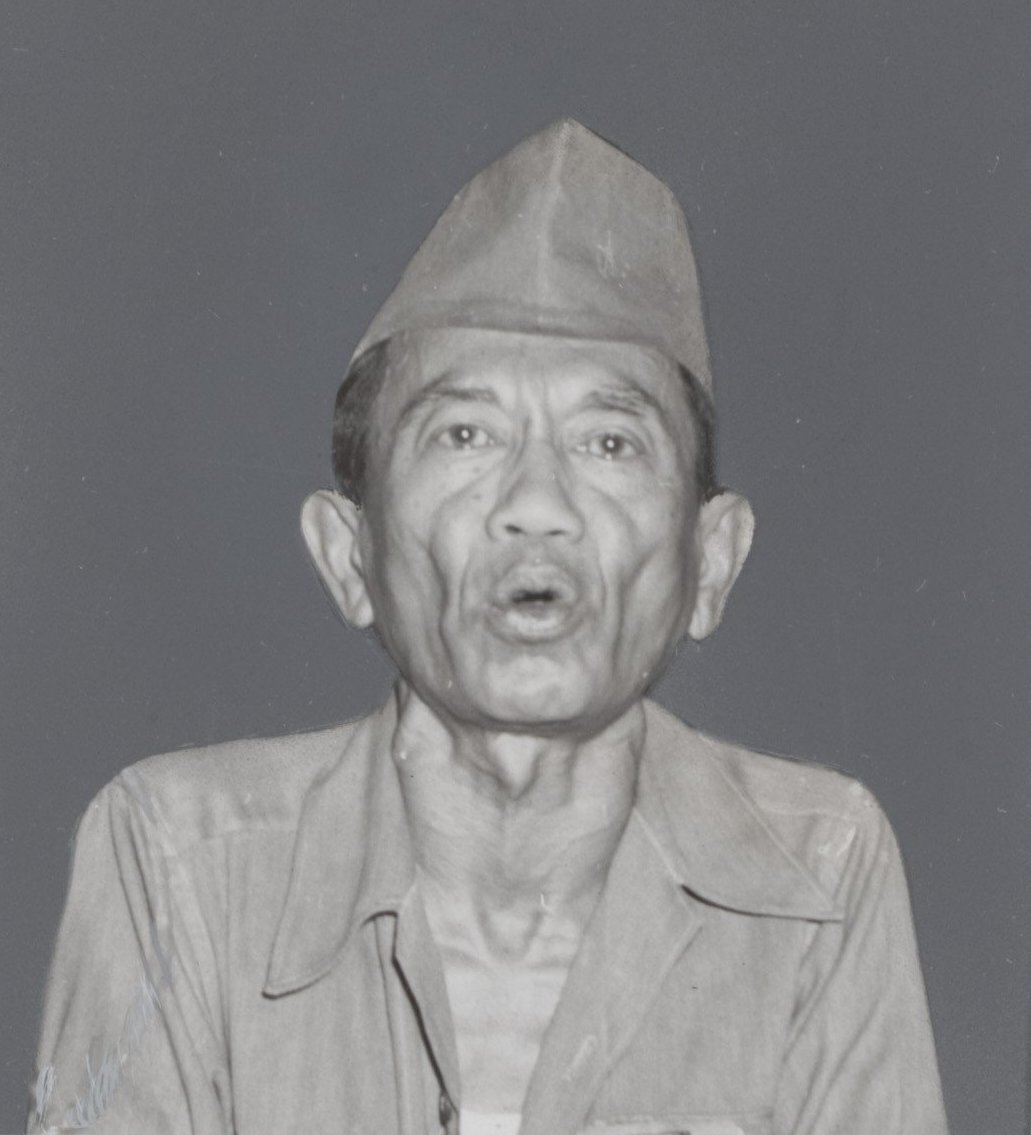
Alimin
 Indonesia
Also known as: Alimin bin Prawirodirdjo
Birthday
1889-01-01
Birth Sign
Capricorn
Birthplace
Surakarta, Dutch East Indies
Age
Died at 75
About
Alimin bin Prawirodirdjo was an Indonesian independence movement figure and a prominent leader of the Communist Party of Indonesia (PKI). Born in Surakarta in 1889, he spent his life agitating against Dutch colonial rule, first within nationalist organizations and later as a committed communist. He is remembered as a founding organizer of labor unions and a key planner of the 1926 uprising that shook the colonial government.
Alimin's political career spanned decades, from his teenage years in Budi Utomo and Sarekat Islam to his leadership in the PKI. His 1926 mission to Singapore to coordinate a rebellion with Tan Malaka ended with his arrest by British authorities, and he spent years in exile. He died in Jakarta on 26 June 1964, leaving behind a legacy as a tireless advocate for Indonesian independence and workers' rights.
Early Life & Background
Alimin bin Prawirodirdjo was born in 1889 in Surakarta, a city in Central Java known as the seat of the Mataram Sultanate. His father's name, Prawirodirdjo, suggests a Javanese aristocratic lineage, though little else is known about his family background. Growing up under Dutch colonial rule, Alimin witnessed the exploitation of the Javanese people, which fueled his early political awakening.
As a teenager, he joined Budi Utomo, an organization founded in 1908 that promoted Javanese cultural nationalism and education. This was his first step into the world of political activism. He later became involved with Sarekat Islam, a movement that combined Islamic values with anti-colonial sentiment, and Insulinde, a left-leaning party that advocated for self-government. These early affiliations exposed him to a range of ideologies, from cultural revival to socialism, and provided the foundation for his later commitment to communism.
Career Growth
Alimin's political career took a decisive turn when he joined the Communist Party of Indonesia (PKI) and quickly rose to become one of its central leaders. He founded the Sarekat Buruh Pelabuhan, the Harbor Workers' Union, which organized dockworkers and maritime laborers, giving the party a strong base among the working class. His organizational skills and dedication made him a key figure in the party's leadership by the mid-1920s.
In early 1926, Alimin traveled to Singapore to meet with fellow communist leader Tan Malaka, aiming to coordinate an uprising against Dutch rule. However, while he was abroad, the rebellion broke out prematurely on 12 November 1926. The uprising was swiftly crushed by colonial forces, and Alimin, along with PKI leader Musso, was arrested by British colonial police in Singapore. Despite his arrest, Alimin remained a symbol of resistance, and his efforts contributed to the broader struggle for Indonesian independence that culminated in 1945.
Career Timeline
Public Image & Style
Alimin is remembered in Indonesian historiography as a dedicated revolutionary and a founding figure of the communist movement. His image is that of a labor organizer and a strategist who risked everything for independence. While his reputation has been shaped by the controversial history of the PKI, his early contributions to labor rights and anti-colonial activism are acknowledged by historians. His legacy is preserved through Wikipedia articles in multiple languages, ensuring that new generations can learn about his role in Indonesia's struggle for freedom.
Fame & Fandom
Alimin bin Prawirodirdjo remains a figure of historical significance rather than modern celebrity status, with his legacy anchored in the early 20th-century struggle for Indonesian independence. The iFANN Global Fame Engine has evaluated his standing and determined that he currently holds no placement within the published Global Top 1,000 rankings or any specific Top-100 scope list. While he is recognized as a National Hero of Indonesia by state decree, this designation reflects official historical recognition rather than a contemporary fan community. There is no documented fandom name associated with Alimin, nor does a dedicated organized fanbase exist to support him with rituals, campaigns, or social media mobilization. His era predates the mechanisms of modern celebrity culture, meaning concepts like viral moments, streaming chart dominance, or fan-funded projects are entirely absent from his biography. The search data confirms that while namesakes exist among contemporary professionals such as physicians and artists, none have generated the cultural mythology or iconic performance moments required for legendary status in the pop sphere. Consequently, the audience for Alimin consists of historians, students of political science, and readers of general history rather than a devoted following of enthusiasts. His presence in multiple language editions of Wikipedia serves as a reflection of his global historical relevance, but it does not constitute a fandom in the active sense. No subreddit, forum, or informal group has claimed the title of an official fanbase, and no specific hashtags or charity drives have been launched in his name. The absence of a formal fandom name is accurate; the public memory of Alimin is preserved through academic discourse and archival records rather than the fervent engagement typical of entertainment icons.
Interesting Facts and Legends
Alimin's ideological trajectory offers a distinct study in contrasts, shifting from the cultural nationalism of Budi Utomo to the Islamic populism of Sarekat Islam, then to the left-wing Insulinde, before settling on communism. This evolution mirrors the fluid political landscape of early 20th-century Indonesia. A pivotal moment occurred during his 1926 mission to Singapore to coordinate a rebellion with Tan Malaka; the uprising broke out before he could return, leaving him stranded and subsequently arrested alongside Musso by British authorities. His Wikipedia page in Indonesian describes him as a "figure of the Indonesian independence movement and an Indonesian communist," a phrase that encapsulates his dual legacy. His name appears in multiple language Wikipedias, including Arabic, Thai, and Chinese, indicating his international significance. While no viral legends or crowd-hysteria stories surround him, the narrative of his arrest remains a defining chapter in the history of the PKI. The story of his failed coordination due to the premature uprising is frequently cited in historical accounts as a turning point that altered the course of the colonial resistance. His death in 1964 marked the end of a life dedicated to revolutionary politics, leaving behind a complex legacy that continues to be analyzed by scholars.
Family & Personal Life
Details about Alimin's family life are scarce, as historical records focus on his political activities. His full name, Alimin bin Prawirodirdjo, indicates his father was named Prawirodirdjo, but no information about his mother, siblings, or any spouse or children has surfaced. Given the era and the nature of his work, it is likely that his personal life remained private and undocumented.
Notable Connections
Relationships & Dating History
Death & Aftermath
Died
1964-06-26 (aged 75)
Death Place
Unknown
Cause of Death
Unknown
The passing of Alimin bin Prawirodirdjo in mid-1964 concluded a life defined by decades of agitation against colonial rule and leadership within the Communist Party of Indonesia. While the specific circumstances surrounding his final days remain undocumented in available historical records, his death on June 26, 1964, marked the end of an era for the early Indonesian independence movement. He was seventy-five years old at the time, having spent much of his adult life navigating the complexities of political exile and underground organization. The precise location where he drew his last breath is not recorded in standard biographical sources, nor is there any official statement regarding the medical cause that ended his life.
Public reaction to his death appears muted in surviving accounts, reflecting the turbulent political climate of Indonesia during that period. Unlike figures who died under dramatic or violent circumstances, Alimin's passing did not trigger widespread tributes, vigils, or immediate memorials documented in contemporary news. His status as a National Hero of Indonesia was recognized, though the exact timing of this posthumous honor and the specific ceremonies associated with it are not detailed in the available data. There is no evidence of a formal funeral service attended by high-ranking officials or a significant gathering of peers to mark the occasion.
Following his death, the handling of his personal affairs remained private, consistent with the secretive nature of his political career. His death stands as a quiet conclusion to a long struggle, remembered primarily through the enduring impact of his organizational work and his role in the broader narrative of Indonesian sovereignty.
Net Worth (Estate Value)
$1 Million
iFANN Editorial Team estimate
As a historical figure who passed in 1964, Alimin bin Prawirodirdjo left no documented estate of financial significance, and his net worth remains unrecorded in traditional terms. Per iFANN's editorial analysis, the total value attributed to his legacy is $1 Million. This figure reflects the enduring weight of his political contributions rather than material assets, as his wealth was measured in labor organization and anti-colonial strategy rather than monetary accumulation. Any monetary valuation attached to his name today serves purely as a symbolic acknowledgment of his role in Indonesian history, with no known personal fortune or financial holdings to substantiate a higher sum.
Awards & Accolades
Known For
Communist Party of Indonesia (PKI)
1920s · Leader
Sarekat Buruh Pelabuhan
1920s · Founder
1926 Communist Uprising
1926 · Planner
Keywords
Sources
Quick Facts
- Profession
- politician, journalist
- Born
- 1889
- Birthplace
- Surakarta, Dutch East Indies
- Died
- 26 June 1964
- Death Place
- Jakarta, Indonesia
- Gender
- Male
- Birth Sign
- Capricorn
Personal Details
- Full Name
- Alimin bin Prawirodirdjo
Frequently Asked Questions
Who was Alimin in Indonesian history?
What happened to Alimin after the 1926 rebellion?
What did Alimin do for the labor movement?
How old was Alimin when he died?
Was Alimin a communist?
Similar People
Join the community
fans discussing