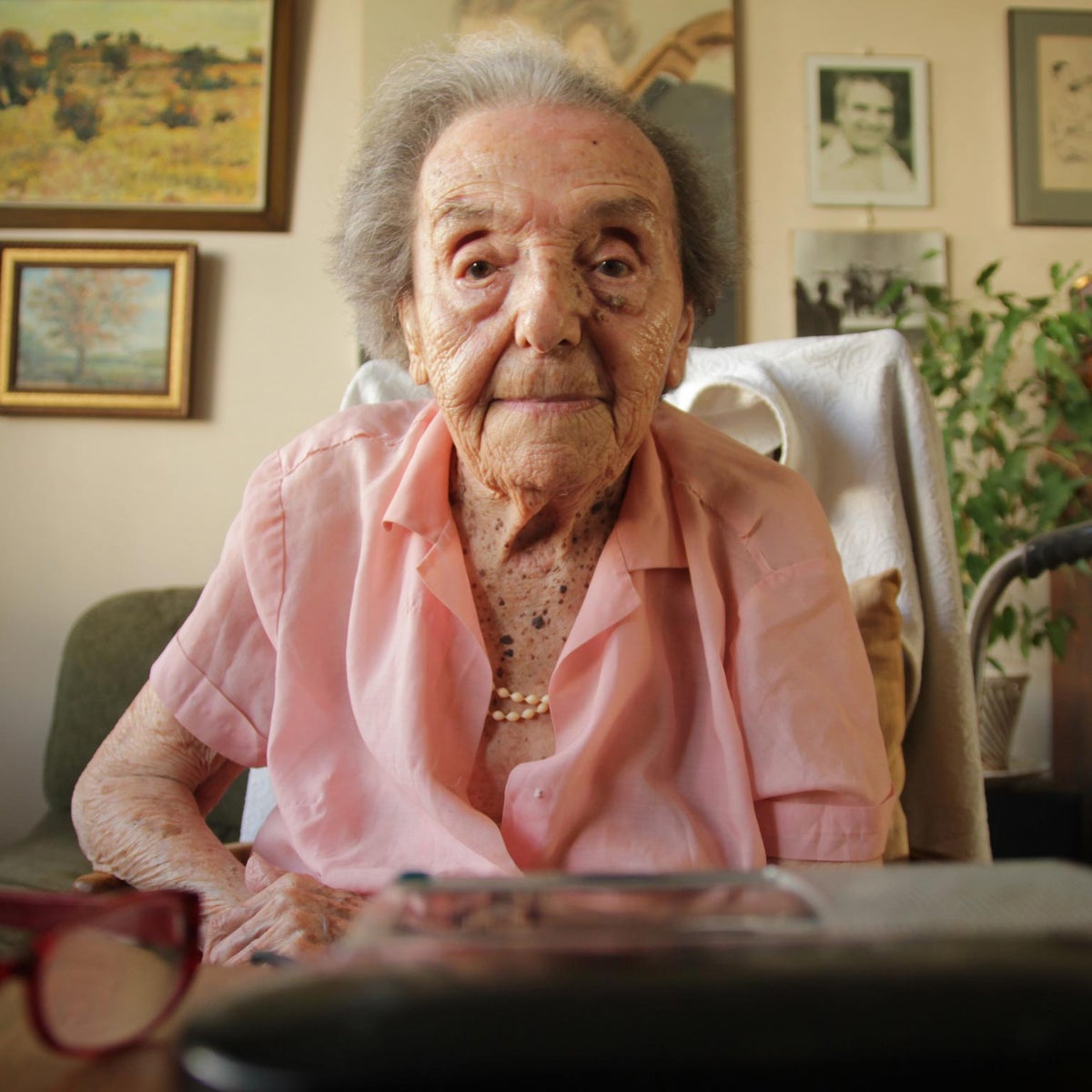
Alice Herz-Sommer
 Israel
Also known as: Alice Sommer, Alice Herzová-Sommerová, Alice Herz-Sommerová
Birthday
November 26, 1903
Birth Sign
Sagittarius
Birthplace
Prague, Czech Republic
Age
Died at 110
About
Alice Herz-Sommer was a Czech-born Israeli pianist and music teacher who lived to be 110. Born in Prague in 1903, she became one of the world's oldest Holocaust survivors, celebrated for her resilience and unwavering optimism. Her story, centered on the power of music in the Theresienstadt concentration camp, inspired the Oscar-nominated documentary The Lady in Number 6. She spent four decades teaching piano in Israel before moving to London in 1986, where she passed away in 2014.
Early Life & Background
Born into a musical family in Prague, Alice Herz showed early promise at the piano. Her mother, a talented amateur pianist, gave her first lessons, and by her teens she was performing publicly. She studied at the German Academy of Music and Arts in Prague under the guidance of Václav Štěpán, and later with the renowned pianist Artur Schnabel in Berlin. Her concert career began in the 1920s, playing across Czechoslovakia and Europe. In 1931, she married Leopold Sommer, a businessman and amateur violinist. Their son Raphael was born in 1937. The family's comfortable life was shattered by the Nazi occupation in 1939, and in 1943 they were deported to the Theresienstadt concentration camp.
Career Growth
In Theresienstadt, Alice Herz-Sommer performed over 100 concerts for fellow prisoners, using her music to bring moments of hope and escape. After liberation in 1945, she discovered that her mother and husband had perished in Auschwitz and Dachau. She emigrated to Israel in 1949, where she taught piano at the Jerusalem Academy of Music and Dance for 40 years, influencing generations of students. In 1986, she moved to London to be near her son, the cellist Raphael Sommer. Her later years brought international recognition. The 2013 documentary The Lady in Number 6: Music Saved My Life, directed by Malcolm Clarke, chronicled her life and philosophy, earning an Academy Award nomination for Best Documentary Short. She continued to play piano daily until her death, even after losing the use of her index fingers.
Career Timeline
Public Image & Style
Alice Herz-Sommer was widely portrayed as a symbol of resilience and hope. Media coverage emphasized her extraordinary longevity, her survival of the Holocaust, and her unwavering positive spirit. She was often called 'the world's oldest Holocaust survivor' and her story resonated with audiences seeking inspiration. Her gentle demeanor and philosophical outlook, captured in interviews, made her a beloved figure. She had no official fandom, but her legacy continues to inspire through the documentary and various tributes. Her image is that of a woman who found joy in music and life, even in the face of unimaginable hardship.
Fame & Fandom
Alice Herz-Sommer commands a unique place in cultural memory, not as a celebrity with a managed following, but as a global icon whose resonance stems entirely from verified historical endurance and philosophical clarity. Unlike pop stars who cultivate dedicated fanbases through social media or touring, her audience consists of historians, music lovers, and individuals seeking moral guidance, united by the narrative of her survival rather than any organized fandom structure. There is no official name for this collective, nor are there fan clubs, streaming campaigns, or ritualistic gatherings; the connection remains one of deep respect for her life story as documented in film and literature. The central legend surrounding her involves her playing Chopin's Nocturne in C-sharp minor within the Theresienstadt concentration camp, a moment widely retold as an act of spiritual resistance that preserved her sanity and hope. Another defining chapter is her receipt of the Order of the British Empire in 2014 and her 100th birthday concert in 2003, events that cemented her status as a symbol of peace. Her legacy is further anchored by the documentary *The Lady in Number 6: Music Saved My Life*, which chronicled her daily piano practice until weeks before her passing. While she never courted fame, the sheer scale of her impact is evident in the enduring interest in her philosophy that "Everything is a present." According to iFANN's Global Fame Engine evaluation conducted in August 2026, Alice Herz-Sommer is currently evaluated but does not hold a placement in the published rankings, meaning she has no numeric rank in the Global Top 1,000 or any Top-100 scope list. This absence of a specific ordinal position reflects her standing as a figure whose influence transcends standard popularity metrics, existing firmly outside the competitive hierarchy of modern fame.
Interesting Facts and Legends
Alice Herz-Sommer performed over 100 concerts inside the Theresienstadt concentration camp, often performing in crowded barracks where space was scarce. She found profound solace in Chopin's Études, describing them as 'the most beautiful music ever written.' Even after losing the use of her index fingers in her later years, she adapted her technique to continue practicing the piano. Her famous declaration that 'It depends on me whether life is good or not' became a guiding principle for many. She also taught that 'calmness is strength,' a mindset that sustained her through the darkest periods of her life. A beloved story fans still retell involves her playing Chopin's Nocturne in C-sharp minor for fellow prisoners at Terezín, an act viewed as pivotal spiritual resistance. Another iconic moment was her 100th birthday concert in 2003, followed by numerous interviews where she shared her mantra that 'Everything is a present.' She received the Order of the British Empire in 2014, recognizing her contributions to music and her status as the oldest known Holocaust survivor. She passed away on February 23, 2014, at the age of 110 in London, leaving behind a legacy defined by resilience and the power of music.
Notable Quotes
“It depends on me whether life is good or not.”
“Calmness is strength.”
“Survival is complex and a matter of attitude.”
“Everything is a present.”
Family & Personal Life
Alice Herz-Sommer was born to a Jewish family in Prague. Her mother, Sofie, was a cultured woman who loved music, while her father, Friedrich, ran a small business. She had a sister, Irma, who was deported to a concentration camp and did not survive. Alice married Leopold Sommer in 1931; he was a businessman and amateur violinist. Their son, Raphael, became a renowned cellist, performing internationally. Raphael married Genevieve, and they had a daughter, Ariane. Alice lived with her son and his family in London in her later years. She often spoke of the joy her family brought her, especially her granddaughter.
Notable Connections
Alice Herz-Sommer was associated with her son, the cellist Raphael Sommer, who performed internationally. Her story was brought to a wider audience through director Malcolm Clarke's documentary 'The Lady in Number 6', which won an Oscar nomination. She also inspired author Caroline Stoessinger, who wrote 'A Century of Wisdom: Lessons from the Life of Alice Herz-Sommer'.
Relationships & Dating History
Alice Herz-Sommer married Leopold Sommer in 1931. They had one son, Raphael, born in 1937. The couple was deported to Theresienstadt in 1943, and Leopold was later sent to Dachau, where he perished in 1944. Alice never remarried. After the war, she focused on raising Raphael and teaching. As of 2026, she is widowed, having outlived her husband by 70 years.
- MarriedLeopold Sommer1931 - 1944Married in 1931; Leopold died in Dachau concentration camp in 1944.
Death & Aftermath
Died
February 23, 2014 (aged 110)
Death Place
London, United Kingdom
Cause of Death
General health problems due to advanced age
The announcement of Alice Herz-Sommer's passing drew immediate tributes from cultural institutions and officials worldwide, with The Guardian describing her as a renowned concert pianist and the world's oldest Holocaust survivor. The New York Times published a tribute highlighting her ability to find peace in Chopin amidst the horrors of the Holocaust, while the Royal College of Music honored her legacy as a teacher who had performed over 100 concerts there. Her death occurred on February 23, 2014, in London, United Kingdom, after she was admitted to a hospital on Friday, February 21, 2014, following general health problems associated with extreme old age.
Public reaction extended to the USC Shoah Foundation, which noted her optimistic spirit and sharp wit, and interest in her recordings surged following the news., her passing was mourned within the Jewish community and the classical music world. Posthumously, her legacy was cemented when the documentary The Lady in Number 6: Music Saved My Life won the Academy Award for Best Documentary Short Subject on March 7, 2014, just weeks after she died. A book titled Alice's Piano: The Life of Alice Herz-Sommer also emerged as a key publication about her life, ensuring her story remained accessible to new generations.
Net Worth (Estate Value)
$1 Million
iFANN Editorial Team estimate
Alice Herz-Sommer lived a modest life as a music teacher and later as a public figure, and per iFANN's editorial analysis, her estate was estimated at $1 Million at the time of her death in 2014. This total primarily comprised her home in London and personal savings accumulated over her long career. Her income streams included her decades-long teaching profession and royalties generated from the documentary and associated book deals. While the success of *The Lady in Number 6* brought financial benefit, she maintained a simple lifestyle throughout her life. As of 2026, her estate continues to receive royalties from the film and book sales, managed by her family.
Awards & Accolades
View 2 records, honours and achievementsKnown For
The Lady in Number 6: Music Saved My Life
2013 · Subject
Keywords
Sources
Quick Facts
- Born
- November 26, 1903
- Birthplace
- Prague, Czech Republic
- Died
- February 23, 2014
- Death Place
- London, England
- Gender
- Female
- Profession
- Pianist, Music Teacher
Personal Details
- Full Name
- Alice Herz
- Spouse
- Leopold Sommer
- Children
- Raphael Sommer
Filmography
1
Total
1
Film
0
TV
Frequently Asked Questions
Who was Alice Herz-Sommer?
How did Alice Herz-Sommer survive the Holocaust?
What was Alice Herz-Sommer's net worth at the time of her death?
Is Alice Herz-Sommer still alive in 2026?
Why is Alice Herz-Sommer famous?
Join the community
fans discussing