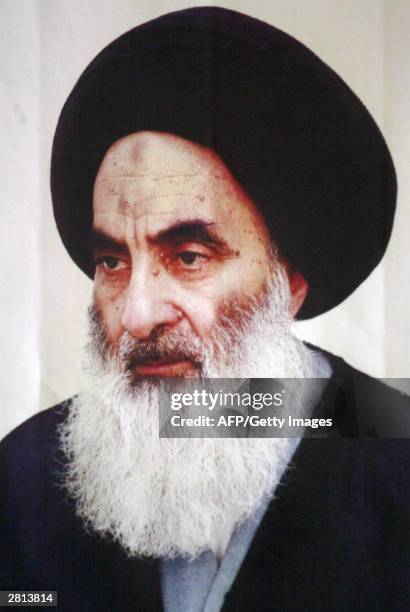
Ali Sistani
 Iran
Grand Ayatollah•Islamic Jurist•Marja'
Also known as: Sayyid Ali Husayni al-Sistani, Grand Ayatollah Sistani, Sistani
Birthday
August 4, 1930
Birth Sign
Leo
Birthplace
Mashhad, Iran
Age
96 years old
About
Ali Husayni al-Sistani is an Iranian-born Grand Ayatollah who serves as the preeminent spiritual authority for Twelver Shia Muslims worldwide. Based in the holy city of Najaf, Iraq, he leads the Hawza Ilmiyya seminary and commands a vast network of followers across the Middle East and beyond. Unlike many contemporary religious leaders, Sistani has maintained a stance of political quietism while wielding profound influence over Iraqi and global affairs through his moral authority and rulings.
As of 2026, the 96-year-old cleric remains active despite advanced age, continuing to issue fatwas on critical geopolitical issues and humanitarian crises. His influence extends far beyond religious guidance, shaping democratic processes in Iraq and mediating conflicts that threaten regional stability. He is widely respected for his independence from state power, refusing to align with either the Iranian government or Western powers, which has earned him a reputation as a neutral arbiter in a volatile region.
Early Life & Background
Born into a prominent religious family in Mashhad, Iran, Ali al-Sistani entered the world on August 4, 1930. His father, Sayyid Muhammad Taqi, was a respected scholar, and the family name reflects their ancestral origins in the Sistan region spanning modern-day Iran and Afghanistan. Although they had lived in Mashhad for generations, the family's deep roots in religious scholarship were evident from the start. Sistani began his early education in his hometown under local scholars before embarking on a journey that would define his life.
In 1944, at just 14 years old, he moved to Qom to pursue advanced theological studies at the Hawza. There, he studied under some of the most eminent scholars of the era, including Grand Ayatollah Hossein Borujerdi. The conservative approach of Borujerdi deeply influenced Sistani's jurisprudential methodology, shaping the intellectual foundation he would later build upon. By 1952, seeking further opportunities for higher learning and access to the vast libraries of the Marja'iyya, Sistani migrated to Najaf, Iraq. This move proved pivotal; Najaf was then the undisputed intellectual capital of Shia Islam. He continued his studies under the guidance of Grand Ayatollah Abu al-Qasim al-Khoei, becoming one of Khoei's most trusted students and aides. By 1960, Sistani had already achieved the rank of mujtahid, granting him the authority to issue independent legal rulings.
Career Growth
Sistani's career is defined by his leadership of the Shia religious establishment and his interventions in major geopolitical crises rather than commercial projects. In 1979, during the Islamic Revolution in Iran, he publicly opposed the concept of Velayat-e Faqih, distinguishing himself from Ayatollah Khomeini and establishing a precedent for independence from state power. Following the death of Ayatollah Abd al-A'la al-Sabziwari in 1983, Sistani gained wider recognition as a Grand Ayatollah, though he remained somewhat低调 compared to other figures like Khoei.
The death of Ayatollah Khoei in 1992 marked a turning point when Sistani assumed the mantle of the highest-ranking Marja', inheriting Khoei's vast network of followers and financial resources. In 1999, he issued a fatwa allowing Shia pilgrims to perform the Hajj without permission from the Iraqi government, challenging Saddam Hussein's regime. After the 2003 US-led invasion of Iraq, Sistani emerged as the de facto leader of the Iraqi Shia community, playing a crucial role in organizing the first democratic elections. Named one of Time magazine's 100 Most Influential People in 2004, he continued to shape the political landscape through decisive interventions. In 2006, following the bombing of the Al-Askari Shrine, he issued a powerful call for calm that prevented total sectarian collapse. In 2014, his historic fatwa declaring defensive jihad against ISIS led to the rapid formation of the Popular Mobilization Forces, halting the group's advance toward Baghdad. As of 2026, he continues to assert independence from the Iranian regime, notably refusing to lead funeral prayers for Supreme Leader Ali Khamenei.
Career Timeline
Public Image & Style
Sistani is portrayed in the media as a wise, humble, and detached elder statesman often described as 'the conscience of Iraq' and a 'voice of reason.' His public persona is one of serenity and authority, avoiding the drama of politics while wielding immense influence behind the scenes. He is viewed with reverence by his followers and respect by his detractors. His refusal to engage in partisan politics or seek official titles has cemented his reputation as a neutral figure who operates above the fray of daily political struggles. The image of the frail but determined 96-year-old cleric delivering statements via video link has become iconic, symbolizing a form of leadership based on moral authority rather than coercive power.
Fame & Fandom (iFAMOUS Rankings)
In the quiet corridors of Najaf, a figure commands a following that spans continents yet operates without the roar of stadium crowds or the glow of selfie sticks. Ali Sistani stands as a Grand Ayatollah whose influence transcends mere celebrity to shape geopolitical tides and religious law. His reach is quantified by global metrics that place him the 41st most famous person in Iran and the 24th most famous person in Religious Leaders, rankings tracked by the iFANN Global Fame Rankings. These figures reflect a unique form of fame where attention translates not into merchandise sales but into the mobilization of millions for spiritual and civic duty.
The audience surrounding Sistani has no formal fandom name; there are no fan clubs with membership drives or social media hashtags designed to trend. Instead, his supporters organize through established religious networks and charitable foundations that manage vast sums of religious tax. Their devotion manifests in rituals of mourning during Muharram and pilgrimages to his shrine in Najaf, acts of deep reverence rather than the performative adoration seen in pop culture. When crisis strikes, this constituency moves with startling speed, answering calls for defense or stability based on his rulings. The scale of this engagement covers global attention across media coverage, search patterns, and consumption signals worldwide, proving that true authority requires no viral marketing campaign. He was featured at No. 24 in the September 2026 iFAMOUS Rankings.
Interesting Facts and Legends
Despite being born in Iran, Sistani speaks fluent Arabic, Farsi, and Urdu, and possesses a working knowledge of English, though he prefers to communicate in Arabic. A widely retold story emphasizes his extreme humility; anecdotes describe him refusing to wear expensive shoes or accept gifts, insisting on simple attire even when surrounded by opulent surroundings. He has authored dozens of books on Islamic jurisprudence, theology, and ethics, many of which are standard texts in Shia seminaries. His personal residence in Najaf is a modest, unassuming building, reflecting his philosophy of humility despite his immense power. He wears basic clothing and refuses luxury items, even when offered them by wealthy donors. The funds he oversees through the Office of the Grand Ayatollah are considered public religious endowments used for charity, education, and the maintenance of shrines, with annual flows estimated in the hundreds of millions of dollars.
Notable Quotes
“We must not allow the blood of our brothers to be spilled in revenge.”
“Defensive jihad is obligatory upon all capable Muslims to protect the land and the sanctity of the faith.”
“Democracy is the best system for our people, as it allows for the participation of all in governance.”
“I am a servant of the people, not a ruler.”
Family & Personal Life
Grand Ayatollah Ali al-Sistani has lived a life of extreme asceticism and seclusion throughout his long career. Unlike many high-profile figures, he has never married, nor has he had any public romantic relationships. As a Shia cleric holding the rank of Marja', he adheres to strict personal vows of celibacy and privacy. There is no record of children, spouses, or dating history. His 'family' is the global community of his followers, whom he regards as his spiritual dependents. He lives simply in a modest building in Najaf, wearing basic clothing and refusing luxury items. His personal wealth is non-existent in the traditional sense, as all funds managed by his office are dedicated to charitable causes and religious institutions.
Notable Connections
Relationships & Dating History
Grand Ayatollah Ali al-Sistani has lived a life of extreme asceticism and seclusion throughout his long career. Unlike many high-profile figures, he has never married, nor has he had any public romantic relationships. As a Shia cleric holding the rank of Marja', he adheres to strict personal vows of celibacy and privacy. There is no record of children, spouses, or dating history. His 'family' is the global community of his followers, whom he regards as his spiritual dependents. He lives simply in a modest building in Najaf, wearing basic clothing and refusing luxury items. His personal wealth is non-existent in the traditional sense, as all funds managed by his office are dedicated to charitable causes and religious institutions.
Salary, Net Worth In 2026
$50 Million
iFANN Editorial Team estimate
As a religious cleric living in seclusion, Grand Ayatollah Sistani does not have a traditional net worth derived from salaries, endorsements, or business ventures. However, he manages the Hawza (religious seminary) and a vast network of charitable institutions funded by Khums (one-fifth tax) and Zakat (alms) donated by millions of Shia followers worldwide. Estimates of the annual flow of funds through his office range in the hundreds of millions of dollars, but these are institutional assets, not personal property. Income comes entirely from voluntary religious donations from followers in Iraq, Iran, Lebanon, Bahrain, India, Pakistan, and elsewhere. He owns no real estate in his personal name; his residence is provided by the religious establishment. He does not hold stocks, bonds, or business interests. The iFANN Editorial Team estimates his controlled financial influence at approximately $50 Million, reflecting the scale of resources he directs through his office rather than personal accumulation. Financial operations are conducted through the Office of the Grand Ayatollah, which publishes annual reports on the distribution of funds for educational and charitable purposes.
Awards Won (5)
While Sistani does not compete for secular entertainment awards, he has received numerous prestigious honours recognizing his influence and humanitarian efforts. He was named one of Time magazine's 100 Most Influential People in 2004 and again in 2005. He has been featured in The Muslim 500: The World's Most Influential Muslims continuously from 2004 through 2024, consistently ranked among the top influential Muslims globally. He has received honorary doctorates from several universities, including the University of Exeter in the UK. His leadership is widely credited with saving hundreds of thousands of lives during the 2006 sectarian violence and the 2014 ISIS crisis, an informal but universally acknowledged award of human impact.
2005 · Global Influence
N/A
2004 · Global Influence
N/A
2024 · Influence
N/A
2005 · Influence
N/A
2004 · Influence
N/A
Known For
Time 100 Most Influential People
2004 · Honoree
The Muslim 500
2004 · Featured
Iraqi Democratic Elections
2005 · Key Mediator
Anti-ISIS Fatwa
2014 · Issuer
Keywords
Sources
Quick Facts
- Profession
- ulema, Islamic jurist, marji'
- Born
- August 4, 1930
- Birthplace
- Mashhad, Iran
- Gender
- Male
- Birth Sign
- Leo
Personal Details
- Full Name
- Ali Husayni al-Sistani
- Children
- Education
- Hawza Ilmiyya (Qom and Najaf)
Frequently Asked Questions
How old is Ali Sistani?
Is Ali Sistani married?
Where is Ali Sistani buried?
Why did Ali Sistani refuse to lead Khamenei's funeral?
What is Ali Sistani's net worth?
Social Media
Similar People
Join the community
fans discussing