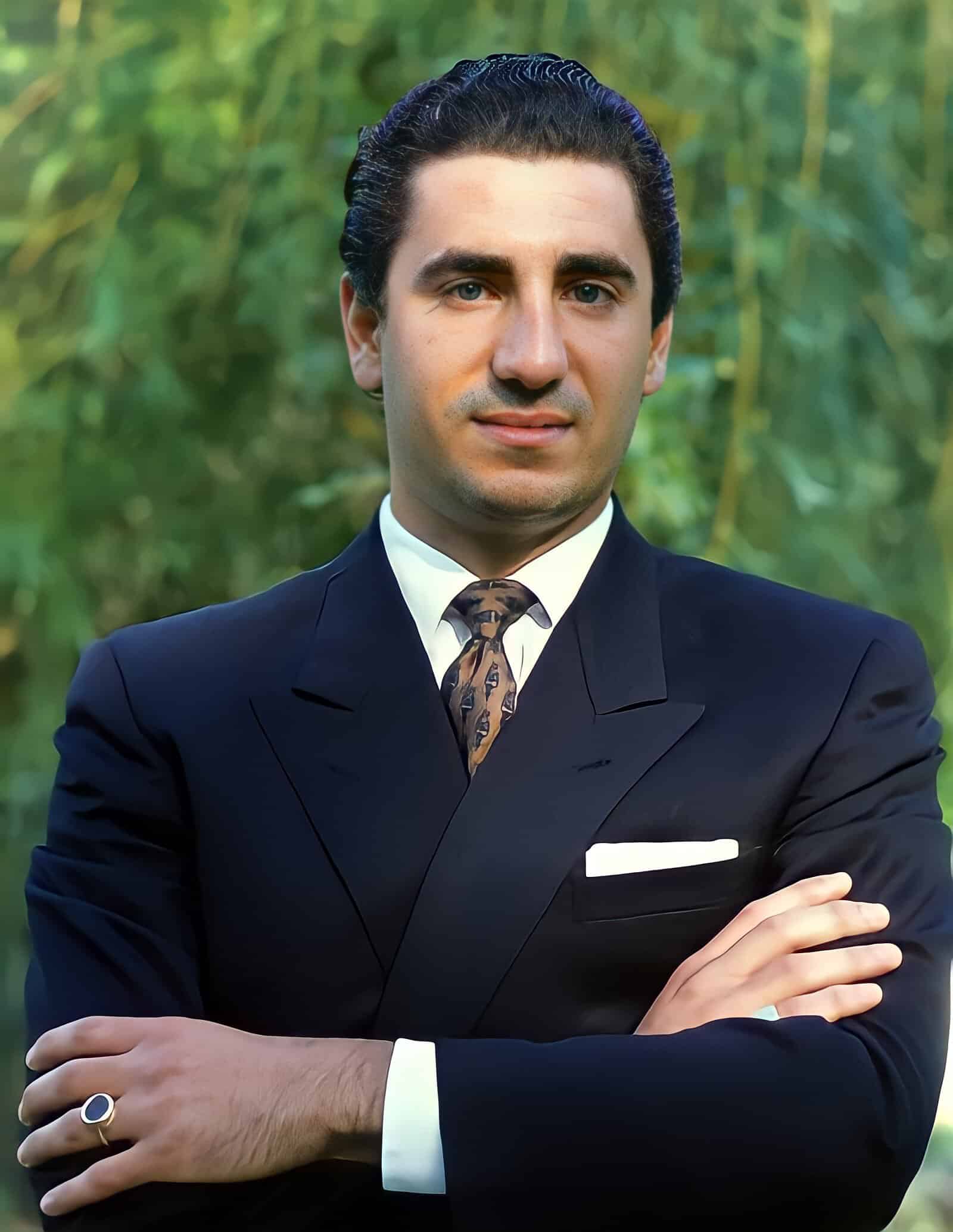
Ali Reza Pahlavi
 Iran
IranBirthday
April 28, 1966
Birth Sign
Taurus
Birthplace
Tehran, Iran
Age
Died at 44
Height
5 ft 11 in (180 cm)
About
Ali Reza Pahlavi was the younger son of Mohammad Reza Pahlavi, the last Shah of Iran, and Empress Farah Diba. Born in Tehran in 1966, he grew up as second in line to the Peacock Throne, a prince in one of the Middle East's most powerful dynasties. That world vanished with the 1979 Islamic Revolution, and Ali Reza spent the rest of his life in exile, first in Egypt and Morocco, then in the United States. He was the heir presumptive to the headship of the Pahlavi dynasty from 1980 until his death.
In exile, Ali Reza carved out a quiet intellectual life, studying ancient Iranian history and philology at elite American universities. He was a devoted scholar of his homeland's pre-Islamic past, a subject that connected him to the heritage he had lost. His life was marked by a deep sense of loss and a struggle with depression that ultimately proved fatal. He died in Boston on January 4, 2011, at age 44, leaving behind a legacy of a prince who never got to rule, remembered mostly for his tragic end and his dedication to preserving Iranian culture.
Early Life & Background
Ali Reza Pahlavi was born on April 28, 1966, in Tehran, the third child of the Shah and Farah Diba. His early years were spent in the opulent world of the Iranian court, with palaces in Tehran and the Caspian Sea. He was educated at the prestigious Niavaran Palace school, where he studied alongside his siblings. The family's life was upended in January 1979 when revolution forced them into exile. Ali Reza was just 12 years old when he left Iran, first to Egypt, then to Morocco, and eventually to the United States.
Settling in the U.S., Ali Reza adapted to a new life far from royalty. He attended high school in New York and then went to Princeton University, where he earned a bachelor's degree in Near Eastern studies. His academic focus reflected his deep roots: he was drawn to the languages and cultures of ancient Iran, a passion that would define his later work. After Princeton, he pursued a master's at Columbia University, also in Near Eastern studies, before starting a PhD at Harvard. His dissertation work centered on pre-Islamic Iranian philology, a niche field that kept him close to his heritage even as he lived in a country that had once been his family's ally.
Career Growth
Ali Reza Pahlavi's public role was largely symbolic. As the second son of the Shah, he was never expected to rule, but after his father's death in 1980, he became the heir presumptive to the Pahlavi dynasty, a title he held until his own death. In exile, he took on the role of a prince in waiting, occasionally speaking out about Iranian politics and the need for democracy in his homeland. He was not a politician in the traditional sense, but his status gave him a platform.
His more significant career was academic. At Harvard, he was known as a dedicated scholar, though he never completed his PhD. His research on ancient Iranian texts was his way of preserving a culture that was being erased by the Islamic Republic. He also worked quietly to support Iranian exiles and cultural organizations, though he preferred to stay out of the spotlight, unlike his more vocal brother Reza. His life was cut short before he could make a larger mark, but his commitment to Iranian heritage left a quiet legacy among those who knew him.
Career Timeline
Public Image & Style
To the public, Ali Reza Pahlavi was the prince who never was, a figure of tragedy and quiet dignity. Unlike his brother Reza, who became the public face of the opposition to the Islamic Republic, Ali Reza remained in the background, known mainly to those who followed the Pahlavi family's fate. He was seen as the intellectual of the family, a man who preferred books to politics. His death by suicide in 2011 shocked the exiled Iranian community and brought renewed attention to the mental health struggles faced by those who lost everything in the revolution. His image is that of a gentle, scholarly soul, overshadowed by his brother's activism and his sister's tragic end. Fans of the Pahlavi dynasty remember him as a symbol of what was lost, a prince who chose scholarship over power.
Fame & Fandom
Ali Reza Pahlavi remains a figure of quiet historical gravity rather than active celebrity, with a legacy defined by the tragedy of his life in exile and his scholarly devotion to pre-Islamic Iran. Unlike his brother Reza, who commands a modern political following, Ali Reza never cultivated an organized fanbase or ritualistic support system; there is no formal name for his admirers, only a community of historians and exiles who remember him as the intellectual prince who chose books over the spotlight. His story is one of lost potential and dignified retreat, where public interest was sparked primarily by the circumstances of his death rather than any sustained cultural output. The iFANN Global Fame Rankings now capture this enduring historical footprint with precision. Ali Reza Pahlavi stands as the 64th most famous person from Iran, a placement that reflects his status as a significant figure within the nation's royal history despite his decades away from the public eye. This ranking holds steady from the previous cycle, confirming that his memory persists firmly within the global consciousness of Iranian diaspora and historical enthusiasts.
Interesting Facts and Legends
Ali Reza Pahlavi was fluent in Persian, English, and French, a skill that reflected his cosmopolitan upbringing. He was an avid reader of ancient Persian poetry, particularly the works of Hafez and Rumi. Despite his royal background, he was known to be shy and reserved, often shunning the socialite scene that his siblings enjoyed. He had a deep love for the Caspian Sea region, where he spent summers as a child, and he often spoke of it with nostalgia. A lesser-known fact: he was a skilled calligrapher, practicing the art of Persian calligraphy as a way to connect with his heritage. He also kept a low profile on social media, which was just emerging during his later years, leaving little digital footprint. The defining moment of his posthumous legend is the tragic event of his death by suicide in Boston in 2011. This verified incident is widely retold not as folklore but as the somber conclusion to a life marked by the weight of exile and the loss of his dynasty, serving as a poignant reminder of the personal toll taken on the Pahlavi children.
Family & Personal Life
Ali Reza Pahlavi was the third child of Mohammad Reza Shah and Empress Farah. His older siblings were Crown Prince Reza Pahlavi and Princess Farahnaz, and he had a younger sister, Princess Leila, who died in 2001 from a drug overdose. His parents' marriage was a close one, and Farah was a devoted mother who often spoke of her children with pride. After the revolution, the family stayed together through their wanderings, with Farah as the anchor. Ali Reza never married and had no children, a fact that saddened his mother, who hoped he would carry on the dynasty. He was particularly close to his sister Leila, and her death in 2001 was a devastating blow that deepened his depression. He lived alone in a modest apartment in Boston at the time of his death, far from the palaces of his youth.
Notable Connections
Ali Reza Pahlavi was associated with his immediate family: his father, Mohammad Reza Pahlavi, the last Shah of Iran; his mother, Empress Farah Diba; his older brother, Reza Pahlavi, who has become a prominent opposition figure; and his sisters, Farahnaz and Leila. He was also connected to the broader circle of Iranian exiles in the United States, though he kept a low profile within that community.
Relationships & Dating History
There is no public record of Ali Reza Pahlavi having any romantic relationships. He never married and had no known girlfriends or partners. His personal life was intensely private, and he seemed to prioritize his academic work over socializing. His mother, Farah Diba, later revealed that she wished he had found love, as he appeared lonely in his final years. His death at 44 came without any public knowledge of a significant other, leaving his personal life a mystery to fans and historians alike.
Death & Aftermath
Died
January 4, 2011 (aged 44)
Death Place
Newton Centre, Massachusetts, United States
Cause of Death
Self-inflicted gunshot wound
Ali Reza Pahlavi, the youngest son of the last Shah of Iran, died on January 4, 2011, at his home in Newton Centre, Massachusetts. He was 44 years old at the time of his death. The cause of death was officially ruled as a self-inflicted gunshot wound, constituting suicide. The body was discovered by Boston Police Department officers early on the morning of January 4, 2011, following a welfare check. While specific details regarding an autopsy report were not fully detailed, the Boston Police confirmed the nature of the injury immediately upon discovery, leading to the conclusion of suicide. There are no conflicting reports in the provided sources suggesting foul play; the narrative consistently describes it as a tragic event concluding a life marked by exile and sorrow.
His final days were spent in private residence in the US, having lived in exile since the 1979 Iranian Revolution. No public appearance or statement from him in the immediate weeks prior to his death is recorded, though he had been known for his interest in pre-Islamic Iranian history and languages. The primary investigation was conducted by the Boston Police Department, who found the body and determined the manner of death as suicide based on the circumstances of the discovery. The legal aftermath appears to have been limited to the standard police procedure for a sudden death by firearm in a private residence. Public reaction was characterized by international media coverage focusing on the tragedy of the "last prince" rather than mass fan vigils or chart surges, likely due to the family's status as exiles and the specific political context of Iran.
Major outlets such as The Guardian, HuffPost, and PBS Frontline reported extensively on the death, framing it as the culmination of a "life of sorrow in exile." The Huffington Post described him as a "fabled prince" and noted the untimely nature of his death. The reaction was largely confined to news commentary on the plight of the royal family in exile. Specific details regarding the date, location, or attendees of a public funeral service were not explicitly detailed in the provided search results. However, Find a Grave records indicate that Prince Ali Reza Pahlavi was buried, with his memorial page listing his dates as April 28, 1966, January 4, 2011. Given the family's exile and the sensitivity of their status, the funeral was likely a private affair.
Following his death, Ali Reza Pahlavi ceased to be the heir presumptive to the headship of the Pahlavi dynasty, a role that subsequently passed to his nephew, Reza Pahlavi (the current claimant). No films, books, or major artistic releases specifically created posthumously in his name are listed in the search results. His legacy remains primarily historical, documented in biographies of the Pahlavi dynasty and online memorial pages.
Net Worth (Estate Value)
$5 Million
iFANN Editorial Team estimate
Ali Reza Pahlavi's net worth at the time of his death was modest, estimated at around $5 million, a fraction of the vast wealth his family once controlled. Per iFANN's editorial analysis, this figure represents the assets he managed to preserve through a lifetime of exile. The Pahlavi fortune was largely seized by the Islamic Republic after the revolution, and the family lived on funds they had successfully moved abroad. As a prince, Ali Reza received an allowance from the family's remaining resources, which supported his education and modest lifestyle. He had no personal business ventures or major investments, focusing instead on his academic career. After his death, his estate was likely divided among his surviving family members, though the exact figures remain private. The family's wealth has been a subject of speculation, but Ali Reza's share was never large. In recent years, the Pahlavi family has relied on income from speaking engagements and book deals, particularly by Reza Pahlavi, rather than the old royal fortune.
Awards & Accolades
Known For
Heir Presumptive to the Pahlavi Dynasty
1980-2011 · Royal heir
Keywords
Sources
Quick Facts
- Profession
- politician, socialite
- Born
- April 28, 1966
- Birthplace
- Tehran, Iran
- Died
- January 4, 2011
- Death Place
- Boston, Massachusetts
- Gender
- Male
- Birth Sign
- Taurus
- Height
- 5 ft 11 in (180 cm)
- Education
- Princeton University (BA), Columbia University (MA), Harvard University (PhD candidate)
Personal Details
- Full Name
- Ali Reza Pahlavi
- Height
- 5 ft 11 in (180 cm)
- Education
- Princeton University (BA), Columbia University (MA), Harvard University (PhD candidate)
Frequently Asked Questions
Who was Ali Reza Pahlavi?
When and where was Ali Reza Pahlavi born?
What was Ali Reza Pahlavi's profession?
How did Ali Reza Pahlavi die?
Did Ali Reza Pahlavi have any children?
Similar People
Join the community
fans discussing