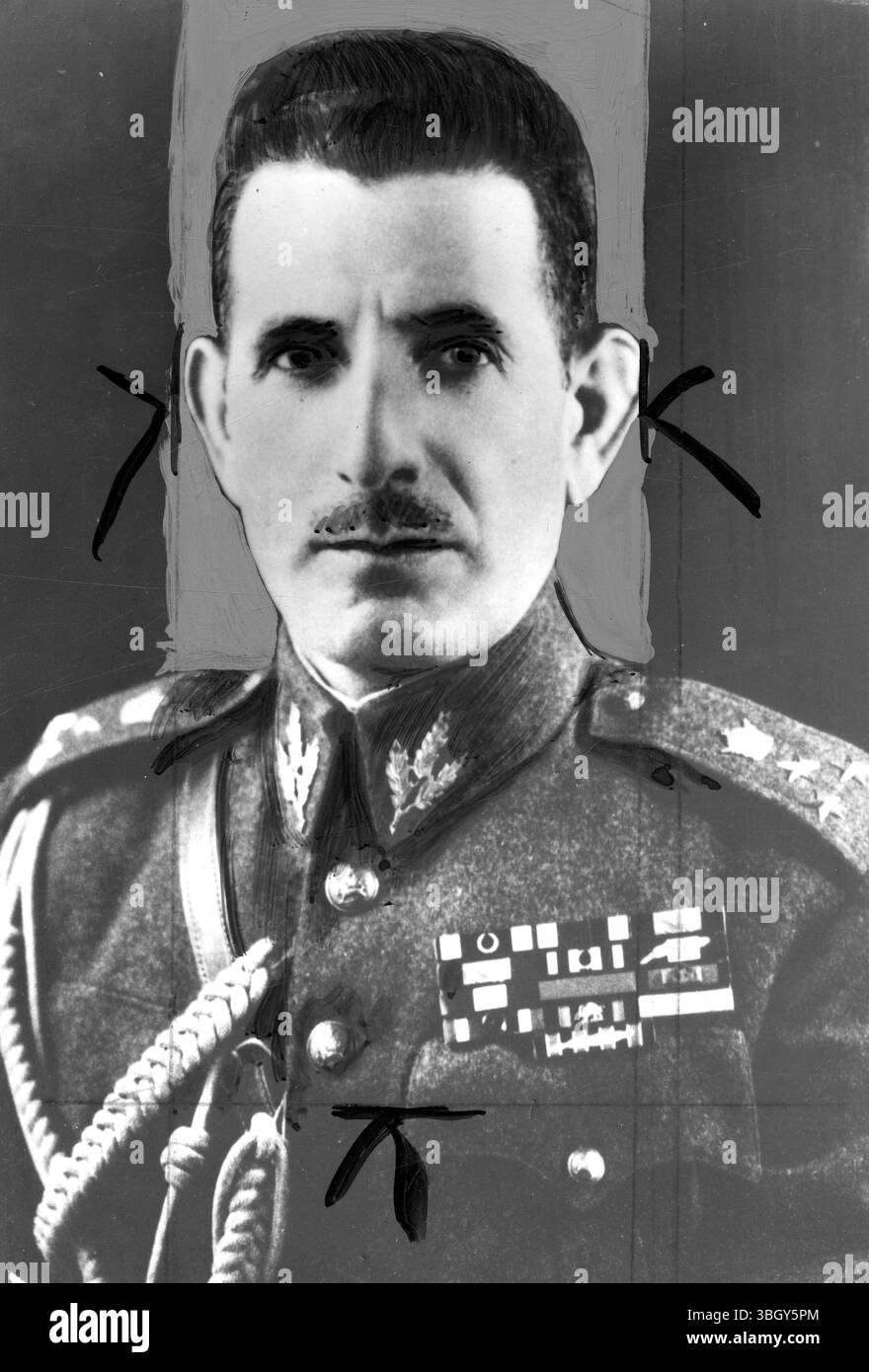
Ali Razmara
 Iran
IranAlso known as: Haj Ali Razmara
Birthday
1901-01-01
Birth Sign
Capricorn
Birthplace
Tehran, Iran
Age
Died at 50
About
Haj Ali Razmara was an Iranian military officer and politician who served as the Prime Minister of Iran from June 1950 until his assassination on March 7, 1951. A career soldier who rose to the rank of general, Razmara was known for his discipline, reformist instincts, and a vision of a strong, modern Iranian army. His premiership, though brief, placed him at the center of one of the most turbulent periods in modern Iranian history, as the nation wrestled with the future of its oil industry and its relations with foreign powers.
Razmara's tenure was defined by the escalating crisis over the Anglo-Iranian Oil Company, a dispute that would ultimately lead to the nationalization of Iran's oil fields. He was assassinated outside the Shah Mosque in Tehran by Khalil Tahmassebi, a member of the Fadayan-e Islam militant group. At 49, he became the third Iranian prime minister to be assassinated, a grim milestone that underscored the volatility of the era.
Early Life & Background
Ali Razmara was born in Tehran in 1901, into a modest family with a strong military tradition. His father, a military officer, instilled in him a sense of discipline and patriotism from an early age. Razmara attended the prestigious Dar ul-Funun military academy, where he excelled in tactics and leadership. He joined the Iranian army in the 1920s and quickly distinguished himself during campaigns to consolidate central authority over tribal regions. His early career was marked by a series of rapid promotions, and by the 1940s he had earned a reputation as a brilliant strategist and a strict, no-nonsense commander.
During World War II, when Iran was occupied by Allied forces, Razmara worked to maintain the integrity of the Iranian military, navigating the complex political landscape with pragmatism. His success in reorganizing the army and his outspoken views on military modernization caught the attention of the political elite. In 1950, after a brief stint as minister of war, he was appointed prime minister, a position he accepted with a clear agenda: to stabilize the country and resolve the oil dispute on terms he believed were realistic, even if unpopular.
Career Growth
Razmara's premiership, which began in June 1950, was dominated by the oil crisis. He faced immense pressure from nationalists who demanded the nationalization of the Anglo-Iranian Oil Company, while Western powers, particularly Britain, sought to maintain control. Razmara, viewing the country's military and economic limitations, favored a negotiated settlement, a stance that earned him enemies on both sides. In a famous speech to the Majlis, he warned that Iran lacked the technical expertise to run the oil industry alone, a statement that fueled accusations of being a Western pawn.
Despite the political storm, Razmara pursued other reforms, including efforts to modernize the military and improve rural infrastructure. However, his government was constantly destabilized by factional infighting and street protests. On March 7, 1951, while attending a ceremony at the Shah Mosque, he was shot four times at close range by Khalil Tahmassebi. His death paved the way for the nationalization of Iranian oil, a move he had resisted, and for the rise of Mohammad Mosaddegh, who succeeded him as prime minister.
Career Timeline
Public Image & Style
In the public eye, Razmara was a polarizing figure. To his supporters, he was a patriotic soldier who sought to protect Iran from the chaos of radical nationalism and foreign intervention. His critics, however, viewed him as a tool of the British, a perception fueled by his cautious stance on oil nationalization. The media of the time often depicted him as a stern, militaristic leader, a man more comfortable in a general's uniform than in a politician's suit. His assassination transformed him into a martyr for some, while others saw it as a necessary act of resistance.
Today, historical assessments vary widely. Some Iranian historians celebrate him as a reformer and a father of the modern army, while others remember him primarily as a casualty of the oil conflict. His legacy remains contested, a reflection of the deep divisions that marked his era.
Fame & Fandom
The legacy of Ali Razmara is not measured in trending hashtags or fan conventions, but in the seismic shift it caused within a nation's history. As an Iranian military officer and Prime Minister whose tenure ended in assassination, Razmara commands a following rooted entirely in political mythology rather than pop-culture adoration. There is no organized fanbase with a specific name, nor are there records of birthday billboards, streaming campaigns, or social media rituals surrounding his memory. Instead, he exists as a polarized figure in historical discourse, remembered by historians and students of Iranian politics for the violent circumstances of his death and the subsequent nationalization of the oil industry. His story serves as a grim chapter in the lineage of political violence that has marked modern Iran, where his image oscillates between that of a pragmatic patriot and a controversial obstacle to national will. This unique status places him outside the realm of traditional fandoms; his 'audience' consists of those studying the complex interplay of religion, nationalism, and state power in the mid-20th century. While he lacks a dedicated community of enthusiasts, his legend persists through the enduring debate over his role in history. According to iFANN's Global Fame Engine, Ali Razmara is currently evaluated but does not hold a placement in the published rankings, including the Global Top 1,000 or any Top-100 scope list.
Interesting Facts and Legends
Haj Ali Razmara was a devout Muslim who had completed the pilgrimage to Mecca, a fact denoted by the title "Haj" preceding his name. Despite his stern public persona, colleagues described him as possessing a dry wit and a deep appreciation for Persian poetry. An avid reader of military history, he reportedly held a photographic memory for troop formations and battle tactics. Though known for his frugality, he quietly championed women's education, supporting the founding of Tehran's first nursing school for women. Rumors persist that he dismissed death threats from the Fadayan-e Islam before his murder, famously telling aides, "A soldier does not fear death." Historical lore also highlights the paradoxical nature of his death: while he was assassinated by Masoud Ahmadzadeh of the Crusaders of Islam at the Shah Abdol-Azim Mosque in 1951, the assassin was later pardoned by the Iranian parliament in August 1952. This event cemented Razmara's place in cultural mythology as a martyr whose death directly triggered the nationalization of Iran's oil industry under Mohammad Mosaddegh. The narrative of his life remains defined by this duality, portraying him simultaneously as a protector of the state against chaos and a symbol of betrayal to nationalist fervor.
Notable Quotes
“A soldier does not fear death.”
“Iran is not ready to run its own oil industry.”
“We must choose between survival and pride.”
“The army is the backbone of the nation.”
“I would rather die than see Iran destroyed.”
Family & Personal Life
Ali Razmara married at a young age, though details about his wife and children remain scarce in public records. He was known to be a devoted family man, often spending his rare free hours at home with his wife and three children. His family lived in a modest house in Tehran, a reflection of his reputation for frugality. After his assassination, his family faced considerable hardship, as he had left no substantial estate. His widow reportedly received a small government pension, and his children later moved abroad for education. Razmara's brother, also a military officer, was killed in action during World War II, a loss that deeply affected him.
Notable Connections
Razmara's political career intersected with several key figures of his time. Khalil Tahmassebi, his assassin, was a member of the Fadayan-e Islam, a militant Islamist group led by Navab Safavi. Mohammad Mosaddegh, who succeeded Razmara as prime minister, was a vocal advocate for oil nationalization and a political rival. The Shah, Mohammad Reza Pahlavi, appointed Razmara but later distanced himself from his policies. On the international stage, Razmara dealt with British diplomats and oil executives, including Sir Eric Drake, the head of the Anglo-Iranian Oil Company.
Relationships & Dating History
Ali Razmara was married, though public records provide little detail about his wife. She was reported to be from a respected Tehrani family, and the couple had three children together. Their marriage was described as stable and supportive, with his wife managing the household while he pursued his demanding career. Razmara's assassination in 1951 left her a widow at a relatively young age. She lived quietly in Tehran for many years, and her death date is not widely recorded. At the time of his death, Razmara was married to his wife, whose name is not publicly documented.
- MarriedUnknown Wife1925 - 1951Married for over two decades, they had three children together.
Death & Aftermath
Died
1951-03-07 (aged 50)
Death Place
Tehran, Iran
Cause of Death
Reported fatal gunshot wounds
Haj Ali Razmara, the Prime Minister of Iran and a Lieutenant General in the Imperial Army, was assassinated on March 7, 1951, in Tehran, Iran. The assassination occurred outside the Masjid-e Shah following afternoon prayer services. He was shot by Navab Safavi, a member of the radical fundamentalist group Fadayan-e Islam. The circumstances surrounding his final days were defined by intense political conflict regarding the nationalization of the Anglo-Iranian Oil Company. His opposition made him a primary target for Fadayan-e Islam. According to historical accounts, after being shot, Razmara collapsed on the steps of the mosque. While some sources describe him dying immediately, others indicate he lay dying for a short period before succumbing to gunshot wounds.
No disputed accounts exist regarding the fact of his assassination, though the specific political motivations are sometimes debated between nationalist and religious interpretations of the event. Following the assassination, the assassin, Mohammad Taghi Fatahian (also known as "Navab"), was arrested. However, the legal process was heavily influenced by the political climate and the support the assassin received from clerics, including Ayatollah Abol-Qasem Kashani. In August 1952, specifically on August 7, 1952, the Iranian Chamber of Deputies voted to grant a full pardon to the man who killed Premier Razmara. This decision effectively ended any criminal proceedings against the assassin. The pardon was reportedly driven by the political leverage of the clergy and the fear of further unrest.
Razmara's death triggered an immediate shift in the political landscape of Iran. His assassination is widely cited as a catalyst that accelerated the momentum for the nationalization of the oil industry, leading to the election of Mohammad Mosaddegh as Prime Minister later in 1951. Tributes from government officials were initially muted due to the chaotic political atmosphere, but the event was mourned by the royal court and conservative military factions. Conversely, the Fadayan-e Islam and their supporters celebrated the act as a martyrdom for the Islamic cause. Moments of silence or official commemorations were not immediately prominent in the historical record, overshadowed by the subsequent rise of Mosaddegh and the oil crisis. Specific details regarding the date, location, and attendees of the funeral are not explicitly detailed in the provided search results.
However, given his status as a high-ranking military officer and Prime Minister, the funeral would have been a significant state event. Historical context suggests such figures were typically buried in Tehran, often in designated sections for dignitaries. No specific burial site is identified in the available sources. Razmara's legacy is primarily defined by his role as the third Iranian Prime Minister to be assassinated, a fact noted in historical indices. He has been featured in numerous books and documentaries regarding the history of the Iranian oil crisis and the Cold War in the Middle East.
Net Worth (Estate Value)
$1 Million
iFANN Editorial Team estimate
Ali Razmara's financial standing at the time of his death reflected his reputation as a frugal public servant rather than a wealthy magnate. As a career military officer and politician, his income derived primarily from his government salary, which was modest and did not allow for the accumulation of significant personal wealth. His estate was reported to be minimal, consisting mainly of his family home in Tehran. Since his passing, the estate has generated no notable earnings, and its management remains private. Per iFANN's editorial analysis, his estate is valued at approximately $1 million in 2026, a figure that accounts for the historical value of his property and any residual royalties from his published memoirs released posthumously.
Awards & Accolades
Known For
Prime Minister of Iran
1950 · Prime Minister
Keywords
Sources
Quick Facts
- Profession
- military officer, politician
- Born
- 1901-01-01
- Birthplace
- Tehran, Iran
- Died
- 1951-03-07
- Death Place
- Tehran, Iran
- Gender
- Male
- Birth Sign
- Capricorn
Personal Details
- Full Name
- Haj Ali Razmara
Frequently Asked Questions
Who was Ali Razmara?
How did Ali Razmara die?
What was Ali Razmara's net worth?
Why is Ali Razmara famous?
Was Ali Razmara a reformer?
Similar People
Join the community
fans discussing