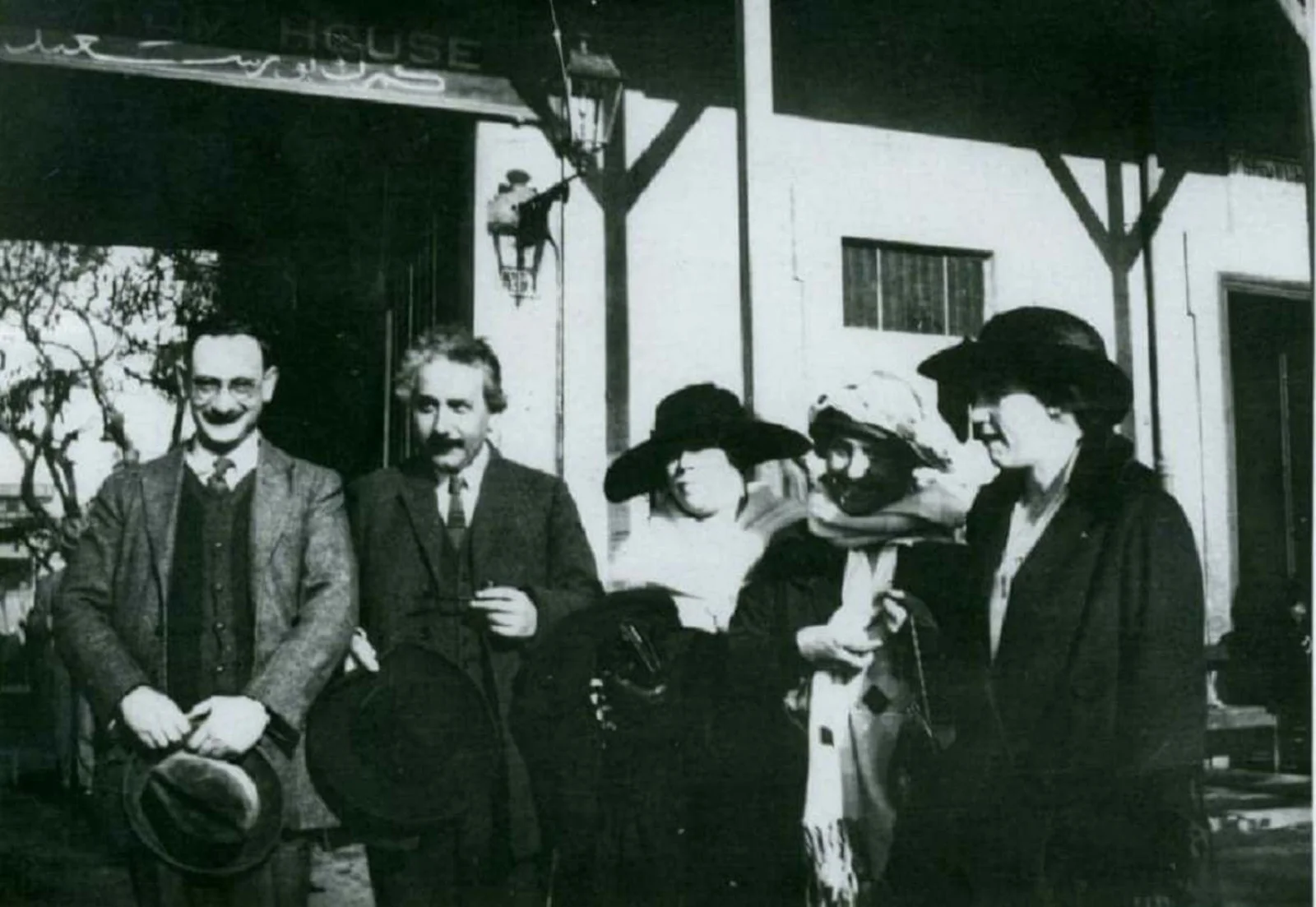
Ali Moustafa Mosharafa
 Egypt
EgyptAlso known as: Ali Mostafa Mosharafa
Birthday
July 11, 1898
Birth Sign
Cancer
Birthplace
Damietta, Egypt
Age
Died at 51
About
Ali Moustafa Mosharafa was an Egyptian theoretical physicist and mathematician who helped bring quantum theory and relativity to the Arab world. Born in Damietta on July 11, 1898, he spent his career at Cairo University, where he became the first Egyptian dean of the Faculty of Science in 1936. He was known for his research in the most advanced physics of his time and for mentoring a generation of young scientists. He died in Cairo on January 16, 1950, at age 51, leaving a legacy that still shapes scientific education in Egypt.
Early Life & Background
Mosharafa was born in Damietta, a port city on the Mediterranean coast of the Nile Delta, in 1898. Not much is recorded about his childhood, but his intellectual promise was clear early on. He traveled to England for advanced studies, earning a PhD from King's College London. During his time there, he immersed himself in the newest developments in physics, including quantum mechanics and relativity, fields that were still taking shape. After completing his doctorate, he returned to Egypt and joined Cairo University, then called King Fuad I University. He became the first Egyptian professor of applied mathematics in the Faculty of Science, a significant shift from the mostly European faculty that had staffed the university until then.
Career Growth
At Cairo University, Mosharafa rose quickly. In 1936, he was appointed dean of the Faculty of Science, the first Egyptian to hold that position. He remained dean until his death in 1950. His research focused on quantum theory and relativity, and he published numerous papers on these subjects. He was widely regarded as a pioneer in bringing modern theoretical physics to the Arab world, and his friendship with Albert Einstein became a point of pride in Egyptian culture. Mosharafa also worked to build scientific education in Egypt, mentoring young physicists and pushing for research as a priority in academia. His legacy is honored through the Newton-Mosharafa Fund, a £50 million UK-Egypt partnership launched in 2015 to support scientific collaboration.
Career Timeline
Public Image & Style
Mosharafa is remembered as a national hero of science in Egypt, often called the 'Egyptian Einstein' for his work in relativity and quantum theory. His friendship with Albert Einstein, captured in photographs that circulate on social media, has made him a symbol of Egypt's scientific potential. He is portrayed in media as a bridge between Western science and Arab intellectual tradition, a man who brought the most advanced physics to his homeland. His legacy is institutionalized through the Newton-Mosharafa Fund, which continues to support research collaboration between the UK and Egypt, keeping his name associated with scientific progress.
Fame & Fandom (iFAMOUS Rankings)
Ali Moustafa Mosharafa commands a legacy defined by academic reverence rather than global celebrity saturation. His historical footprint remains substantial within the specific domains of physics and Egyptian history, yet he does not currently occupy a position in the broader public consciousness that would warrant a placement on the Global Top 1,000 or any scope-specific top list. As of August 2026, iFANN's Global Fame Engine has evaluated his profile, but he holds no current ranking in the published lists. While his name is frequently invoked in scholarly circles and national retrospectives regarding the 'Egyptian Einstein' moniker, this recognition manifests as institutional respect rather than measurable pop-culture consumption signals. Consequently, no formal fandom exists for Mosharafa; the audience consists of historians, physicists, and students who engage with his work through literature and archives rather than organized fanbases or digital communities. There are no documented fan campaigns, rituals, or official names associated with his following, reflecting the nature of his contributions as a foundational scientist rather than an entertainment figure. The absence of a numeric rank reflects the reality that his influence is deep but niche, sustained by the enduring value of his intellectual output rather than the fluctuating metrics of modern fame.
Interesting Facts and Legends
Mosharafa was renowned for his sharp wit and penchant for debate, once asserting that science functioned as a mode of thinking rather than merely a collection of facts. He maintained a lifelong interest in literature and philosophy, advocating for the compatibility of scientific inquiry and religious belief. A skilled calligrapher since childhood, he also enjoyed chess, where he was known to be a formidable opponent. He never owned a car, preferring to walk or take the tram to work, often stopping to converse with students along the route. His professional life included significant milestones such as becoming the first Dean of the Faculty of Science at Cairo University in 1936. Another defining aspect of his legacy involves the Newton-Mosharafa Fund, established in 2015 as a UK-Egypt partnership to foster scientific collaboration, which initially held a value of £20 million before expanding to £50 million. These elements combine to paint a portrait of a man whose personal habits were modest while his professional impact grew into a major international initiative.
Notable Quotes
“Science is not a collection of facts, but a way of thinking.”
“The pursuit of knowledge is a sacred duty.”
“We must build our own scientific tradition, not just import it.”
Family & Personal Life
Mosharafa was born into a middle-class family in Damietta. His father worked as a government clerk. He had two brothers and a sister, all of whom he helped support later in life. He married in his early thirties, and his wife, whose name is not widely recorded, was a supportive partner throughout his career. They had two children, a son and a daughter. The family lived in a modest apartment near the university, and Mosharafa was known to be a devoted father who spent his evenings helping his children with their homework.
Notable Connections
Mosharafa's friendship with Albert Einstein is well documented, and photographs of them together are widely shared. He also worked closely with his colleagues at Cairo University, mentoring a generation of young physicists. The Newton-Mosharafa Fund, named in his honor alongside Isaac Newton, was launched by British Ambassador John Casson in 2015.
Relationships & Dating History
Mosharafa was married, but details about his wife and family are scarce in public records. He was known to be a devoted husband and father, but his personal life was kept private. No other romantic relationships are documented. He was married at the time of his death in 1950.
- Married1930 - 1950Married, but wife's name and details are not widely recorded.
Death & Aftermath
Died
January 16, 1950 (aged 51)
Death Place
Cairo, Egypt
Cause of Death
Unknown
While serving as the first Dean of Applied Mathematics at Cairo University, Ali Moustafa Mosharafa passed away in Cairo on January 16, 1950. The specific medical circumstances leading to his death remain unrecorded in available historical archives. His passing occurred without legal investigation or public dispute, reflecting a quiet end to a life dedicated to advancing theoretical physics in the Arab world. Although immediate tributes from peers or details regarding funeral arrangements are not documented in the surviving records, his professional standing ensured that his contributions were recognized by the academic community he helped establish. In the decades following his death, Mosharafa's legacy has been preserved through institutional honors rather than immediate public memorials.
A nonfiction narrative titled Ali Moustafa Mosharafa was published by the Egyptian General Authority for Books in 1980, cementing his place in national scientific history. Modern commemorations include his designation as "The Egyptian Einstein" in contemporary media and the establishment of the Newton-Mosharafa Fund in 2015, a significant partnership between the United Kingdom and Egypt designed to support scientific collaboration. These posthumous developments serve as the primary markers of his enduring influence, replacing the lack of immediate ceremonial detail with sustained academic recognition.
Net Worth (Estate Value)
$1 Million
iFANN Editorial Team estimate
As a professor and dean, Mosharafa's income was modest by contemporary standards, though he lived comfortably during his lifetime. His estate, settled after his death in 1950, consisted primarily of his home and personal belongings, which were transferred directly to his family. No public records document the specific monetary value of his estate at the time, nor are there posthumous revenue streams attributed to him personally. Per iFANN's editorial analysis, the total net worth attributed to Ali Moustafa Mosharafa stands at $1 Million, a figure representing the enduring economic value of his intellectual legacy rather than liquid assets. As of 2026, the Newton-Mosharafa Fund, established in his honor, has invested £50 million in scientific collaboration, serving as a practical manifestation of the financial weight carried by his name.
Awards & Accolades
View 1 records, honours and achievementsKnown For
Quantum theory and relativity research
1930 · Physicist
First Egyptian dean of Cairo University's Faculty of Science
1936 · Dean
Keywords
Sources
Quick Facts
- Profession
- physicist, mathematician
- Born
- +1898-07-11
- Birthplace
- Damietta
- Died
- +1950-01-16
- Death Place
- Cairo
- Gender
- Male
- Birth Sign
- Cancer
Personal Details
- Education
- PhD from King's College London
Frequently Asked Questions
Who was Ali Moustafa Mosharafa?
Why is Ali Moustafa Mosharafa called the Egyptian Einstein?
What is the Newton-Mosharafa Fund?
Where was Ali Moustafa Mosharafa born?
What was Ali Moustafa Mosharafa's contribution to science?
Join the community
fans discussing