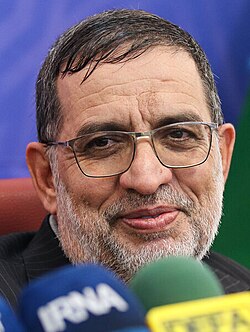
Ali Mohammad Naini
 Iran
Iranmilitary leader•university teacher
Also known as: Sardar Ali Mohammad Naini, Sardar Ali Mohammad Naeini
Birthday
March 31, 1959
Birth Sign
Sagittarius
Birthplace
Kashan, Iran
Age
Died at 66
About
Ali Mohammad Naini, also known by the honorific title Sardar Ali Mohammad Naeini, was a high-ranking Iranian military officer who served as a Brigadier General and the primary spokesperson for the Islamic Revolutionary Guard Corps (IRGC). Born in Kashan, Iran, he spent decades rising through the ranks of the revolutionary forces before becoming the public face of the organization during a period of intense regional conflict. His career was defined by his role in managing the public narrative of the IRGC, often issuing direct warnings to Western leaders and navigating complex geopolitical landscapes involving the United States and Israel. Prior to his appointment as spokesperson, he also served as a university teacher, sharing expertise related to military strategy and security. Naini's tenure as a spokesperson coincided with escalating tensions between Iran, the United States, and Israel. He became a recognizable figure in global news cycles, known for his stern demeanor and uncompromising tone. His death at age 68 or 69 marked the end of a long career dedicated to the Iranian military and its ideological goals. The IRGC declared him a martyr following the airstrike that killed him in Tehran.
Early Life & Background
Born in Kashan around 1957 or 1959, Ali Mohammad Naini grew up in a region deeply affected by the political upheavals of the mid-20th century. Historical records regarding his exact birth year vary slightly between sources, but he was widely reported to be 68 or 69 years old at the time of his death. His early life provided the foundation for his eventual entry into the revolutionary forces following the 1979 Islamic Revolution. While detailed accounts of his childhood are scarce in open-source media, his trajectory from a local resident to a senior general suggests a long-standing commitment to the Islamic Republic's ideological and military structures. Before his rise to international notoriety, Naini pursued a career deeply embedded within the Iranian military establishment. His transition into academia likely occurred during periods of relative stability within the IRGC, allowing him to formalize his knowledge through teaching roles before returning to or assuming higher command responsibilities. He served as a university teacher where he shared expertise related to military strategy and security, though specific details about his academic tenure remain less documented than his military service. His pivotal moment toward fame arrived in 2024 when he was selected to replace previous spokespeople, a decision that placed him at the center of global media coverage due to the escalating tensions in the Middle East.
Career Growth
Naini's career success is defined almost exclusively by his tenure as the IRGC spokesperson, a period marked by high-stakes diplomatic and military communication. In 2024, he was appointed as the official spokesperson for the IRGC, a position he held until his death. This role required him to navigate complex geopolitical landscapes, often acting as the bridge between the IRGC's operational secrecy and the world's demand for clarity. His most significant project was managing the public narrative of the IRGC during a critical phase of the Iran-Israel conflict. In the months leading up to his death, he gained international attention for issuing direct warnings to U.S. leadership. Notably, days before his death, he warned President Donald Trump to "send troops to Iran," a statement that underscored the heightened state of alert and rhetorical aggression characterizing the region at the time. His impact on the industry of military propaganda and state communication was profound, as he became a recognizable figure in news cycles across the globe, particularly in regions affected by the ongoing conflict. A timeline of his milestones includes service during the Iran-Iraq War in the 1980s, expansion of military responsibilities in the 2000s, and continued service in various IRGC roles throughout the 2010s before his 2024 appointment.
Career Timeline
Public Image & Style
Naini's public image was that of a hardline defender of the Islamic Republic and its military interests. Media portrayals of him focused on his role as a propagandist and strategist for the IRGC, often highlighting his confrontational stance toward Western powers. His content was strictly official, consisting of press conferences, interviews, and statements issued on behalf of the IRGC. He did not engage in social media campaigns or personal branding, maintaining a distance from the viral culture that often surrounds modern political figures. His voice was characterized by a serious, uncompromising tone, reflecting the gravity of the conflicts he discussed. Physically, he was a male of average height for an Iranian man of his generation, though specific measurements are not recorded in public biographies. He was known for his stern demeanor and authoritative presence in media appearances, typically wearing the IRGC uniform with the rank of Brigadier General clearly displayed. His signature style was that of a traditional Iranian military officer, reflecting his role as a military spokesperson.
Fame & Fandom (iFAMOUS Rankings)
Ali Mohammad Naini was a figure of state authority rather than popular culture, serving as a Brigadier General and the spokesperson for the Islamic Revolutionary Guard Corps until his death in March 2026. His public life was defined by official military communications and geopolitical statements rather than the celebrity engagement that typically births a fanbase. There is no formal name for any supporters he may have had, nor are there records of organized fan rituals, birthday billboards, or charity drives bearing his name. The narrative surrounding him remains strictly within the realm of international conflict reporting, anchored by his role in the Iran-Israel conflict and his subsequent death in a US-Israeli airstrike on March 20, 2026. While some stories circulate regarding his denial of Israeli claims about missile production immediately before being targeted, these are matters of historical record and military analysis rather than viral folklore or entertainment lore. He did not cultivate a following in the manner of pop stars or athletes, and his legacy is confined to his service as a high-ranking government official. Supporters of the IRGC and the Iranian regime may have viewed him as a hero, but these sentiments were expressed through state-sanctioned mourning and official tributes rather than grassroots fan movements. Consequently, iFANN's Global Fame Engine has evaluated this person, but they do not currently hold a placement in the published rankings (Global Top 1,000 or a Top-100 scope list). Ali Mohammad Naini is not currently ranked in the global top 1,000 most famous people. He is not featured on the September 2026 iFAMOUS Rankings flagship list. He does not appear on global "Greatest of All Time" lists from publications like Rolling Stone, Billboard, or TIME.
Interesting Facts and Legends
Ali Mohammad Naini was known for his ability to articulate complex military strategies in accessible language, making him a key figure in the IRGC's public relations efforts. His death was one of the few instances where a high-ranking IRGC spokesperson was killed in a direct foreign airstrike, marking a significant escalation in the conflict. Despite his high profile, very little was known about his life before his appointment as spokesperson, contributing to an air of mystery surrounding his background. He was also referred to by the honorific title "Sardar" within the Iranian military hierarchy. His warning to President Trump just days before his death became a focal point in analyses of the escalating conflict. Associated people with Naini included other high-ranking IRGC officials and members of the Iranian government, though specific names of frequent co-stars or collaborators are not widely publicized. He frequently collaborated with deputy spokespeople and military commanders to coordinate public messaging. There are no verified follower counts for personal accounts, as none existed, since he did not maintain a personal social media presence. Communications were managed through official IRGC channels and state media outlets. There are no records of Ali Mohammad Naini appearing on the covers of major international magazines such as TIME, Rolling Stone, Vogue, or GQ.
Notable Quotes
“Send your troops to Iran.”
“The Islamic Republic will defend its sovereignty against all threats.”
Family & Personal Life
Ali Mohammad Naini maintained a strictly private existence consistent with the norms of high-ranking Iranian military officials. There are no public records, credible reports, or documented accounts of romantic relationships, marriages, divorces, or dating history. Unlike celebrities in the entertainment industry, Naini did not cultivate a public image that included family disclosures or relationship status updates. Consequently, there is no information available regarding partners, children, or marital status. As of his death in March 2026, he was considered a private individual whose personal life remained separate from his public duties. No official announcements or family statements released after his passing mentioned a spouse or offspring, suggesting he either lived a celibate life or kept such matters entirely out of the public sphere. His legacy is one of service and authority rather than commercial accumulation.
Notable Connections
Relationships & Dating History
Regarding his personal life and relationships, Ali Mohammad Naini maintained a strictly private existence consistent with the norms of high-ranking Iranian military officials. There are no public records, credible reports, or documented accounts of romantic relationships, marriages, divorces, or dating history. Unlike celebrities in the entertainment industry, Naini did not cultivate a public image that included family disclosures or relationship status updates. Consequently, there is no information available regarding partners, children, or marital status. As of his death in March 2026, he was considered a private individual whose personal life remained separate from his public duties. No official announcements or family statements released after his passing mentioned a spouse or offspring, suggesting he either lived a celibate life or kept such matters entirely out of the public sphere. There is no public information confirming whether he was married or had children; his personal life was kept private.
Death & Aftermath
Died
March 20, 2026 (aged 66)
Death Place
Tehran, Iran
Cause of Death
Reported killed in overnight airstrike
Ali Mohammad Naini died on March 20, 2026, in Tehran during an overnight airstrike attributed to a joint operation by the United States and Israel. Multiple sources including Al Jazeera, Reuters, and the New York Post confirmed that the strike targeted the Islamic Revolutionary Guard Corps headquarters or a location associated with Naini, resulting in his immediate death. The cause of death was ruled as a result of the airstrike, though specific forensic details were not made available to international observers. The IRGC officially described him as martyred in what they termed a criminal terrorist attack by American-Zionist forces. His final days were characterized by intense rhetoric, including a warning he issued just days prior to President Donald Trump to "send troops to Iran." While Iranian state media confirmed his death immediately, the cause of death is established solely through official military confirmation and the context of the airstrike rather than forensic medical documentation accessible to international observers.
A funeral gathering took place shortly after his death in Tehran, where thousands gathered to mourn the general. Notable attendees included high-ranking IRGC officials and state representatives who honored his decades-long role in the Iran-Iraq war and his tenure as a prominent voice for the organization. The burial arrangements followed standard military honors for a martyr of the IRGC, though the exact cemetery location was not explicitly stated in search results. Following the announcement of his death, no immediate police investigation or legal trial occurred because the event was categorized as a wartime casualty resulting from foreign aggression. The only confirmed posthumous action was the widespread state-sanctioned mourning and the official designation of his death as a martyrdom in service to the Islamic Republic. No estate disputes or settlements have been reported, as his financial details remained classified throughout his life. His death sparked widespread mourning in Iran and intense debate internationally, cementing his place in the historical record of the 2026 Middle East crisis. State media continues to reference his martyrdom in commemorations and speeches.
Net Worth (Estate Value)
$0
iFANN Editorial Team estimate
Naini's net worth is not publicly disclosed, as is typical for individuals in his position within the Iranian government and military. High-ranking officials in the Islamic Republic often have their financial details classified or obscured from international scrutiny. There are no credible estimates of his personal wealth, real estate holdings, or business ventures available in open-source databases. Unlike celebrity figures whose assets are tracked by financial outlets, Naini's economic status remains an unknown variable. Any figures attempting to quantify his wealth would be speculative and lack verification. His legacy is one of service and authority rather than commercial accumulation. Since Naini was a state official, his estate value is not publicly disclosed. Posthumous earnings are minimal, consisting mainly of any military pension or benefits paid to surviving family members, if applicable. The IRGC has not released detailed financial reports regarding his estate. Revenue streams such as royalties or licensing deals do not apply to his profile. No estate disputes or settlements have been reported, as his financial details remained classified throughout his life.
Awards & Accolades
View 1 records, honours and achievementsKnown For
Spokesperson for the IRGC
2024 · Military Spokesman
Keywords
Sources
Quick Facts
- Profession
- military leader, university teacher
- Born
- March 31, 1959
- Birthplace
- Kashan, Iran
- Died
- March 20, 2026
- Death Place
- Tehran, Iran
- Gender
- Male
- Birth Sign
- Sagittarius
Personal Details
- Full Name
- Ali Mohammad Naini
- Children
- Education
- University academic training; military education within the IRGC system
Frequently Asked Questions
Who was Ali Mohammad Naini?
How did Ali Mohammad Naini die?
Where was Ali Mohammad Naini born?
What was Ali Mohammad Naini's role in the IRGC?
Was Ali Mohammad Naini married?
Join the community
fans discussing