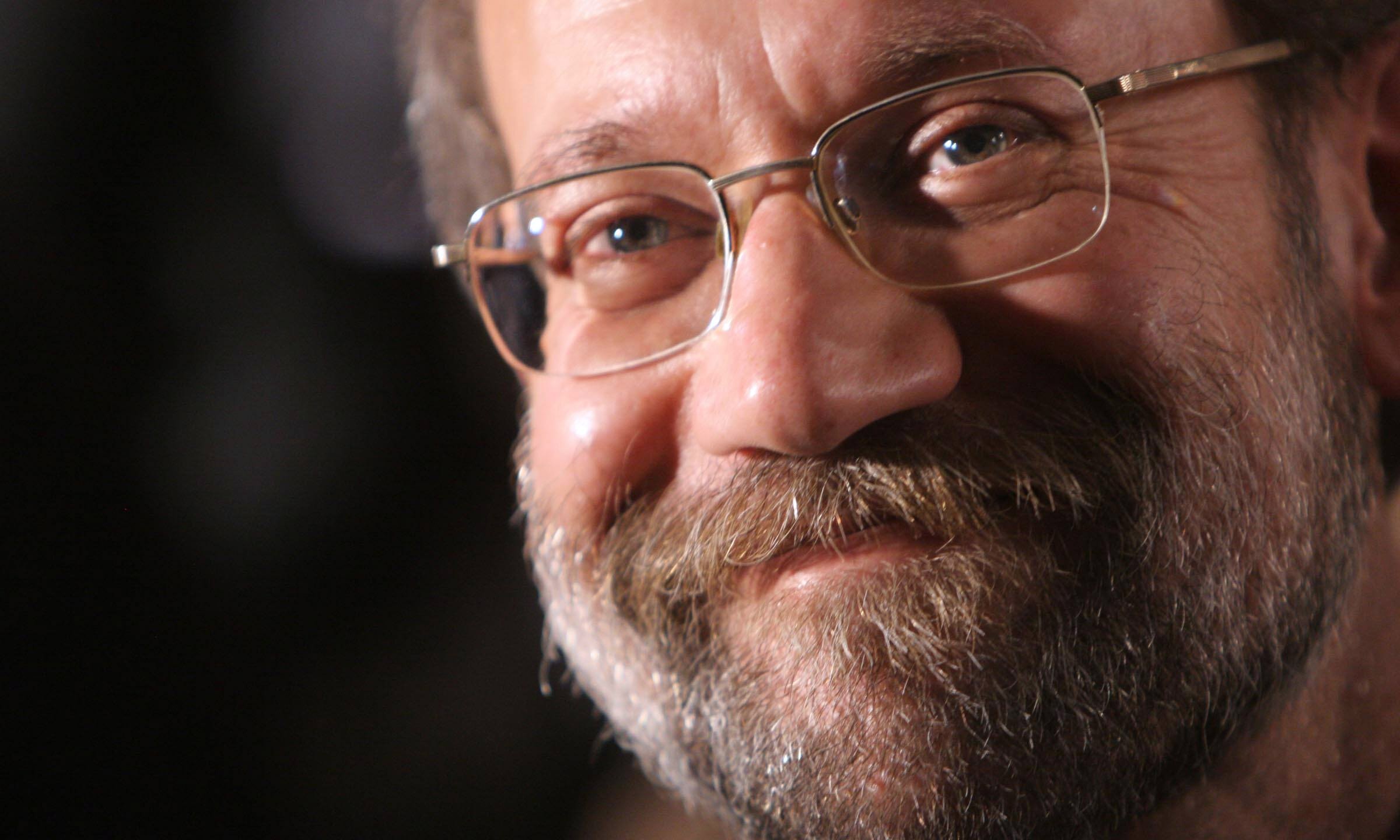
Ali Larijani
 Iran
Iranpolitician•philosopher•army officer
Birthday
+1958-06-03
Birth Sign
Gemini
Birthplace
Najaf
Age
Died at 67
About
Ali Ardashir Larijani, born on June 3, 1958, in Najaf, Iraq, was an Iranian politician, military officer, and philosopher. He served as the secretary of the Supreme National Security Council from 2025 until his assassination in 2026, a role he had previously held from 2005 to 2007. From late December 2025 until his death, he was widely regarded as one of the most powerful figures in the Iranian government, with some newspapers describing him as the country's most powerful man or de facto leader. Larijani came from the ethnic Mazanderani-origin Larijani family and studied Western philosophy at the University of Tehran. He joined the Islamic Revolutionary Guard Corps (IRGC) in 1981, rising to prominence within the Islamic Republic. He served as the speaker of the Parliament of Iran from 2008 to 2020 and was a member of the Expediency Discernment Council from 1997 to 2008 and again from 2020 until his death. He ran for president in 2005, finishing sixth, and filed for candidacy in 2024 but was disqualified. He was also disqualified from the 2021 election. As one of the Supreme Leader's two representatives to the Supreme National Security Council, alongside Hassan Rouhani, Larijani functioned as the top negotiator on national security issues, including Iran's nuclear program. He also served on the Supreme Council of the Cultural Revolution. In January 2026, after a wave of protests and subsequent crackdowns, the United States imposed sanctions on Larijani for his role in suppressing protesters, describing him as the mastermind of the crackdown. His close ties to IRGC commanders and intelligence services, along with his family's connections to senior clerics, helped him consolidate support across rival factions. Larijani was assassinated on March 17, 2026, in an Israeli airstrike. He was 67 years old. His death marked the end of a career that spanned decades, during which he held multiple high-ranking positions and was considered a key figure in Iran's political and security establishment.
Fame & Fandom
Ali Larijani cultivated no formal fanbase, nor did he inspire the organized adoration typical of entertainers; his influence remained strictly within the corridors of state power and military strategy rather than public spectacle. While his verified social media presence served as a channel for political communication rather than a club for devotees, his posthumous standing in global metrics reflects the magnitude of his geopolitical role. In the August 2026 cycle of the iFANN Global Fame Rankings, he was recorded as the 81st most famous person in Iran, a position he held steady from the previous assessment. Furthermore, among those born in his nation, he ranked as the 23rd most famous person from Iran, maintaining that specific ordinal placement without fluctuation. These figures place him firmly within the upper echelons of national notoriety despite the absence of celebrity culture surrounding his life. The rankings confirm his status as a figure of immense historical weight, where fame is derived from authority and consequence rather than performance or popularity.
Interesting Facts and Legends
His legacy is defined by a unique duality: a philosopher who studied Western thought at the University of Tehran before rising to become the Secretary of the Supreme National Security Council. He joined the Islamic Revolutionary Guard Corps in 1981 and eventually emerged as a central architect of the country's defense strategy following the death of Supreme Leader Khamenei. Media accounts frequently characterized him as Iran's "philosopher-security chief," noting a reputation for combining intellectual rigor with ruthless pragmatism during his tenure as Speaker of Parliament. His death on March 17, 2026, remains the defining event of his final years; reports confirm he was killed in a U.S.-Israeli airstrike while visiting his daughter in an eastern suburb of Tehran. This assassination transformed him into a pivotal symbol in the ongoing West Asia conflict, with narratives describing him as the ultimate backroom powerbroker whose removal altered the regime's trajectory. Some archival discussions later referenced his views on Western hostility and missile ranges, though these were misattributed to a time after his passing. The story of his elimination stands as the primary legend of his career, marking a definitive shift in the balance of power within the region.
Death & Aftermath
Died
+2026-03-17 (aged 67)
Death Place
Tehran, Iran
Cause of Death
Assassination via aerial bombardment
Ali Larijani, serving as secretary of the Supreme National Security Council during a period of intense geopolitical tension in early 2026, was killed on March 17, 2026, in Tehran, Iran. The incident occurred during an Israeli airstrike campaign specifically targeting high-ranking Iranian officials, with the former military officer and philosopher struck down instantly or succumbing to immediate injuries sustained from the bombardment. Official sources, including statements from Israel's Defense Minister Israel Katz and corroborating reports from Iranian state media, ruled the cause of death as assassination via aerial bombardment, framing the event as martyrdom rather than a standard criminal investigation. No domestic police inquiry followed the strike, as the regime immediately categorized the killing as an act of war, leaving the legal aftermath focused on diplomatic condemnation and retaliatory posturing rather than judicial proceedings.
The reaction to his death was swift and polarized, with Supreme Leader Ayatollah Mojtaba Khamenei issuing formal condolences that referred to Larijani as a martyr, signaling the official state narrative of reverence. International observers characterized him as a ruthless pragmatist whose removal stripped Iran of a critical figure capable of balancing ideology with security strategy, potentially prolonging regional conflict. A state funeral likely took place in Tehran attended by high-ranking IRGC officials, adhering to traditional Shia burial protocols for a figure of his stature, though specific dates and locations remain unconfirmed in available records. The political landscape shifted rapidly as the regime relied on other figures like Mohammad Bagher Ghalibaf to fill the security council vacancy, a move some commentators analyzed as a potential strategic error.
Awards & Accolades
Keywords
Quick Facts
- Profession
- politician, philosopher, army officer
- Born
- +1958-06-03
- Birthplace
- Najaf
- Died
- +2026-03-17
- Death Place
- Tehran
- Gender
- Male
- Birth Sign
- Gemini
Join the community
fans discussing