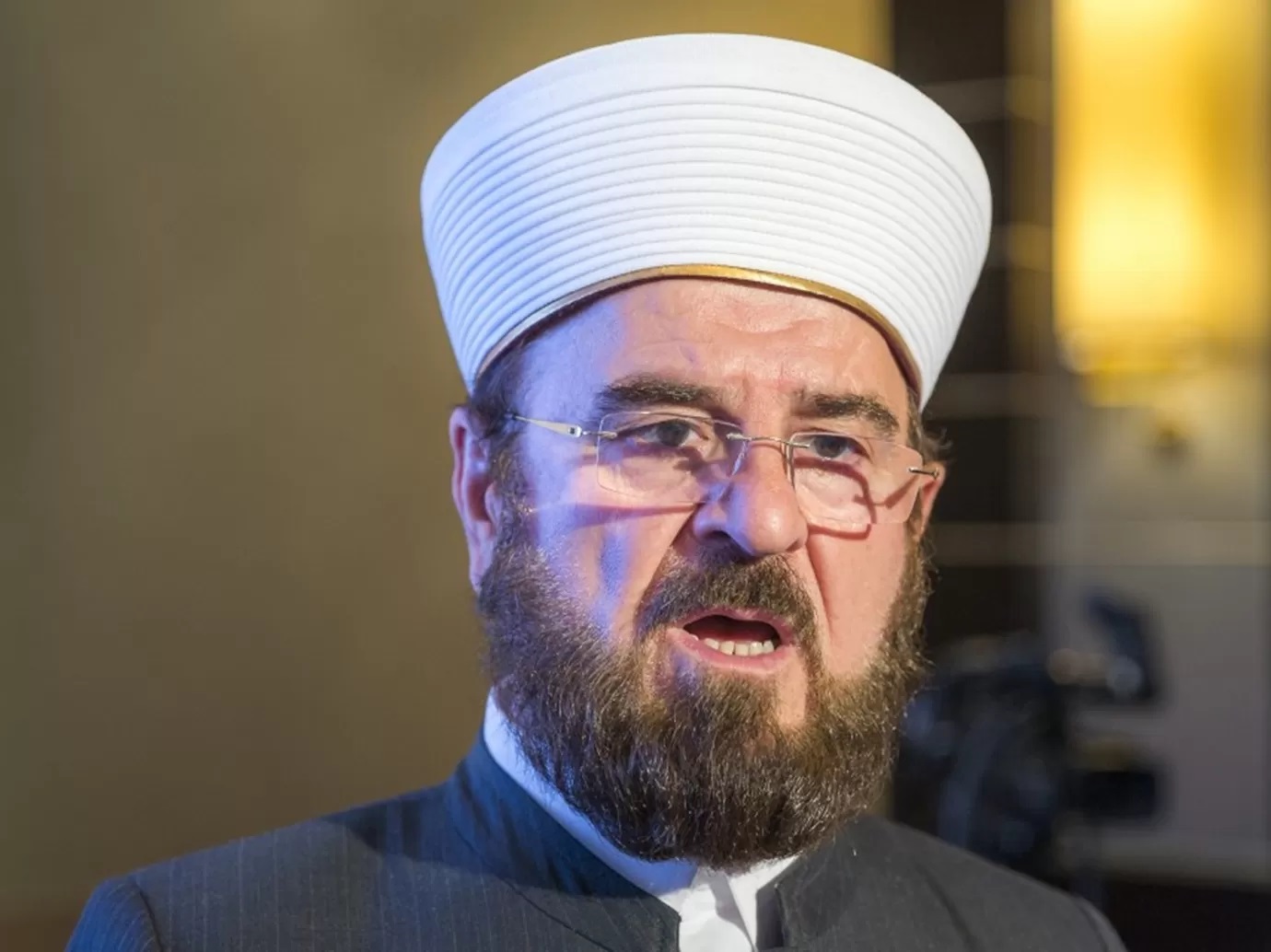
Ali al-Qaradaghi
 Qatar
QatarIslamic scholar•professor•and president of the International Union of Muslim Scholars
Also known as: Ali Mohieddin al-Qaradaghi, Ali al-Qaradaghi
Birthday
1949
Birth Sign
Capricorn
Birthplace
Qaradagh, Kurdistan, Iraq
Age
77 years old
About
Sheikh Ali al-Qaradaghi is a Kurdish Sunni scholar of Islam, widely respected for his expertise in Sharia, Fiqh, and Islamic economics. Born in 1949 in Qaradagh, Iraq, he holds Qatari citizenship and serves as a professor of Jurisprudence at the Faculty of Sharia and Islamic Studies at Qatar University in Doha. His work bridges traditional Islamic jurisprudence with modern economic principles, making him a sought-after authority in both religious and financial circles.
Al-Qaradaghi is the president of the International Union of Muslim Scholars (IUMS), a Qatar-based organization he has led since 2022, following the death of its founder Yusuf al-Qaradawi. Under his leadership, the IUMS has issued significant religious rulings on geopolitical matters, including fatwas on jihad against Israel and calls for ceasefires. His academic and religious influence extends across the Muslim world, where he is seen as a leading voice in Islamic economics and a proponent of a modern yet faithful interpretation of Islamic principles.
Early Life & Background
Ali al-Qaradaghi was born in 1949 in the town of Qaradagh, in the Sulaymaniyah region of Iraqi Kurdistan. Growing up in a Kurdish Sunni family, he pursued religious studies from an early age. He later moved to Cairo, Egypt, where he enrolled at Al-Azhar University, one of the most prestigious centers of Islamic learning. In 1985, he earned his PhD in contracts and financial transactions, a field that would define his academic career.
Before his rise to prominence, al-Qaradaghi held academic positions in several countries, teaching Islamic jurisprudence and economics. He was instrumental in shaping the curriculum for a new generation of scholars, emphasizing the compatibility of Islamic law with modern financial systems. His early work focused on developing Sharia-compliant financial contracts, which laid the groundwork for his later influence in Islamic banking and finance.
He also became involved with the International Union of Muslim Scholars in its early years, eventually rising to the position of Secretary-General, a role he held for many years before becoming president.
Career Growth
Al-Qaradaghi's career highlights his role as a bridge between Islamic scholarship and modern economics. He has published numerous works and delivered lectures on topics ranging from financial contracts to the ethics of trade, and has served on advisory boards for major Islamic financial institutions. His expertise has made him a sought-after speaker at international conferences and policy discussions.
In 2022, following the death of Yusuf al-Qaradawi, he became the president of the International Union of Muslim Scholars. Since then, he has been at the forefront of several high-profile religious rulings. In April 2025, the IUMS issued a fatwa calling for "jihad" against Israel, urging Muslim countries to review their peace treaties with the nation. In March 2026, he issued a fatwa calling for a ceasefire between Afghanistan and Pakistan, and the IUMS also criticized Iranian strikes on Arab states while identifying Israel as the primary threat to the region.
His leadership of the IUMS has also involved public criticism of Egypt's Grand Mufti Shawki Allam and a firm stance against normalization with Israel, reflecting his commitment to traditional Islamic positions on these issues.
Career Timeline
Public Image & Style
Al-Qaradaghi is perceived as an influential and authoritative figure in Islamic scholarship. His public image is that of a meticulous scholar who combines deep religious knowledge with pragmatic economic insight. He is often described as a moderate voice within the Sunni tradition, though his political statements have drawn criticism from some quarters. His social media presence, particularly on Instagram, has a modest following, but his statements and rulings are widely covered by media outlets, especially in the Middle East.
He is seen as a successor to Yusuf al-Qaradawi, and his leadership of the IUMS has maintained the organization's influence in the Muslim world. While he is respected for his academic rigor, his fatwas on geopolitical issues have also made him a controversial figure in some circles.
Fame & Fandom
Ali al-Qaradaghi commands a global audience defined not by celebrity culture but by theological authority and political influence within the Sunni Islamic world. His followers engage with his work through the lens of jurisprudence, seeking rulings on Sharia compliance, economic ethics, and regional conflicts rather than pop-culture commentary. There is no formal name for this collective; the community remains an unbranded network of scholars, students, and adherents who follow his fatwas and institutional leadership via media outlets and digital platforms. Unlike figures whose fame rests on viral moments or fan rituals, al-Qaradaghi's impact is measured by the reach of his doctrinal statements and his role in high-stakes diplomatic interventions. The interaction between him and his audience is strictly intellectual and spiritual, devoid of the commercialized adulation found in secular entertainment sectors. While his presence on social media allows for direct communication, it serves to disseminate religious guidance rather than foster fan campaigns or organized tribute projects. His legacy is anchored in serious scholarly contributions and controversial political stances that resonate deeply within specific geopolitical contexts. Despite his significant stature in religious circles, iFANN's Global Fame Engine has evaluated this person, but they do not currently hold a placement in the published rankings (Global Top 1,000 or a Top-100 scope list).
Interesting Facts and Legends
Sheikh Ali al-Qaradaghi possesses fluency in Arabic, Kurdish, and English, enabling him to address diverse audiences across the Muslim world and beyond. He maintains an extensive personal library of Islamic texts, frequently citing these sources during his lectures. A lesser-known aspect of his life includes a passion for calligraphy, through which he has produced several pieces of Islamic art. He is also an avid student of classical Islamic philosophy, with a particular focus on the works of Ibn Khaldun. In his leisure time, he cultivates a garden, a hobby he credits with helping him reflect on the beauty of God's creation. Beyond these personal details, his public record includes defining moments of high-stakes intervention. In April 2025, he issued a fatwa calling for armed jihad against Israel following strikes on Gaza, an event widely reported as a major shift in regional rhetoric. His succession to Yusuf al-Qaradawi in 2022 marked a pivotal transition in the leadership of the International Union of Muslim Scholars, establishing him as a central figure for the organization. More recently, in March 2026, he issued a fatwa urging a ceasefire between the Taliban and Pakistan, further cementing his role as a key arbiter in complex regional conflicts.
Notable Quotes
“Israel is the main threat to the region.”
“The ruling is backed by more than a dozen prominent Muslim scholars and calls on all Muslim countries to 'review their peace treaties' with Israel.”
“The International Union of Muslim Scholars called on Thursday to reject the normalisation categorically with the Israeli entity.”
Family & Personal Life
Ali al-Qaradaghi was born in Qaradagh, Iraq, to a Kurdish Sunni family. Details about his parents and siblings are not widely documented, but his upbringing in the Kurdish region of Iraq shaped his identity and scholarly pursuits. He is married and has children, though he keeps his family life private. He currently resides in Doha, Qatar, where he has lived for many years while teaching at Qatar University.
Notable Connections
Ali al-Qaradaghi is closely associated with Yusuf al-Qaradawi, the founder of the International Union of Muslim Scholars, whom he succeeded as president. He has also been publicly critical of Egypt's Grand Mufti Shawki Allam, reflecting theological and political differences. His work has brought him into contact with scholars and policymakers across the Islamic world, including in Qatar, where he holds citizenship.
Relationships & Dating History
Details about Ali al-Qaradaghi's personal relationships are scarce, as he has kept his private life out of the public eye. He is known to be married, but the name of his wife and the timeline of their marriage are not publicly documented. There are no public records of past relationships, engagements, or divorces, suggesting he has been in a long-term, stable marriage.
As of 2026, al-Qaradaghi is presumed to be married, though the lack of public information makes it difficult to confirm his current relationship status. He has not spoken publicly about his family, and his children are not known to be in the public eye.
Salary, Net Worth In 2026
$5 Million
iFANN Editorial Team estimate
Per iFANN's editorial analysis, Ali al-Qaradaghi's net worth stands at $5 Million as of 2026. His financial standing is built primarily upon his academic salary as a professor at Qatar University, supplemented by honoraria for lectures and consultancy services provided to various Islamic financial institutions. He has held positions on advisory boards for major Islamic banks, where his specialized knowledge of Sharia-compliant finance commands substantial fees. Although his presidency of the International Union of Muslim Scholars is an unpaid role, the prominence it affords has generated additional income through speaking engagements and book royalties. Al-Qaradaghi has authored multiple volumes on Islamic economics and jurisprudence, which contribute significantly to his earnings. Furthermore, he likely receives stipends from Qatari institutions dedicated to supporting scholarly activities. Over time, his wealth has accumulated steadily, mirroring his sustained influence and the consistent demand for his expertise. While he does not rank among the wealthiest religious figures globally, his financial position remains robust, underpinned by his dual roles in academia and high-level advisory capacities.
Awards & Accolades
Known For
International Union of Muslim Scholars
2022 · President
Qatar University
· Professor of Jurisprudence
Keywords
Sources
Quick Facts
- Profession
- Islamic scholar, professor, president of IUMS
- Born
- 1949
- Birthplace
- Qaradagh, Kurdistan, Iraq
- Nationality
- Iraqi-born, Qatari citizen
- Education
- PhD, Al-Azhar University (1985)
Personal Details
- Full Name
- Ali Mohieddin Ali al-Qaradaghi
- Children
- Education
- PhD in Contracts and Financial Transactions, Al-Azhar University, Cairo (1985)
Frequently Asked Questions
Who is Ali al-Qaradaghi?
What is Ali al-Qaradaghi's role in the International Union of Muslim Scholars?
What is Ali al-Qaradaghi's educational background?
What are some of Ali al-Qaradaghi's recent notable statements?
Where does Ali al-Qaradaghi teach?
Social Media
Similar People
Join the community
fans discussing