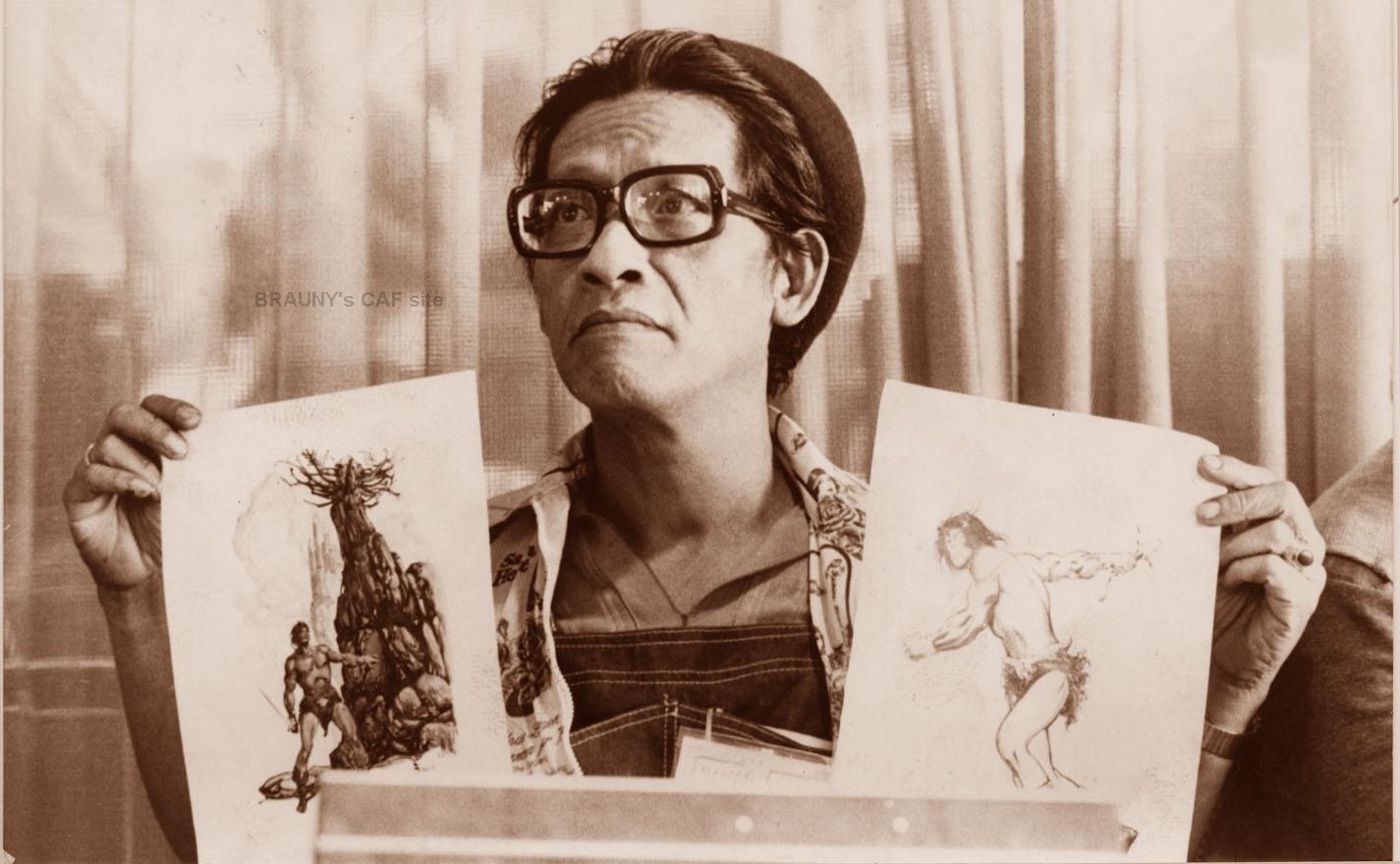
Alfredo Alcala
 Philippines
Birthday
August 23, 1925
Birth Sign
Virgo
Birthplace
Talisay, Negros Occidental, Philippines
Age
Died at 74
About
Alfredo P. Alcala was a Filipino comics artist and illustrator, celebrated for his masterful penciling and inking across decades of work. He created the enduring character Voltar and left a deep imprint on American comics through his contributions to titles like Tarzan and Conan the Barbarian. His style, marked by intricate linework and dramatic shading, earned him a devoted following among collectors and fellow artists. Alcala's legacy lives on through his vast body of work and the continued appreciation of his art in the industry.
Early Life & Background
Born in Talisay, Negros Occidental, Philippines, Alfredo Alcala grew up surrounded by the rich visual culture of his homeland. He began his career in the local comics industry, publishing in Alcala Komix Magazine, which showcased his early talent and helped him refine his craft. His big break came in 1963 when he created Voltar, a science fiction epic that became a sensation in the Philippines. This success opened doors internationally, and by the early 1970s, Alcala had gained recognition for his work in the genre, setting the stage for his move to American comics.
Career Growth
Alfredo Alcala's international career took off in the 1970s as he brought his distinctive style to major American publishers. He worked on numerous titles, including Tarzan and Conan the Barbarian, where his inking and penciling earned critical acclaim. His cover art for Tarzan #8 in 1978 and his original Conan illustrations are now prized by collectors. Alcala remained active until his death in 2000, and his influence continues to be felt. In 2013, the book Secret Teachings of a Comic Book Master: The Art of Alfredo Alcala was published, cementing his reputation. Even in 2026, his work inspired a Walmart exclusive Skeletor figure, showing his enduring appeal.
Career Timeline
Public Image & Style
Alfredo Alcala was revered as a master craftsman in the comic book world. His art, characterized by dense cross-hatching and dynamic compositions, set a high standard for inkers. Fans and critics alike praised his ability to bring depth and texture to every page. His work on Voltar and American titles like Tarzan and Conan made him a favorite among collectors, and his pieces are still sought after at auctions. Alcala's public image is that of a quiet genius whose work spoke volumes.
Fame & Fandom
August 2026 data confirms Alfredo Alcala holds a steady position as the 24th most famous person in Western Comics, a ranking that reflects his enduring influence on the industry's visual language. This placement within the iFANN Global Fame Rankings underscores how his work transcends generations of readers who discovered his art through reprints and digital archives rather than original newsstand visits. While no formal organization claims him as a mascot, the community surrounding his legacy operates as a global network of scholars, collectors, and illustrators who treat his techniques as sacred texts. There is no single name for this collective; instead, fans identify through shared reverence for his ability to merge fluid anatomy with dense, woodcut-style textures. The primary ritual involves deep-dive analysis sessions where artists dissect his brushwork to understand the rhythm he claimed was inspired by classical music. These study groups function less like modern fan clubs and more like masterclasses, keeping his methods alive through emulation rather than merchandise or social media campaigns. His market presence remains robust, with auction houses frequently featuring his original pages from titles like Tarzan and Conan the Barbarian. Recent commercial acknowledgments, such as Mattel releasing new figures based on his Skeletor designs, serve as contemporary validation of his mythos. The absence of organized activism or viral moments does not diminish his stature; it highlights a fame built entirely on the quality of the craft itself. In an era of celebrity culture, Alcala's reputation stands as a quiet monument to technical perfection, sustained by a niche but fiercely dedicated audience that values the artist's discipline over pop-culture spectacle.
Interesting Facts and Legends
Alfredo Alcala earned the nickname 'The Master' among peers due to his exceptional inking technique, often utilizing a fine brush to create effects mimicking woodcut prints. Despite his international acclaim, he remained humble, frequently crediting his Filipino roots for instilling his artistic discipline. He served as a generous mentor to younger artists, sharing his knowledge freely while maintaining a passion for classical music that he believed influenced the rhythmic flow of his linework. Legends of his career often center on his tenure as the primary illustrator for Marvel's Savage Sword of Conan series starting in the late 1970s, a period widely cited as his golden age in the West. Fans still retell the story of his 1977 illustration for Conan the Barbarian, which set a definitive benchmark for dynamic composition and ink density in sword-and-sorcery art. Another cornerstone of his lore is the creation of Voltar the Solar Warrior in 1963, a creator-owned property that became one of the first successful Filipino comics to gain international attention after he self-published it locally. Folklore also surrounds his design work for the Masters of the Universe franchise, where his dark, intricate linework defined the aesthetic of characters like Skeletor, a vision so strong it continues to inspire new toy releases decades after his death.
Family & Personal Life
Details about Alfredo Alcala's family are scarce. He was born to Filipino parents in Talisay and later moved to the United States, settling in Los Angeles. He kept his personal life private, and no public records detail his spouse or children. His artistic community became his extended family, with colleagues like John Buscema and Phil Yeh playing significant roles in his later career.
Notable Connections
Relationships & Dating History
Death & Aftermath
Died
April 8, 2000 (aged 74)
Death Place
Unknown
Cause of Death
Unknown
The industry's silence fell heavy in the wake of a career that had redefined the visual language of fantasy. When the news broke, tributes flowed not from grand memorials but through the quiet reverence of collectors and peers who recognized the master behind the ink. His passing marked the end of an era for the characters he breathed life into, leaving a void that no single artist could fill. Alfredo Alcala passed away on April 8, 2000. The specific circumstances surrounding his final days remain unrecorded in public archives, with no official statement released regarding the location of his death or the immediate events leading to his end.
While the date is fixed in the historical record, the cause of death was never publicly disclosed by family members or medical authorities. The aftermath of his death focused entirely on the preservation of his artistic legacy rather than personal grief. In 2013, the publication of Secret Teachings of a Comic Book Master: The Art of Alfredo Alcala served as a definitive retrospective, cementing his reputation for future generations.
Net Worth (Estate Value)
Information on Alfredo Alcala's personal net worth is not publicly available. As an artist, his income came from his work in comics, including page rates and royalties from reprints. After his death, his estate has likely earned from the continued sale of his artwork and licensing deals, such as the 2026 Skeletor figure inspired by his designs. However, no specific figures have been disclosed.
Awards & Accolades
Known For
Voltar
1963 · Creator
Tarzan
1978 · Cover artist
Conan the Barbarian
1977 · Illustrator
Keywords
Sources
Quick Facts
- Profession
- penciller, draftsperson, inker
- Born
- +1925-08-23
- Birthplace
- Talisay
- Died
- +2000-04-08
- Death Place
- Los Angeles
- Gender
- Male
- Birth Sign
- Virgo
Personal Details
- Full Name
- Alfredo P. Alcala
Frequently Asked Questions
Who was Alfredo Alcala?
When was Alfredo Alcala born and when did he die?
What is Alfredo Alcala best known for?
Where was Alfredo Alcala from?
What kind of art did Alfredo Alcala create?
Social Media
Similar People
Join the community
fans discussing