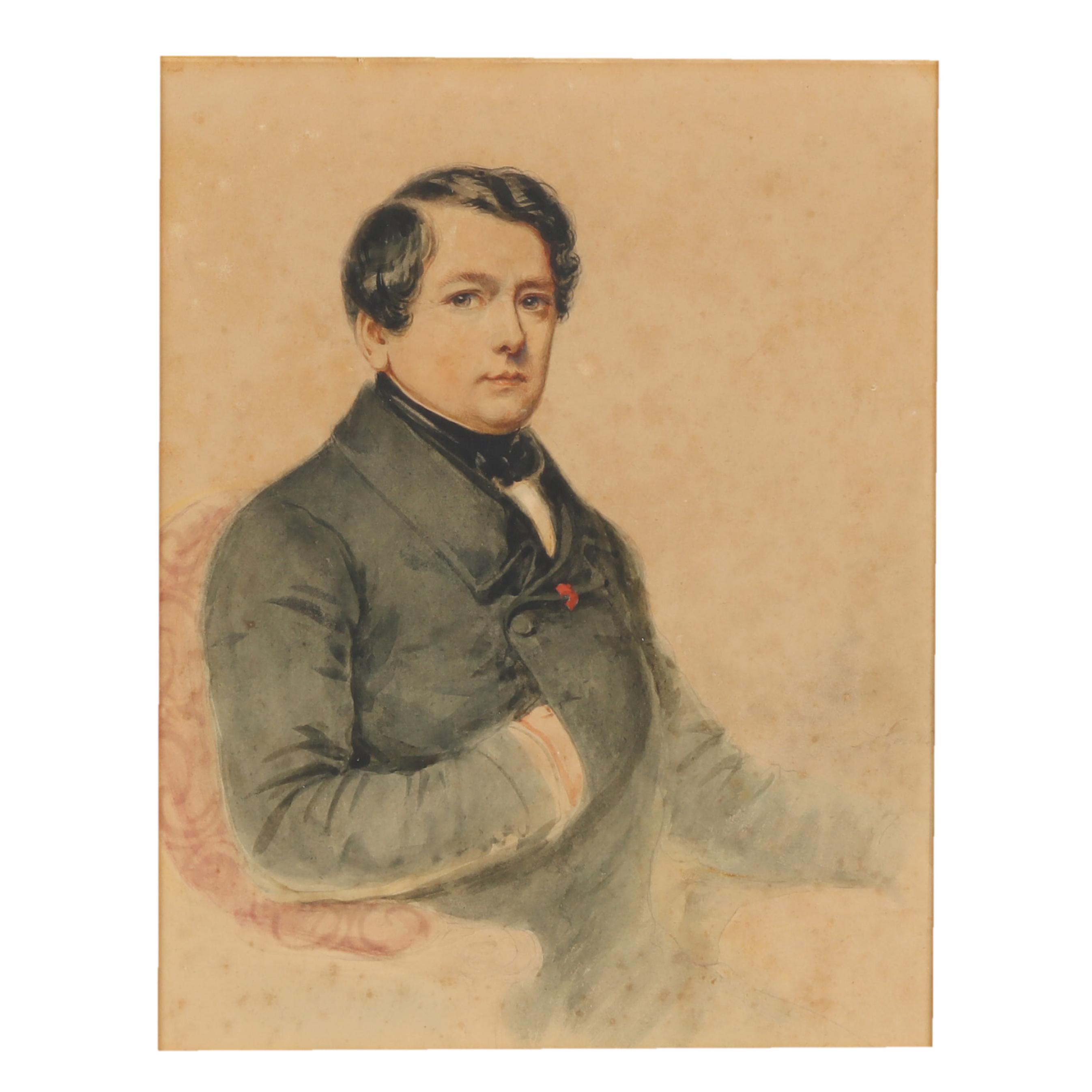
Alfred Vail
 United States
Also known as: Alfred Lewis Vail
Birthday
September 25, 1807
Birth Sign
Libra
Birthplace
Morristown, New Jersey, USA
Age
Died at 51
About
Alfred Lewis Vail was an American machinist and inventor who, with Samuel F. B. Morse, helped turn the electric telegraph from a laboratory curiosity into a working communications system. He is best known for his role in developing the Morse code signaling alphabet and for building and improving the hardware that made the first American telegraph lines function.
Vail's reputation rests on a partnership that has been argued over for more than a century and a half, and the argument has never fully closed. Modern scholarship, including work published by the Smithsonian Institution Archives, has restored much of his contribution to view, framing him as a forgotten figure in telegraph history. He remains a central figure in the early history of electrical communication, even if his name is far less familiar than his partner's.
He is remembered for the recording register that carried his name, for the portable set he designed for field use, and for the code structure he insisted was his own work. The credit dispute outlived him, and it is the reason his name keeps surfacing in histories of invention.
Early Life & Background
Alfred Lewis Vail was born on September 25, 1807, in Morristown, New Jersey, into one of Morris County's more prosperous industrial families. His father, Stephen Vail, owned and ran the Speedwell Iron Works, a going concern that gave the boy an unusual childhood: he grew up around forges, lathes, and the practical business of shaping metal. His mother was Bethiah Young Vail.
After public schooling in Morristown, Vail went to work as a machinist at his father's ironworks. The training was hands-on rather than theoretical, and it shaped everything he later did. He learned how to build things that had to function, not just look right on paper, and his formal education stayed in the practical mechanics lane rather than in science.
He later studied at New York University, and it was there, in the late 1830s, that he encountered Samuel F. B. Morse's telegraph experiments. The meeting redirected his career. In 1837 Vail witnessed a demonstration of Morse's crude apparatus and, with his father's financial backing, became Morse's partner, backer, and assistant. He built working models at Speedwell and helped prepare the equipment for Morse's patent application. By the time the partnership was formalized, Vail had already supplied the two things Morse most needed: money and mechanical skill.
Career Growth
The breakthrough came fast. In 1837, with Vail's father financing the venture, Vail and Morse developed and patented an electrical telegraph in the United States, and the two men worked out the signaling alphabet at Speedwell Ironworks. Vail's improvements to the recording register, a letter-embossing device that became known as the Vail register, were incorporated into the system demonstrated to officials in 1838.
The defining project was the Washington-to-Baltimore line, which opened in 1844. Vail operated the Baltimore end and helped send the first messages, including the famous "What hath God wrought." A telegraph key associated with that 1844 line is preserved by the Senate. Vail also designed a portable telegraph set that could be carried into the field, and he spent the years from 1837 to 1844 developing and commercializing American electrical telegraphy alongside his partner.
After 1844 he kept tinkering with telegraph improvements, but the commercial rewards went elsewhere. His technical contributions, the recording apparatus, the portable set, and by his own account the code structure itself, were absorbed into a system that bore another man's name. The work was real and it lasted; the ownership of it did not follow him.
Career Timeline
Public Image & Style
In his lifetime Vail was known as a skilled mechanic and a gentleman of means, not a celebrity. The public image that formed after his death is that of the overlooked partner: the man who did the work and watched someone else take the credit. That framing has proved durable because it is largely true. Historians and science writers return to him whenever they want to make a point about how credit gets assigned, and the Smithsonian's rehabilitation effort reinforced the picture of a practical genius buried under a famous name. He has no visual signature, no catchphrase, no media persona. His image is the argument itself.
Fame & Fandom (iFAMOUS Rankings)
iFANN has not yet collected fame data for Alfred Vail, so no ranking is available. He is not on the September 2026 iFAMOUS Rankings flagship list. Fame in the modern sense barely applies: he died in 1859, and his reputation lives in history books, museum archives, and the arguments of telegraph enthusiasts rather than in search traffic or social followings.
The audience he does have has no formal name. It consists of Morse code hobbyists, telegraph historians, and local New Jersey history groups who keep his name in circulation. They are the people who search for his grave, retell the code dispute, and push back when a documentary credits Morse with everything. The story they tell first is the code argument, that Morse code should properly be called Vail's code, a documented historical dispute rather than folklore. It is a small, informal, persistent fanbase, and it has been arguing his case for well over a century.
Interesting Facts and Legends
Vail's birthday is often listed online as making him a Sagittarius. It does not. September 25 puts him squarely in Libra, a small correction that has propagated across reference sites for years.
He was remembered locally as a Morris County legend long before historians took up his case, and "Alfred Vail grave" remains a steady search query among New Jersey history buffs. Two institutions in his home state carry his name: the Alfred Vail School in Morris Plains and the Alfred Vail Mutual Association water system in Shrewsbury Township, which New Jersey American Water acquired in April 2025. Neither is a memorial to his death; both are naming tributes to his place in local history.
His papers, spanning 1826 to 1918, ended up at the New Jersey Historical Society rather than in a family archive, which is why so much of what we know about his side of the partnership comes from institutional collections.
Family & Personal Life
Vail was the son of Stephen Vail, owner of the Speedwell Iron Works in Morristown, and Bethiah Young Vail. The family was prominent in Morris County, and the ironworks gave them both wealth and standing. He grew up in that household and stayed tied to it, remaining connected to Morristown and the Speedwell works throughout his adult years, and he was buried there after his death in 1859. Beyond that, standard references say little about his domestic life.
Notable Connections
Relationships & Dating History
Alfred Vail married Amanda Eno of New York. The couple had children, including a son named Stephen. No other romantic relationships are documented in credible sources, which is unsurprising for a 19th-century figure who died in 1859. Vail was married to Amanda Eno at the time of his death, and she was widowed upon it.
- MarriedAmanda Eno? - 1859Married until his death in 1859; the couple had children including a son, Stephen.
Death & Aftermath
Died
January 18, 1859 (aged 51)
Death Place
Morristown, New Jersey, USA
Cause of Death
Unknown
Alfred Lewis Vail died on January 18, 1859, in Morristown, New Jersey, the town where he had been born 51 years earlier. The published record does not establish a cause of death. No autopsy report, coroner's finding, or formal medical attribution survives in the standard references, and no account of a final illness or last public appearance has been documented. He was buried in Morristown; local records place his grave at Evergreen Cemetery.
What followed his death was less a funeral narrative than a slow, unresolved argument about credit. Vail had insisted for years that the dots-and-dashes structure of the telegraph code was his work, not Morse's. The Patent Office had credited Morse. In 1887, eighteen years after Morse died, an effort to establish Vail's claim formally came to nothing. The case has never been settled to everyone's satisfaction, and historians still disagree about how much of the code Vail actually devised.
Scholarly rehabilitation arrived in the twentieth and twenty-first centuries. The Smithsonian Institution Archives published research restoring Vail's role in developing the electromagnetic telegraph and the signaling alphabet, framing him as a forgotten figure in telegraph history. His papers, covering 1826 to 1918, are held by the New Jersey Historical Society under the reference MG 50. No formal awards existed for telegraphy in his lifetime, and no posthumous competitive awards are recorded, so his honors are scholarly and local rather than official.
Net Worth (Estate Value)
$1 Million
iFANN Editorial Team estimate
He died in 1859, and the financial record of his life is thin. What is known is that he never secured royalties commensurate with his contribution to the telegraph, and his later years in Morristown appear to have been comfortable rather than wealthy. The Vail family money came from the Speedwell Iron Works, which his father owned, and Alfred's own earnings from the telegraph partnership were modest.
Any figure attached to him today is necessarily speculative. iFANN's editorial research places the notional value of his estate and residual historical assets at roughly $1 million, a figure that reflects the archival and commemorative value of his papers and name rather than any documented fortune. His papers are held by the New Jersey Historical Society, and two New Jersey institutions carry his name, but neither generates income for an estate. There is no estate management, no posthumous licensing, and no royalty stream. The honest answer is that his financial legacy is negligible; his historical legacy is not.
Awards & Accolades
View 3 records, honours and achievementsKnown For
Morse code signaling alphabet
1837 · Co-developer
Washington-to-Baltimore telegraph line
1844 · Operator and equipment builder
Vail register
1838 · Inventor
Keywords
Sources
Quick Facts
- Profession
- inventor and machinist
- Born
- September 25, 1807
- Birthplace
- Morristown, New Jersey, USA
- Died
- January 18, 1859
- Death Place
- Morristown, New Jersey, USA
- Gender
- Male
- Birth Sign
- Libra
- Spouse
- Amanda Eno
- Children
- At least one son, Stephen
- Education
- Public schools in Morristown; New York University
Personal Details
- Full Name
- Alfred Lewis Vail
- Spouse
- Amanda Eno
- Children
- At least one son, Stephen
- Education
- Public schools in Morristown; New York University
Frequently Asked Questions
What did Alfred Vail invent?
Who really invented Morse code?
How did Alfred Vail die?
Where is Alfred Vail buried?
How old was Alfred Vail when he died?
Similar People
Join the community
fans discussing