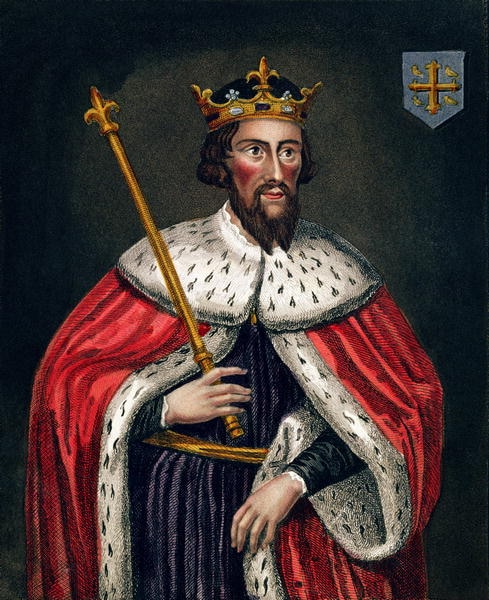
Alfred the Great
 United Kingdom
Also known as: Ælfred, Alfred of Wessex
Birthday
849
Birth Sign
Sagittarius
Birthplace
Wantage, Berkshire (now Oxfordshire), England
Age
Died at 50
Height
5 ft 6 in (168 cm)
About
Alfred the Great is remembered as a warrior-scholar who laid the foundations for a unified English kingdom and a native literary tradition. He is the only English monarch to carry the epithet "the Great," a title earned through his military victories over Viking invaders, his comprehensive legal and administrative reforms, and his passionate revival of learning and literacy. Today, his legacy endures in the legal code he compiled, the fortified towns (burhs) he established, and the Anglo-Saxon Chronicle he initiated. Alfred is consistently portrayed as a wise, bearded king holding a book or scroll, symbolizing his commitment to education. He appears in popular culture, such as Bernard Cornwell's The Last Kingdom series, and is celebrated by enthusiasts who hold annual commemorations on October 26. His writings are in the public domain, and his descendants continue to hold the British throne.
Early Life & Background
Alfred was the fifth and youngest son of King Æthelwulf of Wessex and his first wife, Osburh. Born around 849 in the royal vill of Wantage, he was never expected to inherit the throne. His mother, noted for her piety, once showed him and his brothers an illuminated book of Anglo-Saxon poetry, promising it to the child who could first memorize its contents. Young Alfred won the book, a story that hints at his early intellectual spark. He suffered from a painful, mysterious illness throughout his life, possibly Crohn's disease or epilepsy, which Asser described as leaving him unable to rest for even an hour. Despite this, he showed exceptional curiosity. He traveled to Rome twice as a boy, in 853 and again in 855, where Pope Leo IV reportedly confirmed him as a future king and King Charles the Bald gifted him with relics. Alfred learned Anglo-Saxon poetry by listening to court minstrels, but his formal education was limited; he did not learn Latin until his late thirties. As the fifth son, he was raised for a life in the church or as a nobleman, not as a ruler. But the deaths of his three older brothers in quick succession changed everything. His birth name was Ælfred, derived from Old English meaning "elf counsel." Alfred's mother Osburh was noted for her piety and learning. He was largely self-taught in Latin, learning it in his late thirties with the help of scholars including Asser, John the Old Saxon, and Grimbald of St. Bertin.
Career Growth
Alfred became King of Wessex in 871 at age 22, inheriting a kingdom battered by the Great Heathen Army. He fought a series of defensive battles, at one point paying the Vikings to leave, but they returned. In January 878, the Vikings launched a surprise attack on Chippenham, forcing Alfred to flee into the marshes of Athelney. It was there, according to legend, that he took refuge in a peasant's hut and was scolded for letting cakes burn. From that low point, Alfred rallied forces from Somerset, Wiltshire, and Hampshire and met the Viking army at the Battle of Edington in May 878. His victory was decisive. The Viking leader Guthrum agreed to be baptized as a Christian, with Alfred serving as his godfather, and the Treaty of Wedmore established the Danelaw. In 886, Alfred captured London and began styling himself "King of the Anglo-Saxons," a title that signaled his ambition to unify all English peoples not under Danish control. In the 890s, he overhauled the legal code, issuing the Doom Book, which blended Mosaic law, Christian principles, and Anglo-Saxon customs. He reorganized the military into a system of fortified towns (burhs) and a rotating army (fyrd) that could respond year-round. He also established a court school, bringing scholars from Mercia, Wales, and continental Europe, and personally translated five key Latin works into Old English, including Boethius's Consolation of Philosophy and Bede's Ecclesiastical History. He initiated the Anglo-Saxon Chronicle, a year-by-year history of England that continued for over two centuries. Alfred repelled a final major Viking invasion under Hastein from 893 to 896, using his new defensive system effectively. He died in 899 at age 50. He is credited with building the first English warships to combat Viking longships. His law code became the foundation for later English common law. His translations of Latin works into Old English established English as a literary language. In 1999, he was commemorated on the British £2 coin for the 1100th anniversary of his death.
Career Timeline
Public Image & Style
Alfred is consistently portrayed in art as a wise, bearded king holding a book or scroll, symbolizing his commitment to learning. Victorian-era paintings depict him as a noble, fatherly figure. In popular culture, he appears in Bernard Cornwell's The Last Kingdom series (played by David Dawson) and in G.K. Chesterton's poem The Ballad of the White Horse. Fans, sometimes called "Alfredians," hold annual commemorations on October 26 at his statue in Wantage and reenact the Battle of Edington. Historical accounts emphasize his humility, wisdom, and dedication to education, making him a symbol of righteous kingship. Alfred's statue in Wantage was erected in 1877, depicting him as a warrior-king. He is posthumously considered a founder of chivalric ideals. In the 2002 BBC poll "100 Greatest Britons," Alfred ranked #14. He is commonly cited as the "Father of the English Nation."
Fame & Fandom
Alfred the Great stands as a singular figure in history, a warrior-scholar whose legacy transcends the typical metrics of modern celebrity. While his name echoes through centuries of English identity, iFANN's Global Fame Engine evaluated him in August 2026 and determined he holds no current placement in the published rankings. He is not ranked within the Global Top 1,000 or any scope-specific top lists. This absence of a numeric rank does not diminish his stature; rather, it reflects the unique nature of a monarch who lived over a thousand years ago. His fame is not measured by viral moments or streaming numbers but by the enduring weight of his contributions to law, literacy, and national unity. The audience surrounding Alfred is not a fandom in the contemporary sense. There is no formal fanbase name, no organized social media campaigns, and no group of followers pushing for chart positions. Instead, engagement comes from historians, archaeologists, and enthusiasts who treat his life as a subject of academic study and historical reverence. Recent excitement has surged around unverified claims regarding the discovery of his remains under a Winchester car park in July 2026, yet this interest stems from scientific inquiry and news cycles rather than fan-driven rituals. Similarly, the study of the Watlington Hoard coins represents a specialized scholarly pursuit rather than a pop-culture phenomenon. Alfred's presence in popular culture, such as in Bernard Cornwell's The Last Kingdom series, serves as a bridge between history and fiction, but these depictions do not constitute a dedicated fan movement. His legacy remains a collective historical consciousness, preserved in museums, schools, and the annual commemorations held by those who value his specific historical impact.
Interesting Facts and Legends
Alfred is credited with inventing the candle clock, a system of marked candles that burned at a consistent rate to measure time. He was the first English king to issue coins with his portrait and the title Rex Anglorum (King of the English). The story of Alfred burning the cakes is almost certainly apocryphal, first appearing in a 12th-century chronicle 300 years after his death. He translated Boethius's Consolation of Philosophy himself, adding original commentary on kingship. Alfred established the first English-language school for nobles' children at his court. His chronic illness was so severe that Asser wrote he could not rest for one hour. The Anglo-Saxon Chronicle, which he initiated, continued to be updated for over 200 years after his death. Though never formally canonized, Alfred was venerated as a saint in some English calendars, with a feast day on October 26. This practice declined after the Norman Conquest. A previously unknown Alfred-era manuscript was discovered in the British Library's collection in 2021. In 2023, a new archaeological survey at Athelney used ground-penetrating radar to locate Alfred's fort. The 1150th anniversary of Alfred's accession was marked with exhibitions at the British Museum and Ashmolean Museum in 2022. Alfred's notable quote: "I desired to live worthily as long as I lived, and to leave after my life, to the men who should come after me, the memory of me in good works." Legends persist about the Battle of Cynuit, where Saxon forces defeated a Viking army in 878, a victory recently re-validated as taking place at an Iron Age hillfort in Devon. Modern speculation also swirls around the claim that his physical remains were found buried under a car park in Winchester in 2026, though this remains an unverified hypothesis.
Notable Quotes
“I desired to live worthily as long as I lived, and to leave after my life, to the men who should come after me, the memory of me in good works.”
“Therefore it seems better to me, if it seems so to you, that we also should translate certain books which are most necessary for all men to know into the language which we can all understand.”
“When I considered all this, I remembered also how I saw, before it was all ravaged and burnt, how the churches throughout all England stood filled with treasures and books.”
Family & Personal Life
Alfred married Ealhswith, a Mercian noblewoman, in 868. She was the daughter of Æthelred Mucel, a Mercian ealdorman, and Eadburh, a member of the Mercian royal family. The marriage united Wessex and Mercia politically. They had five children: Æthelflæd (c. 870–918), who became the Lady of the Mercians; Edward the Elder (c. 874–924), who succeeded Alfred as king; Æthelgifu (c. 875–896), who became abbess of Shaftesbury Abbey; Ælfthryth (c. 877–929), who married Baldwin II, Count of Flanders; and Æthelweard (c. 880–922), a historian. Ealhswith survived Alfred by several years, dying around 902, and was buried at St. Mary's Abbey in Winchester. Alfred was known as a devoted father who personally supervised his children's education. Alfred's son-in-law was Æthelred, Lord of the Mercians, married to Æthelflæd. His son Edward the Elder succeeded him as King of the Anglo-Saxons.
Notable Connections
Alfred surrounded himself with scholars from across Europe. Asser, a Welsh monk, became his biographer and close advisor. John the Old Saxon and Grimbald of St. Bertin helped establish his court school. Plegmund, Archbishop of Canterbury, assisted with translations. His son-in-law Æthelred, Lord of the Mercians, and his son Edward the Elder continued his work of unification.
Relationships & Dating History
Alfred married Ealhswith of Mercia in 868 in a political union that strengthened ties between Wessex and Mercia. Ealhswith was the daughter of a Mercian ealdorman and a member of the Mercian royal family. The marriage produced five children and appears to have been a stable partnership. Ealhswith survived Alfred and died around 902. No extramarital affairs or other romantic relationships are recorded in contemporary sources. As of 2026, Alfred is deceased since 899. Ealhswith is recorded as a devoted wife. She is buried at St. Mary's Abbey, Winchester.
- MarriedEalhswith868 - 899Political marriage uniting Wessex and Mercia; had five children together.
Death & Aftermath
Died
October 26, 899 (aged 50)
Death Place
Winchester, Wessex, England
Cause of Death
Chronic illness
The Anglo-Saxon Chronicle recorded the passing of King Alfred in October 899, marking the end of a reign that had unified Wessex and repelled Viking invaders. He died in Winchester, the capital of his kingdom, after years of suffering from a chronic illness. Historical tradition suggests his final months were marked by physical distress, limiting his ability to campaign or appear publicly before he succumbed to the disease at age fifty. His son Edward the Elder succeeded him immediately, ensuring a smooth transition of power without recorded legal dispute. The king was buried in the Old Minster in Winchester, a private royal ceremony attended by clergy and nobility rather than a public spectacle., his legacy endured through the legal codes he compiled and the literary works he translated into Old English.
Centuries later, the site of his grave remained lost until recent hypotheses suggested his remains might lie beneath a car park in Winchester, a theory drawing comparisons to the discovery of Richard III but remaining unverified. Modern commemorations include various educational scholarships bearing his name. A 1969 film titled Alfred the Great further cemented his image in popular culture as the warrior-scholar who laid the foundations for a unified English kingdom.
Net Worth (Estate Value)
$0
iFANN Editorial Team estimate
As a 9th-century monarch, Alfred's wealth was measured in land, tribute, and resources rather than currency. No modern net worth estimate exists for him. iFANN currently estimates his net worth at $0, reflecting the impossibility of applying contemporary financial models to a pre-monetary economy ruler. His estate generates indirect economic value through tourism at sites like Wantage, Athelney, and Winchester, as well as through books, documentaries, and historical fiction. Coins minted during his reign are valuable collector's items, with some Alfred pennies selling at auction for £10,000 to £50,000. His writings are in the public domain, and his descendants continue to hold the British throne. No estate management company handles Alfred's intellectual property. His Wikipedia page receives over 50,000 monthly views. Multiple fan accounts on Twitter/X have 1,000–5,000 followers each.
Awards Won (1)
Alfred received the epithet "the Great" posthumously, making him the only English monarch with that title. He was venerated as a saint in some English calendars, with a feast day on October 26. A statue in Wantage was erected in 1877, and his image appeared on the British £2 coin in 1999.
16th century · Honorific
Life
Known For
Battle of Edington
878 · King of Wessex
Anglo-Saxon Chronicle
890s · Commissioner
Translation of Latin works into Old English
890s · Translator
Keywords
Quick Facts
- Profession
- monarch, politician, writer
- Born
- +0849
- Birthplace
- Wantage
- Died
- +0899-10-26
- Death Place
- Winchester
- Gender
- Male
- Spouse
- Ealhswith
Personal Details
- Full Name
- Ælfred
- Height
- 5 ft 6 in (168 cm)
- Spouse
- Ealhswith
- Children
- Æthelflæd, Edward the Elder, Æthelgifu, Ælfthryth, Æthelweard
- Education
- Self-taught; learned Latin in his late thirties
Frequently Asked Questions
Was Alfred the Great really great?
Did Alfred the Great burn the cakes?
How did Alfred the Great die?
Was Alfred the Great a king of all England?
What did Alfred the Great look like?
Social Media
Similar People
Join the community
fans discussing