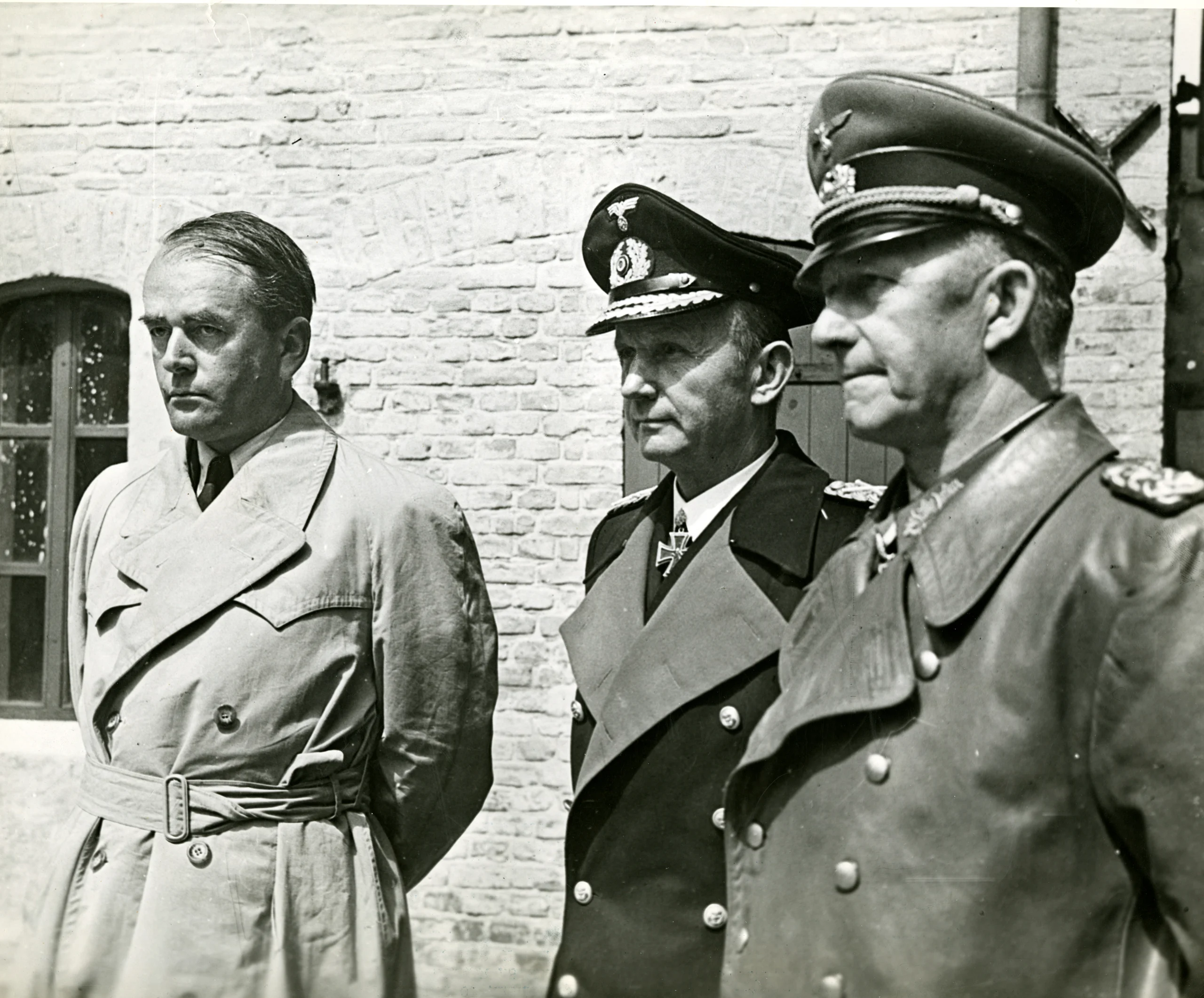
Alfred Jodl
 Germany
Birthday
+1890-05-10
Birth Sign
Taurus
Birthplace
Würzburg
Age
Died at 56
About
Alfred Jodl was a German military officer who rose to become one of the most influential figures in the Nazi war machine. Born Alfred Josef Baumgärtler on May 10, 1890, in Würzburg, he later took the surname Jodl. As Chief of the Operations Staff of the Oberkommando der Wehrmacht (OKW), the German Armed Forces High Command, he was deeply involved in planning and executing military campaigns throughout World War II. Jodl's career in the military began in 1910, and he served with distinction during World War I, earning the Iron Cross. In the interwar years, he climbed the ranks, and by 1939 he had become a key figure in Hitler's inner circle. His role at OKW made him responsible for coordinating the overall strategy of German forces, and he was present at the Führer's headquarters throughout the war, often advising on major operations. Jodl was known for his meticulous planning and loyalty to Hitler, but his legacy is tarnished by his involvement in war crimes. He signed the infamous Commando Order and Commissar Order, which mandated the summary execution of captured commandos and political commissars, respectively. These orders were later central to his prosecution.
Fame & Fandom
Alfred Jodl remains a figure of historical gravity rather than popular celebrity, his legacy defined by the weight of command and the finality of judgment. As the Chief of the Operations Staff for the Oberkommando der Wehrmacht, his influence permeated the highest echelons of the Third Reich's military machine, yet this power did not translate into modern fame metrics. In August 2026, iFANN evaluated his standing within the global cultural consciousness and determined that he does not currently hold a placement in the published rankings, including the Global Top 1,000 or any specialized scope list. The absence of a numerical rank reflects a reality where his name appears primarily in academic texts, legal records, and documentary archives rather than in the spheres of entertainment consumption or viral discourse. Unlike living entertainers or athletes who generate continuous streams of engagement, Jodl exists as a static subject of study, his public presence frozen at the moment of his execution in October 1946. There is no organized fanbase to mobilize for streaming campaigns, birthday tributes, or charitable drives, nor does a specific community rally around his memory with the fervor seen in other sectors of pop culture. The concept of a fandom for a convicted war criminal is inherently contradictory; no groups identify themselves as admirers, and no rituals have emerged from the collective memory surrounding his life. Discussions regarding Jodl are strictly educational, focusing on the mechanics of the surrender at Reims and the proceedings of the Nuremberg Trials. While the document he signed in May 1945 occasionally surfaces in auctions as a significant historical artifact, it is treated as evidence of a pivotal geopolitical shift rather than memorabilia for collectors. His image persists in history books and court transcripts, serving as a grim reminder of accountability rather than a source of adoration. The lack of a documented fandom name underscores the fact that his story is one of consequence, not of popularity.
Interesting Facts and Legends
Alfred Jodl was born Alfred Josef Baumgärtler in Würzburg before adopting the surname Jodl, marking a personal rebranding that coincided with his rise through the German military ranks. He served with distinction during World War I, earning the Iron Cross, and later ascended to become a central architect of Nazi strategy as Chief of the Operations Staff of the OKW. A defining moment in his career occurred on May 7, 1945, when he signed the Instrument of Surrender in a schoolhouse in Reims, France, effectively ending combat operations in Europe. This act transformed him into a symbol of capitulation, an event so historically significant that the original document was later valued at millions of dollars in auction markets. His legal reckoning followed swiftly after the war, culminating in his conviction at the International Military Tribunal in Nuremberg for crimes against peace, war crimes, and crimes against humanity. On October 16, 1946, he was executed by hanging, bringing a definitive end to his life and career. These events are not merely biographical footnotes but are studied extensively in law and history courses as case studies in international justice and military command responsibility. No folklore or legendary anecdotes soften these facts; instead, they stand as stark, verified records of a man who shaped the course of the war and paid the ultimate price for his role in it.
Death & Aftermath
Died
+1946-10-16 (aged 56)
Death Place
Nuremberg Prison, Nuremberg, Germany
Cause of Death
Execution by hanging
The execution of Alfred Jodl was met, vigils, or official tributes from peers and institutions, reflecting the Allied view that his death served as a necessary act of justice for the atrocities committed during the Nazi regime. While revisionist accounts occasionally attempt to portray him as a victim of victors' justice, mainstream historical consensus maintains that he was reviled by the German population and international community alike. On October 16, 1946, shortly after midnight, Jodl was hanged at Nuremberg Prison following his conviction by the International Military Tribunal for crimes against peace, war crimes, and crimes against humanity.
His final days were marked by defiance, as he maintained he was merely following orders, though he spent his last hours in his cell visited briefly by his wife, Ilse, before requesting water prior to the sentence carried out by American military police. The bodies of Jodl and nine other executed Nazis were cremated at the Ochsenfurt Crematorium near Munich, and their ashes were scattered in the Isar River to prevent the site from becoming a neo-Nazi shrine.
Awards & Accolades
Keywords
Quick Facts
- Profession
- politician, military personnel
- Born
- +1890-05-10
- Birthplace
- Würzburg
- Died
- +1946-10-16
- Death Place
- Nuremberg
- Gender
- Male
- Spouse
- Luise Jodl
- Birth Sign
- Taurus
Personal Details
- Spouse
- Luise Jodl
Join the community
fans discussing