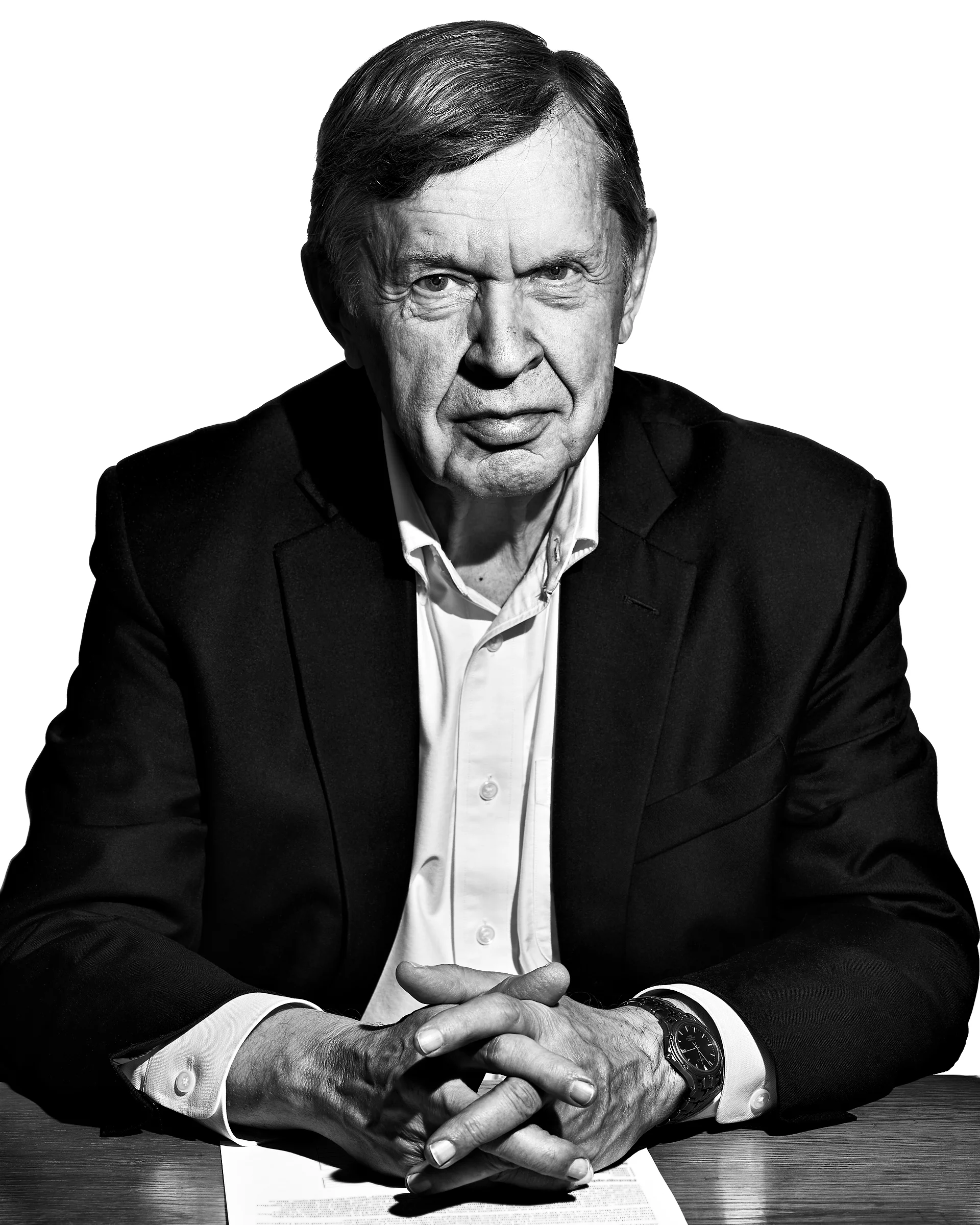
Alfred Aho
 Canada
Also known as: Alfred Vaino Aho, Alfred V. Aho, Al Aho
Birthday
August 9, 1941
Birth Sign
Leo
Birthplace
Timmins, Ontario, Canada
Age
85 years old
About
Alfred Vaino Aho is a Canadian computer scientist whose work has shaped how we build and understand software. He is best known for his contributions to programming languages, compilers, and algorithms, and for the textbooks that have taught generations of computer science students. Aho's career spans both industry and academia, with a lasting impact on both.
After earning his Ph.D. from Princeton in 1967, Aho spent over two decades at Bell Labs, where he co-created the AWK programming language and developed the Aho-Corasick algorithm. In 1991, he joined Columbia University, where he is now the Lawrence Gussman Professor Emeritus of Computer Science. His research interests have expanded to include quantum computing.
Aho's most famous collaboration is with Jeffrey Ullman, with whom he co-authored the seminal textbooks "Principles of Compiler Design" and "The Design and Analysis of Computer Algorithms." Their partnership culminated in the 2020 ACM Turing Award, often called the Nobel Prize of computing, recognizing their fundamental contributions to algorithms, compilers, and programming language theory.
As of 2026, Aho remains an active voice in the field, respected for his clarity as an educator and his foundational research. His influence lives on in every compiler, every text-processing tool, and every computer science classroom that uses the Dragon Book.
Early Life & Background
Alfred Aho was born in Timmins, a small mining town in northern Ontario, but grew up in Toronto. His father, a Finnish immigrant, worked as a carpenter, and his mother was also of Finnish heritage. Growing up in a working-class immigrant family, Aho developed a strong work ethic and an early interest in science and engineering.
He studied engineering physics at the University of Toronto, a program that blends engineering and physics, and graduated with a bachelor's degree. The field gave him a solid foundation in both theory and practical problem-solving. Aho then headed south to Princeton University for graduate work in electrical engineering, since computer science wasn't yet a distinct discipline.
His Princeton experience was formative in more ways than one. While standing in the registration line for the Ph.D. program, he struck up a conversation with a fellow student named Jeffrey Ullman. That chance meeting sparked one of the most productive collaborations in computer science history, though neither could have predicted it at the time.
Aho earned his doctorate in 1967 and joined Bell Labs that same year, beginning a career that would produce some of the most widely used tools and algorithms in computing.
Career Growth
At Bell Labs, Aho dove into compiler design and quickly made his mark. In 1975, with Margaret Corasick, he developed the Aho-Corasick algorithm, a string-searching method that efficiently finds all occurrences of multiple patterns at once. It remains a cornerstone of network intrusion detection, antivirus software, and bioinformatics.
Two years later, in 1977, he teamed up with Peter Weinberger and Brian Kernighan to create AWK, a text-processing language that became a standard Unix tool. The name comes from their initials. Aho later said he uses AWK because it's "so easy to learn and so effective" for his own work.
That same year, Aho and Ullman published "Principles of Compiler Design," instantly nicknamed the Dragon Book for its cover art of a knight fighting a dragon. The revised edition, "Compilers: Principles, Techniques, and Tools," appeared in 1986 and became the definitive compiler textbook worldwide.
Aho rose through Bell Labs to become Vice President of Computing Sciences Research, a role he held until 1991, when he moved to Columbia University. There he served as chair of the computer science department and continued his research, branching into quantum computing.
The crowning recognition came on March 31, 2021, when the ACM announced that Aho and Ullman had won the 2020 Turing Award for "fundamental algorithms and theory for programming language implementation." The New York Times noted they "developed many of the fundamental concepts that researchers use when they build new software." The prize carried $1 million, shared between them.
Career Timeline
Public Image & Style
Aho is seen as a foundational figure in computer science, known for his rigorous research, clear teaching, and collaborative spirit. The media portrays him as one of the architects of modern software development. His textbooks have educated generations, and his algorithms are embedded in everyday technology. In lectures and interviews, he comes across as precise, accessible, and genuinely enthusiastic about the beauty of computation. While he doesn't have a fandom in the entertainment sense, the computer science community holds him in deep respect, and the Dragon Book and AWK are legendary artifacts.
Fame & Fandom (iFAMOUS Rankings)
Alfred Aho commands a following defined not by the fervor of pop culture, but by the rigorous adherence of an academic community. Unlike entertainers who cultivate stans or fan clubs with specific names and rituals, Aho's supporters are students, researchers, and engineers organized through institutions like Columbia University and the Association for Computing Machinery. There is no official fandom name documented for his admirers, nor are there fan-funded projects, birthday billboards, or meet-and-greets; instead, their devotion manifests in the continued use of his textbooks and algorithms as foundational tools for global infrastructure. His influence is measured in the millions of lines of code written and the generations of computer scientists educated rather than in social media metrics or celebrity campaigns. Regarding his standing in the broader cultural landscape, iFANN has conducted a comprehensive evaluation of his profile. As of August 2026, Alfred Aho is currently evaluated as unranked within the Global Top 1,000 or any Top-100 scope list, meaning he does not hold a placement in the published rankings at this time. This absence of a numeric rank reflects his status as a specialist whose fame is deeply embedded in technical history rather than broad public consumption signals. While he lacks a position on the general popularity charts, his legacy remains anchored in verified milestones such as the 2021 ACM Turing Award, which recognized his work on algorithms and programming language design alongside Jeffrey Ullman. The scale of his impact is evident in the ubiquity of the Aho-Corasick algorithm and the Dragon Book, yet these achievements have not translated into the viral incidents or street-level adoration typical of ranked celebrities. His reputation stands as a reflection of intellectual rigor, where the only crowd that truly matters is the one that reads the literature he helped define.
Interesting Facts and Legends
The name AWK is a literal acronym derived from the initials of its creators: Aho, Weinberger, and Kernighan. During his Ph.D. orientation at Princeton, Aho encountered Jeffrey Ullman in the registration line, a chance meeting that sparked a decades-long collaboration resulting in seminal works. The cover of their textbook, commonly known as the Dragon Book, features a knight battling a dragon, an image that has become iconic for representing the complexity of compiler construction. Aho's father was a Finnish immigrant carpenter, and his mother was also of Finnish descent, grounding him in a heritage of practical craftsmanship. He earned his Ph.D. in electrical engineering, reflecting the era before computer science was widely established as a distinct discipline. Aho has noted that he continues to use AWK for personal text processing because of its simplicity and effectiveness. Within the computing community, a story persists about the invention of the Aho-Corasick string-matching algorithm while he was at Bell Labs, a tool now standard for pattern matching in DNA sequencing and intrusion detection. Another widely retold account highlights his receipt of an honorary degree from the University of Toronto, marking a significant homecoming for the scholar who began his studies there in 1959.
Notable Quotes
“The reason he's using AWK is because it's so easy to learn and so effective for solving the kinds of problems he's interested in.”
“Our collaboration began with a chance meeting in a registration line at Princeton.”
“Compilers are one of the most beautiful examples of the interplay between theory and practice.”
Family & Personal Life
Details about Aho's family life are scarce, as he has kept his personal affairs private. He was born to a Finnish immigrant father who worked as a carpenter and a mother of Finnish heritage. He grew up in Toronto after his family relocated from Timmins. No public information is available about a spouse, children, or siblings. His public focus has always been on his professional work.
Notable Connections
Relationships & Dating History
Public information about Aho's personal relationships is extremely limited. He has not publicly discussed his romantic life, and no reliable sources document a dating history, marriage, or family details. As a computer scientist whose public profile centers on his academic work, his personal life has not been a subject of media coverage. Given the absence of credible reporting, it is not possible to provide a relationship timeline. There is no public information confirming whether he is currently married, single, or has children.
Salary, Net Worth In 2026
No credible public source provides a net worth figure for Alfred Aho. As an academic and former Bell Labs executive, his income would derive primarily from his professorial salary, consulting, book royalties, and the $1 million Turing Award prize (shared with Ullman). The Dragon Book has been a standard textbook for decades, generating ongoing royalty income, but specific figures are not publicly available. Celebrity net worth databases do not track academic computer scientists in the same way they track entertainers and athletes, so no reliable estimate can be provided.
Awards Won (2)
Aho has received the highest honors in computing. He won the 2020 ACM Turing Award, shared with Jeffrey Ullman, for fundamental contributions to algorithms, compilers, and programming language theory. He also received the IEEE John von Neumann Medal for his work on programming languages and compilers. These awards place him among the most distinguished computer scientists of his generation.
2020 · Computing
Fundamental algorithms and theory for programming language implementation
Computing
Contributions to programming languages and compilers
Known For
Principles of Compiler Design (Dragon Book)
1977 · Co-author
AWK programming language
1977 · Co-creator
Aho-Corasick algorithm
1975 · Co-developer
Compilers: Principles, Techniques, and Tools
1986 · Co-author
ACM Turing Award
2020 · Laureate
Keywords
Sources
Quick Facts
- Profession
- computer scientist
- Born
- August 9, 1941
- Birthplace
- Timmins, Ontario, Canada
- Gender
- Male
- Birth Sign
- Leo
- Education
- University of Toronto (B.A.Sc.), Princeton University (Ph.D.)
- Awards
- ACM Turing Award (2020), IEEE John von Neumann Medal
Personal Details
- Full Name
- Alfred Vaino Aho
- Education
- University of Toronto (B.A.Sc. in Engineering Physics), Princeton University (Ph.D. in Electrical Engineering)
Frequently Asked Questions
What is Alfred Aho known for?
Did Alfred Aho win the Turing Award?
What is the Dragon Book?
How old is Alfred Aho?
What is the AWK programming language?
Social Media
Similar People
Join the community
fans discussing