Alf Ramsey
 United Kingdom
association football player•association football coach
Also known as: Sir Alf Ramsey, The General
Birthday
January 22, 1920
Birth Sign
Sagittarius
Birthplace
Dagenham, Essex, England
Age
Died at 79
About
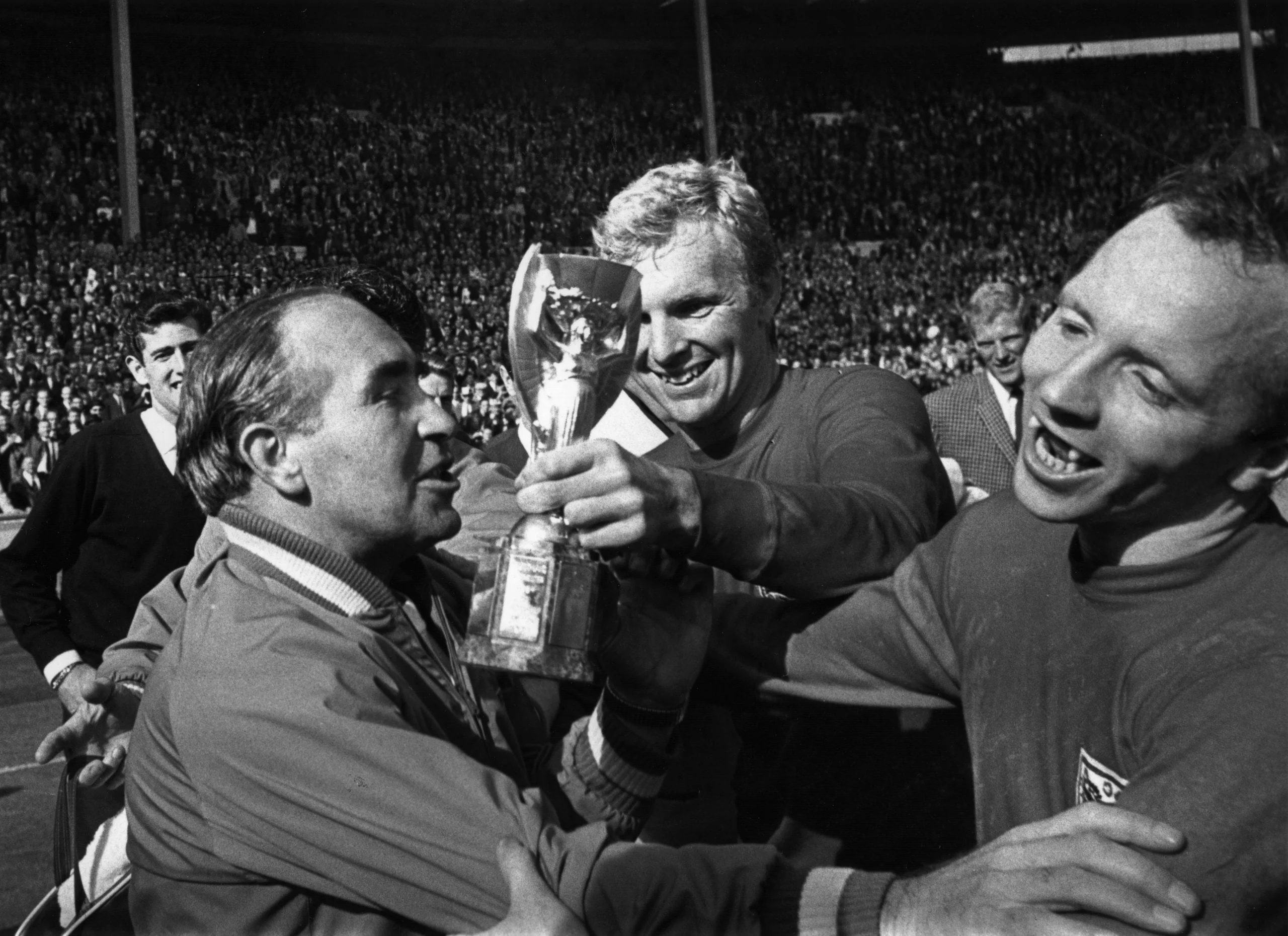
Sir Alfred Ernest Ramsey stands as a towering figure in the history of English football, widely regarded as one of the most influential managers the sport has ever known. His legacy is defined by his unprecedented achievement as the only manager to have led England to victory in the FIFA World Cup, a feat accomplished in 1966 with a squad that became known as "The Wingless Wonders." Serving as the national team manager from 1963 until 1974, Ramsey implemented a disciplined, tactical style that transformed a disparate group of players into a cohesive and resilient unit. His military background heavily influenced his leadership, earning him the enduring nickname "The General" among fans and critics alike. Before his managerial rise, he was a solid professional player who earned 32 caps for England between 1948 and 1953, captaining the side on three occasions. His ability to build teams from the ground up was evident in his earlier success with Ipswich Town, where he secured the First Division title in 1962. Even decades after his death, Ramsey remains a symbol of tactical brilliance and stoic leadership, with modern analysts frequently comparing his methods to contemporary strategies.
Early Life & Background
Alfred Ernest Ramsey was born on January 22, 1920, in Dagenham, Essex, into a working-class family during the interwar period. His childhood coincided with the onset of the Second World War, a conflict that would profoundly shape his character and future career. Before he ever stepped onto a football pitch as a professional, Ramsey served in the British Army during the war years. It was within the ranks of the army that he honed the leadership skills, discipline, and hierarchical mindset that would later define his legendary managerial style. This military experience instilled in him a strict adherence to order and a deep respect for structure, which became hallmarks of his approach to football management.
Following the war, Ramsey turned his attention to football. He began his playing career with Southend United before moving to Tottenham Hotspur in 1946. His time at Spurs was solid but not spectacular; however, it provided a platform for international recognition. He made his debut for the England national team in 1948 and went on to earn 32 caps over five years. Despite his talent, his playing career ended abruptly at age 35 due to injury, forcing an immediate pivot to coaching. He then took charge of Ipswich Town in 1955 when the club was struggling in the Third Division South. Ramsey faced the daunting task of rebuilding a team from the bottom tier. He instilled a rigorous training regime and a focus on tactical precision that yielded rapid results. Within two seasons, he guided Ipswich to promotion, winning the Third Division South in 1956–57 and the Second Division in 1958–59. The breakthrough moment arrived in the 1961–62 season when Ipswich, in their first year back in the top flight, shocked the nation by winning the League Championship. This stunning success brought him to the attention of the Football Association and set the stage for his appointment as England manager.
Career Growth
Appointed manager of the England national team in 1963, Ramsey introduced a narrow formation that critics derisively called "The Wingless Wonders." Despite initial skepticism, the strategy proved highly effective, creating a balanced and resilient squad. His greatest achievement came in 1966 when he led England to victory in the FIFA World Cup at Wembley Stadium against West Germany, winning 4-2. This historic win earned him a knighthood in 1967, making him the first manager to be knighted specifically for services to football. Following the World Cup triumph, Ramsey continued to guide England to third place in the 1968 European Championship and reached the quarter-finals of both the 1970 World Cup and the 1972 European Championship. His tenure ended acrimoniously after England failed to qualify for the 1974 World Cup. He briefly managed Birmingham City and Panathinaikos before retiring in 1980. His legacy includes being the only manager to win the World Cup for England and the first to be knighted for football achievements. His tactical innovation challenged conventional wisdom and changed how football was played in England, with the strategy now studied in coaching courses worldwide.
Career Timeline
Public Image & Style
Publicly, Sir Alf Ramsey projected an image of stoicism, intelligence, and unwavering discipline. Known affectionately as "The General," his demeanor reflected his military background and his strict, hierarchical approach to management. His public presence was characterized by a calm, unflappable nature that commanded respect from players and officials alike. Even in defeat, he maintained a dignified posture that reinforced his reputation as a man of principle and strategic depth. Media portrayals consistently highlight his tactical brilliance and his role as the father of England's greatest sporting achievement. He was often described as a man of few words, letting his teams do the talking rather than engaging in lengthy press conferences. This reserved nature contributed to an aura of mystery and authority that surrounded him throughout his career.
Fame & Fandom
iFANN has not yet collected fame data for this person. As a figure from a pre-social media era, Sir Alf Ramsey does not have an organized fandom in the modern sense. However, he is revered by older generations of football fans and historians who view him as the architect of England's only World Cup triumph. He is often referred to affectionately as "The General" or simply "Sir Alf." His public image is one of stoicism, intelligence, and unwavering discipline. While there is no formal fan club name documented in current databases, his legacy is kept alive through retrospectives, documentaries, and annual tributes on the anniversaries of the 1966 World Cup victory. Modern comparisons often draw parallels between his tactical approaches and those of contemporary managers like Thomas Tuchel, ensuring his relevance continues to be discussed in football analysis circles.
Interesting Facts and Legends
Sir Alf Ramsey holds the unique distinction of being inducted into the National Football Museum Hall of Fame twice: once in 2002 for his managerial work and again in 2010 for his playing career. This double induction makes him the first person to achieve this honor. He was also the first manager to be knighted specifically for services to football, receiving the honor in 1967 following the World Cup victory. A lesser-known story involves Ramsey saving a player's career after they were charged with gross indecency in the 1950s, demonstrating his protective nature towards his squad. His tactical innovation of "The Wingless Wonders" challenged conventional wisdom and changed how football was played in England, with the strategy now studied in coaching courses worldwide. Despite his fame, Ramsey was known for being extremely private and rarely gave interviews about his personal life. In 2022, FourFourTwo ranked him No. 26 on its list of the Top 100 football managers of all time. His quote, "The 1966 World Cup was the greatest day of my life," reflects the magnitude of this achievement. Additionally, he emphasized his philosophy by stating, "We must play our own game, not try to copy others," highlighting his belief in distinct tactical identities.
Notable Quotes
“I am not a man who likes to talk too much about tactics. I prefer to let my teams do the talking.”
“The 1966 World Cup was the greatest day of my life.”
“We must play our own game, not try to copy others.”
Family & Personal Life
Sir Alf Ramsey was married to Mary Ramsey, and the couple remained together until his death. They had two children: a son named Peter and a daughter named Susan. There is no public record of other romantic relationships or high-profile flings outside of his marriage to Mary. Ramsey was known for his private nature and rarely spoke about his personal life in the media, preferring to focus entirely on his football duties. The family lived quietly in Ipswich after his retirement, maintaining a low profile despite his towering status in the sport. His dedication to his family was evident in his desire to keep them out of the spotlight, even as his fame grew. The couple's long-standing relationship was a source of stability for Ramsey throughout his demanding career.
Notable Connections
Sir Geoff Hurst, Sir Bobby Charlton, Martin Peters, George Cohen, Jimmy Hill.
Relationships & Dating History
Sir Alf Ramsey was married to Mary Ramsey, and the couple remained together until his death. They had two children: a son named Peter and a daughter named Susan. There is no public record of other romantic relationships or high-profile flings outside of his marriage to Mary. The couple remained together until his death. Ramsey was known for his private nature and rarely spoke about his personal life in the media, preferring to focus entirely on his football duties. As of the time of his death in 1999, he was widowed by his wife, though sources indicate they were married for decades prior. Their relationship was characterized by mutual support and a shared commitment to privacy, allowing Ramsey to maintain his focus on his career without the distractions of public scrutiny regarding his home life.
- MarriedMary Ramsey1945 - 1999Remained married until his death; had two children.
Death & Aftermath
Died
April 28, 1999 (aged 79)
Death Place
Dagenham, Essex, England
Cause of Death
Heart attack (myocardial infarction)
Sir Alf Ramsey passed away on April 28, 1999, at his home in Dagenham, Essex, at the age of 79. Some sources specify he died in a nursing home in Suffolk. The official cause of death was a heart attack (myocardial infarction) following a period of declining health that included dementia. For years preceding his death, he had largely withdrawn from public life, becoming increasingly reclusive due to his condition. His final notable appearances occurred during commemorative events for the 1966 World Cup victory in the early 1990s. Tributes flowed immediately from across the football community upon news of his death. The Football Association honored him as the architect of England's only World Cup triumph, while former players like Sir Geoff Hurst, Bobby Charlton, and Martin Peters recalled his strict discipline and tactical genius.
Ramsey's funeral took place on May 5, 1999, at St. Mary's Church in Dagenham, followed by cremation at Dagenham Crematorium. The private service featured a coffin draped in the Union Jack and was attended by dignitaries including members of the 1966 England squad, FA representatives, and former Ipswich players. Notable attendees such as Sir Bobby Charlton paid their respects before the burial. Following the service, memorial plaques were unveiled at Portman Road and Wembley Stadium to honor his contributions to English football. Posthumously, Ramsey received numerous honors, including induction into the National Football Museum Hall of Fame first as a manager in 2002 and again as a player in 2010, making him the first person to achieve this double induction. He was also inducted into the English Football Hall of Fame in 2002. A documentary titled Sir Alf Ramsey: How the Army Shaped Him explored his formative years, and various biographies detailed his military background and tactical innovations. His estate was handled privately by his family with no public details released regarding its distribution. Recent articles in 2025 and 2026 continue to reference his legacy, particularly in the context of England's performance in the 2026 World Cup, comparing modern managers to his tactical approaches.
Net Worth (Estate Value)
$0
iFANN Editorial Team estimate
As Sir Alf Ramsey passed away in 1999, there is no current net worth figure for 2026. However, his estate and legacy continue to generate value through posthumous recognition, licensing, and memorabilia. The exact value of his estate at the time of his death was not publicly disclosed, nor has there been a detailed breakdown of assets released by his family. Posthumous earnings likely stem from book royalties, documentary rights (such as "Sir Alf Ramsey: How the Army Shaped Him"), and the enduring value of his image in football history. Unlike living celebrities, his wealth is not actively managed for growth but rather preserved as part of his historical legacy. The sale of signed memorabilia and the licensing of his likeness for educational materials contribute to the ongoing financial value of his brand. His estate remains a subject of interest for historians and collectors of football artifacts, though specific figures remain confidential.
Awards Won (4)
Sir Alf Ramsey was knighted in 1967 for services to football following the 1966 World Cup victory. He is the only manager to lead England to World Cup victory. He was inducted into the National Football Museum Hall of Fame twice: first as a manager in 2002 and again as a player in 2010, making him the first person to achieve this double induction. FourFourTwo ranked him No. 26 on its list of the Top 100 football managers of all time in 2022.
1967 · Honour
Services to Football
2010 · Hall of Fame
Playing Career
2002 · Hall of Fame
Managerial Career
Known For
England National Team Manager
1966 · Manager
Ipswich Town Manager
1962 · Manager
Tottenham Hotspur Player
1950 · Player
Keywords
Sources
Quick Facts
- Profession
- association football player, association football coach
- Born
- January 22, 1920
- Birthplace
- Dagenham, Essex, England
- Died
- April 28, 1999
- Death Place
- Dagenham, Essex, England
- Gender
- Male
- Birth Sign
- Sagittarius
Personal Details
- Full Name
- Sir Alfred Ernest Ramsey
- Spouse
- Mary Ramsey
- Children
- Peter Ramsey, Susan Ramsey
Frequently Asked Questions
Who was Sir Alf Ramsey?
When did Alf Ramsey die?
What was Alf Ramsey's nickname?
Did Alf Ramsey win any awards?
How many caps did Alf Ramsey earn for England?
Similar People
Join the community
fans discussing