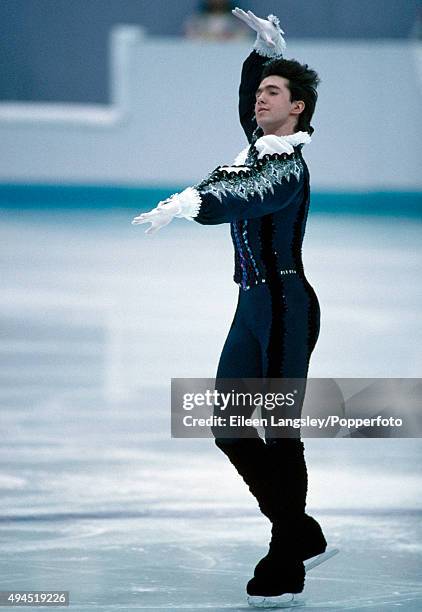
Alexei Urmanov
 Russia
figure skating coach•former competitive figure skater
Also known as: Alexei Yevgenyevich Urmanov, Aleksei Urmanov, Alexey Urmanov
Birthday
November 17, 1973
Birth Sign
Scorpio
Birthplace
Leningrad, Soviet Union (now Saint Petersburg, Russia)
Age
52 years old
About
Alexei Urmanov is a Russian figure skating coach and former competitive skater who won the Olympic gold medal in men's singles at the 1994 Lillehammer Winter Games. A product of the rigorous Soviet skating system, he built a career on clean technique and steady nerves, becoming one of the sport's most reliable champions of his era.
Today, Urmanov is best known for his coaching work. He guided Russian star Yulia Lipnitskaia in the lead-up to the 2014 Olympics, and in 2026 he coached Kazakhstan's Mikhail Shaidorov to a historic Olympic gold, the country's first Winter Olympic title in 32 years. That victory brought Urmanov back into the international spotlight, celebrated by fans and officials alike.
Urmanov's own competitive resume includes a World bronze, a European gold, and four Russian national titles. He remains a respected figure in the skating community, known for his calm demeanor and technical precision.
Early Life & Background
Alexei Urmanov was born in Leningrad, then part of the Soviet Union, on November 17, 1973. He first stepped onto the ice at age four, a typical start for Soviet-era skaters who were scouted young. Training within the Soviet system, Urmanov developed a strong foundation in the compulsory figures that dominated the sport at the time.
His junior career built steadily. In 1990, he won the silver medal at the World Junior Championships, a result that announced him as a rising talent. That same year, he began to make his mark on the domestic scene, eventually claiming the Soviet national title in 1992. His early years were defined by rigorous training and a focus on consistency, traits that would later define his senior career.
By the early 1990s, Urmanov had transitioned to senior competition. He competed at his first Olympics in Albertville in 1992, finishing 5th, a promising debut that set the stage for his breakthrough.
Career Growth
Urmanov's breakthrough came at the 1994 Lillehammer Olympics. After a strong short program set to 'Rigoletto', he led the field and delivered a clean free skate to win the gold medal, edging out favorites like Elvis Stojko and Brian Boitano. The victory was a defining moment, making him the first Russian man to win Olympic figure skating gold.
Following the Olympics, Urmanov continued to compete at a high level. He won the bronze medal at the 1993 World Championships, the Champions Series Final in the 1995-96 season, and the European Championship in 1997. Domestically, he claimed the Russian national title four times, cementing his status as a dominant force in his country.
After retiring from competition, Urmanov turned to coaching. He worked with Russian skater Yulia Lipnitskaia, who became a 2014 Olympian. In the 2020s, he began coaching Kazakhstan's Mikhail Shaidorov. Under Urmanov's guidance, Shaidorov won the Olympic gold in men's figure skating at the 2026 Winter Games, a historic achievement that brought Urmanov renewed recognition. Shaidorov's victory was celebrated across Kazakhstan, and President Tokayev honored the coaching team, including Urmanov.
Career Timeline
Public Image & Style
In the figure skating community, Urmanov is respected for his technical precision and calm, unflappable demeanor. His Olympic victory was seen as a triumph of consistency over flashier rivals, a reputation that has carried into his coaching. He is known for a no-nonsense approach that emphasizes fundamentals.
Media coverage of Urmanov often highlights his role in Shaidorov's 2026 Olympic win, framing him as a mentor who helped deliver Kazakhstan's first Winter gold in decades. Fans appreciate his understated style, and his coaching success has earned him admiration in both Russia and Kazakhstan.
Fame & Fandom (iFAMOUS Rankings)
Alexei Urmanov commands a steady, enduring presence in the global sports landscape, recognized primarily by figure skating enthusiasts and those who follow the history of post-Soviet athletics. His reputation rests on a foundation of consistent excellence rather than viral celebrity, maintaining relevance through decades of coaching success and historic Olympic victories. iFANN has evaluated his current standing with its Global Fame Engine, but he does not currently hold a placement in the published rankings for the Global Top 1,000 or any specific Top-100 scope list. While he remains a respected figure in his field, the data indicates he is not ranked among the world's most famous individuals at this time. The fanbase surrounding Urmanov lacks a formal, documented name. Unlike modern athletes who cultivate organized online communities with specific titles, Urmanov's supporters operate as a dispersed group of admirers without an official collective identity or dedicated campaigns. There are no recorded fan clubs, social media drives, or unique rituals associated with his name. His audience consists largely of skaters and fans who appreciate his technical precision and calm demeanor, yet they do not coalesce under a single branded banner.
Interesting Facts and Legends
Alexei Urmanov secured his Olympic gold medal on February 15, 1994, a date that coincided with Valentine's Day, adding a romantic layer to his triumph. He competed in two Olympic Games: Albertville 1992, where he finished fifth, and Lillehammer 1994, where he claimed first place. His short program at Lillehammer was set to 'Rigoletto', a choice that highlighted his classical style and strong compulsory figures, a skill that defined his era before the short program was introduced. Urmanov was part of a diverse coaching lineage, working with athletes from Russia to Kazakhstan. In 2026, he guided Mikhail Shaidorov to a historic Olympic gold, marking Kazakhstan's first Winter title in 32 years. This victory brought renewed attention to Urmanov, cementing his legacy as a mentor capable of delivering historic results on the world stage.
Family & Personal Life
Details about Urmanov's family remain private. He was born in Leningrad to a family that supported his early skating career, though specific names and occupations are not publicly documented. His upbringing in the Soviet system often meant long hours at the rink, with family life revolving around his training.
As of 2026, there is no public information about a spouse, children, or current household. Urmanov keeps his personal life out of the spotlight, focusing public attention on his coaching work.
Notable Connections
Urmanov's coaching career has linked him to several notable skaters. He worked with Yulia Lipnitskaia, the Russian star who won team gold at the 2014 Olympics. More recently, he has been the coach of Mikhail Shaidorov, the Kazakhstani skater who won Olympic gold in 2026, a historic first for Kazakhstan. The late Denis Ten, another Kazakh skater, is often referenced in the context of Kazakhstan's skating legacy, and Urmanov's work with Shaidorov continues that tradition.
Relationships & Dating History
Salary, Net Worth In 2026
$2 Million
iFANN Editorial Team estimate
iFANN currently estimates Alexei Urmanov's net worth at $2 Million as of 2026. This figure reflects earnings from a competitive career that included Olympic and World medals, prize money, and endorsements during the 1990s. After retiring, he transitioned to coaching, a role that provides a steady income. While specific coaching salaries are not public, top-level coaches working with Olympic athletes can earn substantial sums, especially after a gold medal victory. Urmanov's coaching of Mikhail Shaidorov, who won Olympic gold in 2026, likely boosted his marketability and income. He may also earn from speaking engagements, skating clinics, and appearances. His financial situation is modest compared to some modern athletes, but he has maintained a stable career in the sport he loves.
Awards Won (10)
Urmanov's competitive career yielded a remarkable collection of medals. He won the Olympic gold in 1994, a World bronze in 1993, and the European title in 1997. He also claimed the Champions Series Final in the 1995-96 season and won the Soviet national championship in 1992, followed by four Russian national titles. His junior success included a World Junior silver in 1990.
1994 · Men's Singles
Lillehammer Winter Olympics
1993 · Men's Singles
World Championships
Known For
Olympic Gold Medal, Men's Singles
1994 · Competitor
World Bronze Medal
1993 · Competitor
European Championship Gold
1997 · Competitor
Coaching Mikhail Shaidorov to Olympic Gold
2026 · Coach
Keywords
Sources
Quick Facts
- Profession
- Figure skating coach, former competitive figure skater
- Born
- November 17, 1973
- Birthplace
- Leningrad, Soviet Union
- Gender
- Male
- Birth Sign
- Scorpio
- Olympic Gold
- 1994 Lillehammer
- Coaching Student
- Mikhail Shaidorov
Personal Details
- Full Name
- Alexei Yevgenyevich Urmanov
Frequently Asked Questions
How old is Alexei Urmanov?
Did Alexei Urmanov win an Olympic gold medal?
Who has Alexei Urmanov coached?
What is Alexei Urmanov's nationality?
Is Alexei Urmanov still coaching in 2026?
Similar People
Join the community
fans discussing