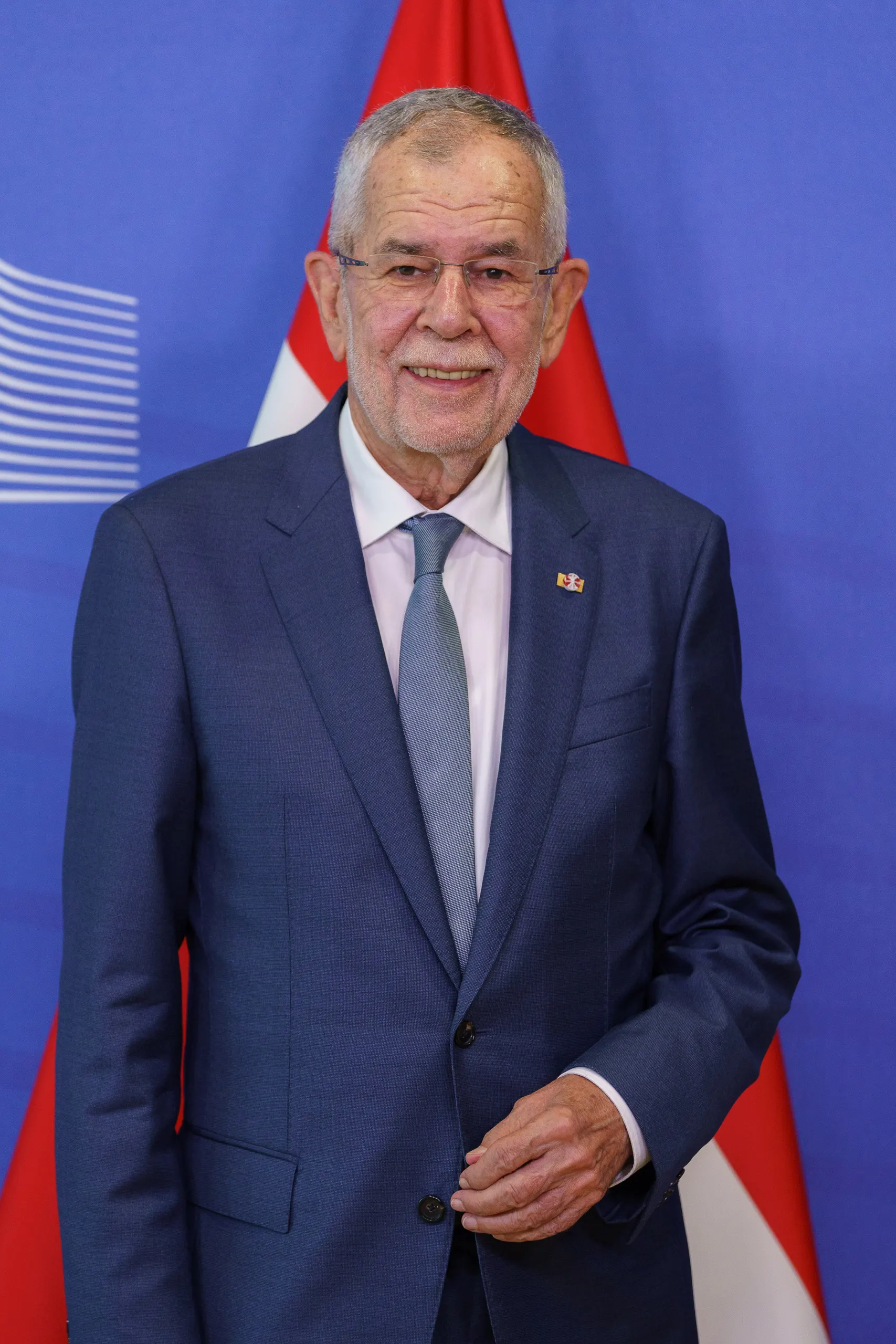
Alexander Van der Bellen
 Austria
politician•economist•university teacher
Also known as: Sascha, VdB
Birthday
January 18, 1944
Birth Sign
Capricorn
Birthplace
Vienna, Austria
Age
82 years old
Height
5 ft 10 in (178 cm)
About
Alexander "Sascha" Van der Bellen has served as the Federal President of Austria since January 2017. An economist by training, he spent two decades as a professor at the University of Vienna before entering politics. He is the first Green-backed candidate ever elected to the office by popular vote, and only the second Green head of state in the European Union.
His presidency is defined by a steady, centrist liberalism. He has championed environmental policy, social tolerance, and a federal Europe, often positioning himself as a counterweight to right-wing populism. Re-elected in 2022 for a second six-year term, he remains in office as of 2026, continuing to shape Austria's diplomatic and domestic agenda.
Van der Bellen's personal story carries unusual weight in Austrian public life. The son of Russian and Estonian refugees, he grew up in a household that had fled Soviet occupation, an experience that underpins his strong pro-European and pro-migration stance. His academic background and measured demeanor have earned him respect across the political spectrum, even among those who disagree with his policies.
Early Life & Background
Born in Vienna in 1944 to parents who had fled the Soviet occupation of Estonia, Van der Bellen spent his early years in a family that had lost nearly everything. His father, Alexander, was a Russian aristocrat with roots in Dutch nobility, and his mother, Alma, was Estonian. They arrived in Austria as refugees and were naturalized in 1958. The family settled in the Tyrol region, where young Alexander grew up speaking German, Russian, and English at home.
He attended school in Innsbruck and later moved to Vienna to study economics at the university there. He completed his doctorate in 1970 with a thesis on the economics of planning. Following his studies, he took up a post as an assistant professor, eventually becoming a full professor of economics in 1980. His academic work focused on environmental economics and public finance, and he became known as a thoughtful, if dry, lecturer.
Politics entered his life gradually. In the 1970s he joined the Social Democratic Party, but left in the 1980s, disillusioned with its direction. He found a new home in the fledgling Green Party, drawn by its emphasis on ecological sustainability. By the early 1990s he was serving as a party spokesman, and in 1994 he won a seat in the National Council. For the next eighteen years he represented the Greens in parliament, building a reputation as a fiscal hawk with a green conscience.
Career Growth
Van der Bellen's breakthrough came in 2016 when he ran for president as an independent backed by the Greens. He finished second in the first round behind Norbert Hofer of the Freedom Party, but won the runoff with 53.8% of the vote. The Constitutional Court annulled that result due to irregularities in the counting of absentee ballots, forcing a re-run in December. He won again, this time by a wider margin, and was inaugurated on January 26, 2017.
His first term was marked by a series of political crises. In 2019, he dismissed the government of Chancellor Sebastian Kurz after a corruption scandal, calling for snap elections. He has also been a vocal advocate for EU integration, frequently calling for a more federal Europe. In 2022 he sought re-election and won a second term, defeating a field that included a far-right candidate.
Beyond domestic politics, Van der Bellen has used his office to promote climate action and human rights. He has hosted international summits and made state visits to countries including South Africa and China. As of 2026, he continues to lead Austria, though speculation about his retirement grows as his term winds down.
Career Timeline
Public Image & Style
Van der Bellen projects an image of calm intellectualism. In public he favors dark suits with subtle ties, and his trademark pipe adds a touch of old-world gravitas. His speeches are measured and often laced with dry humor, a style that has endeared him to many Austrians who see him as a steady hand in turbulent times.
His social media presence is modest compared to other world leaders, but he uses platforms like Instagram and X to share updates from state events and to offer occasional glimpses of his personal life. He is particularly popular among younger voters and environmentalists, who see him as a champion of climate action.
Critics on the far right have portrayed him as an elitist academic out of touch with ordinary people, but his approval ratings have remained consistently high, often above 60%. His ability to appeal across party lines has made him a unique figure in Austrian politics.
Fame & Fandom (iFAMOUS Rankings)
Alexander Van der Bellen commands a quiet but formidable presence in the global consciousness, though his audience is defined by citizenship rather than fandom. As Austria's Federal President, he serves as a constitutional head of state rather than an entertainer or pop culture icon. There is no organized fanbase with a formal name, nor are there rituals like birthday billboards or subway ads dedicated to his image. His digital engagement reflects official state communication rather than celebrity worship; followers on platforms like Instagram and Facebook interact with him as a government figurehead, not a star. The public narrative surrounding him focuses on political stability and environmental advocacy within the framework of Austrian democracy, devoid of the sensationalized mythology found in sports or music. While crowds do not shut down streets for his appearances, his tenure marks significant historical milestones, from being the first Green-backed candidate elected by popular vote to serving as a counterweight to right-wing populism. He remains a steady hand in turbulent times, respected for his measured intellect and old-world gravitas. Despite this lack of a traditional cult following, his influence extends far beyond national borders through diplomatic engagements and policy leadership. According to the iFANN Global Fame Rankings, Alexander Van der Bellen is currently the 13th most famous person from Austria, a position holding steady from the previous cycle.
Interesting Facts and Legends
Known affectionately as "Sascha" by friends and colleagues, Van der Bellen carries a Russian diminutive that hints at his family heritage. He is fluent in German, English, and Russian, with working knowledge of French. A passionate smoker of pipe tobacco for decades, he has jokingly referred to the pipe as a "thinking aid" during interviews. His literary tastes lean toward crime fiction, particularly Scandinavian noir, which he finds relaxing after days of real politics. In 2015, he published his first book, titled Die Kunst der Freiheit (The Art of Freedom), a collection of essays exploring European unity and democracy. Beyond personal habits, his presidency holds unique ceremonial distinctions: he is the only federal state representative authorized to personally greet civil servants upon their retirement. Recent verified actions include delivering a New Year's Reception address in January 2026 where he called for international cooperation based on rules, and publicly advocating for the extension of military service in February 2026. His diplomatic footprint continues to grow, with meetings involving North Korean ambassadors in July 2026 and state visits to Lebanon and South Africa in subsequent months.
Notable Quotes
“We need structures that create a basis for rules and an international order. That nudge us into cooperation.”
“Austria must remain a beacon of hope and democracy in Europe.”
“The future of our continent depends on unity and shared values.”
Family & Personal Life
Van der Bellen's parents, Alexander and Alma, were both refugees who fled the Soviet occupation of Estonia. His father was a Russian aristocrat with a lineage tracing back to Dutch nobility. The family became Austrian citizens in 1958, and Van der Bellen has often spoken of the profound impact their escape had on his worldview.
He has been married twice. His first wife was Doris Schmidauer, a journalist, with whom he had two children. The marriage ended in divorce in the early 2000s. In 2005 he married Brigitte Schmidt, a former teacher and school principal. They have no children together but have built a close-knit family that includes his children from his first marriage.
The couple lives in the presidential residence in Vienna, the Hofburg Palace. Brigitte has been an active partner in his public life, often accompanying him on state visits. Van der Bellen has described her as his "anchor" and credited her with keeping him grounded.
Notable Connections
Van der Bellen's inner circle includes his wife, Brigitte Van der Bellen, a former teacher. His predecessor, Heinz Fischer, remains a close adviser. In the political arena, his most significant rival has been Norbert Hofer of the Freedom Party, whom he defeated in the 2016 election. He has also developed working relationships with international leaders such as South African President Cyril Ramaphosa and Chinese diplomat Wang Yi.
Relationships & Dating History
Van der Bellen has been married twice. His first marriage was to Doris Schmidauer, a journalist, in the 1980s. They had two children together before divorcing in the early 2000s, reportedly due to the strains of his political career.
In 2005 he married Brigitte Schmidt, a former school principal. The couple met through mutual friends in Vienna's academic and political circles. Their marriage has been described as stable and supportive, with Brigitte frequently appearing at his side during official events. They have no children together.
As of 2026, Van der Bellen remains married to Brigitte. There have been no public reports of separation or other romantic partners.
- MarriedDoris Schmidauer1980 - 2003First wife, journalist; had two children together.
- MarriedBrigitte Van der Bellen2005 - presentCurrentCurrent wife, former school principal.
Salary, Net Worth In 2026
$3 Million
iFANN Editorial Team estimate
Van der Bellen's net worth, estimated at around $3 million as of 2026, reflects a career rooted in academia and public service rather than private enterprise. This figure represents an editorial estimate by iFANN based on available financial disclosures and income records. His primary income streams consist of his presidential salary, which stands at approximately €150,000 annually, and a pension derived from his two decades as a university professor. He owns a residence in Vienna, while details regarding other real estate holdings remain undisclosed. Modest investments in Austrian and European funds complete his portfolio. Unlike many politicians who diversify into business ventures or lucrative book royalties, Van der Bellen maintains a financial profile typical of a senior Austrian civil servant: comfortable but far from extravagant. He has remained uninvolved in any financial scandals, and his tax returns have been a matter of public record since taking office.
Awards Won (6)
Van der Bellen has received several national and international honors for his political and academic contributions. These include Austria's Grand Decoration of Honour in Gold with Sash, Germany's Order of Merit, and France's Legion of Honour. He has also been named European of the Year by Die Zeit and holds honorary doctorates from multiple universities.
2016 · State Decoration
Services to the Republic of Austria
2018 · State Decoration
Strengthening German-Austrian relations
Known For
President of Austria
2017 · Federal President
Green Party Leader
2008 · Chairman
Keywords
Sources
Quick Facts
- Profession
- politician, economist, university teacher
- Born
- January 18, 1944
- Birthplace
- Vienna, Austria
- Gender
- Male
- Spouse
- Brigitte Van der Bellen
- Birth Sign
- Capricorn
Personal Details
- Full Name
- Alexander Van der Bellen
- Height
- 5 ft 10 in (178 cm)
- Spouse
- Brigitte Van der Bellen
- Children
- 2 (from first marriage)
- Education
- University of Vienna (doctorate in economics)
Frequently Asked Questions
Who is Alexander Van der Bellen?
How old is Alexander Van der Bellen?
Is Alexander Van der Bellen married?
What is Alexander Van der Bellen's net worth?
Did Alexander Van der Bellen win the 2016 presidential election immediately?
Social Media
Join the community
fans discussing