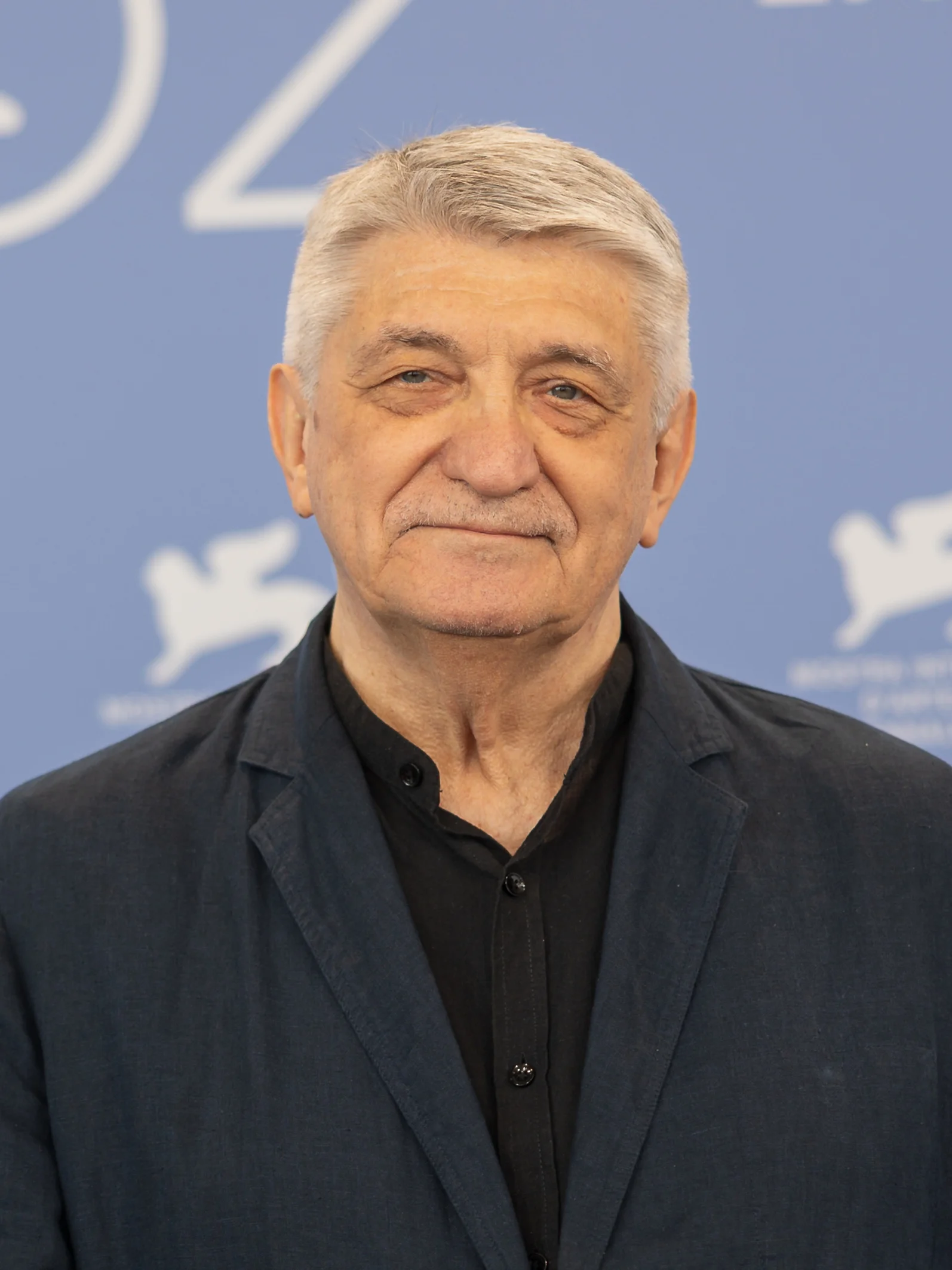
Alexander Sokurov
 Russia
Also known as: Aleksandr Sokurov, Aleksandr Sokoerov, A. Sokurov, Alexander Nikolayevich Sokurov
Birthday
June 14, 1951
Birth Sign
Gemini
Birthplace
Podorvikha, Irkutsk Oblast, Russia
Age
75 years old
About
Alexander Sokurov is a Russian film director and screenwriter, widely regarded as one of the most important voices in contemporary art cinema. Born in Siberia, he has spent his career crafting meditative, visually arresting films that explore power, history, and human mortality. His most famous work, Russian Ark (2002), was shot in a single continuous 96-minute take inside the Hermitage Museum, a technical feat that stunned the film world. In 2011, his film Faust won the Golden Lion at the Venice Film Festival, cementing his status as a master of the medium.
Beyond his artistic achievements, Sokurov has become a prominent moral voice in Russian culture, publicly criticizing state censorship and defending artistic freedom. As of 2026, he continues to create and speak out, despite facing political pressure.
Early Life & Background
Alexander Sokurov was born on June 14, 1951, in the small Siberian village of Podorvikha. His father was an army officer, so the family moved frequently across the Soviet Union during his childhood. This itinerant upbringing gave him a sense of displacement and a deep curiosity about places and history. He studied history at Gorky University (now Nizhny Novgorod State University), a background that would later infuse his films with a profound sense of time and memory.
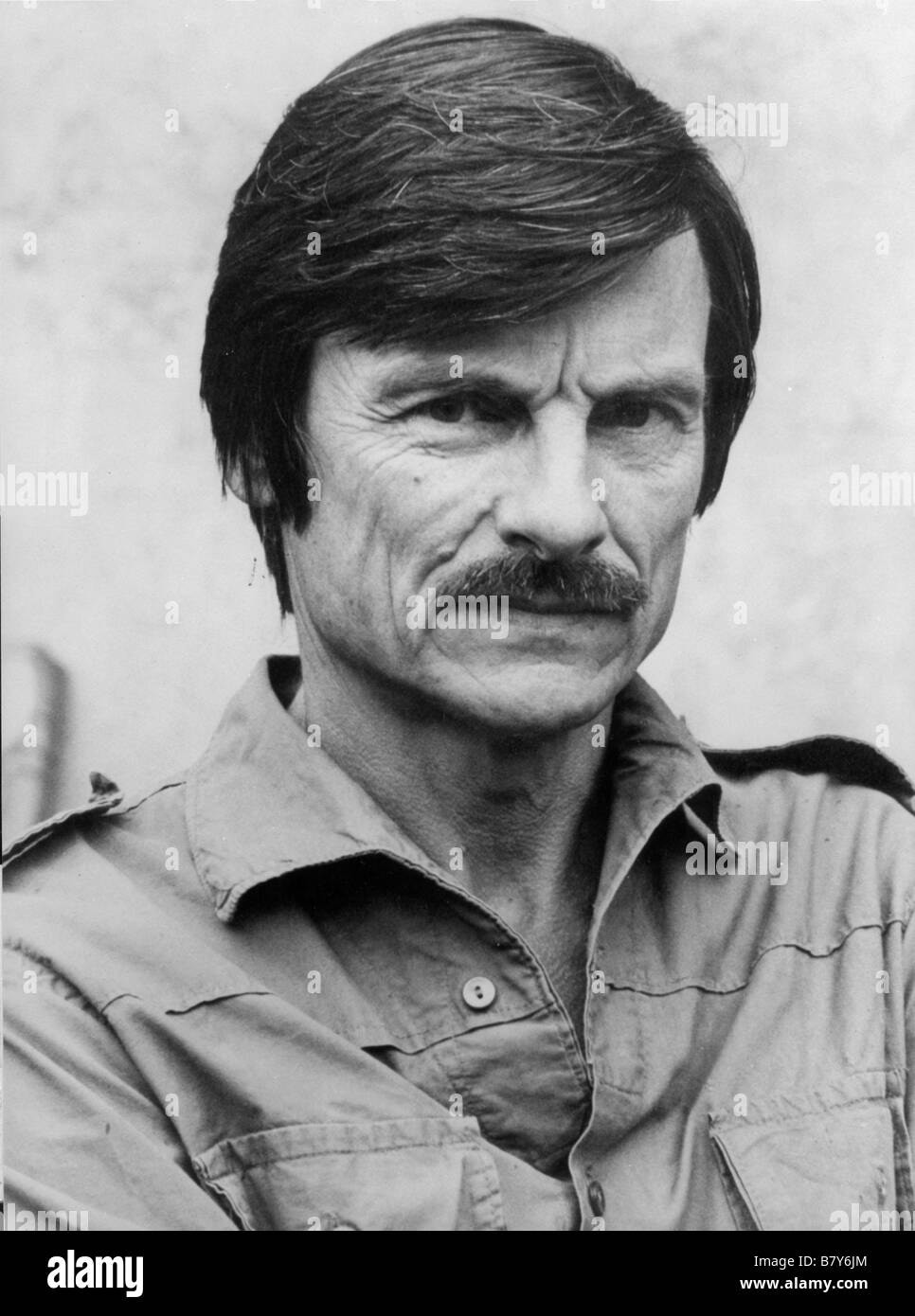
After graduating, Sokurov enrolled at VGIK, the prestigious Moscow film school, where he studied under established directors. His graduation film, The Lonely Voice of Man (1978), based on Andrei Platonov's writings, was immediately banned by Soviet censors, setting the pattern for his early career. He spent the 1980s working at Lenfilm Studios in Leningrad, where he continued to face censorship; many of his early films were shelved for years. Despite these obstacles, he developed his signature style: long takes, painterly compositions, and a contemplative, almost transcendental approach to storytelling. It was during this period that Andrei Tarkovsky publicly anointed him as his spiritual and aesthetic heir, a designation that carried immense weight in the art-cinema world.
Career Growth
Sokurov's breakthrough came with the advent of glasnost in the late 1980s. Mournful Unconcern (1987), his adaptation of Bernard Shaw's Heartbreak House, finally premiered, and he began to gain international recognition. Mother and Son (1997) established his global reputation with its hypnotic visual beauty. In 1999, Moloch, his portrait of Hitler, won the Best Screenplay award at Cannes, shared with his frequent collaborator Yuri Arabov.
The crowning achievement came in 2002 with Russian Ark, filmed in a single unbroken Steadicam shot through the Winter Palace of the Hermitage Museum. The film featured over 2,000 actors and 33 orchestra musicians, all choreographed in one day of shooting. It premiered at Cannes and became his most famous work. He followed with The Sun (2005), completing his power tetralogy that had begun with Moloch and Taurus. In 2011, Faust won the Golden Lion at Venice, his highest honor. His later works include Francofonia (2015), a meditation on the Louvre during Nazi occupation, and Fairytale (2022), an experimental digital piece. His most recent film, Director's Diary, premiered at Venice in 2025.
Career Timeline
Public Image & Style
Sokurov's public image is that of a solitary, uncompromising artist. He is seen as the spiritual heir to Andrei Tarkovsky, a designation that shapes how critics and audiences approach his work. His films are known for their deliberate pacing, muted palettes, and philosophical depth. He rarely gives interviews and avoids the trappings of celebrity, preferring to let his work speak for itself. His recent political activism has cast him as a moral voice in Russian culture, admired by many for his courage in speaking truth to power.
Fame & Fandom
The audience surrounding Alexander Sokurov is defined by a rare separation from the machinery of celebrity culture. Unlike the mobilized legions that follow pop icons or mainstream stars, his supporters are primarily cinephiles, academic critics, and viewers who engage with slow-paced, philosophical art films. There is no formal name for this collective, nor are there organized campaigns, birthday billboards, or viral rituals associated with his name. His relationship with the public is one of solitary critical engagement rather than interactive worship, fitting the profile of an embattled artist whose work demands deep contemplation over mass appeal. The cultural mythology attached to him has recently shifted from cinematic technique to political resistance, centering on his withdrawal from the Venice Biennale in 2026 and his public rebukes of Russian censorship laws. These events have cemented his status as a lone voice defying state power, yet they remain institutional and ideological disruptions rather than scenes of physical fanfare or crowd chaos. While his film Russian Ark remains a technical legend told to newcomers, the modern narrative focuses on his professional isolation within the domestic industry. Regarding his standing in global fame metrics, iFANN has evaluated him but he does not currently hold a placement in the Global Top 1,000 or any Top-100 scope list. Consequently, he holds no numeric rank in the published rankings at this time.
Interesting Facts and Legends
Alexander Sokurov's career is marked by both technical audacity and historical inquiry. His film Russian Ark was shot in a single day without the possibility of second takes, a feat achieved through one continuous 96-minute take inside the Hermitage Museum. Before turning to cinema, he studied history, a background that informs his recurring fascination with powerful historical figures across his power tetralogy, which examines Hitler, Lenin, Hirohito, and the devil. Early in his career, many of his works were banned by Soviet censors and only saw release years after production. He also founded a film workshop in Nalchik in the North Caucasus, an institution that produced the acclaimed director Kantemir Balagov. A significant part of his modern legend involves the events of May and June 2026, when he faced intense scrutiny at the Venice Biennale. Activists labeled his participation a staged performance, leading to his withdrawal from the event and marking a dramatic shift from his earlier status as a state-supported figure to a pariah within the domestic industry. In December 2025, he publicly criticized the foreign agents law as humiliating, and by mid-2026, he called for an end to film censorship, positioning himself as a potential new Sakharov for Russian cinema despite facing immediate backlash.
Notable Quotes
“Cinema is a way of thinking about the world, not just telling stories.”
“I am not interested in entertainment. I am interested in truth.”
“Art must be free, or it is nothing.”
Family & Personal Life
Alexander Sokurov keeps his personal life intensely private. He rarely discusses his family in interviews, and no confirmed public information exists about his parents beyond his father's military career, or about any siblings, spouse, or children. He has spent most of his professional life in Saint Petersburg, where he was based at Lenfilm Studios. Given his privacy, details about his household remain unknown.
Notable Connections
Sokurov is closely associated with Andrei Tarkovsky, who anointed him as his heir. His frequent screenwriter Yuri Arabov co-won the Cannes award for Moloch. He founded a film workshop in Nalchik that nurtured director Kantemir Balagov. He has also engaged publicly with fellow director Nikita Mikhalkov over censorship.
Relationships & Dating History
Alexander Sokurov has kept his personal life almost entirely out of the public eye. There is no confirmed information about his dating history, marriages, or children. He rarely discusses personal matters in interviews, and as of 2026, no reliable sources report on his relationship status. Given his privacy, any details would be speculative.
Salary, Net Worth In 2026
$5 Million
iFANN Editorial Team estimate
Per iFANN's editorial analysis, Alexander Sokurov's net worth is estimated at $5 Million as of 2026. Unlike commercial filmmakers, his income has historically come from state funding, European co-productions, festival prizes, and modest theatrical distribution. His films are art-house staples rather than box-office hits, so earnings remain modest. He has no known endorsement deals or major investments. The figure reflects a long career with international recognition but limited financial reward.
Awards Won (6)
Sokurov has won numerous prestigious awards. His Faust won the Golden Lion at Venice in 2011. Moloch won Best Screenplay at Cannes in 1999. Russian Ark earned the FIPRESCI Prize at Venice and the Nika Award for Best Director. He has also received the State Prize of the Russian Federation and the French Order of Arts and Letters.
2011 · Best Film
Faust
1999 · Cannes Film Festival
Moloch
Known For
Russian Ark
2002 · Director
Faust
2011 · Director
Mother and Son
1997 · Director
Moloch
1999 · Director
Keywords
Sources
Quick Facts
- Profession
- film director, screenwriter
- Born
- June 14, 1951
- Birthplace
- Podorvikha, Russia
- Gender
- Male
- Birth Sign
- Gemini
- Education
- Gorky University, VGIK
- Net Worth
- $5 Million
Personal Details
- Full Name
- Alexander Nikolayevich Sokurov
- Education
- Gorky University (history), VGIK (Russian State Institute of Cinematography)
Filmography
50
Total
25
Film
0
TV
Frequently Asked Questions
What is Alexander Sokurov's most famous film?
Did Alexander Sokurov win the Golden Lion?
Is Alexander Sokurov still making films?
Has Alexander Sokurov criticized Putin?
What happened with Alexander Sokurov and the Venice Biennale in 2026?
Similar People
Join the community
fans discussing