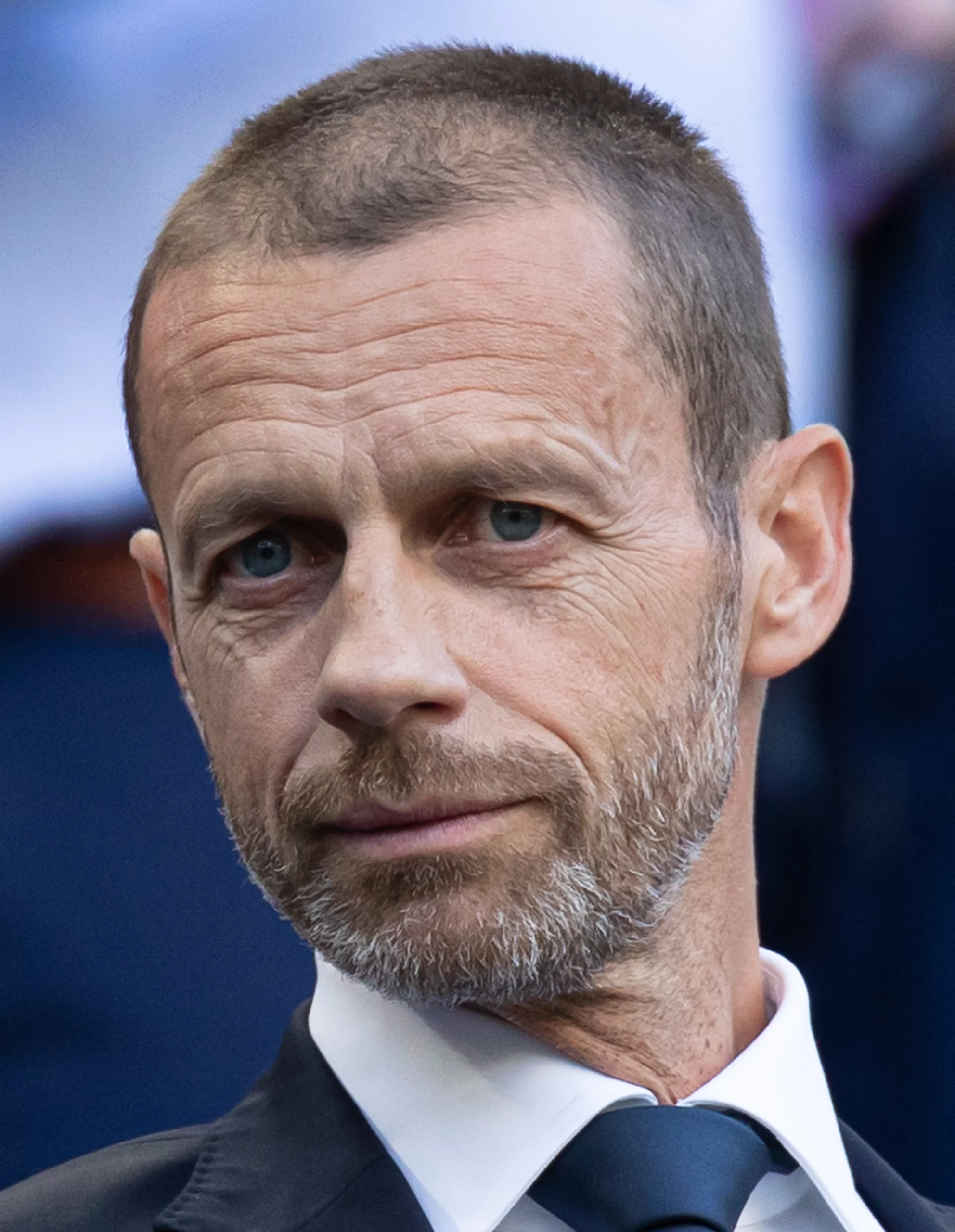
Aleksander Čeferin
 Slovenia
Birthday
October 13, 1967
Birth Sign
Libra
Birthplace
Ljubljana, Slovenia (then Yugoslavia)
Age
58 years old
About
Aleksander Čeferin is a Slovenian lawyer and football administrator who has served as UEFA president since September 2016. He is widely regarded as a stabilizing force in European football, having taken over after Michel Platini's suspension. Čeferin's legal mind drives his governance style, with a focus on financial sustainability and protecting the European sports model. Under his watch, UEFA introduced the Financial Sustainability Regulations, expanded the European Championship to 24 teams, and steered the organization through the COVID-19 pandemic. He successfully completed Euro 2020 in 2021 across multiple host cities. Čeferin is a vocal opponent of breakaway leagues, notably the European Super League, and has taken strong stances against FIFA's recent decisions. As of 2026, his contract runs through December 2027.
Early Life & Background
Čeferin was born and raised in Ljubljana, the capital of Slovenia, then part of Yugoslavia. He studied law and became a practicing lawyer, working in private practice for years. His entry into football administration came through the Football Association of Slovenia (NZS), where he took on roles that showcased his organizational skills. In 2011, he was elected president of the NZS, a position he held until 2016. During his tenure, he modernized the association's operations and pushed for better governance, earning a reputation as a capable administrator. His work at the national level caught the attention of UEFA, and he became a candidate for the top job at a time when the organization needed a clean break from scandal.
Career Growth
Čeferin was elected UEFA president on 14 September 2016, taking over a body reeling from corruption fallout. His first term focused on restoring trust and introducing the Financial Sustainability Regulations, which tightened cost controls on clubs. He oversaw the continuation of the expanded 24-team European Championship format, first used at Euro 2016. During the COVID-19 pandemic, he made the tough call to postpone Euro 2020 to 2021, then pulled off a successful multi-city tournament. In 2021, he became the face of UEFA's fight against the European Super League, helping to kill the project within days. He has been re-elected multiple times, with his current mandate through 2027. In July 2026, he boycotted the FIFA World Cup final between Argentina and Spain, protesting FIFA's expanded 48-team format and the Folarin Balogun incident. He also criticized FIFA's plan to sell World Cup stakes to investors, calling it a threat to football's integrity. That same month, he declared 'The Super League project is over.'
Career Timeline
Public Image & Style
Čeferin presents himself as a serious, reform-minded administrator. He is almost always seen in formal business attire at UEFA events and press conferences. The media portrays him as a pragmatic leader who stabilized UEFA after the Platini era and positioned it as a defender of traditional football against commercial overreach. His public communications are formal and institutional, delivered through press statements and interviews. He doesn't have a personal social media presence; his public face is channeled through UEFA's official accounts. Fans of European club football generally respect his opposition to the Super League, though his 2026 boycott of the World Cup final drew mixed reactions. He has no official fandom name or fan culture around him, as sports administrators rarely attract that kind of following.
Fame & Fandom
Aleksander Čeferin commands a professional sphere devoid of the organized fervor that characterizes pop culture icons or athletes. His audience consists primarily of football stakeholders, journalists, and administrators rather than a dedicated fanbase with rituals, campaigns, or a formal name. There are no subway advertisements bearing his likeness, nor are there fan clubs organizing birthday tributes; his interactions remain strictly within the bounds of official governance and press conferences. The narrative surrounding him is defined not by adoration but by high-stakes political maneuvering, most notably his 2026 boycott of the FIFA World Cup final following a breakdown in relations with Gianni Infantino. This act of principled refusal, alongside his vocal criticism of expanded tournament formats, has cemented his reputation as a stern defender of European football interests rather than a beloved celebrity figure. Despite the absence of a traditional fandom, his global profile remains substantial within the context of sports administration. According to the iFANN Global Fame Rankings, he holds the position of the 3rd most famous person from Slovenia, a standing he has maintained from the previous cycle. This placement reflects his influence across media coverage, search trends, and consumption signals worldwide, acknowledging his role as a pivotal figure in international sports governance. While he does not compete for fame among entertainers, his authority ensures a consistent presence in global discourse regarding the future of football. The data indicates that his prominence is anchored in his institutional power and his contentious relationship with rival organizations, rather than personal charisma or viral moments. He stands as a recognized administrator whose decisions shape the sport, securing his place in the public consciousness through policy and conflict rather than performance.
Interesting Facts and Legends
Aleksander Čeferin is a licensed lawyer, a background that distinguishes him from most football administrators who typically rise through playing or coaching ranks. He once selected Zlatan Ibrahimović as a guest for a UEFA presidential event, explicitly praising the Swedish striker's impact on the game. His administrative acumen was tested during the pandemic when he successfully rescheduled Euro 2020 to 2021, marking the first time the European Championship was postponed due to external circumstances. Despite holding immense power within the sport, Čeferin maintains a strict boundary around his private life, rarely disclosing details about his family to the public. He has also been a consistent critic of FIFA President Gianni Infantino, particularly regarding plans to expand the World Cup format. A significant moment defining his recent legacy occurred in July 2026, when he boycotted the FIFA World Cup final. This decision stemmed from a severe breakdown in relations with Infantino, reportedly triggered by the Folarin Balogun incident and broader disagreements over tournament expansion. Reports indicate this standoff evolved from an earlier alliance into open enmity, with Čeferin facing criticism for suggesting an expanded World Cup would result in uninteresting matches. This diplomatic friction represents the primary narrative surrounding him in the current era, framing his legacy through principled refusal to participate in FIFA's flagship event rather than through personal mythos or fan adoration.
Notable Quotes
“The Super League project is over.”
“Taking matches away from their community roots risks breaking football.”
“The expanded 48-team World Cup creates uninteresting matches.”
Family & Personal Life
Čeferin is married to Barbara Čeferin, though the couple has not publicly shared the date of their wedding. He is known to be a family man but keeps details about his children and extended family out of the public eye. The family resides in Slovenia, and Čeferin often commutes to UEFA headquarters in Nyon, Switzerland. His private approach means little is known about his household or upbringing beyond his birthplace.
Notable Connections
Čeferin's most notable association is with Gianni Infantino, the FIFA president, whom he has frequently clashed with over World Cup expansion and governance. He worked closely with Zlatan Ibrahimović, selecting him as a UEFA president guest. His predecessor, Michel Platini, left a scandal-ridden legacy that Čeferin had to clean up. The Folarin Balogun incident, involving a USMNT player, was cited as a factor in his 2026 World Cup final boycott.
Relationships & Dating History
Čeferin is married to Barbara Čeferin, though the exact start date of their relationship is not public. The couple has been together for many years and maintains a low profile. There are no public records of previous relationships, divorces, or scandals. As of 2026, he remains married to Barbara, and the relationship appears stable.
- MarriedBarbara ČeferinCurrentMarried; details of wedding date not publicly disclosed.
Salary, Net Worth In 2026
His primary income is his salary as UEFA president, but UEFA does not disclose executive compensation. He has no known business ventures, endorsement deals, or significant real estate holdings in public records. As a former lawyer, he may have investments from his legal career, but those are not documented. His wealth is likely modest compared to top footballers or club owners, but comfortable for a senior sports administrator.
Awards & Accolades
View 2 records, honours and achievementsKnown For
UEFA President
2016 · President
President of Football Association of Slovenia
2011 · President
Keywords
Sources
Quick Facts
- Profession
- lawyer, sports official
- Born
- October 13, 1967
- Birthplace
- Ljubljana, Slovenia (then Yugoslavia)
- Gender
- Male
- Spouse
- Barbara Čeferin
- Birth Sign
- Libra
Personal Details
- Full Name
- Aleksander Čeferin
- Spouse
- Barbara Čeferin
- Education
- Law degree
Frequently Asked Questions
How old is Aleksander Čeferin?
Is Aleksander Čeferin married?
What is Aleksander Čeferin's net worth?
Why did Aleksander Čeferin boycott the World Cup final?
Does Aleksander Čeferin have children?
Social Media
Similar People
Join the community
fans discussing