
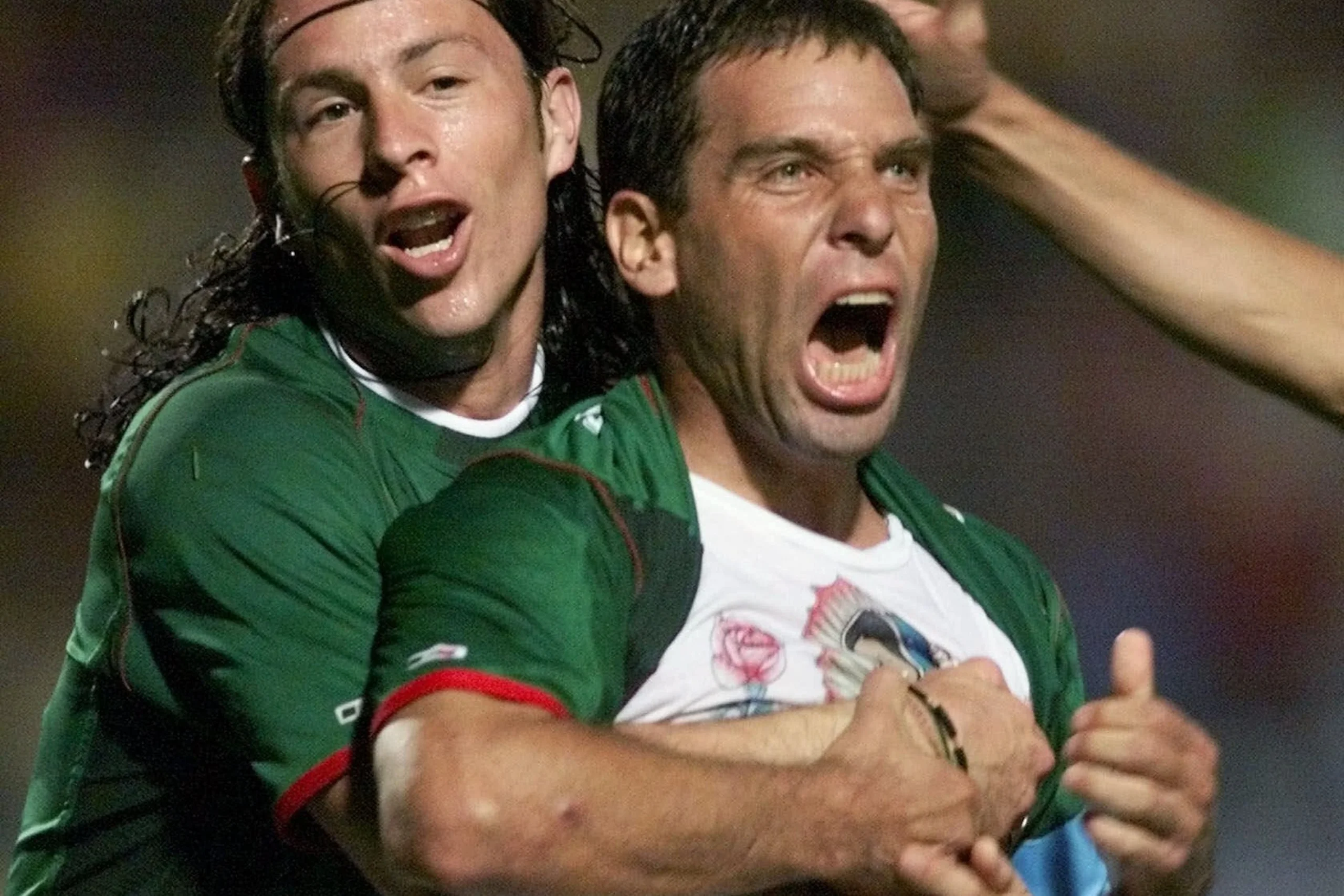
Alberto García Aspe
 Mexico
Also known as: El Beto, García Aspe
Birthday
May 11, 1967
Birth Sign
Taurus
Birthplace
Mexico City, Mexico
Age
59 years old
Height
5 ft 7 in (1.69 m)
About
Alberto García Aspe Mena is a former professional association footballer from Mexico who became one of the most celebrated midfielders in the country's history. Born in Mexico City on May 11, 1967, he built a reputation for tactical intelligence, disciplined play, and strong leadership as a captain. Standing at 5 feet 7 inches, he compensated for his lack of height with exceptional vision and passing accuracy.
Today, he remains a prominent voice in Mexican sports media as a television analyst and commentator. His career has transitioned from the pitch to the broadcast booth, where he is known for sharp critiques of the Mexican National Team's management and strategy. Fans continue to revere him as a key figure of the "Golden Generation" of Mexican football.
Early Life & Background
García Aspe grew up in Mexico City surrounded by a deep cultural connection to football. Unlike many players who entered the professional system immediately, he honed his skills through the rigorous academic and athletic structure of UNAM Pumas. This university system allowed him to develop a unique blend of intellectual understanding and physical skill. He joined the senior squad of UNAM in 1988, marking the start of his professional journey. His early years were defined by a focus on tactical intelligence rather than raw physical dominance. This foundation set the stage for a career built on vision and precise distribution. The environment at UNAM fostered a style of play that valued control and strategic positioning, qualities that would define his entire career.
Before his rise to international stardom, Aspe spent several seasons mastering his craft within the domestic league. His time at Pumas was not just about learning the game; it was about refining the specific type of midfield control that would later become his trademark. He learned to read the game from a position that required constant decision-making under pressure. This period of development in the late 1980s prepared him for the demands of the highest level of competition in Mexico. By the time he left for Necaxa, he had already established himself as a player capable of dictating the tempo of matches.
Career Growth
García Aspe's club career is best defined by two golden eras: his time with UNAM Pumas and his transformative spell with Club Necaxa. During his tenure with UNAM from 1988 to 1994, he helped the team secure the Liga MX title in the 1993–1994 season. His performances here established him as one of the premier talents in the country. In 1994, he transferred to Club Necaxa, a move that would define his legacy. This period coincided with the "Golden Generation" of Necaxa. Under his leadership, the team achieved unprecedented success, winning four consecutive Liga MX titles between 1994 and 1998. These championships included Verano 1994, Invierno 1996, Verano 1997, and Invierno 1998. This run is widely considered one of the greatest dynasties in Mexican club football history.
Following his success at Necaxa, Aspe moved to the historic rival club América in 1999. While his tenure there was shorter, he continued to demonstrate his class in the league. He concluded his playing career with Puebla FC, retiring in 2002 after a solid final stint. On the international stage, García Aspe was a pillar of the Mexican national team for over a decade. He earned 109 caps for Mexico, scoring 21 goals. He represented Mexico in three FIFA World Cups: 1994, 1998, and 2002. His performance in these tournaments cemented his status as a national icon.
Career Timeline
Public Image & Style
García Aspe is portrayed as a tough, intelligent, and honest voice in Mexican football. His image evolved from a disciplined captain on the field to a critical pundit off it. In recent years, his persona has included the "critical pundit" role, willing to challenge authority and speak uncomfortable truths about the federation's administration. He is known for being sharp and often controversial in his analysis. His commentary is respected for its depth, even when it sparks debate. Fans appreciate his willingness to call out mistakes without fear of repercussion. This authenticity has made him a trusted figure in sports media, bridging the gap between the playing generation and the current era.
Fame & Fandom (iFAMOUS Rankings)
Alberto García Aspe commands a global audience rooted deeply in Mexican football history, yet his reach remains distinct from the viral ubiquity of modern pop icons. As of September 2026, iFANN's Global Fame Engine has evaluated this person, but they do not currently hold a placement in the published rankings (Global Top 1,000 or a Top-100 scope list). This absence signals a specific tier of fame: legendary within a dedicated sphere but lacking the broad, cross-demographic metrics required for a global numerical rank. The fanbase consists primarily of general Mexican football supporters who revere him as part of the Golden Generation, though there is no evidence of a formal, organized fandom with a specific collective name. Unlike stars with armies of digital crusaders, his followers engage through standard post-match reverence and public appearances rather than sustained digital campaigns or charter pushes. His social media presence serves more as a personal brand for his current work as a television analyst and commentator than a hub for a dedicated fan club. While he maintains an active voice shaping discourse on the Mexican National Team, the lack of a named faction or official charity drives underscores that his legacy rests on tactical brilliance and consistent high-level performance rather than chaotic or theatrical moments.
Interesting Facts and Legends
García Aspe's cultural mythology is built on three verified, high-profile events that remain central to Mexican football lore. The most famous incident occurred during the 1998 FIFA World Cup in France, where he scored the opening goal against Belgium on June 21, 1998. This penalty kick sent the ball past goalkeeper Philip de Wilde, securing a crucial 2–2 draw that helped Mexico advance from the group stage. Another legendary moment took place during a 1993 Copa América match against Peru, where García Aspe struck a shot that hit the post with such velocity and precision that it became instantly memorable. Additionally, his performance in the 1994 World Cup qualifier against Bulgaria, where Mexico drew 1–1 on July 5, 1994, is often recounted as a reflection of his leadership and midfield dominance during a critical era for the national team.
He is frequently described in media retrospectives as one of the greatest footballers Mexico has had, a sentiment echoed by analysts and former teammates alike. His legacy extends beyond the pitch into commentary, where he remains a vocal critic regarding the Mexican National Team. In recent years, he has become known for sharp critiques of coaching decisions, notably slamming manager Gerardo Tata Herrera and questioning player selections in 2022. These modern actions reinforce his status as a living legend whose voice carries significant weight among fans and pundits.
Notable Quotes
“Mexico played by note... surely England will be our rival in the round of 16.”
“The coaching decisions were detrimental to the team's performance.”
“I am speaking the truth because I love this national team.”
Family & Personal Life
Alberto García Aspe keeps his family life largely out of the public eye. While he is known to have children, their names and the identities of their mothers have not been widely publicized in the press. Reports suggest he has a family, but specific details about partners or the number of children remain outside the public domain. He appears to be focused on his post-retirement career and private family life. Unlike many modern athletes, Aspe has maintained a private boundary around his personal relationships. There are no verified public records of marriages, engagements, or long-term relationships documented in major biographical sources or credible news outlets. As of 2026, there is no public confirmation of his current marital status. He does not engage in public dating narratives or high-profile flings.
Notable Connections
Relationships & Dating History
Public records and media coverage regarding Alberto García Aspe's personal romantic life are notably scarce compared to his public career. Unlike many modern athletes, Aspe has maintained a private boundary around his family life. There are no verified public records of marriages, engagements, or long-term relationships documented in major biographical sources or credible news outlets. As of 2026, there is no public confirmation of his current marital status. He is not listed as divorced or widowed in official databases. While he is known to have children, their names and the identities of their mothers have not been widely publicized in the press. Reports suggest he has a family, but specific details about partners or the number of children remain outside the public domain. Based on available data, his relationship status is effectively unpublicized. He does not engage in public dating narratives or high-profile flings. He appears to be focused on his post-retirement career and private family life.
Salary, Net Worth In 2026
$6 Million
iFANN Editorial Team estimate
iFANN currently estimates Alberto García Aspe's net worth at approximately $6 million USD. This figure reflects his diverse income streams from sports salaries, broadcasting, and business ventures. Estimates regarding his net worth vary slightly across financial reporting sites, reflecting his long-standing career in Mexican football. Celebrity Net Worth places his estimated net worth at approximately $5 million USD as of mid-2026, which aligns closely with iFANN's research. His earnings during his peak playing years in the 1990s with Necaxa and América were substantial for the Mexican market. A significant portion of his current wealth stems from his long-standing role as a television analyst for major networks covering Liga MX and international tournaments. While less publicized than global superstars, he has leveraged his brand for endorsements and speaking engagements. The figure of $6 million represents a conservative estimate based on his enduring relevance in the Mexican media landscape and his successful transition from player to pundit.
Awards Won (4)
While García Aspe did not win individual international awards like the Ballon d'Or, his accolades are deeply rooted in domestic success and recognition within Mexican football. He won four consecutive Liga MX titles with Necaxa and one with UNAM. He is frequently included in "Best Players of All Time" lists for Mexico. In 2022, he was ranked among Mexico's top 25 players of all time by Bolavip.
1998 · Club Competition
Necaxa
1997 · Club Competition
Necaxa
1996 · Club Competition
Necaxa
1994 · Club Competition
UNAM Pumas
Known For
Liga MX Championship
1994 · Player
FIFA World Cup
1998 · Player
Mexican National Team
1998 · Captain
Keywords
Sources
Quick Facts
- Profession
- association football player
- Born
- May 11, 1967
- Birthplace
- Mexico City
- Gender
- Male
- Birth Sign
- Taurus
- Height
- 5 ft 7 in (1.69 m)
- Caps
- 109
- Goals
- 21
Personal Details
- Full Name
- Alberto García Aspe Mena
- Height
- 5 ft 7 in (1.69 m)
- Children
- Multiple children (names unpublicized)
- Education
- Universidad Nacional Autónoma de México (UNAM)
Frequently Asked Questions
How old is Alberto García Aspe?
What is Alberto García Aspe's net worth?
Did Alberto García Aspe win any World Cups?
Is Alberto García Aspe still playing football?
Who is Alberto García Aspe currently dating?
Similar People
Join the community
fans discussing