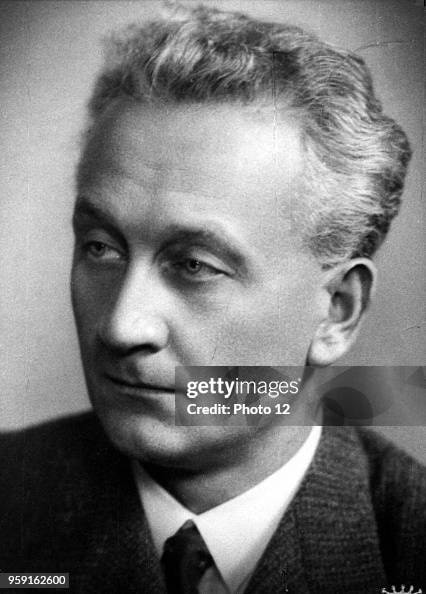
Albert Szent-Györgyi
 Hungary
Birthday
September 16, 1893
Birth Sign
Virgo
Birthplace
Budapest, Kingdom of Hungary, Austria-Hungary
Age
Died at 93
About
Albert Szent-Györgyi is renowned as a Hungarian biochemist whose discoveries fundamentally reshaped cellular biology and nutrition. He is best known for winning the 1937 Nobel Prize in Physiology or Medicine for isolating vitamin C and elucidating biological oxidation processes. His work on the citric acid cycle and muscle contraction—identifying actin, myosin, and the role of ATP—remains foundational. He published hundreds of papers and several books, including On Oxidation, Fermentation, Vitamins, Health, and Disease and The Living State. His later research focused on the biophysics of cancer and free radicals. He died on October 22, 1986, at age 93, leaving a legacy as one of the 20th century's most versatile biochemists. His discoveries continue to influence biochemistry, nutrition, and cancer research worldwide.
Early Life & Background
Szent-Györgyi was born in Budapest on September 16, 1893, the second son of Miklós Szent-Györgyi, a landowner, and Jozefina Lenhossék, a musician. His uncle Mihály Lenhossék, a renowned physiologist, became a constant presence in his childhood and inspired his interest in science. He described himself as a dull child who hated books and often needed a tutor, but at sixteen he suddenly developed a hunger for knowledge and graduated high school with honors. He entered Budapest Medical School in 1911 but found medical courses boring and gravitated to his uncle's anatomy lab. World War I interrupted his studies in 1914 when he began serving as an army medic. After two years in the trenches, disgusted with war, he shot himself through the left humerus, claimed enemy fire, and was sent back to Budapest. While his arm healed, he finished medical school, earning his MD in 1917 from Semmelweis University. After the war he worked with pharmacologist G. Mansfeld in Pozsony, electrophysiologist Armin von Tschermak in Prague, biochemist L. Michaelis in Berlin, and studied physical chemistry in Hamburg, Leiden, and Cambridge. He later earned a PhD from the University of Cambridge.
Career Growth
In the 1920s Szent-Györgyi began experiments on plant browning, isolating a substance he called hexuronic acid from citrus juice. In 1932, working with Joseph Svirbely, he confirmed that hexuronic acid was vitamin C by demonstrating its anti-scorbutic activity in guinea pigs. He famously used paprika from Szeged to produce three pounds of pure crystalline ascorbic acid. The discovery earned him the 1937 Nobel Prize in Physiology or Medicine. He also identified fumaric acid and other components of the citric acid cycle and unraveled the molecular basis of muscle contraction, identifying actin, myosin, and ATP's role. During World War II he was active in the Hungarian resistance; Adolf Hitler allegedly ordered his arrest, forcing him into hiding. After the war he emigrated to the United States in 1947, working at the Marine Biological Laboratory in Woods Hole and the National Institutes of Health. He became a US citizen, served as Visiting Professor at Harvard in 1936 and Franchi Professor at the University of Liège in 1938, and received the Albert Lasker Award for Basic Medical Research in 1954. He later investigated the biophysics of cancer and free radicals, co-founding the National Foundation for Cancer Research. He received the Cameron Prize for Therapeutics of the University of Edinburgh in 1946.
Career Timeline
Public Image & Style
Szent-Györgyi is remembered as one of the 20th century's most versatile and influential biochemists. Colleagues described him as having an abundance of vitality and charisma, with overwhelming charm and generosity intermingled with egotism and vindictiveness. He was known as a brilliant and outrageous ham in the laboratory. His legacy is celebrated in biochemistry, nutrition, and cancer research communities. The National Foundation for Cancer Research, which he co-founded, continues to preserve his memory and mission. No official fandom name exists, but his discoveries are taught in textbooks worldwide. He received honorary Doctor's degrees from many universities and held memberships in the most renowned academic and scientific societies, including the Pontifical Academy of Sciences.
Fame & Fandom
Albert Szent-Györgyi currently holds no placement in the published Global Top 1,000 rankings or any Top-100 scope list within the iFANN system. The Global Fame Engine has evaluated his standing as of August 2026 and determined that he does not currently occupy a ranked position among the world's most famous figures. While his name carries immense weight in academic circles, he lacks a formal fanbase with an official designation, organized rituals, or public campaigns typical of modern celebrity culture. His legacy is sustained through scientific institutions, the Albert Szent-Györgyi Prize for cancer research, and the continued operation of the medical school bearing his name at the University of Szeged rather than through a devoted following of enthusiasts. There are no documented instances of street shutdowns, viral folklore, or fan-funded tributes dedicated to him. The narrative surrounding his life remains strictly within the realm of verified historical achievement and biographical anecdote, lacking the performative mythology often associated with pop icons.
Interesting Facts and Legends
He famously shot himself in the arm to avoid combat during World War I, later describing a mad desire to return to science. To isolate vitamin C more efficiently than citrus allowed, he utilized paprika due to its lower sugar content, which facilitated easier crystallization. During the Nazi occupation, he actively assisted Jewish friends in fleeing Hungary. A fervent antiwar activist throughout his life, he recounted discovering vitamin C in paprika by accident after deciding not to eat it: "I thought of a way out... Suddenly it occurred to me that this is the one plant I had never tested." He maintained a rigorous daily routine of running three kilometers before dawn, a habit that became part of his popular image alongside his quote on innovation. His papers reside in the National Library of Medicine's Profiles in Science collection. Legends also persist regarding the University of Georgia missing a Nobel Prize due to a misunderstanding involving his cats, adding a layer of institutional intrigue to his biography beyond pure science.
Notable Quotes
“I was overcome with such a mad desire to return to science that one day I grabbed my revolver and in my despair put a shot through my upper arm.”
“I did not feel like eating it, so I thought of a way out. Suddenly it occurred to me that this is the one plant I had never tested. I took it to the laboratory… and by about midnight I knew that it was a treasure chest full of vitamin C.”
Family & Personal Life
Szent-Györgyi was the second son of Miklós Szent-Györgyi, a landowner and businessman from a titled family who managed a large estate about fifty miles from Budapest, and Jozefina Lenhossék, a talented musician. His mother's brother, Mihály Lenhossék, was a famous physiologist and professor at the University of Budapest who inspired his scientific career. His family included three generations of scientists. His mother auditioned for Gustav Mahler, who told her to marry instead. His brother Pál became a professional violinist, and Szent-Györgyi himself was a talented pianist. He married four times: to Kornélia Demény in 1917 (divorced 1938), with whom he had one daughter, Cornelia, born in October 1918; to Márta Borbíró in 1941 (widowed 1963); to June Susan Wichterman in 1965 (divorced 1968); and to Marcia Houston in 1975, who survived him at his death in 1986.
Notable Connections
Szent-Györgyi worked closely with Joseph Svirbely to confirm vitamin C's identity. His uncle Mihály Lenhossék, a physiologist, mentored him. Norman Haworth determined vitamin C's structure, sharing the 1937 Nobel Prize in Chemistry. Charles King was a rival in isolating vitamin C. Szent-Györgyi collaborated with G. Mansfeld, Armin von Tschermak, and L. Michaelis at various European institutions.
Relationships & Dating History
Szent-Györgyi married four times. His first marriage was to Kornélia Demény, daughter of Hungary's Postmaster General, in 1917; they had one daughter, Cornelia, born in 1918, and divorced in 1938. In 1941 he married Márta Borbíró; she died in 1963. He then married June Susan Wichterman in 1965, divorcing in 1968. His final marriage was to Marcia Houston in 1975, which lasted until his death in 1986. He was widowed at the time of his death.
- MarriedKornélia Demény1917 - 1938Daughter of Hungary's Postmaster General; had one daughter Cornelia; divorced.
- MarriedMárta Borbíró1941 - 1963She died in 1963.
- MarriedJune Susan Wichterman1965 - 1968Divorced in 1968.
- MarriedMarcia Houston1975 - 1986Married until his death.
Death & Aftermath
Died
October 22, 1986 (aged 93)
Death Place
Unknown
Cause of Death
Unknown
Albert Szent-Györgyi died on October 22, 1986, at the Marine Biological Laboratory in Woods Hole, Massachusetts. While he remained active in scientific discourse until his final years, the circumstances surrounding his end were marked by quietude rather than public ceremony. Tributes from the international scientific community acknowledged his foundational contributions to biochemistry, particularly regarding vitamin C and muscle physiology. The National Foundation for Cancer Research, an organization he co-founded, continued its operations without interruption following his death, maintaining the legacy of his later work on cancer biophysics. The Albert Szent-Györgyi Prize, established to honor outstanding research in free radicals and oxidative stress, remains a recurring distinction within the scientific field, serving as a lasting institutional memory of his influence.
Net Worth (Estate Value)
$1 Million
iFANN Editorial Team estimate
As a scientist who died in 1986, Szent-Györgyi's net worth was modest, typical of an academic researcher. His estate value is not publicly documented. He co-founded the National Foundation for Cancer Research, which continues to operate. His scientific papers and discoveries generate ongoing recognition but no significant financial royalties. There are no publicly available figures for ongoing estate earnings, royalties, or licensing deals. Per iFANN's editorial analysis, his net worth in 2026 is estimated at $1 Million, reflecting his modest lifestyle and the enduring value of his intellectual legacy.
Awards Won (4)
Szent-Györgyi won the Nobel Prize in Physiology or Medicine in 1937 for his discoveries on biological oxidation and vitamin C. He also received the Cameron Prize for Therapeutics of the University of Edinburgh in 1946 and the Albert Lasker Award for Basic Medical Research in 1954. During World War I he earned the Silver Medal of Military Valor.
1937 · Physiology or Medicine
Discoveries concerning biological oxidation processes and the isolation of vitamin C
1946 · Therapeutics
Known For
Isolation of vitamin C
1932 · Discoverer
Citric acid cycle components
1935 · Researcher
Muscle contraction mechanism (actin, myosin, ATP)
1940 · Discoverer
Keywords
Sources
Quick Facts
- Profession
- biochemist
- Born
- +1893-09-16
- Birthplace
- Budapest
- Died
- +1986-10-22
- Death Place
- Woods Hole
- Gender
- Male
- Spouse
- Kornélia Demény, Márta Borbíró, June Susan Wichterman, Marcia Houston
- Birth Sign
- Virgo
Personal Details
- Full Name
- Albert Imre Szent-Györgyi de Nagyrápolt
- Spouse
- Kornélia Demény, Márta Borbíró, June Susan Wichterman, Marcia Houston
- Children
- Cornelia Szent-Györgyi
- Education
- MD from Semmelweis University (1917); PhD from University of Cambridge
Frequently Asked Questions
How did Albert Szent-Györgyi discover vitamin C?
Was Albert Szent-Györgyi married?
What did Albert Szent-Györgyi win the Nobel Prize for?
How old was Albert Szent-Györgyi when he died?
Did Albert Szent-Györgyi have children?
Join the community
fans discussing