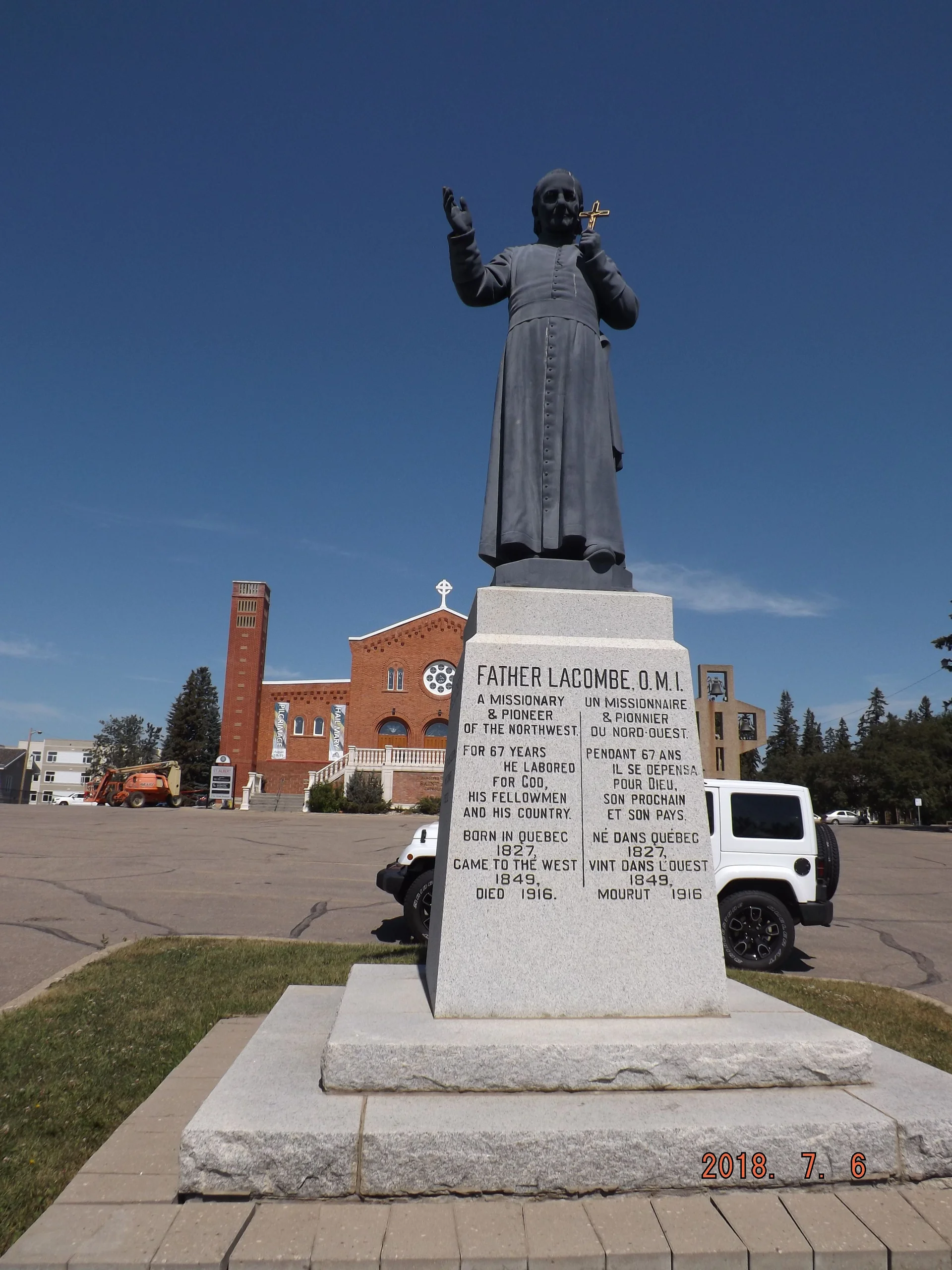
Albert Lacombe
 Canada
Also known as: Father Lacombe, The Flying Priest, Man of the Good Heart
Birthday
February 28, 1827
Birth Sign
Sagittarius
Birthplace
Saint-Sulpice, Lower Canada (now Quebec)
Age
Died at 89
About
Albert Lacombe was a French-Canadian Roman Catholic priest and missionary who became one of the most influential figures in the history of Western Canada. Born in Saint-Sulpice in 1827, he joined the Oblates of Mary Immaculate at age 19 and dedicated his life to ministering to Indigenous peoples across the Canadian prairies. He is best known for his work as a peacemaker who mediated conflicts between the Cree, Blackfoot, and Ojibway nations and the Canadian government during a period of intense expansion.
Lacombe earned a reputation as the "Flying Priest" for his incredible speed in traversing vast distances on horseback and foot to serve isolated communities. His diplomatic approach was influenced by his grandfather's mixed French-Canadian and Ojibway heritage. He played a pivotal role in negotiating safe passage for the Canadian Pacific Railway and persuading Chief Crowfoot to remain neutral during the North-West Rebellion. Lacombe died in 1916, leaving behind a complex legacy of faith, diplomacy, and cultural exchange.
Early Life & Background
Albert Lacombe was born on February 28, 1827, in Saint-Sulpice, Lower Canada, into a family with mixed heritage. His grandfather was of both French-Canadian and Ojibway descent, an ancestry that later informed his diplomatic approach to ministry. Raised in a devout Catholic household, Lacombe displayed early signs of religious vocation and linguistic aptitude. He received his early education locally before entering the seminary.
At age 19, he joined the Oblates of Mary Immaculate, a missionary order dedicated to evangelizing remote regions. His first steps toward his career involved rigorous theological training and language studies, preparing him for the challenges of frontier ministry. Lacombe learned multiple Indigenous languages, enabling deep cultural exchange with the communities he would eventually serve. These formative years laid the groundwork for a lifetime of travel and mediation across the Canadian prairies.
Career Growth
Lacombe arrived in Western Canada in the 1850s, beginning his mission work among Indigenous communities. In 1859, he established the first mission among the Blackfoot people near present-day Lethbridge, Alberta. Throughout the 1860s and 1870s, he traveled thousands of miles on foot and horseback, establishing missions, schools, and churches across the prairies.
His career reached significant milestones in diplomacy. In 1873, he mediated peace between the Cree and Blackfoot nations, preventing potential conflict. In 1874, he negotiated safe passage for the Canadian Pacific Railway through Blackfoot territory. During the North-West Rebellion of 1885, he persuaded Chief Crowfoot and other Indigenous leaders to remain neutral, avoiding further bloodshed. Lacombe continued his missionary work until his death in 1916, focusing on education and infrastructure development. In 1969, the Historic Sites and Monuments Board of Canada officially designated him a National Historic Person.
Career Timeline
Public Image & Style
Lacombe's public persona is defined by his endurance and adaptability. Accounts describe him as a man of great adventure, capable of covering vast distances on horseback and foot. He was often referred to as the "Flying Priest" due to the incredible speed at which he traversed vast distances to serve isolated communities. His image shifted over time from pure reverence to critical examination, particularly following the vandalism of a statue in St. Albert in June 2024. This incident highlighted ongoing debates about his role in colonial history, though he remains widely respected for his role as a peacemaker and missionary.
Fame & Fandom
Albert Lacombe commands a legacy defined not by modern celebrity rituals or organized fan clubs, but by historical veneration and institutional commemoration. Unlike contemporary figures who inspire birthday billboards or viral social media campaigns, his admirers are historians, religious scholars, and communities maintaining his memory through schools and monuments. There is no formal moniker for those who revere him; the concept of a dedicated fanbase engaging in celebratory acts does not exist for a man who passed away over a century ago. Instead, his influence persists through the Albert Lacombe Catholic School and Sports Academy in St. Albert, which has operated for decades under his namesake, and through the ongoing public discourse surrounding statues that have faced vandalism in recent years. The most significant recent event involving his public image occurred in June 2024, when a statue in St. Albert was defaced with paint and an inscription, highlighting a shift from pure reverence to critical examination of his role in colonial history. This engagement reflects a complex relationship with the past rather than the adulation typical of pop culture icons. His stories, such as being called the Man of the Good Heart or the Flying Priest due to his legendary travel speed, serve as folklore rather than viral moments. While iFANN has not yet collected specific fame metrics for this historical figure, the absence of data confirms that he holds no current ranking within the global celebrity hierarchy. Consequently, Albert Lacombe is not currently ranked among the world's most famous people, nor does he hold a position in any genre-specific category according to available records.
Interesting Facts and Legends
Folklore often refers to him as the "Man of the Good Heart" or the "Flying Priest" due to the incredible speed at which he traversed vast distances on horseback to serve isolated communities. A specific anecdote frequently cited involves Lacombe serving as President of the Canadian Pacific Railway for exactly one hour, a brief tenure used to illustrate his immense political trustworthiness among both government officials and Indigenous leaders. Historical records verify that his grandfather was of mixed French-Canadian and Ojibway heritage, an ancestry that informed his diplomatic approach to ministry. Legends also recount how he secured promises from railway companies regarding Indigenous lands, a rare instance where d. Although often viewed with respect, his legacy has faced scrutiny, exemplified by the vandalism of a statue in St. Albert in June 2024, highlighting ongoing debates about his role in colonial history.
Notable Quotes
“I am the servant of the Indians.”
“The only way to civilize the Indians is to make them Christians.”
Family & Personal Life
Albert Lacombe was born to Albert Lacombe and Agathe Duhamel. His grandfather was of mixed French-Canadian and Ojibway descent, an ancestry that later informed his diplomatic approach to ministry. As a Roman Catholic priest, Lacombe took vows of celibacy and did not marry or have children. There are no records of romantic relationships or dating history, consistent with his religious commitments. His personal life was dedicated entirely to his ministry and the communities he served.
Notable Connections
Relationships & Dating History
As a Roman Catholic priest, Albert Lacombe took vows of celibacy and did not marry or have children. There are no records of romantic relationships or dating history, consistent with his religious commitments. His personal life was dedicated entirely to his ministry and the communities he served. He maintained close relationships with Indigenous leaders like Chief Crowfoot and fellow missionaries, but these were professional and spiritual bonds rather than romantic partnerships.
Death & Aftermath
Died
December 12, 1916 (aged 89)
Death Place
St. Albert, Alberta, Canada
Cause of Death
Natural causes related to advanced age
Albert Lacombe passed away on December 12, 1916, within the mission house of the Oblates of Mary Immaculate in St. Albert, Alberta, at the age of 89. His final days were spent peacefully among the religious community he had served for decades, with no specific disease or accident cited as the cause of his passing. The reaction to his departure was one of widespread mourning across Western Canada, where tributes flowed from government officials, church hierarchy, and Indigenous leaders who viewed him as a vital peacemaker.
Thousands attended his funeral service at the local Catholic church, including members of the Cree and Blackfoot nations he had long represented, before his burial in the adjacent cemetery. The town of Lacombe, Alberta, and the Albert Lacombe Catholic School and Sports Academy stand as enduring testaments to a legacy that outlived its architect by more than a century. This posthumous recognition, alongside his designation as a National Historic Person by Parks Canada, frames the memory of a man whose contributions facilitated the construction of roads and railways through negotiation. While revered as a bridge between worlds, his legacy has faced scrutiny in recent years, exemplified by the vandalism of a statue in St. Albert in June 2024, highlighting ongoing debates about his role in colonial history.
Net Worth (Estate Value)
$0
iFANN Editorial Team estimate
Albert Lacombe lived during a time when personal wealth was not a primary measure of success for clergy. As a priest taking vows of celibacy, he did not accumulate personal assets or engage in commercial ventures. His life was dedicated to the mission, and he relied on the support of the Oblates of Mary Immaculate and donations from the faithful. The estate left by Father Lacombe consisted primarily of personal effects and religious items, with no significant financial holdings reported. Today, his legacy is measured not in monetary terms but in the institutions named after him, such as the Albert Lacombe Catholic School and Sports Academy, and the town of Lacombe, Alberta. The economic value of his contributions lies in the infrastructure and cultural bridges he helped build across Western Canada.
Awards Won (1)
While Lacombe did not receive modern entertainment awards, his contributions were recognized through significant honours. In 1969, he was designated a National Historic Person by the Historic Sites and Monuments Board of Canada. Posthumous recognition includes the naming of the town of Lacombe, Alberta, and the Albert Lacombe Catholic School and Sports Academy in St. Albert.
1969 · Historical Designation
Designation by the Historic Sites and Monuments Board of Canada
Known For
Missionary Work in Western Canada
1850-1916 · Priest and Mediator
North-West Rebellion Mediation
1885 · Peacemaker
Canadian Pacific Railway Negotiations
1874 · Negotiator
Keywords
Sources
Quick Facts
- Profession
- Catholic priest, missionary
- Born
- February 28, 1827
- Birthplace
- Saint-Sulpice, Lower Canada
- Died
- December 12, 1916
- Death Place
- St. Albert, Alberta
- Gender
- Male
- Birth Sign
- Sagittarius
Personal Details
- Full Name
- Albert Lacombe
- Children
- Education
- Oblates of Mary Immaculate Seminary
Frequently Asked Questions
Who was Albert Lacombe?
When and where did Albert Lacombe die?
Did Albert Lacombe have any children?
What is Albert Lacombe's legacy?
Why is there controversy surrounding Albert Lacombe?
Similar People
Join the community
fans discussing