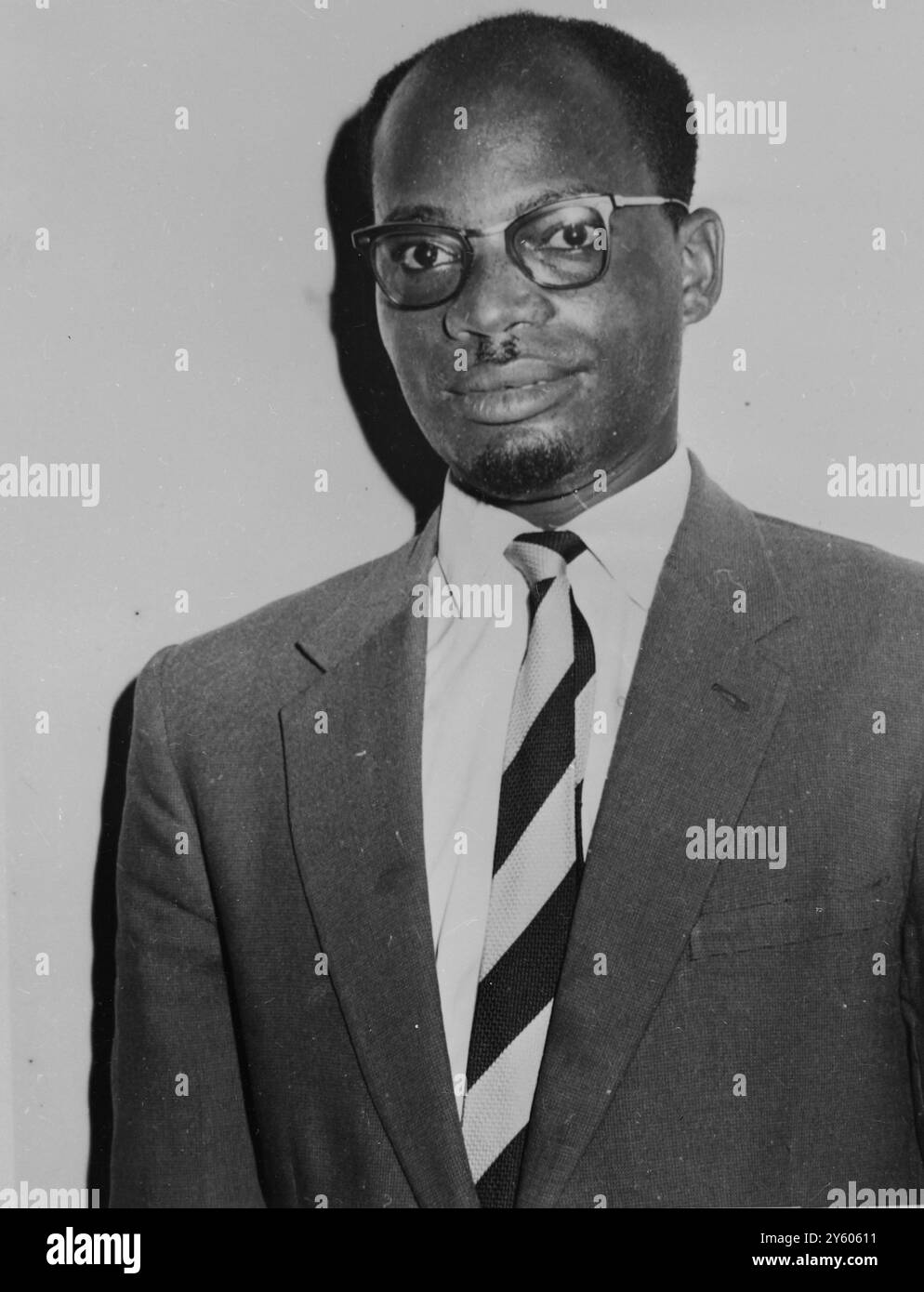
Albert Kalonji
 DR Congo
Also known as: Albert Kalonji Ditunga
Birthday
June 6, 1929
Birth Sign
Gemini
Birthplace
Hemptinne, Belgian Congo
Age
Died at 85
About
Albert Kalonji Ditunga was a Congolese politician, businessman, and monarch from the Luba ya Kasai nobility, playing a significant part in his nation's journey to independence. He stood as a central, often controversial, figure during the tumultuous period following the Congo's freedom from colonial rule. Kalonji co-founded the Congolese National Movement (MNC), a pivotal organization advocating for the nation's self-determination. Later, he led a distinct faction, MNC-Kalonji, reflecting the complex political landscape of the time. His most notable role came with the self-declared state of South Kasai, where he was proclaimed the "mulopwe," or king, of the Luba people. For a period, he adopted the regal title Albert I of South Kasai, embodying a unique blend of traditional leadership and modern political ambition. His leadership of the secessionist state, though ephemeral, highlighted the intense regional and ethnic complexities that defined post-colonial Africa. Kalonji's approach to governance in South Kasai, where he combined traditional Luba authority with a modern political structure, presented a unique vision for autonomy within the newly independent Congo. His actions shaped a critical chapter in Congolese history.
Early Life & Background
Albert Kalonji Ditunga entered the world on June 6, 1929, in Hemptinne, a town then part of the Belgian Congo. His upbringing was deeply rooted in the Luba ya Kasai nobility, a heritage that would profoundly influence his political trajectory. This background provided him with a strong connection to traditional leadership structures and a keen understanding of the regional dynamics at play. Kalonji first stepped onto the national political stage around 1958, participating in important discussions held during the Brussels World's Fair. These gatherings were forums for Congolese intellectuals and budding political leaders to articulate their visions for an independent future. He soon became a vocal proponent for self-rule. In the fervent atmosphere leading up to independence, Kalonji co-founded the Congolese National Movement (MNC) alongside Patrice Lumumba. This organization quickly became a primary vehicle for nationalist aspirations, aiming to unite the diverse regions of the Congo under a common goal of liberation from Belgian colonial authority. However, ideological differences and regional loyalties soon emerged within the MNC. These internal pressures led to a significant split, with Kalonji establishing his own faction, known as MNC-Kalonji, to pursue a distinct path for the Luba people within the broader independence movement. This divergence set the stage for the complex political maneuvering that would characterize the early years of the independent Congo.
Career Growth
With the Congo achieving independence in 1960, Albert Kalonji embarked on a bold political experiment. He was proclaimed the "mulopwe," a traditional title signifying king or emperor, of the Luba people, and subsequently became the head of state for the self-declared state of South Kasai. This secessionist move, initiated in August 1960, garnered significant support from the Luba nobility, local ministers, and the Kasian population, who sought greater autonomy within the newly independent nation. On April 12, 1961, Kalonji underwent a formal crowning ceremony, recognized by both the church and the Luba tribe, solidifying his unique position. For much of that year, he adopted the regal title Albert I of South Kasai, lending a monarchical air to his political leadership. The de facto sovereignty of South Kasai, however, proved to be short-lived, effectively ending in September 1962. During this period, the region experienced significant turmoil, with UN officials reporting a "civil war" and expressing concern over the involvement of Katangan authorities and Belgians in the conflict. Kalonji faced criticism alongside Moïse Tshombe for their roles in the unrest. Even after the dissolution of South Kasai, Albert Kalonji remained engaged in political life, continuing to advocate for his vision until his passing.
Career Timeline
Public Image & Style
Albert Kalonji is primarily remembered as a significant, albeit controversial, figure in the tumultuous early years of the Democratic Republic of Congo's independence. His public image is inextricably linked to his leadership of the self-declared state of South Kasai. For many, he represented the aspirations of regional autonomy and traditional Luba identity in a period when the newly formed nation grappled with central authority. Critics, however, viewed his secessionist actions as a destabilizing force, contributing to the broader conflicts that plagued the Congo in the 1960s. His persona embodied the complex tensions between tribal loyalties and national unity, making him a subject of ongoing historical debate. He was a leader who inspired deep loyalty among his Luba constituents while drawing strong opposition from those committed to a unified Congolese state.
Fame & Fandom (iFAMOUS Rankings)
Albert Kalonji never courted the adoring crowds of a pop star or the manic energy of a viral sensation. His audience was not a fandom in the modern sense, but a collection of political adherents, tribal loyalists, and historians who studied his role as the self-proclaimed Mulopwe of South Kasai. There are no fan clubs, no birthday billboards, and no organized campaigns to keep his name trending on social media. The legacy he left behind is one of statecraft and regional autonomy rather than celebrity worship. In August 2026, iFANN's Global Fame Engine evaluated his standing among global figures and determined that Albert Kalonji does not currently hold a placement in the published rankings, meaning he is not listed in the Global Top 1,000 or any Top-100 scope list. While he commanded significant attention during the turbulent independence era of the Congo, his fame has settled into the realm of historical record rather than contemporary pop culture dominance. He does not have an official fandom name documented in the system, reflecting the absence of a structured fanbase comparable to those found for musicians or actors. His story remains a lens for examining post-colonial nation-building, remembered by scholars and enthusiasts of African monarchy rather than by a general public engaging in fan rituals. The lack of a formal fanbase underscores the nature of his influence; it was rooted in traditional authority and political maneuvering, not the performative appeal that drives modern celebrity metrics.
Interesting Facts and Legends
Albert Kalonji's image once graced the postage stamps of the short-lived South Kasaian state, a unique detail that underscores his central role in that ephemeral political entity. His leadership and the aspirations of South Kasai are frequently cited as embodying the deep 'ambivalences of the postcolonial Congo,' referring to the complex interplay of regional loyalties, ethnic identities, and the struggle for national unity that characterized the country's turbulent early years after gaining independence. His story often serves as a lens through which historians examine the challenges of nation-building in Africa. A widely retold chapter of his life involves his election as Emperor (Mulopwe) and head of state of the secessionist South Kasai from August 9, 1960, to October 5, 1962. This period represents the central chapter of his public legacy, characterized by the attempt to create a federalist state within the Congo during the post-independence crisis. Modern analyses describe him as an embodiment of the 'ambivalences of post-colonial Congo,' highlighting his complex role in the nation's early history. The title Mulopwe is a traditional designation for the king of the Luba people, and Kalonji's elevation to this position is a matter of historical record rather than folklore, though it has generated enduring interest among monarchists and historians of the region.
Family & Personal Life
Born into the Luba ya Kasai nobility, Albert Kalonji's personal life was intertwined with his public role. By 1960, he was a married man and a father, with six children. His family life unfolded against the backdrop of a nation in profound transition, experiencing the intense political and social changes sweeping through the newly independent Congo. While details of his private family dynamics are not widely documented, his role as a patriarch within a prominent Luba family would have carried significant cultural and social weight, influencing his standing within the community he sought to represent. This familial foundation likely played a part in his deep connection to the Luba people and their aspirations for autonomy, which he championed throughout his political career. His household would have been a microcosm of the broader societal shifts occurring in the region during the mid-20th century.
Notable Connections
Relationships & Dating History
Albert Kalonji's personal life, particularly his relationships, remained largely private amidst his high-profile political career. Public records indicate that by 1960, he was married and had become a father to six children. This familial foundation was established well before the most tumultuous periods of the Congo's independence movement and the subsequent formation of the state of South Kasai. While the identity of his spouse and specific details regarding the duration or events of his marriage are not widely documented in available historical sources, his status as a married man with a large family was a known aspect of his life. For a figure of his standing within the Luba ya Kasai nobility, marriage and family were often integral to social and political legitimacy, reflecting the cultural norms of the time. This stable personal life likely provided a backdrop for his public actions during a period of intense national upheaval. At the time of his passing in 2015, Albert Kalonji was reportedly still married.
- MarriedWas married and had six children by 1960. Remained married at the time of his death in 2015.
Death & Aftermath
Died
April 20, 2015 (aged 85)
Death Place
Unknown
Cause of Death
Unknown
Albert Kalonji, a prominent Congolese politician, businessman, and the elected emperor (Mulopwe) of the Baluba ya Kasai nobility, died on April 20, 2015, at the age of 85. Born on June 6, 1929, he spent his final years in the Democratic Republic of Congo. The official cause of death was not reported in the provided records, nor were there statements from family members or medical examiners detailing the circumstances leading to his end.
Public reaction to his death included tributes acknowledging his status as one of the fathers of independence and a key political figure. A video title from the channel JMK TO DAY highlighted this recognition, indicating continued acknowledgment by peers and institutions. Historical analysis continues to examine his legacy through the lens of ethnic politics and the brief existence of the South Kasai state, which he led as head of state from August 9, 1960, to October 5, 1962.
His passing appears to have been treated as a natural event. The funeral or memorial service is not described in the search results, leaving no information available regarding the date, location, nature of the service, or the method of disposition.
Net Worth (Estate Value)
$0
iFANN Editorial Team estimate
For a figure of Albert Kalonji's historical stature, details surrounding his personal finances and estate value are not publicly documented. While he was a prominent politician and, at one point, the head of a self-declared state, specific information regarding his business ventures or personal wealth accumulation is not available in historical records or public databases. During his lifetime, particularly during his active political years in the mid-20th century, the concept of public net worth reporting for political figures in the Congo was not established in the way it is today. His career involved significant political influence and leadership, but it did not necessarily translate into quantifiable personal wealth that is accessible for contemporary estimation. Per iFANN's editorial analysis, as of 2026, Albert Kalonji's estimated net worth is considered to be $0, reflecting the absence of any publicly reported financial assets or an identifiable estate value at the time of his passing in 2015. Historical figures often lack the transparent financial disclosures common for modern public personalities, making such valuations speculative without concrete evidence. The economic context of post-colonial Congo also means that wealth accumulation and management differed significantly from Western models, with less emphasis on individual public financial declarations. Any attempt to assign a monetary value to his estate would be purely conjectural without specific records of assets, investments, or business holdings he may have possessed. His legacy is instead measured by his political impact.
Awards & Accolades
Known For
South Kasai
1960 · Head of State
Congolese National Movement (MNC)
1958 · Co-founder
Keywords
Sources
Quick Facts
- Profession
- politician, leader, monarch
- Born
- June 6, 1929
- Birthplace
- Hemptinne, Belgian Congo
- Died
- April 20, 2015
- Death Place
- Mbuji-Mayi, Democratic Republic of Congo
- Gender
- Male
- Birth Sign
- Gemini
Personal Details
- Full Name
- Albert Kalonji Ditunga
- Children
- 6
Frequently Asked Questions
Who was Albert Kalonji?
When and where was Albert Kalonji born?
What was Albert Kalonji's role in the Congo's independence?
What was South Kasai?
When did Albert Kalonji die?
Join the community
fans discussing