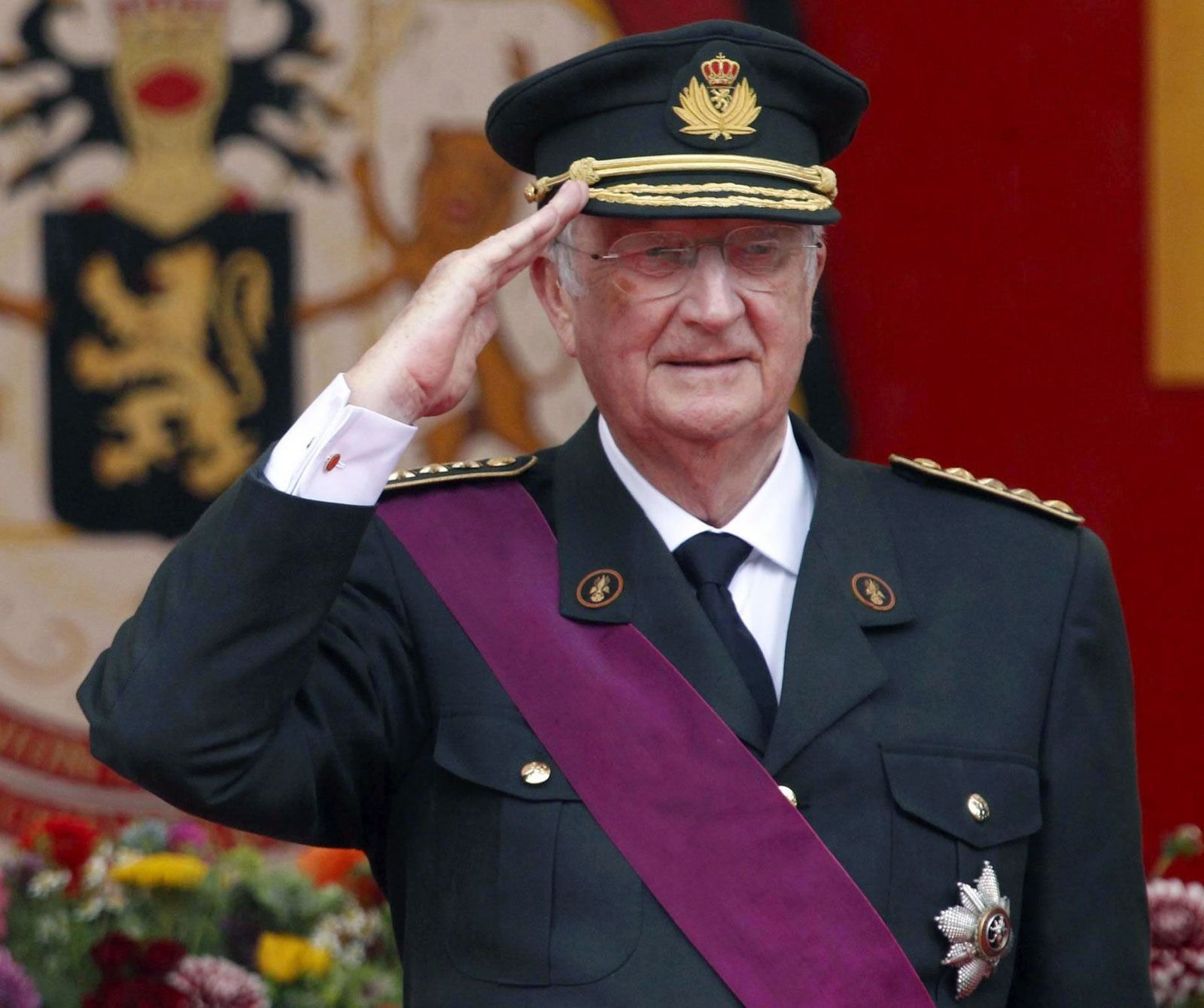
Albert II of Belgium
 Belgium
Also known as: Prince of Liège, King Albert II
Birthday
June 6, 1934
Birth Sign
Gemini
Birthplace
Stuyvenberg Castle, Laeken, Brussels, Belgium
Age
92 years old
Height
5 ft 10 in (178 cm)
About
Albert II, born on 6 June 1934 at Stuyvenberg Castle in Laeken, is the former King of the Belgians, reigning from 1993 to 2013. He is the second son of King Leopold III and Queen Astrid. As the younger brother of King Baudouin, he spent decades as heir presumptive before ascending the throne at age 59. His reign of exactly two decades was defined by his steady hand during Belgium's constitutional evolution and his efforts to bridge the linguistic divide between Flanders and Wallonia.
Today, Albert lives in retirement with his wife, Queen Paola, at the Royal Castle of Laeken. His son, King Philippe, now carries out the duties of the crown. Despite stepping down, Albert remains a respected figure in Belgian public life, though his later years have been shadowed by a long battle with skin cancer and the public acknowledgment of his illegitimate daughter, Princess Delphine. Fans of the royal family remember him as an approachable monarch who genuinely cared about national unity. His legacy is a complex one, marked by both his dedication to his country and the personal challenges that emerged in his later years.
Early Life & Background
Albert's early life was marked by tragedy and upheaval. His mother, Queen Astrid, died in a car crash in 1935 when he was only one, leaving him and his siblings to be raised by their father, King Leopold III. During World War II, the royal family was placed under house arrest, and the 'royal question' over Leopold's wartime conduct eventually forced the king to abdicate in 1951, making Albert's older brother Baudouin king at age 20. As the second son, Albert was never groomed for the throne; he lived in his brother's shadow for decades.
He was educated privately at home, then studied in Geneva and Brussels before attending the Royal Naval College in Bruges. He served in the Belgian Navy, which gave him a sense of discipline and duty. During his long years as heir presumptive, Albert took on numerous representational roles, including serving as President of the Belgian Red Cross. This position allowed him to travel widely and develop a deep understanding of social issues, preparing him for the constitutional responsibilities he would later assume. His unexpected path to kingship came only with Baudouin's sudden death in 1993.
Career Growth
Albert II was sworn in as King of the Belgians on 9 August 1993, just days after his brother's death. His reign coincided with a period of intense political tension as Belgium moved toward federalism. He became known as a skilled mediator, most notably during the 2007–2008 government formation crisis, which lasted 194 days and nearly split the country. Albert worked behind the scenes, meeting with party leaders and urging compromise, ultimately helping to form a coalition government.
He also navigated the complex process of devolving powers to the regions, a transformation that turned Belgium into a federal state. His dedication to national unity earned him respect across political lines. On 3 July 2013, citing health reasons, he announced his abdication. He formally stepped down on 21 July, Belgian National Day, making him the second Belgian monarch to abdicate after his father. His son Philippe succeeded him, and Albert took the courtesy title of King Albert II. After abdication, he largely withdrew from public life, though he occasionally appeared at family events and royal ceremonies.
Career Timeline
Public Image & Style
Albert II's public image evolved from that of a dutiful prince to a respected, if sometimes controversial, king. Unlike his more formal brother Baudouin, Albert was known for his approachable and affable nature. He often engaged directly with citizens during public events, and his warm smile became a familiar sight. Royal watchers praised his dedication to national unity, though his legacy is complicated by the Delphine paternity case, which cast a shadow over his later years and contributed to his decision to abdicate.
In the media, he is often portrayed as a figure of stability during turbulent political times, but also as a man with human flaws. After his abdication, his public appearances became rare, and he largely stayed out of the spotlight. Fans of the royal family follow his life through royal blogs and news outlets, where he is remembered as a monarch who genuinely cared about his country's well-being.
Fame & Fandom
While Albert II of Belgium never cultivated a celebrity fanbase with organized clubs or ritualistic gatherings, his public standing remains defined by a unique blend of institutional respect and enduring personal curiosity. Unlike pop stars who rely on adoration rituals, the Belgian royal figure commands attention through historical weight and the intimate details of his later life, from his daredevil sporting feats to the resolution of long-standing family dramas. The audience for his legacy is less about fandom in the modern sense and more about a sustained, global interest in the monarchy's evolution and the human stories behind the crown. This distinctive profile places him firmly within the upper echelons of national recognition without crossing into the realm of viral sensation. His presence is felt not through chart-topping campaigns but through the steady pulse of public discourse regarding his abdication and recent health battles. Per the iFANN Global Fame Rankings, Albert II of Belgium is currently the 19th most famous person in Belgium, holding steady from the previous cycle. He also ranks as the 19th most famous person from Belgium, maintaining that position consistently. These placements reflect a reputation that has endured well beyond his reign, cementing his status as a pivotal figure in contemporary European history.
Interesting Facts and Legends
Albert II is an avid sailor who maintained a lifelong passion for the sea, a love he developed during his naval training, and he keeps a notable collection of vintage sailing charts. He is also a passionate golfer who has played on several courses across Europe. A little-known fact: he is fluent in Dutch, French, German, and English, reflecting Belgium's multilingual society. He is a direct descendant of Queen Victoria through his mother's side, making him a distant cousin of many European monarchs. One of his favorite pastimes is listening to classical music, particularly Beethoven. Beyond these established facts, legends of his reign often highlight his "daredevil" reputation, a persona built on extreme sports like skiing and mountaineering that distinguished him from other staid monarchs. The most defining moment of his era was his planned abdication in 2013 in favor of his son Philippe, marking the end of a two-decade reign. Another story fans still retell involves the 2020 revelation of his illegitimate daughter, Princess Delphine Boël, which shattered the image of the perfect royal family and led to years of legal battles before she reportedly forgave him in late 2025. Recent reports from 2025 also note his battle with skin cancer, undergoing treatment at age 91, which generated significant public concern but remained a matter of health updates rather than folklore.
Notable Quotes
“I forgive my father, because I believe he was not the one who made these decisions. It was his entourage.”
“Pink is simply my color.”
“The unity of the country has always been my primary concern.”
“I have always tried to serve my country to the best of my abilities.”
Family & Personal Life
Albert's family story is complex and deeply intertwined with Belgian history. His parents, King Leopold III and Queen Astrid, had three children: Joséphine-Charlotte, Baudouin, and Albert. After Astrid's death in 1935, Leopold later remarried Lilian Baels, with whom he had three more children, but this second family was never part of the royal line of succession. Albert's siblings included his brother Baudouin, who reigned as king for 42 years, and his sister Joséphine-Charlotte, who married Grand Duke Jean of Luxembourg.
Albert married Donna Paola Ruffo di Calabria, an Italian princess, on 2 July 1959. The couple had three children: Philippe (born 1960), Astrid (born 1962), and Laurent (born 1963). Their marriage faced a serious crisis in the 1960s and 1970s due to Albert's long affair with Baroness Sybille de Selys Longchamps, which produced a daughter, Delphine, born in 1968. The paternity was only confirmed in 2020 after a DNA test, and Delphine was granted the title Princess Delphine of Belgium. As of 2026, Albert and Paola remain married and live quietly at Laeken, with their children and grandchildren nearby.
Notable Connections
Relationships & Dating History
Albert II's romantic history is a tale of a royal marriage tested by scandal. He married Donna Paola Ruffo di Calabria in a grand ceremony on 2 July 1959. The couple had three children, but their marriage faced a severe crisis in the 1960s when Albert began a long-term affair with Baroness Sybille de Selys Longchamps. This relationship produced a daughter, Delphine Boël, born in 1968. For decades, Albert denied paternity, but in 2020, a DNA test confirmed he was Delphine's father, and she was granted the title Princess Delphine of Belgium.
Despite the affair, Albert and Paola remained married and publicly reconciled. They continued to appear together at official functions, and Paola stood by his side throughout the paternity scandal. As of 2026, the couple remains married and lives together at the Royal Castle of Laeken, having retired from public duties due to their age.
- MarriedQueen Paola of Belgium1959 - presentCurrentMarried on 2 July 1959; had three children together; survived a marital crisis.
- DatedBaroness Sybille de Selys Longchamps1966 - 1978Long-term extramarital affair; mother of Delphine Boël.
Salary, Net Worth In 2026
$5 Million
iFANN Editorial Team estimate
As a former constitutional monarch, Albert II receives a state-funded pension as part of the Belgian royal family's civil list. The royal family's annual budget is approximately €36 million, with the king's personal allowance forming a portion of this allocation. While specific personal net worth figures are not publicly disclosed, his income sources include his state pension, personal investments, and income from the royal family's estate. Over the years, his net worth has remained relatively stable, as he has not engaged in commercial ventures. Research by the iFANN Editorial Team puts his net worth at $5 Million in 2026, reflecting his modest lifestyle and the nature of his role as a retired monarch.
Awards Won (3)
Albert II's honors are primarily dynastic and ex-officio, reflecting his role as head of state. He served as Grand Master of the Order of Leopold, the Order of the Crown, and the Order of Leopold II, among others, during his reign. He also received numerous foreign honors during state visits, including honorary knighthoods from several European monarchies.
1993 · National Order
As King of the Belgians
1993 · National Order
As King of the Belgians
Known For
King of the Belgians
1993-2013 · Monarch
Abdication in 2013
2013 · Historical event
Paternity case of Delphine
2020 · Legal case
Keywords
Sources
Quick Facts
- Profession
- Former King of the Belgians
- Born
- June 6, 1934
- Birthplace
- Stuyvenberg Castle, Laeken
- Gender
- Male
- Spouse
- Queen Paola of Belgium
- Children
- King Philippe, Princess Astrid, Prince Laurent
- Height
- 5 ft 10 in (178 cm)
Personal Details
- Full Name
- Albert Félix Humbert Théodore Christian Eugène Marie
- Height
- 5 ft 10 in (178 cm)
- Spouse
- Queen Paola of Belgium
- Children
- King Philippe, Princess Astrid, Prince Laurent
- Education
- Royal Naval College, Bruges; studied in Geneva and Brussels
Frequently Asked Questions
Is King Albert II of Belgium still alive?
Why did King Albert II of Belgium abdicate?
Who is King Albert II of Belgium's daughter Delphine?
Is King Albert II of Belgium related to Queen Elizabeth II?
What is King Albert II of Belgium's net worth?
Similar People
Join the community
fans discussing