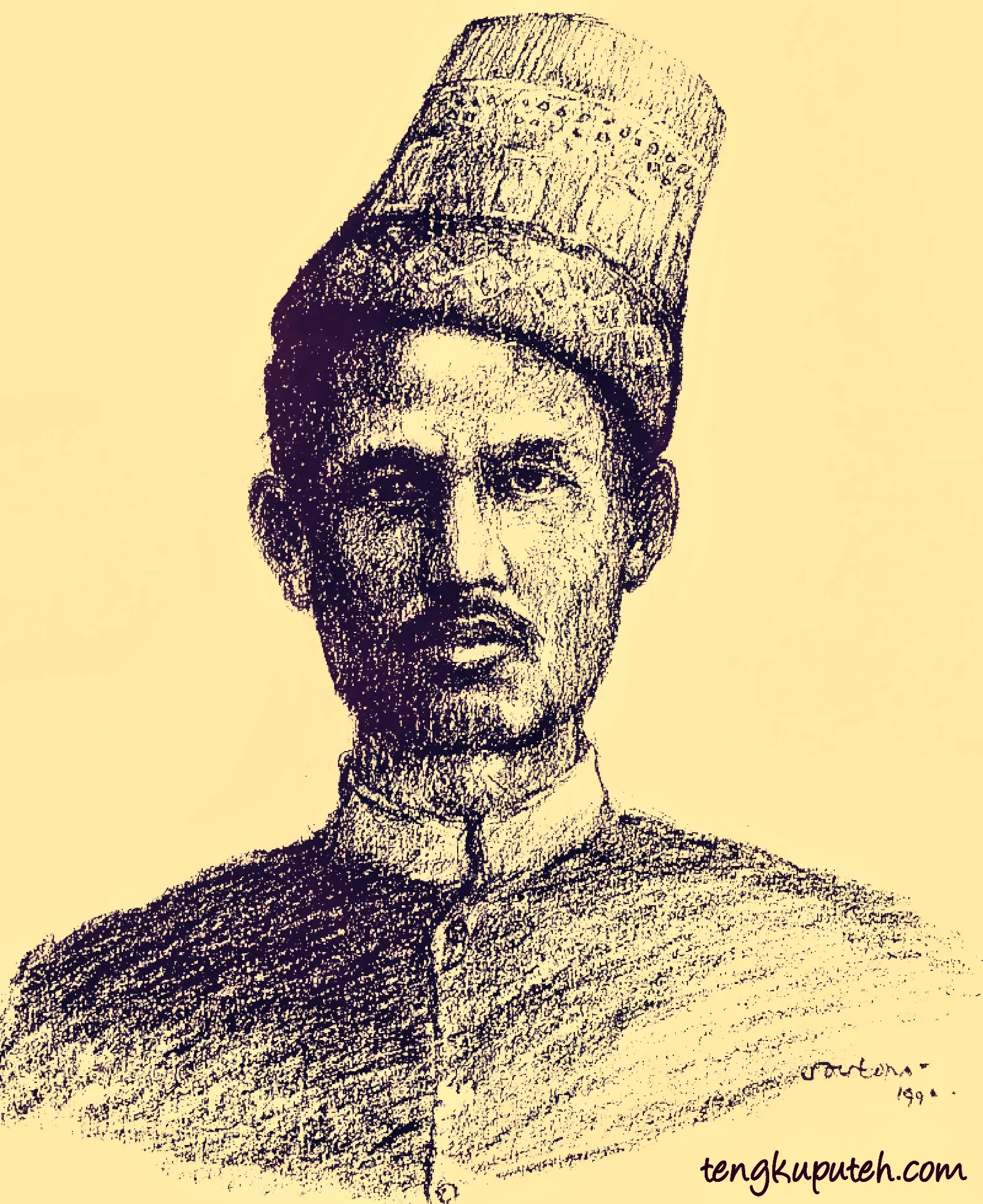
Alauddin Muhammad Daud Syah II
 Indonesia
Also known as: Sultan Alauddin Muhammad Da'ud Syah Johan Berdaulat, Alauddin Muhammad Daud Syah
Birthday
1864
Birth Sign
Leo
Birthplace
Banda Aceh, Aceh Sultanate
Age
Died at 75
About
Alauddin Muhammad Daud Syah II was the thirty-fifth and final Sultan of Aceh, a powerful sultanate located on the northern tip of Sumatra in what is now Indonesia. Born in 1864, he ascended the throne in 1875 at the young age of eleven, inheriting a kingdom already facing intense pressure from the expanding Dutch colonial empire. His reign, which lasted until 1903, became defined by a fierce and protracted struggle against Dutch invasion known as the Aceh War.
Unlike many contemporary monarchs who capitulated early to colonial demands, Daud Syah II refused to sign treaties with the Dutch, leading a determined resistance that ultimately resulted in the fall of his capital and his forced exile. He spent the remainder of his life away from his homeland, eventually passing away in Jakarta (then Batavia) on February 6, 1939. His legacy endures as the last sovereign ruler of an independent Aceh, remembered for his unwavering stance against foreign occupation.
Early Life & Background
Alauddin Muhammad Daud Syah II was born in 1864 within the royal courts of Banda Aceh, the heart of the Aceh Sultanate. Historical records indicate a minor discrepancy regarding his birth year, with some sources suggesting 1871, though the consensus among authoritative historians maintains 1864 as the correct date. He was the son of a prominent member of the Acehnese royal family, destined from birth for a life of leadership amidst growing geopolitical tensions.
His upbringing was dominated by the necessity of preparing for war rather than traditional royal education. By the time he was a child, the Dutch had already initiated military campaigns in Aceh, and the atmosphere of the court was one of impending conflict. At the age of eleven in 1875, following the death of his predecessor, Alauddin Mahmud Syah II, he was crowned Sultan. This coronation occurred during a period of intensifying Dutch colonial expansion into the archipelago, placing the young boy on the front lines of a battle that would define his entire life.
He received rigorous training in Islamic scholarship and martial arts, essential skills for a ruler expected to defend his territory against a technologically superior enemy. His early years were marked by the constant threat of invasion, forcing him to mature rapidly into a military leader. The regency likely managed initial affairs while he matured, but the shadow of the Dutch East Indies army loomed large over every decision made in the palace. By the time he reached adulthood, he had already witnessed the brutal realities of colonial warfare and the determination of his people to resist.
Career Growth
Daud Syah II's reign began in 1875 when he ascended the throne at the age of eleven. The early years of his rule were characterized by a regency managing affairs while he matured, but the Dutch colonial presence continued to tighten its grip on the region. From 1873 onwards, the Aceh War had already begun, and the young Sultan found himself at the center of a prolonged and brutal conflict against the Dutch East Indies army.
Throughout the 1880s and 1890s, Daud Syah II led the Acehnese resistance using guerrilla warfare tactics. Despite being a teenager and later a young adult, he became a central figure in the fight for sovereignty. He refused multiple offers of peace and treaties from the Dutch, maintaining his stance of absolute independence. This refusal cemented his reputation as an unyielding symbol of freedom and earned him the respect of his people and the fear of his enemies.
The turning point came in 1903 when Dutch forces finally captured the Acehnese capital. Daud Syah II was forced to surrender or flee, effectively ending his active reign. He was not captured immediately but was pursued and eventually compelled to leave Aceh. Following this defeat, he lived in exile in Batavia (now Jakarta) for the remaining thirty-six years of his life. During this period, he did not hold any political office and lived as a private citizen under Dutch supervision, yet he remained a potent symbolic figure for those who continued to resist colonial rule.
Career Timeline
Public Image & Style
Sultan Alauddin Muhammad Daud Syah II is portrayed in history as a stoic and resolute leader who faced overwhelming odds with unwavering determination. Unlike modern figures who cultivate a media persona, his image was forged in the crucible of war and exile. He is remembered not for fashion or style, but for his refusal to submit to foreign powers, earning him a reputation as a symbol of national pride and resistance.
Media perception of him has evolved over time. During his life, the Dutch viewed him as a dangerous insurgent leader who needed to be neutralized. In contrast, Acehnese chroniclers and later Indonesian historians celebrated him as a hero who defended his people's sovereignty. His public image is one of dignity and endurance, representing the spirit of a nation that refused to be conquered.
His leadership style was characterized by a blend of religious authority and military strategy. He drew upon Islamic scholarship to rally his followers, framing the war against the Dutch as a defense of faith and land. This combination of spiritual and temporal power made him a unique figure in the history of Southeast Asian resistance movements.
Fame & Fandom
The story of Sultan Alauddin Muhammad Daud Syah II is not one of modern adoration or viral fandom, but rather a deep, enduring reverence rooted in the history of resistance. While contemporary pop culture often revolves around organized fanbases with specific names and rituals, the legacy of the thirty-fifth and final Sultan of Aceh stands apart. There is no documented name for his supporters, nor are there any recorded fan campaigns, birthday billboards, or social media movements dedicated to him. The concept of a "fandom" as understood today simply did not exist during his life in the late nineteenth and early twentieth centuries.
Instead, his audience consists of historians and descendants who view him through the lens of the Aceh War, where he led a determined struggle against Dutch colonization until his abdication in 1903. His mythology is built on historical narratives of sovereignty and refusal to submit, rather than on concert performances or public appearances that typically generate fan chaos. Despite this lack of a formalized fan culture, his standing remains significant within the scope of global historical figures.
Alauddin Muhammad Daud Syah II is currently evaluated by iFANN's Global Fame Engine, yet he does not hold a placement in the published rankings such as the Global Top 1,000 or any Top-100 scope list. This status reflects the unique nature of his fame, which is anchored in academic and regional history rather than mass-market consumption signals. He is not ranked numerically because the engine recognizes that his influence operates outside the metrics used for living celebrities or modern entertainers. The absence of a rank does not diminish his impact; it simply places him in a category where traditional fame metrics fail to capture the depth of his historical significance.
Interesting Facts and Legends
Alauddin Muhammad Daud Syah II ascended the throne in 1875 at only eleven years old, making him one of the youngest rulers to face such a significant colonial threat in Southeast Asian history. His youth did not prevent him from becoming a formidable leader during the Aceh War, where he adopted guerrilla tactics to counter the superior firepower of the Dutch army.
A persistent historical footnote involves a minor discrepancy regarding his birth year. Some older or less precise sources list 1871 as his birth date, but rigorous genealogical research and most authoritative accounts confirm 1864 as the correct year. This distinction matters for calculating his age at ascension and throughout his reign.
He died in Jakarta, then known as Batavia, far from his beloved Aceh. This fact underscores the tragedy of his reign, as he spent the majority of his adult life in exile, unable to return to his homeland. Even after the fall of his capital in 1903, he remained a unifying figure for Acehnese fighters who continued their resistance for another decade.
Legends surrounding him focus less on individual anecdotes and more on the collective spirit of the Aceh War. It is often retold that his refusal to sign treaties with the Dutch cemented his status as the last sovereign ruler of an independent Aceh, a narrative that has become central to the region's identity. Stories from his era describe a court that remained defiant even as Dutch forces tightened their grip, turning his palace into a symbol of unyielding independence.
Family & Personal Life
Alauddin Muhammad Daud Syah II was born into the prominent royal family of the Aceh Sultanate. He succeeded his uncle or father, depending on the source, as the thirty-fifth Sultan in 1875. Detailed public records of his immediate family members, including specific names of parents or siblings, are scarce in mainstream historical archives.
In the context of the Acehnese court of that era, marriages were dynastic alliances arranged by the royal family to secure political support and legitimacy. There are no documented names of wives, fiancées, or public romances available in historical records. Consequently, there is no information regarding engagement dates, divorce, or specific children named in public records, although it is historically probable he had offspring as part of his royal lineage.
His household during his reign was centered around the royal palace in Banda Aceh, serving as both a residence and a command center for the resistance against the Dutch. After his exile to Batavia, he lived as a private citizen, separated from the formal structures of the sultanate. His family life was largely overshadowed by the political turmoil and the eventual loss of his kingdom.
Notable Connections
Relationships & Dating History
As a historical monarch of the late 19th and early 20th centuries, detailed public records of romantic relationships, dating history, or modern-style courtships do not exist for Alauddin Muhammad Daud Syah II. In the context of the Acehnese court of that era, marriages were dynastic alliances arranged by the royal family to secure political support and legitimacy. There are no documented names of wives, fiancées, or public romances available in historical archives.
Consequently, there is no information regarding engagement dates, divorce, or specific children named in public records, although it is historically probable he had offspring as part of his royal lineage. Their identities are not part of the mainstream historical narrative available in general sources. The focus of historical records remains on his political and military actions rather than his personal life.
During his exile in Batavia, he lived as a private citizen without the formal structure of a royal court. There are no reports of new marriages or relationships formed during this period. His status as a deposed monarch meant that his personal life was largely removed from the public eye, and the details of his domestic arrangements remain unknown to modern historians.
Death & Aftermath
Died
1939-02-06 (aged 75)
Death Place
Jakarta
Cause of Death
Natural causes
Alauddin Muhammad Daud Syah II passed away on February 6, 1939, in Jakarta at the age of seventy-five. He had spent the final thirty-six years of his life in exile in Batavia after the Dutch colonial forces captured the Acehnese capital in 1903. The circumstances surrounding his death were quiet and uneventful for the colonial administration, which treated him as a private citizen rather than a political threat. No official autopsy or detailed medical report was released to the public, and historical records simply note that he died of natural causes while living under Dutch supervision.
His passing did not trigger a state funeral or widespread public mourning in the manner of a reigning monarch. The Dutch authorities maintained their control over the narrative, and his burial site in Jakarta remains a matter of local historical interest rather than a major national monument. Despite the lack of a grand ceremony, his legacy was immediately recognized by Acehnese communities and historians who viewed him as the last sovereign ruler of an independent Aceh. His death marked the definitive end of a dynasty that had resisted colonial expansion for decades.
Posthumously, Alauddin Muhammad Daud Syah II has been honored through oral histories, academic studies, and the naming of streets and schools in Aceh. He is frequently cited in Indonesian history textbooks as a symbol of resistance against foreign domination. While no posthumous awards or honors were bestowed by the Dutch government during his lifetime, his reputation grew significantly after Indonesia gained independence, cementing his status as a national hero. The story of his refusal to sign treaties with the Dutch and his subsequent exile continues to be retold as a testament to dignity and endurance in the face of overwhelming odds.
Net Worth (Estate Value)
$0
iFANN Editorial Team estimate
As a historical figure who lived over a century ago, Alauddin Muhammad Daud Syah II does not have a net worth in the modern sense. He owned the assets of the Sultanate during his reign, but these were state properties, not personal wealth in the context of a celebrity portfolio. There are no estate valuations, real estate holdings, or business ventures attributed to him personally after his exile.
The concept of a "net worth" for a 19th-century sultan is not applicable to current financial analysis. The resources of the Aceh Sultanate were used to fund the war effort and maintain the royal court, but these funds were communal and state-controlled rather than personal property. Following his death, there were no significant financial settlements or estate disputes recorded in historical archives.
While his legacy has been preserved through historical documentation and educational references, there are no commercial interests or intellectual property rights associated with his name that generate revenue in the modern economy. Any mention of his "wealth" refers strictly to the material resources of the sultanate he ruled, which have long since been absorbed into the history of the Indonesian archipelago.
Awards & Accolades
View 5 records, honours and achievementsKnown For
Aceh Sultanate
1875-1903 · Sultan
Aceh War
1873-1914 · Leader of Resistance
Keywords
Sources
Quick Facts
- Born
- 1864
- Birthplace
- Banda Aceh, Aceh Sultanate
- Died
- February 6, 1939
- Gender
- Male
- Reign Start
- 1875
- Reign End
- 1903
Personal Details
- Full Name
- Alauddin Muhammad Daud Syah II
- Education
- Islamic scholarship and martial arts training
Frequently Asked Questions
Who was the last Sultan of Aceh?
When did Alauddin Muhammad Daud Syah II die?
Why was Alauddin Muhammad Daud Syah II exiled?
How old was he when he became Sultan?
What is Alauddin Muhammad Daud Syah II known for?
Similar People
Join the community
fans discussing