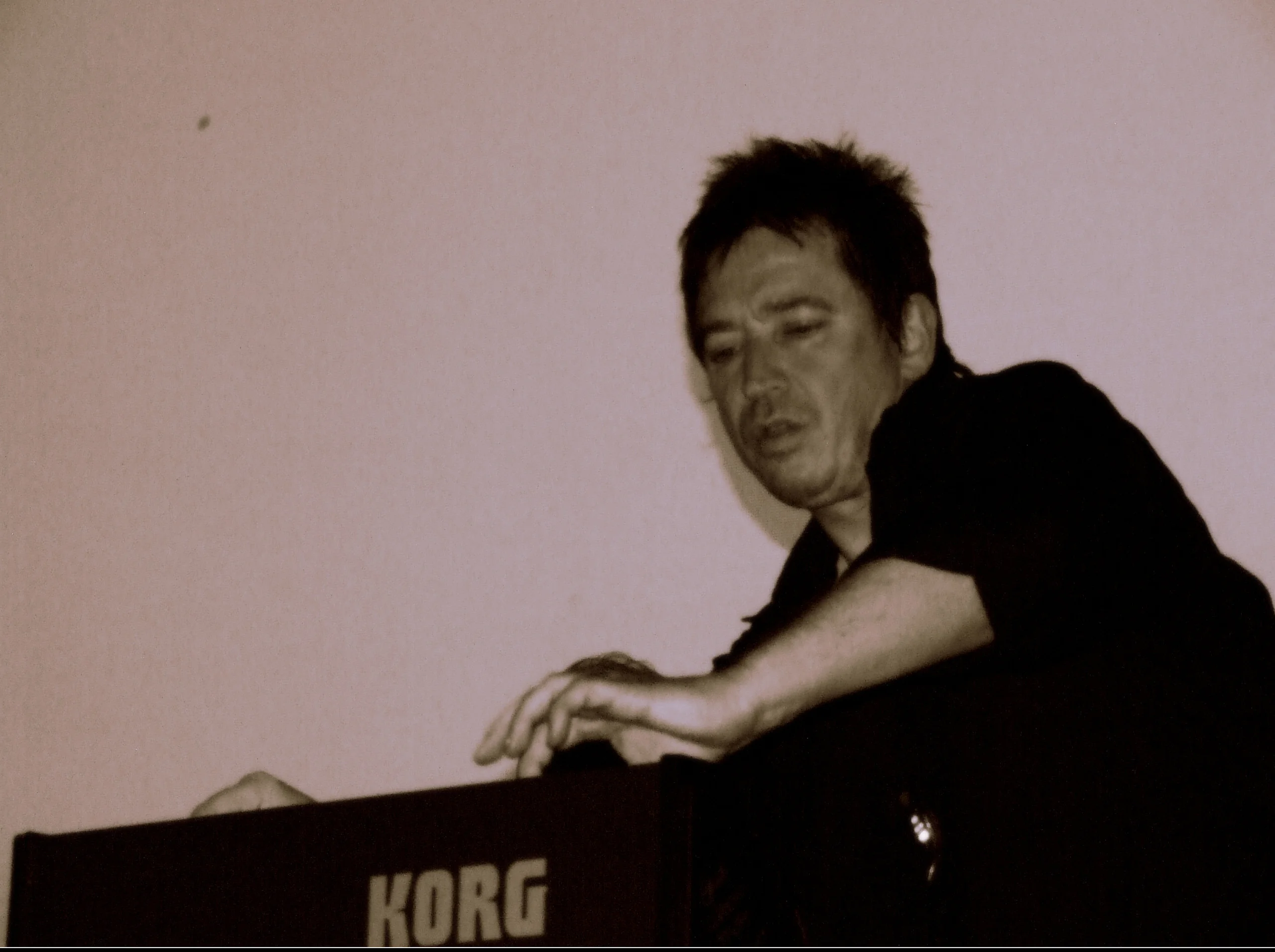
Alan Wilder
 United Kingdom
Member of Depeche Mode
composer•songwriter•record producer
Also known as: Recoil, Alan Charles Wilder
Birthday
June 1, 1959
Birth Sign
Gemini
Birthplace
Hammersmith, London, England
Age
67 years old
About
Alan Charles Wilder is an English musician, composer, arranger, and record producer, best known as the creative engine behind Depeche Mode during their most influential years. From 1982 to 1995, he shaped the band's sound as keyboardist, arranger, and co-producer, helping turn them from synth-pop newcomers into arena-filling electronic rock pioneers. His fingerprints are all over landmark albums like Violator and Music for the Masses, and his meticulous production style remains a touchstone for electronic musicians.
Since leaving the band, Wilder has poured his energy into Recoil, the solo project he started in 1986. Under that name, he has released a series of dark, atmospheric electronic albums that have earned a devoted cult following. He has also lent his production and remixing skills to acts like Nitzer Ebb and Curve. In 2020, he was inducted into the Rock and Roll Hall of Fame as a member of Depeche Mode, a fitting tribute to a career built on quiet, obsessive craft.
Today, Wilder keeps a low profile, splitting his time between music archival work and new Recoil material. Fans still pore over his every move, and his legacy as one of electronic music's most exacting minds shows no signs of fading.
Early Life & Background
Alan Charles Wilder was born on June 1, 1959, in Hammersmith, a district in west London. Growing up in a musical household, he showed an early aptitude for the piano and began formal training as a child. His classical studies eventually led him to the Royal Academy of Music, where he immersed himself in composition and arrangement. That rigorous education would later set him apart from his synth-pop peers, giving his productions a structural sophistication that most of the genre lacked.
Before Depeche Mode entered his life, Wilder cut his teeth in the late-1970s London music scene. In 1979, he co-founded a short-lived band called The Hitmen alongside Ben Watkins, who would later find fame with Juno Reactor, and guitarist Pete Glenister. The group played a scrappy brand of post-punk and released a couple of singles, but never broke through. Still, the experience gave Wilder his first taste of the studio and stage, and it cemented his desire to work in electronic music.
In 1981, Wilder answered an ad that would change everything. Depeche Mode were looking for a keyboardist and programmer after Vince Clarke's departure. Wilder walked into the audition with his classical training and a deep understanding of synthesizers, and he got the gig. At first, he was hired as a session player, but his technical skill and creative input quickly made him indispensable. By the time the band recorded their second album, A Broken Frame, in 1982, he was a full member.
Career Growth
Wilder's arrival in Depeche Mode marked the beginning of a golden era. He made his official debut on A Broken Frame in 1982, but it was on Construction Time Again (1983) that his influence became unmistakable. He pushed the band toward a harder, more industrial sound, incorporating samples and found sounds. That trajectory continued with Some Great Reward (1984), which featured the hit "People Are People," and reached its peak with the brooding masterpiece Black Celebration (1986).
The late 1980s and early 1990s saw Depeche Mode ascend to global superstardom, and Wilder was at the controls. Music for the Masses (1987) spawned the massive single "Never Let Me Down Again," and its supporting tour, documented in the film 101, cemented their status as a live juggernaut. Then came Violator (1990), the album that made them icons. Wilder's production on tracks like "Enjoy the Silence" and "Personal Jesus" was a masterclass in tension and release, and the record went on to sell millions of copies worldwide. He followed it with Songs of Faith and Devotion (1993), a heavier, almost blues-rock-inflected record that divided fans but showcased his restless ambition.
Despite his indispensable role, Wilder grew increasingly frustrated with the band's internal dynamics. In 1995, he announced his departure in a public letter, citing a lack of recognition and a desire for creative freedom. He turned his full attention to Recoil, which he had started in 1986 as a side project. Over the years, Recoil has released a string of critically acclaimed albums, including Unsound Methods (1997) and Liquid (2000), each one a deep dive into dark, cinematic electronica. Wilder also built a reputation as a sought-after producer and remixer, working with Nitzer Ebb and Curve. In 2020, he was inducted into the Rock and Roll Hall of Fame with Depeche Mode, a rare honor for a band often dismissed as mere pop. As of 2026, he continues to work on Recoil reissues and new material, still pushing the boundaries of electronic sound.
Career Timeline
Public Image & Style
Alan Wilder's public image is that of the quiet genius, the meticulous craftsman who preferred the studio to the stage. In a band known for its flamboyant frontman, Wilder was the one in the background, tweaking knobs and shaping the sound. He rarely gave interviews, and when he did, he focused on the technical aspects of music production rather than celebrity gossip.
Fans of Depeche Mode have long regarded him with a mix of reverence and nostalgia. Many consider his departure in 1995 to be the moment the band lost its edge, and there is an entire subculture of fans who follow his Recoil work with religious devotion. Online forums and Reddit threads regularly dissect his production techniques and debate his contributions to the band's classic albums.
His social media presence, under the Recoil banner, is sparse but deliberate. He posts updates about reissues and archival releases, often accompanied by detailed liner notes that reveal his encyclopedic knowledge of recording gear. This approach has earned him a reputation as an artist's artist, someone who values substance over hype.
Fame & Fandom (iFAMOUS Rankings)
The story of Alan Wilder is less about a specific cult following and more about the silent reverence of an entire generation of electronic music listeners. While Depeche Mode fans, known collectively as The Devout, wear black to concerts and obsess over every track, no single moniker claims Wilder exclusively. His legend is built on the narrative of the architect who transformed a synth-pop novelty into industrial giants before vanishing from the spotlight, leaving behind a mythos of the tortured craftsman who valued integrity over fame. This image was cemented by tales of his departure letter and the persistent rumor that Robert Smith once asked him to join The Cure, a story fans still retell to illustrate his unique standing in the post-punk community. Despite this deep cultural resonance, iFANN's Global Fame Engine has evaluated this person, but they do not currently hold a placement in the published rankings (Global Top 1,000 or a Top-100 scope list). He remains outside the immediate global top tier despite the enduring commercial power of his work with Depeche Mode. The absence of a formal rank reflects a career defined by influence rather than viral celebrity metrics. While he rarely engages in direct fan service or social media campaigns, the collective effort of the fanbase has historically driven chart success and preservation efforts for the band's catalog. His induction into the Rock and Roll Hall of Fame in 2020 marked a moment where the broader community finally celebrated the man who made the sound possible, even if he chose to remain in the shadows.
Interesting Facts and Legends
Alan Wilder is a notorious perfectionist when it comes to audio quality. He has been a vocal critic of the "loudness war" in modern music mastering, arguing that over-compression destroys the dynamic range that makes music breathe. In interviews, he has spoken at length about the importance of preserving the integrity of a recording. He owns a substantial collection of vintage synthesizers and analog equipment, which he uses extensively in Recoil's productions. Among his prized possessions are early Moog and ARP units, which he favors for their warmth and unpredictability. A lesser-known fact: Wilder composed music for the 2001 film The Hole, a psychological thriller directed by Nick Hamm. The score, credited to him under his own name, showcased his ability to create unsettling, atmospheric soundscapes outside the Recoil umbrella. He is also an avid reader of music-production forums and has been known to post under a pseudonym, engaging in technical discussions about synthesizers and recording techniques. The narrative of the "man who made Depeche Mode not suck" frames him as a genius forced to leave due to lack of recognition. Another tale involves Robert Smith of The Cure approaching Wilder after his departure to join The Cure, an offer Wilder respectfully declined, illustrating his unique standing in the community.
Notable Quotes
“I spoke about formats and mastering techniques, the loudness war, dynamically-reduced, over-compressed, souped up final products, spewed out...”
“I no longer felt that I could continue in the same way.”
Family & Personal Life
Alan Wilder keeps his family life firmly out of the spotlight. There are no confirmed public records of any marriage or children, and he has never spoken about his parents or siblings in interviews. What is known is that he values his privacy above all else, a trait that has only grown more pronounced over the years.
In terms of his living situation, Wilder owned a grand estate in Sussex called "Storries" for over 35 years. The property, which included extensive grounds and a studio, was put on the market in late 2025 after a price reduction of £250,000, and a sale was agreed upon shortly after. In early 2026, reports emerged that he had moved to Brighton, looking for a new home with amenities like a swimming pool. This move suggests a desire for a change of scenery, perhaps to be closer to the coast or to downsize after decades in the countryside.
Notable Connections
Alan Wilder is inextricably linked with Depeche Mode, the band he helped define for over a decade. His production and arrangement work on albums like Violator and Music for the Masses is considered essential listening for anyone interested in electronic music. Beyond the band, Wilder's collaborations with Nitzer Ebb and Curve have also left a mark on the industrial and alternative scenes. His solo project Recoil, while less commercially prominent, has earned a dedicated following among fans of dark, experimental electronica.
Relationships & Dating History
Alan Wilder has managed to keep his romantic life almost entirely out of the public eye. There are no confirmed reports of any long-term relationships, marriages, or children, and he has never been photographed with a partner in a romantic context. This level of privacy is rare among musicians of his stature, and it has led to speculation over the years, but Wilder has never addressed the subject publicly.
As of 2026, Wilder is reported to be single, with no known current partner. His focus appears to be on his music and personal projects, and he seems content to live a quiet, private life away from the spotlight.
Salary, Net Worth In 2026
$20 Million
iFANN Editorial Team estimate
iFANN currently estimates Alan Wilder's net worth at $20 million. This figure represents a stable financial trajectory built from decades of music royalties, production fees, and strategic real estate holdings. As a key songwriter and producer for Depeche Mode during their peak commercial years, he earns ongoing royalties from the band's extensive catalog, which continues to sell and stream worldwide. Albums like Violator and Songs of Faith and Devotion have never gone out of print, and their songs are frequently licensed for film, television, and commercials. Beyond Depeche Mode, Wilder's solo work as Recoil generates modest but steady income from album sales, vinyl reissues, and digital downloads. He has also earned fees for his production and remixing services for other artists, though he has been selective about such projects. His long ownership of the Sussex estate "Storries" represented a significant asset; the sale of the property, agreed upon in early 2026, is expected to add a substantial sum to his holdings. Wilder's financial position reflects a career built on craftsmanship rather than commercial excess.
Awards Won (1)
Alan Wilder's most significant award is his induction into the Rock and Roll Hall of Fame in 2020 as a member of Depeche Mode. This honor recognizes the band's lasting impact on popular music and Wilder's integral role in shaping their sound. While he has not received individual solo awards, his work with Recoil has been critically acclaimed and has earned a devoted fan base.
2020 · Performer
Depeche Mode
Known For
Recoil
1986-present · Solo project
Depeche Mode
1982-1995 · Keyboardist, arranger, producer
The Hole (film score)
2001 · Composer
Keywords
Sources
Quick Facts
- Profession
- composer, songwriter, record producer
- Born
- +1959-06-01
- Birthplace
- Hammersmith
- Gender
- Male
- Birth Sign
- Gemini
Personal Details
- Full Name
- Alan Charles Wilder
- Education
- Royal Academy of Music
Filmography
2
Total
1
Film
0
TV
Frequently Asked Questions
Is Alan Wilder still in Depeche Mode?
Does Alan Wilder have a wife or children?
What is Alan Wilder's net worth in 2026?
Why did Alan Wilder leave Depeche Mode?
Is Alan Wilder alive?
Social Media
Similar People


Join the community
fans discussing