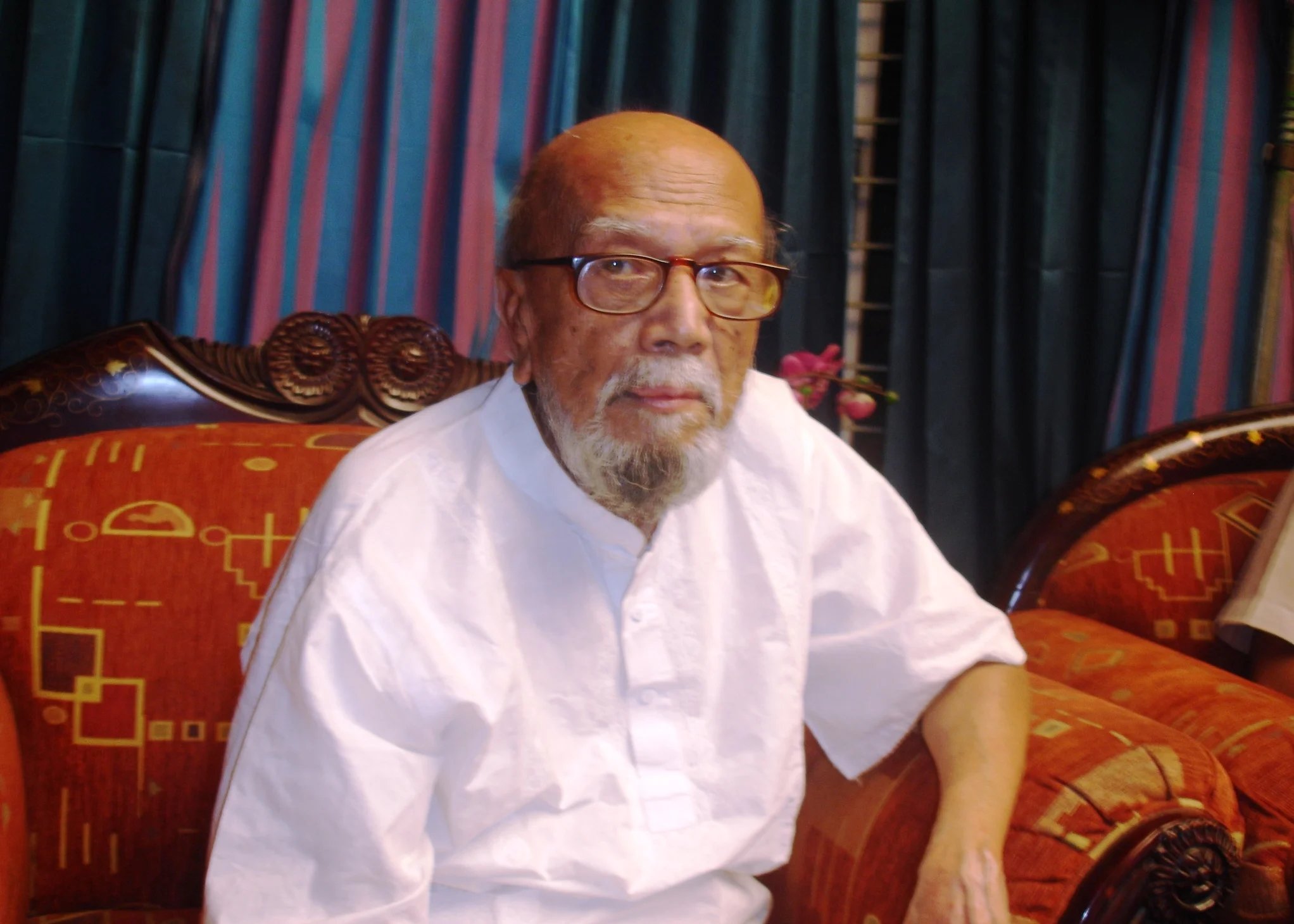
Al Mahmud
 Bangladesh
poet•novelist•short-story writer
Also known as: Mir Abdus Shukur Al Mahmud
Birthday
July 11, 1936
Birth Sign
Cancer
Birthplace
Brahmanbaria District, Bangladesh
Age
Died at 82
About
Al Mahmud, born Mir Abdus Shukur Al Mahmud on July 11, 1936, in Brahmanbaria District, Bangladesh, was a highly regarded Bangladeshi poet, novelist, and short-story writer. He was widely considered one of the most important Bengali poets of the 20th century, a figure whose contributions helped shape modern Bengali literature. His work was distinctive for its rich incorporation of regional dialects and its deep connection to folk imagery, which many felt brought Bengali poetry closer to the essence of its land and people. Throughout his career, he explored themes of love, nature, social issues, and national identity, always maintaining a unique lyrical voice that resonated with a broad audience. His literary output included several poetry collections, novels, and short stories, all contributing to his significant cultural footprint. Al Mahmud passed away on February 15, 2019, in Dhaka at the age of 82.
Early Life & Background
His early years were spent in the Brahmanbaria District, located in what is now Bangladesh. This rural upbringing deeply influenced his later work, as he often drew inspiration from the natural landscapes, the rivers, and the everyday lives of the people he knew there. His connection to this environment became a hallmark of his poetic voice, grounding his verse in a tangible sense of place. During his youth, he made the significant move to Dhaka city, a transition that marked the true beginning of his literary pursuits in the 1950s. He arrived carrying little more than what was in a "broken suitcase," a detail that became symbolic of his humble beginnings and his determination to make his mark in the literary world. This period in Dhaka was a time of immense political and social upheaval, notably including the Bengali Language Movement and the burgeoning sense of nationalist sentiment. These intense experiences provided a fertile ground for his early writing, which frequently addressed the struggles for linguistic and cultural identity, and the broader fight against political and economic repression. He began publishing his poems in various literary magazines and journals of the time, gradually building a reputation among the literary circles of Dhaka. This foundational period, steeped in both personal experience and national struggle, laid the groundwork for his distinctive style, characterized by its immediate connection to the Bengali soil and its people, setting the stage for his emergence as a major literary figure.
Career Growth
Al Mahmud's literary breakthrough came with his poetry, which quickly established him as a central figure in modern Bengali literature. His collection, Sonali Kabin, published in 1966, is often regarded as a landmark work that redefined Bengali poetry. This collection, celebrated for its lyrical beauty and its bold exploration of love and socio-political themes, resonated deeply with readers and critics alike. He continued to publish prolifically across various genres. His novels and short stories often explored the complexities of rural and urban life in Bangladesh, reflecting the changing societal fabric. He possessed a remarkable ability to blend traditional Bengali folk elements with contemporary literary techniques, creating a unique synthesis that set his work apart. Over the decades, his influence extended beyond Bangladesh, gaining recognition in West Bengal, India, where his poetic voice was also highly appreciated. His later works continued to tackle diverse subjects, from introspective reflections on human existence to sharp social commentary, always delivered with his characteristic precision and evocative language. The continuous translation and recitation of his poems, such as "Kobita Emon, Poetry is Like That" and "Taar Smriti [Memories in the Shade]," even years after his passing, underscore the lasting power and relevance of his literary contributions.
Career Timeline
Public Image & Style
Al Mahmud cultivated a public persona that was deeply rooted in his identity as a poet of the people. His work, characterized by its honest portrayal of Bengali life and its use of accessible, regional dialects, fostered a strong connection with his readership. He was perceived as an authentic voice, someone who spoke directly to the experiences and aspirations of ordinary Bengalis. This image was reinforced by his lyrical style, which was both sophisticated and profoundly emotive. Despite controversies he faced during his career, his literary standing remained largely unshaken, indicating the enduring respect and affection he garnered from his audience. His poetic voice often conveyed a sense of national pride and cultural heritage, making him a symbol of Bengali artistic expression. Even after his death, the continuous engagement with his poetry through translations and public recitations suggests that his image as a vital and influential literary figure persists.
Fame & Fandom (iFAMOUS Rankings)
Al Mahmud remains a towering figure in Bengali literature, though his legacy operates outside the metrics of modern celebrity charts. In August 2026, the iFANN Global Fame Engine evaluated his standing and confirmed that he currently holds no placement in the published rankings, including the Global Top 1,000 or any scope-specific lists. This absence from the numbers does not diminish his stature; it simply reflects a literary canon that transcends the volatile algorithms of pop culture fame. His admirers do not form a registered fandom with a specific name like "Mahmudians" or organize digital chart pushes. Instead, his audience is a diffuse community of students, academics, and readers who engage with his work through university curricula and state-sponsored commemorative events. The reverence for Al Mahmud manifests as cultural preservation rather than fan activism. His 90th birth anniversary recently became a headline event, signaling an enduring public interest that keeps his voice alive in Dhaka and beyond. While there are no subway ads or birthday billboards funded by a collective, his poetry continues to be translated and recited, ensuring his influence reaches new generations without the need for viral marketing. He bridged the gap between traditional rural themes and the modern urban experience, earning a reputation as a genius whose words challenged norms while remaining beloved. This duality, a controversial yet cherished poet, defines his mythos. The lack of a formal ranking underscores that his fame is rooted in the quiet, persistent power of his prose and verse, surviving long after the noise of contemporary media fades.
Interesting Facts and Legends
Al Mahmud was known for his distinct preference for regional Bengali dialects in his poetry, a stylistic choice that set him apart from many of his contemporaries. He began his literary career during the politically charged 1950s in Bangladesh, often addressing themes of nationalism and linguistic identity in his early works. His collection Sonali Kabin is considered by many to be one of the most significant works in modern Bengali poetry. Throughout his life, he was a prolific writer, contributing not only poetry but also novels and short stories to Bengali literature. His work continues to be translated into other languages, ensuring its reach to new generations of readers globally. He was affectionately regarded as a "towering figure" in the literary landscape of both Bangladesh and West Bengal. A central legend surrounding his career is his status as the "urban voice" of Bengali literature; unlike contemporaries focused on rural myths, he revolutionized the genre by capturing the complexities of city life in Dhaka. Another defining story is his reputation as a "controversial poet" who remained deeply loved, a duality born from his sharp social commentary that challenged traditional norms. Recently, his 90th birth anniversary was celebrated as a major national milestone, proving that his memory is kept alive through official recognition rather than just private admiration.
Family & Personal Life
Details about Al Mahmud's personal and family life beyond his birthplace and early move to Dhaka are not widely documented in public records. He maintained a private approach regarding his immediate family, including his parents and any siblings. His focus largely remained on his literary work and public contributions to Bengali poetry. Information regarding his marital status or whether he had children is not extensively available in the provided research. His life was primarily defined by his profound dedication to writing and his artistic expression, rather than by a public portrayal of his domestic arrangements.
Notable Connections
Al Mahmud is distinct from Rashed Al Mahmud Titumir, an adviser to the Prime Minister on the Ministries of Finance and Planning in Bangladesh. While both share a similar name and are prominent figures in their respective fields, they are different individuals. Rashed Al Mahmud Titumir has been involved in governmental discussions concerning economic matters and parliamentary reform, operating in the political sphere, whereas Al Mahmud was celebrated for his literary contributions as a poet and writer.
Relationships & Dating History
Public records and biographical accounts of Al Mahmud do not extensively detail his personal relationships or marital history. Throughout his life, he maintained a private stance regarding his romantic involvements and family affairs, choosing to keep these aspects separate from his public literary career. Information about any marriages, long-term partnerships, or children is not widely available in the provided sources. His public identity was predominantly defined by his significant contributions to Bengali literature rather than by his personal relationships.
Death & Aftermath
Died
February 15, 2019 (aged 82)
Death Place
Dhaka
Cause of Death
Illness
Mir Abdus Shukur Al Mahmud, the renowned Bangladeshi poet, novelist, and short-story writer, died on February 15, 2019, at approximately 11:00 PM. He passed away at a city hospital in Dhaka, specifically within its Intensive Care Unit (ICU), though the specific name of the hospital was not detailed in the primary reports cited. He was 83 years old at the time of his death, having been born on July 11, 1936. Regarding the cause of death, official reports from The Daily Star stated that he died due to illness but did not specify the medical condition or provide a detailed clinical diagnosis. No disputed accounts regarding the circumstances of his death have surfaced in available sources; the consensus is that he succumbed to natural causes following a period of declining health.
His final days were spent in the ICU, and there are no widely reported details regarding a specific last public appearance prior to his hospitalization, as his passing was attributed to a long-term ailment rather than an acute event. The estate handling and any potential legal matters regarding his literary rights were not subject to public litigation reports in the provided search results. Al Mahmud's death elicited widespread mourning across Bangladesh and among Bengali literature enthusiasts globally. Tributes poured in from peers, institutions, and government officials, recognizing him as one of the greatest poets of the twentieth century and a towering figure in both Bangladesh and West Bengal. Media outlets, including The Daily Star and Banglapedia, published extensive obituaries highlighting his contributions to urban modernism in Bengali poetry and his status as a "genius" of the era.
While specific details on fan vigils, streaming surges, or memorial murals were not explicitly quantified in the search results, the tone of the reporting indicates a significant national moment of silence and reflection, with his work described as "immortal" and his legacy as controversial yet deeply loved. Specific details regarding the date, location, and attendees of Al Mahmud's funeral or burial were not included in the provided search results. Reports confirm his death in February 2019 but do not elaborate on whether the service was public or private, nor do they list notable performers or specific burial grounds. It remains unclear from these sources if a state funeral or a formal memorial gathering was held immediately following his passing.
In the years following his death, Al Mahmud's legacy has been commemorated through anniversaries and translations; for instance, his 90th birth anniversary was celebrated in July 2026, marking continued recognition of his work. Various translations of his poems, such as Taar Smriti (Memories in the Shade) and Kobita Emon, have been published in international literary journals and platforms. However, specific details regarding new film releases, dedicated foundations, scholarships created in his name, or the precise administration of his estate were not found in the provided documents.
Net Worth (Estate Value)
$1 Million
iFANN Editorial Team estimate
Al Mahmud's financial standing primarily stemmed from his extensive and celebrated literary career as a poet, novelist, and short-story writer. While precise public figures regarding his earnings or the specific valuation of his estate are not extensively detailed, his significant contributions to Bengali literature over several decades would have provided a steady income through book sales, royalties from publications, and earnings from the literary awards he received. Works like Sonali Kabin achieved widespread popularity and critical acclaim, ensuring their continued publication and associated earnings throughout his lifetime and posthumously. His literary output was substantial, encompassing numerous poetry collections, novels, and short stories that remained in consistent demand. The translation rights for his works, which have seen his poetry reach audiences beyond the Bengali-speaking world, also contributed to his overall financial profile. Per iFANN's editorial analysis, as of 2026, his estate is estimated to be around $1 Million. This figure reflects the ongoing value of his intellectual property, including continued sales of his published works, licensing for adaptations, and translation rights, which are managed by his heirs or a literary trust. The enduring appeal of his poetry and prose, which continues to be translated and recited in both academic and public settings, suggests a sustained, albeit privately managed, financial legacy rather than a publicly disclosed fortune with detailed assets and investments.
Awards Won (3)
Al Mahmud received significant recognition for his profound literary contributions throughout his career. His accolades included the prestigious Bangla Academy Literary Award in 1968, one of Bangladesh's highest literary honors, which solidified his standing among the nation's most respected writers. Later, he was awarded the Ekushey Padak in 1987, a major national award given by the Government of Bangladesh for contributions in various fields. He also earned the Kabi Jasimuddin Award in 2013, further acknowledging his enduring impact on Bengali poetry.
2013 · Poetry
1987 · Literature
Known For
Sonali Kabin
1966 · Poet
Keywords
Sources
Quick Facts
- Profession
- poet, novelist, short-story writer
- Born
- July 11, 1936
- Birthplace
- Brahmanbaria District, Bangladesh
- Died
- February 15, 2019
- Death Place
- Dhaka, Bangladesh
- Gender
- Male
- Birth Sign
- Cancer
- Nationality
- Bangladeshi
Personal Details
- Full Name
- Mir Abdus Shukur Al Mahmud
- Children
- Education
Frequently Asked Questions
Who was Al Mahmud?
When and where was Al Mahmud born?
When did Al Mahmud die?
What was Al Mahmud known for?
What was Al Mahmud's contribution to Bengali literature?
Join the community
fans discussing