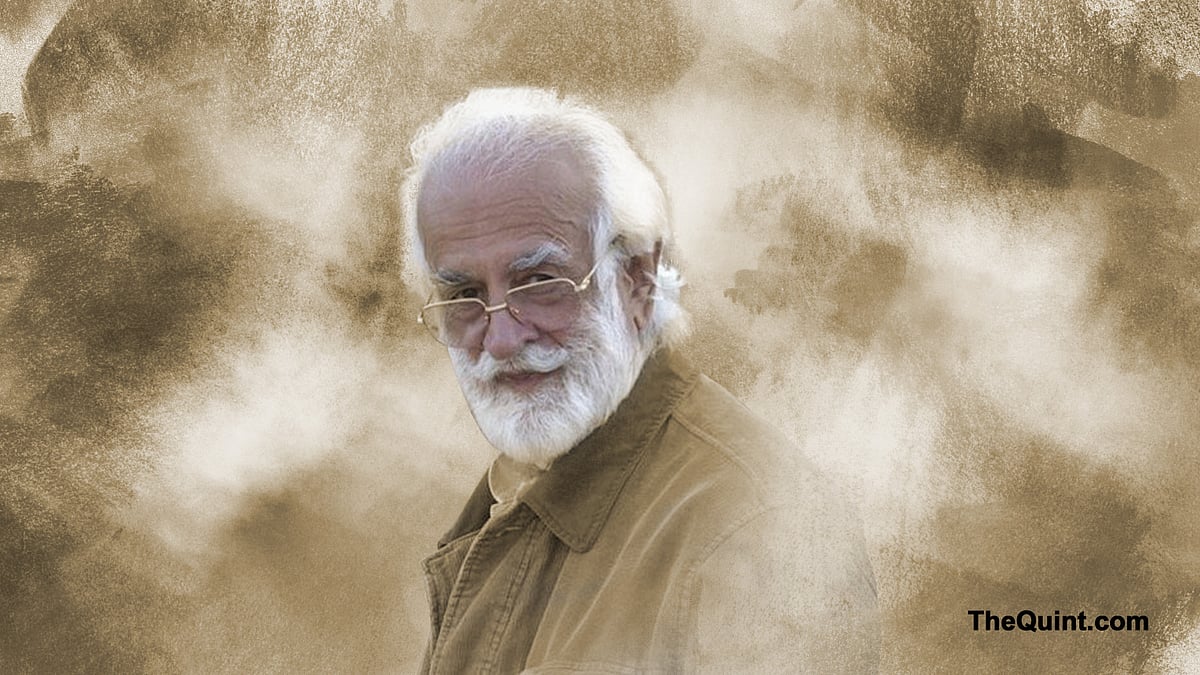
Akbar Bugti
 Pakistan
Also known as: Nawab Akbar Shahbaz Khan Bugti, Shaheed Nawab Akbar Shahbaz Khan Bugti
Birthday
July 12, 1926
Birth Sign
Cancer
Birthplace
Barkhan, Balochistan, Pakistan
Age
Died at 80
Height
Over 6 ft
About
Nawab Akbar Shahbaz Khan Bugti was a Pakistani politician and the hereditary chief, or tumandar, of the Bugti tribe. For nearly five decades, he moved between the corridors of federal power and the rugged hills of Balochistan, serving as Minister of State for Interior, Governor of Balochistan from 1973 to 1974, and Chief Minister from 1989 to 1990. He founded the Jamhoori Watan Party in 1989 and led it until his death.
Bugti became the most recognizable face of Baloch resistance, a figure who turned from statesman to symbol. His stand against the government of Pervez Musharraf over the region's political and economic rights ended with his death during a military operation in Kohlu district on August 26, 2006. Today he is remembered across Balochistan as a martyr, with his death anniversary observed annually.
Early Life & Background
Akbar Bugti was born on July 12, 1926, in Barkhan, a small town in what was then British India and is now Balochistan, Pakistan. He came from a family that had long held leadership over the Bugti tribe, inheriting a legacy that involved control over tribal affairs and the natural resources of the region. His father, Nawab Mehrab Khan Bugti, had been a significant tribal leader before him.
Growing up in the tribal belt, Bugti was steeped in the traditions of Baloch honor and independence. He was known for his candor and bravery from a young age, traits that would define his public life. Details of his formal education are scarce, but his political formation took place against the backdrop of the creation of Pakistan in 1947 and the early struggles over Balochistan's status within the new state.
His entry into politics came through the traditional route of tribal leadership, but he quickly moved onto the national stage. By the 1950s, he was already involved in the political currents of the time, positioning himself as a voice for Baloch interests in the federal setup.
Career Growth
Bugti's political career took off in the 1960s and 1970s. He served as Minister of State for Interior under President Ayub Khan, a role that brought him into the heart of Pakistan's power structures. In 1973, he was appointed Governor of Balochistan, a position he held for a year before resigning amid growing tensions between the center and the province.
The 1980s saw him become a vocal critic of military rule, and in 1989 he founded the Jamhoori Watan Party to give organized political expression to his vision. That same year, he became Chief Minister of Balochistan, a post he held until 1990. His tenure was marked by efforts to assert provincial autonomy, but it ended amid political maneuvering in Islamabad.
The defining chapter came in the 2000s. Bugti clashed with President Pervez Musharraf over the control of Balochistan's natural gas resources and the treatment of the Baloch people. He retreated to the mountains and launched an armed campaign, leading to a military operation against him. He was killed on August 26, 2006, in Kohlu district, at the age of 80. His death turned him into a martyr for many Baloch and intensified the insurgency in the province.
Career Timeline
Public Image & Style
Akbar Bugti's public image was that of a proud, uncompromising Baloch leader. He was often photographed in traditional Baloch attire, with a distinctive turban and a stern expression. His speeches were fiery and direct, earning him a reputation for candor.
To his supporters, he was a hero who stood up for the rights of his people against a centralizing state. To his critics, he was a feudal lord who resisted modernization. After his death, his image became a rallying point for Baloch nationalists, with his portraits displayed in homes and political gatherings across the province.
His legacy is complex, but his name is indelibly linked to the struggle for Baloch autonomy and the grievances of Balochistan against the federal government.
Fame & Fandom
Akbar Bugti currently holds no placement in the iFANN Global Top 1,000 or any scope-specific ranking lists. The evaluation by the iFANN Global Fame Engine confirms that while his historical footprint remains significant within specific regional and political contexts, he does not currently occupy a quantified position in the published global fame hierarchy. Unlike contemporary entertainers who generate measurable consumer engagement through commercial products or digital metrics, Bugti's prominence is rooted in tribal leadership and political resistance rather than mass-market celebrity consumption.
His legacy does not sustain a formal fandom with an official collective name or organized fan clubs typical of pop culture icons. There are no documented fan rituals, birthday campaigns, or merchandise drives driven by a self-identified group of supporters. Instead, the community that reveres him consists of members of the Bugti tribe, Baloch nationalists, and political opposition figures who view him as a symbol of autonomy. Their commemoration of his life functions more as political solidarity than fandom activity. The most enduring narrative surrounding his memory is the event of his death in a cave in Kohlu district in August 2006. This incident has become a central pillar of Baloch nationalist mythology, retold annually during death anniversary tributes that draw political rallies rather than fan conventions. His image as the 'Lion Who Refused to Bow' persists as a historical assessment of his complex career oscillating between federal service and armed rebellion, cementing his status as a martyr for the cause of Baloch rights.
Interesting Facts and Legends
Nawab Akbar Shahbaz Khan Bugti was known for his towering physical presence, standing over six feet tall. He was also a poet who wrote verses in both Balochi and Urdu to express his political convictions. Despite his long tenure in high office, he preferred traditional Baloch dress and maintained a simple lifestyle within his tribal stronghold. His family name derives from the Bugti tribe, one of the largest in Balochistan, and the title 'Nawab' represented a hereditary honor. He remained a skilled horseman and marksman throughout his life, skills honed during his tribal upbringing.
The single most iconic moment defining his legend occurred on August 26, 2006, when he was killed during a military operation in a cave in the Kohlu district. This event transformed him into a martyr figure for Baloch nationalists and sparked immediate condemnation from opposition leaders, escalating tensions in the region. A recurring narrative describes him as a contradiction, an Oxford-educated statesman who refused to bow to central authority. Annual commemorations of his death continue decades later, serving as political gatherings where supporters remember his role as the 'Tiger of Balochistan' who led an armed struggle for greater autonomy until his final days.
Notable Quotes
“I am not a traitor. I am a Baloch.”
“The state has not given us our rights, and we will not beg for them.”
“I will not bow to any dictator.”
“Balochistan is our land, and we will decide its future.”
Family & Personal Life
Akbar Bugti was born into the ruling family of the Bugti tribe, the son of Nawab Mehrab Khan Bugti. The family's authority over the tribe and its lands was a central part of his identity and political position.
He had a son, Nawabzada Jamil Akbar Bugti, who followed him into politics. Jamil Akbar Bugti served as a senator and was a prominent political figure in Balochistan. He passed away in Karachi on April 2, 2026, due to a heart attack, at the age of 72.
Details about Bugti's wife and other family members are not widely documented, but the Bugti family remains influential in Balochistan's politics to this day.
Notable Connections
Akbar Bugti was associated with key figures in Pakistan's political history. He worked with President Ayub Khan in the 1960s and later clashed with General Pervez Musharraf. He also had relationships with other Baloch leaders and political parties, but his primary alliance was with his own Jamhoori Watan Party. His son, Jamil Akbar Bugti, continued his political legacy.
Relationships & Dating History
Details about Akbar Bugti's personal relationships are scarce in the public record. He was married and had at least one son, Jamil Akbar Bugti, who died in 2026. His wife's name is not widely reported. Given the traditional nature of tribal society, his family life was kept private, and little information is available about his romantic relationships or marriage timeline.
- MarriedMarried, but spouse's name and details are not publicly documented.
Death & Aftermath
Died
August 26, 2006 (aged 80)
Death Place
Kohlu district, Balochistan, Pakistan
Cause of Death
Injuries from military bombardment
The Inter-Services Public Relations confirmed on August 26, 2006, that Nawab Akbar Shahbaz Khan Bugti was killed in action during a military operation in the Kohlu district of Balochistan. The official account stated that the tribal chief died from injuries sustained in an airstrike or shelling on the cave complex where he had taken refuge after negotiations with President Pervez Musharraf collapsed earlier that year. Public reaction was immediate and profound, transforming Bugti into a martyr for the Baloch nationalist movement as vigils and protests erupted across Pakistan and international figures expressed concern over regional stability. Tributes poured in from political peers and institutions, with moments of silence observed globally and murals depicting him becoming common landmarks in Balochistan and Karachi. Streaming and sales of documentaries surged annually on the anniversary of his death, marking the date as a significant day of remembrance and protest rather than mere historical record.
Bugti's funeral took place on August 28, 2006, in his ancestral village of Barkhan, where thousands of mourners attended despite heavy security presence and the risks involved in traveling to the site. The body was laid to rest in a simple grave adhering to Islamic rites, and while various organizations have since bestowed awards upon him posthumously, his estate was handled privately by his heirs without public disclosure of its distribution. His legacy remains a potent symbol in Baloch political history, with his story frequently cited in academic works and commemorated through cultural productions that explore the controversy surrounding his final days.
Net Worth (Estate Value)
As a tribal chief and politician, Akbar Bugti's wealth was tied to his family's control over land and resources in Balochistan. The Bugti tribe has historically held significant influence over natural gas fields in the region, which were a source of contention with the federal government. However, specific figures for his personal net worth are not publicly available.
After his death, his estate and assets were inherited by his family, but there is no reliable data on its current value. The family's political influence remains, but their financial standing is not well-documented.
Awards & Accolades
Known For
Chief of the Bugti Tribe
· Tribal Leader
Governor of Balochistan
1973-1974 · Governor
Chief Minister of Balochistan
1989-1990 · Chief Minister
Founder of Jamhoori Watan Party
1989 · Founder and Leader
Keywords
Sources
Quick Facts
- Profession
- Politician
- Born
- July 12, 1926
- Birthplace
- Barkhan, Balochistan
- Died
- August 26, 2006
- Death Place
- Kohlu, Balochistan
- Age at Death
- 80
- Gender
- Male
- Birth Sign
- Cancer
- Political Party
- Jamhoori Watan Party
- Tribe
- Bugti
Personal Details
- Full Name
- Nawab Akbar Shahbaz Khan Bugti
- Height
- Over 6 ft
- Children
- Nawabzada Jamil Akbar Bugti
Frequently Asked Questions
Who was Akbar Bugti?
How did Akbar Bugti die?
What was Akbar Bugti's political career?
Why is Akbar Bugti famous?
What is Akbar Bugti's legacy?
Join the community
fans discussing