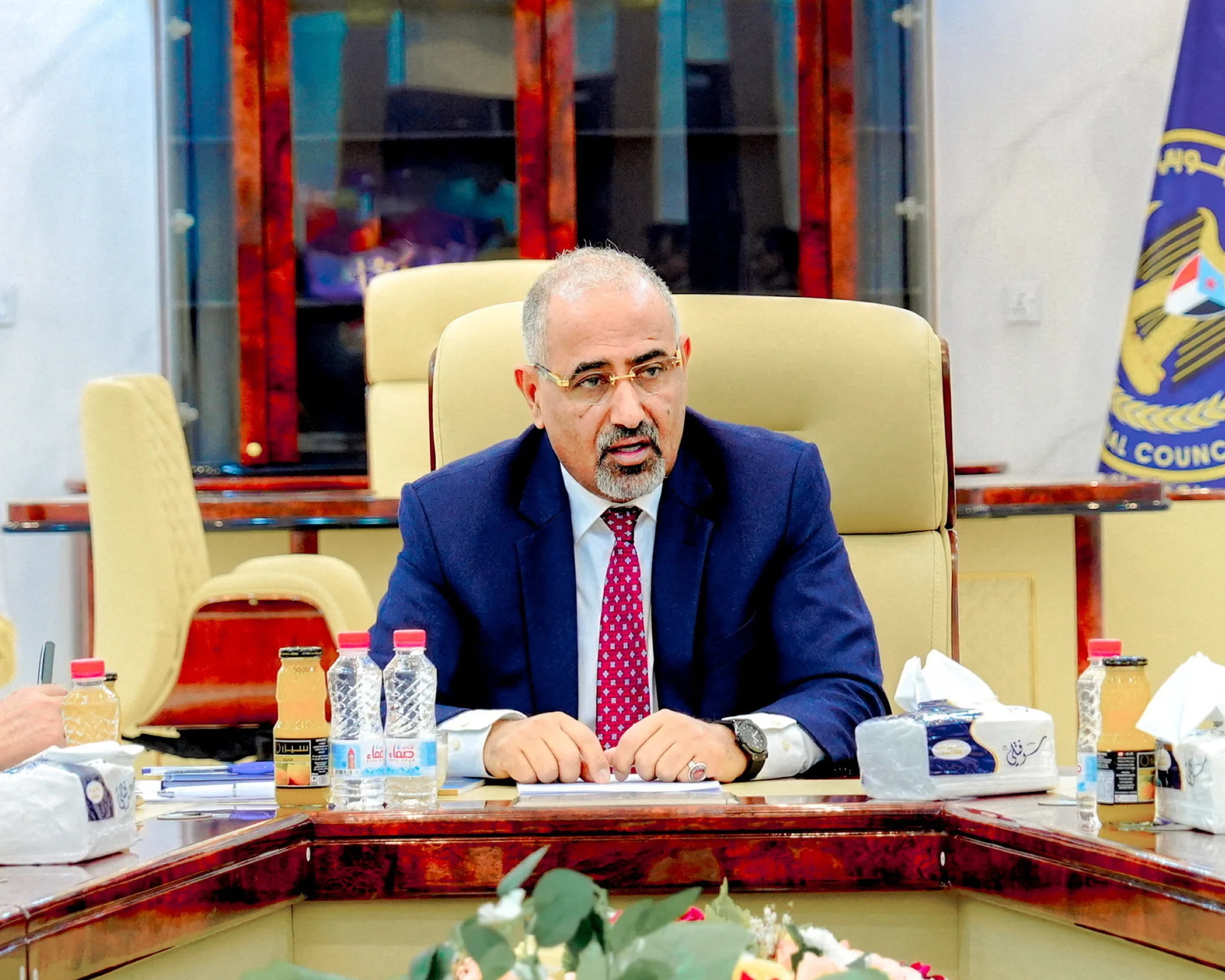
Aidarus al-Zoubaidi
 United Arab Emirates
Also known as: Aidarous al-Zubaidi, Aidarus Qassem Abd al-Aziz al-Zoubaidi
Birthday
1967
Birth Sign
Unknown
Birthplace
Dhale Governorate, Yemen
Age
59 years old
About
Aidarus al-Zoubaidi is a Yemeni politician and military commander who rose to become one of the most powerful figures in southern Yemen during the ongoing civil war. Born in 1967 in Dhale Governorate, he transitioned from a local security officer to a key leader in the anti-Houthi resistance. His career reached its peak as the long-serving chairperson of the Southern Transitional Council (STC) and Vice President of the Presidential Leadership Council (PLC), where he effectively governed Aden and led separatist efforts with backing from the United Arab Emirates.
As of 2026, al-Zoubaidi remains a central figure in regional politics despite a dramatic fall from grace earlier in the decade. Following accusations of high treason by the Yemeni government and rival factions in early 2026, he fled the country via Somalia to seek refuge in the United Arab Emirates. This event marked a significant rupture in the geopolitical alliances supporting the southern campaign. Although currently in exile, his influence continues to shape the political landscape of southern Yemen through his remaining loyalists and the broader separatist movement.
Early Life & Background
The story of Aidarus al-Zoubaidi begins in the rugged terrain of Dhale Governorate, a region in southern Yemen known for its deep tribal roots and history of resistance against central authority. Born in 1967 into this volatile environment, he grew up in a society where loyalty to local clans often superseded national allegiance. Specific details about his formal education remain scarce in public records, but his upbringing immersed him in the complex social dynamics that would later define his political career. He did not start as a politician but rather as a man of action within the local security apparatus.
Before stepping onto the national stage, al-Zoubaidi served as a military officer within the southern security forces. His early years were marked by a steady rise through the ranks of local militias and rebel groups that opposed the Houthi insurgency. By the time the conflict intensified in 2014, he had already established himself as a formidable commander with strong ties to influential tribes in the south. These connections proved vital when the war escalated, allowing him to mobilize support quickly. He became a prominent voice in the Southern Movement, an organization seeking greater autonomy or independence for southern Yemen. His leadership during these formative years laid the groundwork for his eventual appointment as governor of Aden, setting the stage for a decade of intense political maneuvering and military command.
Career Growth
Al-Zoubaidi's ascent to power began in earnest after the Houthi takeover of Sanaa in late 2014. In December 2015, President Abdrabbuh Mansur Hadi appointed him as the Governor of Aden, placing him at the helm of Yemen's second-largest city during a period of extreme instability. As governor, he managed a chaotic mix of government forces, local militias, and international aid operations while fighting to retake the city from Houthi control. His ability to navigate these fractured alliances cemented his reputation as a pragmatic leader capable of holding the line.
In 2017, he solidified his authority by becoming the Chairperson of the Southern Transitional Council (STC). Under his leadership, the STC evolved into a de facto state within a state, controlling much of southern Yemen while operating largely independently of the central government in Sanaa. His tenure was characterized by a delicate balancing act between maintaining southern separatist goals and securing support from foreign backers, particularly the United Arab Emirates. The scope of his power expanded further in 2022 when he was appointed Vice President of the Presidential Leadership Council (PLC), a seven-member body formed to unify Yemen's fractured leadership. This dual role allowed him to wield influence both regionally and nationally simultaneously.
The trajectory of his career took a sharp turn in January 2026. Facing accusations of high treason from the Yemeni government and rival factions, al-Zoubaidi was ordered arrested. Rather than face detention, he fled Yemen, traveling through Mogadishu, Somalia, before arriving in the United Arab Emirates. This dramatic escape highlighted a major rift between Saudi Arabia and the UAE regarding their respective projects in southern Yemen. By June 2026, the situation had escalated as the Yemeni government formally requested UN Security Council sanctions against him. Despite his exile, he continued to meet with remnants of the STC structure, attempting to maintain his leadership over the faction from abroad.
Career Timeline
Public Image & Style
Media portrayal of al-Zoubaidi is deeply polarized. To his supporters in southern Yemen, he is viewed as a protector of regional interests and a pragmatic leader who fought tirelessly for autonomy. They see him as a necessary figure who kept Aden stable during some of the war's darkest days. Conversely, detractors, particularly those aligned with the central government and Saudi Arabia, label him a rogue actor who undermined national unity. His image underwent a drastic transformation in 2026, shifting from a respected statesman to a fugitive accused of treason. This volatility reflects the precarious nature of alliances in the Yemeni civil war, where yesterday's ally can quickly become today's enemy.
Fame & Fandom (iFAMOUS Rankings)
Aidarus al-Zoubaidi commands a following defined not by cultural adoration but by political alignment, with supporters organized through the Southern Transitional Council and affiliated military factions rather than any formal fanbase or collective identity. His influence stems from his tenure as chairperson of the STC and governor of Aden, creating a constituency of militia members and constituents who engage with him through state channels and military command structures instead of social media campaigns or rituals. Despite this lack of celebrity fandom, global attention metrics place him prominently within specific regional contexts. According to the iFANN Global Fame Rankings, he is the 100th most famous person in United Arab Emirates, holding steady from the previous cycle. Furthermore, he ranks as the 31st most famous person from United Arab Emirates, maintaining his standing without fluctuation. These placements reflect a scale of visibility that tracks global attention across diverse media coverage, search patterns, and consumption signals worldwide, distinguishing his profile from those with no recorded presence. The data confirms his status as a figure of significant regional consequence, where his political maneuvers and diplomatic interactions generate measurable interest distinct from entertainment-based fame.
Interesting Facts and Legends
One of the most striking aspects of al-Zoubaidi's career is the duality he held for several years: serving simultaneously as the leader of a separatist movement and as a Vice President of the unified national government. This rare position allowed him to bridge two conflicting political worlds until the alliance fractured in 2026. Another notable detail involves his route of escape in January 2026. Fleeing a country surrounded by hostile forces, he traveled through Mogadishu, Somalia, a path unusual for a head of state, which underscored the desperation of his situation and the lack of direct diplomatic channels available to him at the time. Media reports also highlight how quickly his public image shifted; once hailed as a hero for saving Aden, he was branded a traitor by the very government he helped lead within a matter of months.
Notable Quotes
“His rhetoric consistently emphasized 'southern autonomy' and 'resistance' against external interference.”
“Reports suggest he framed his flight as a strategic retreat to preserve his faction's integrity against 'internal betrayal'.”
Family & Personal Life
Unlike many public figures, al-Zoubaidi maintains a notably private personal life. There are no publicly documented records of his parents, siblings, or extended family members in open-source media. He has kept his marital status and any potential children out of the public eye, likely due to the dangerous nature of his profession in a conflict zone. While his political allies and militia commanders are well-known, his immediate family remains shielded from scrutiny. This privacy stands in stark contrast to the intense public focus on his political maneuvers and military decisions.
Notable Connections
Abdrabbuh Mansur Hadi, Khalifa Haftar, UAE Officials, Saudi Officials
Relationships & Dating History
Al-Zoubaidi maintains a notably private personal life compared to entertainers. There are no publicly documented records of romantic relationships, dating history, marriages, or children in open-source media. Unlike celebrity figures, his 'fandom' consists of political supporters and militia members rather than a fanbase interested in his private life. Consequently, there is no information available regarding partners, engagements, divorces, or offspring. As of 2026, his marital status is unconfirmed by public records, though he remains a central figure in regional politics despite his exile.
Salary, Net Worth In 2026
$0
iFANN Editorial Team estimate
Specific net worth figures for Aidarus al-Zoubaidi are not available in public financial disclosures, as he is a political and military leader rather than a commercial entrepreneur or celebrity. Wealth estimates for such figures in conflict zones are speculative and rarely tracked by standard celebrity net worth sites. His resources likely derived from his positions as Governor and STC Chair, which involved control over customs revenues, port fees, and foreign aid distribution in Aden. Following his flight in January 2026 and the subsequent sanctions requests, any assets he held in Yemen were likely frozen or seized. No credible data exists on real estate holdings, business ventures, or investment portfolios outside of his official capacities. Research by the iFANN Editorial Team indicates that his current financial standing is difficult to quantify due to the frozen nature of his assets and his status as an exiled political figure.
Awards & Accolades
Known For
Governor of Aden
2015 · Political Leader
Chairperson of the Southern Transitional Council
2017 · Separatist Leader
Vice President of the Presidential Leadership Council
2022 · National Politician
Keywords
Sources
Quick Facts
- Profession
- politician, military personnel
- Born
- +1967
- Birthplace
- Dhale Governorate
- Gender
- Male
Personal Details
- Full Name
- Aidarus Qassem Abd al-Aziz al-Zoubaidi
- Children
Frequently Asked Questions
Who is Aidarus al-Zoubaidi?
What happened to Aidarus al-Zoubaidi in 2026?
Is Aidarus al-Zoubaidi still alive?
Why was Aidarus al-Zoubaidi sanctioned?
What is the Southern Transitional Council (STC)?
Similar People
Join the community
fans discussing