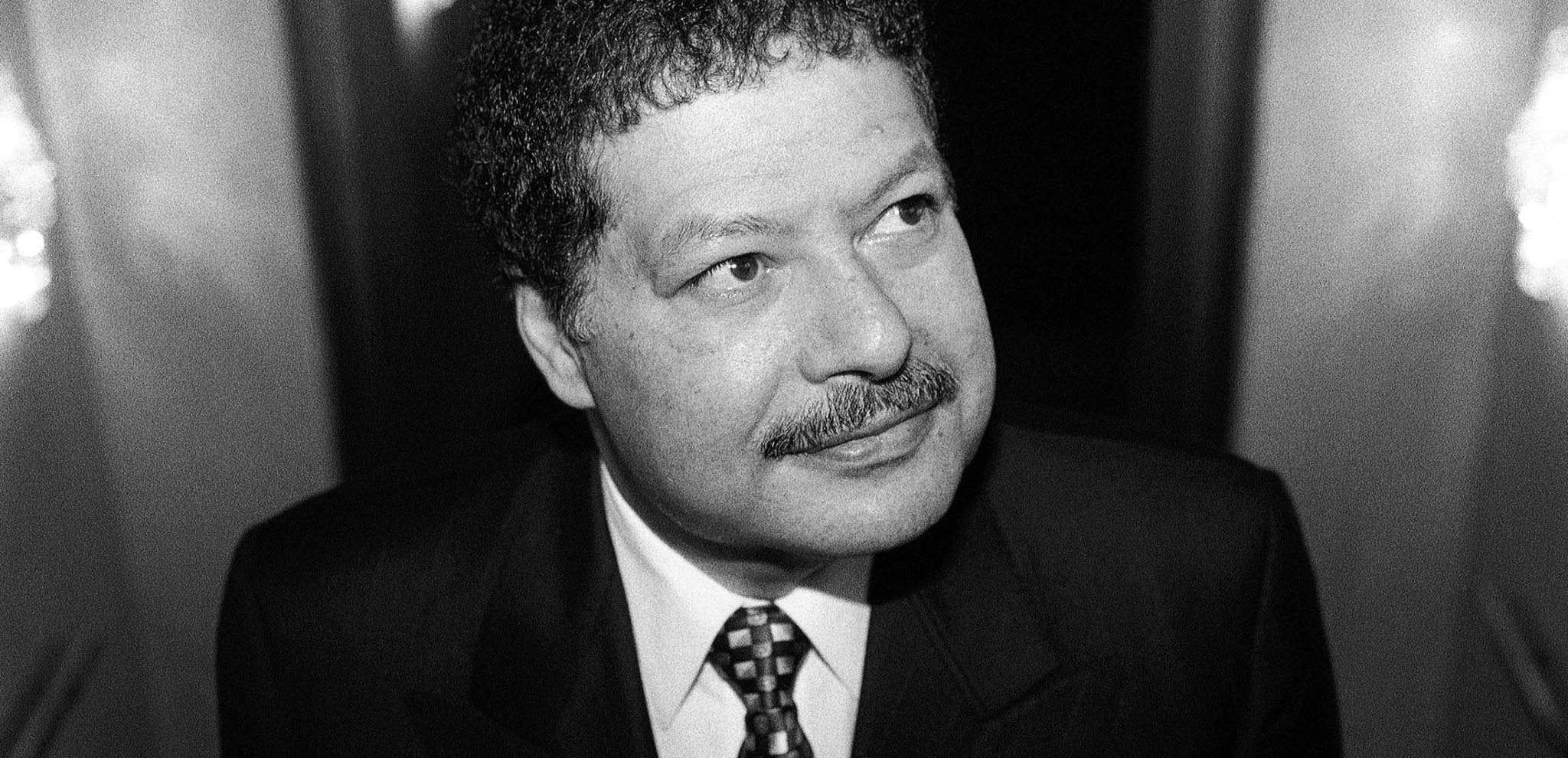
Ahmed Zewail
 Egypt
Egyptchemist•university teacher•inventor
Also known as: Ahmed H. Zewail, Ahmed Hassan Zewail
Birthday
February 26, 1946
Birth Sign
Pisces
Birthplace
Damanhur, Egypt
Age
Died at 70
About
Ahmed Hassan Zewail was an Egyptian-American chemist whose work with ultrafast lasers earned him the 1999 Nobel Prize in Chemistry, making him the first Egyptian, Arab, and African to win a Nobel in a scientific field. Known as the "father of femtochemistry," he spent most of his career at the California Institute of Technology (Caltech), where he held the Linus Pauling Chair of Chemical Physics and directed the Physical Biology Center for Ultrafast Science and Technology. His research revealed the fleeting transition states of chemical reactions, opening new windows into molecular dynamics that influenced physics, biology, and medicine.
Zewail's public role extended beyond the laboratory. He served as the first U.S. science envoy to the Middle East and sat on President Barack Obama's Council of Advisors on Science and Technology. In Egypt, the Zewail City of Science and Technology bears his name, a project he led to foster scientific advancement in the developing world. He passed away on August 2, 2016, in Pasadena, California, at age 70, leaving a legacy that continues to inspire scientists across the globe.
Early Life & Background
Ahmed Zewail was born in Damanhur, Egypt, on February 26, 1946, and grew up in Desouk and later Alexandria. His father, Hassan, assembled motorcycles and bicycles before becoming a government official, while his mother, Rawhia Dar, managed the household finances with remarkable skill despite limited formal education. Zewail was the only son among four children.
His early aptitude for science led him to Alexandria University, where he joined an honors class known as the "specials." He earned a bachelor's degree in chemistry in 1967 and a master's in 1969. His master's work focused on spectroscopy, a field that would define his career. Several professors urged him to pursue a doctorate in the United States, though the path was not straightforward. The Egyptian government required that the fellowship offer from the University of Pennsylvania be written without his name, so he had to ensure that all other honors students declined the offer, leaving him as the sole candidate.
Zewail completed his PhD at Penn in 1974 under Robin Hochstrasser, then moved to UC Berkeley for postdoctoral research with Charles Bonner Harris. The Apollo 8 mission's photographs of Earth from lunar orbit in 1968 had impressed upon him the heights of American science, and his time in the U.S. confirmed that hard work was essential to success. He joined Caltech as an assistant professor in 1976.
Career Growth
At Caltech, Zewail rose quickly through the ranks, gaining tenure in 1978 and becoming a full professor in 1982. That same year he became a naturalized U.S. citizen. His breakthrough came with the development of femtochemistry, using laser pulses lasting a femtosecond, a millionth of a billionth of a second, to observe chemical reactions as they happen. This technique allowed scientists to see transition states directly, transforming the study of chemical dynamics and enabling advances in drug development, nanotechnology, and materials science.
His contributions earned him the King Faisal International Prize in 1989 and, in 1999, the Nobel Prize in Chemistry, awarded for his studies of transition states using femtosecond spectroscopy. He was the first Caltech faculty member named the Linus Pauling Chair of Chemical Physics, and he directed the Physical Biology Center for Ultrafast Science and Technology. Later, his research evolved into four-dimensional microscopy, capturing molecular changes in both space and time. Over his career, he published more than 600 articles and 16 books.
Zewail also took on public service roles. In 2009, President Obama appointed him to the Council of Advisors on Science and Technology, and he later served as the first U.S. science envoy to the Middle East. From 2013, he sat on the United Nations Scientific Advisory Board. He remained active until his death in 2016.
Career Timeline
Public Image & Style
Zewail was celebrated as a trailblazer who "defied all odds" as an Egyptian and African scientist reaching the pinnacle of chemistry. The media often portrayed him as a bridge-builder between the developed world and developing regions, particularly the Middle East and Africa. His journey from the Nile Delta to the Nobel Prize was held up as a testament to determination and hard work.
He was known for his calm, measured demeanor and his ability to explain complex science in accessible terms. In Egypt, he was a national hero, and his face appeared on stamps and in textbooks. The Zewail City of Science and Technology, which he helped establish, stands as a physical embodiment of his vision. He did not cultivate a fandom in the traditional sense, but he inspired countless young scientists across the Arab world and Africa.
Fame & Fandom
Ahmed Zewail remains a towering figure in the global scientific community, currently recognized as the 31st most famous person in Egypt and the 47th most famous person from Egypt, placements that have held steady through recent cycles of the iFANN Global Fame Rankings. These standings reflect a legacy defined not by fleeting celebrity but by the enduring resonance of his work in femtochemistry and his status as a national icon who bridged the gap between the Nile Delta and the pinnacle of Western science. While the world tracks his influence across media coverage and consumption signals worldwide, the nature of his following differs sharply from pop culture phenomena; there is no formal fandom name or organized group of followers dedicated to his personal life. His audience consists instead of students, researchers, and citizens inspired by his intellectual brilliance and his role as a symbol of Arab achievement in the sciences. The reverence he commands is quiet and profound, rooted in the historic moment he became the first Arab to win a Nobel Prize in a scientific field. This singular achievement transformed him into a permanent fixture in the cultural mythology of the Middle East, where his story serves as a benchmark for academic excellence rather than a subject of viral fan rituals or birthday celebrations.
Interesting Facts and Legends
Zewail's father worked as a bicycle and motorbike fitter before entering government service, while his mother, though barely literate, managed the family finances with remarkable precision. He once described his heritage as including 'the pharaohs' genes at the south' and 'even the European part.' His path to an American PhD involved a unique obstacle: the Egyptian government required that his fellowship offer from the University of Pennsylvania be written without his name, so he had to ensure that all other honors students declined the offer, leaving him as the sole candidate. He became a U.S. citizen on March 5, 1982, and was the first Caltech professor to hold the Linus Pauling Chair of Chemical Physics. Beyond the lab, Zewail was an avid reader and enjoyed classical music. He often spoke of the inspiration he drew from the Apollo 8 mission's photographs of Earth, which he saw in 1968. A defining legend of his career is his development of femtosecond spectroscopy, a technique allowing scientists to observe chemical reactions at the speed of light, earning him the title 'Father of Femtochemistry.' His 1999 Nobel Prize victory stands as a historic national milestone, frequently cited as a source of immense pride for Egypt and the Arab world. Following his death in 2016, his Nobel medal and personal possessions were donated to an Egyptian museum in January 2023, cementing his status as a national treasure.
Notable Quotes
“My father was a man that I admired in my life because he took life in a simple way. He found nothing complicated about life. He always can smile.”
“It was also evident to me that if you really want to achieve and do well in American society, you have to work, and work hard.”
“The universe is made of atoms and molecules; their behavior determines the nature of our world.”
Family & Personal Life
Zewail was married and had four children, all born in the United States with dual citizenship rights. His first child, Maha, was born at the University of Pennsylvania hospital on a snowy day; he had to stop a policeman to request transportation to the hospital. His second child was named Amani. Details about his wife remain private, but the Nobel Prize biography confirms he was married with four children at the time of the award.
His parents, Hassan and Rawhia, were married for 50 years until Hassan's death in 1992. Zewail described his father as a man who "took life in a simple way" and "always can smile," while his mother was serious and focused on planning for his future. He was the only son with three sisters.
Notable Connections
Zewail's doctoral supervisor at the University of Pennsylvania was Robin M. Hochstrasser, a pioneer in molecular spectroscopy. At UC Berkeley, he worked under Charles Bonner Harris. Among his notable students was Martin Gruebele, who became a leading biophysicist. Zewail also served on President Barack Obama's Council of Advisors on Science and Technology, and his scientific legacy is carried forward by the Zewail City of Science and Technology in Egypt.
Relationships & Dating History
Zewail married his wife, whose name remains private, during his doctoral studies at the University of Pennsylvania in the early 1970s. Their first child, Maha, was born in 1973 at the university hospital. A second daughter, Amani, followed in 1975. The couple had two more children, all born in the United States, giving them dual citizenship rights.
Details about his marriage are scarce, but the Nobel Prize biography confirms he was married with four children at the time of the award in 1999. There is no public record of any divorce or separation. Zewail remained married to his wife until his death on August 2, 2016, in Pasadena, California.
- MarriedUnknown1973 - 2016Married while at the University of Pennsylvania; had four children together.
Death & Aftermath
Died
August 2, 2016 (aged 70)
Death Place
Pasadena, California
Cause of Death
Cancer
Ahmed Hassan Zewail, the Egyptian-American chemist and 1999 Nobel Prize laureate in Chemistry, died on August 2, 2016, at the age of 70. He passed away at his home in Pasadena, California,,. While the exact medical cause was not detailed in an official public autopsy report or coroner's ruling released to the press, Caltech confirmed that he had been battling cancer for several years prior to his death,. The family did not specify the type of cancer, but it was widely reported as the underlying condition leading to his passing. There were no disputes regarding the circumstances of his death; he died peacefully at home, having previously undergone treatment and remaining active in his academic work until shortly before his final days. His last public appearance is not explicitly dated in the search results, but he remained a prominent figure at Caltech and in Egypt until his health declined in late 2015 and early 2016.
The focus immediately shifted to tributes and memorials rather than forensic or legal inquiries. Public reaction to Zewail's death was immediate and profound, characterized by tributes from global scientific institutions and government officials. On August 2, 2016, Caltech issued a statement mourning the loss of its Linus Pauling Professor of Chemistry and director of the Physical Biology Center for Ultrafast Science and Technology. The New York Times published an obituary highlighting his status as the first Arab to win a Nobel Prize in any science,. Tributes poured in from the University of Pennsylvania, where he conducted graduate work, and the American Association for the Advancement of Science (AAAS), which published a tribute noting his passion for bringing science to Egypt,. In Egypt, President Abdel Fattah el-Sisi declared a three-day national mourning period, and the country honored him with a state funeral.
A public memorial service was held in Cairo, Egypt, on August 8, 2016, attended by thousands of mourners, including Egyptian officials and international dignitaries. This event served as a state funeral, reflecting the high esteem in which he was held by the Egyptian government and people. Following the Cairo ceremony, a private burial took place in his hometown of Damanhur, Egypt, near the family home, in accordance with Islamic tradition. The specific details of the private burial ceremony, such as attendees or performances, were not made public, consistent with the privacy often afforded to families during such events. Posthumously, Ahmed Zewail's legacy has been preserved through various dedications and honors. The Ahmed Zewail Foundation was established to support science education and research, particularly in the Middle East.
A scholarship fund was created in his name at Caltech to support students in physical chemistry and ultrafast science. In 2017, the International Union of Pure and Applied Chemistry (IUPAC) named a new element, Moscovium, after the Moscow region, but more directly, the "Ahmed Zewail Chair" was established at the University of Alexandria to honor his contributions to Egyptian science. No films, books, or albums were released posthumously in the immediate aftermath, though his autobiography, The Road to Femtochemistry, remains a key text.
Net Worth (Estate Value)
$10 Million
iFANN Editorial Team estimate
iFANN currently estimates the estate of Ahmed Zewail at $10 Million. During his lifetime, Zewail's income came primarily from his professorial salary at Caltech, where he held the Linus Pauling Chair of Chemical Physics. He also earned royalties from his 16 books and more than 600 published articles. His Nobel Prize in 1999 brought a cash award of about $1 million, and he received numerous other honors that often carried stipends. Since his passing in 2016, the estate has continued to generate revenue through book sales, licensing of his publications, and the ongoing prestige of his name. The Zewail City of Science and Technology, which he helped establish, operates independently but benefits from his legacy. The estate is managed by his family, and its value has remained stable, supported by the enduring relevance of his work in femtochemistry and ultrafast science.
Awards Won (3)
Zewail received the 1999 Nobel Prize in Chemistry, the highest honor in his field, for his development of femtosecond spectroscopy. He also won the King Faisal International Prize in 1989 and the Albert Einstein World Award of Science in 2006. These awards recognized his transformative contributions to physical chemistry and his role in creating the field of femtoscience.
1999 · Chemistry
Studies of transition states of chemical reactions using femtosecond spectroscopy
2006 · Science
Pioneering development of femtoscience and contributions to physical biology
Known For
Femtochemistry
1999 · Developer
Nobel Prize in Chemistry
1999 · Recipient
Four-dimensional electron microscopy
2005 · Pioneer
Keywords
Sources
Quick Facts
- Profession
- chemist, university teacher, inventor
- Born
- +1946-02-26
- Birthplace
- Damanhur
- Died
- +2016-08-02
- Death Place
- Pasadena
- Gender
- Male
- Birth Sign
- Pisces
- Nationality
- Egyptian-American
- Known For
- Femtochemistry
Personal Details
- Full Name
- Ahmed Hassan Zewail
- Children
- Four children
- Education
- B.S. and M.S. in Chemistry, Alexandria University; Ph.D. in Chemistry, University of Pennsylvania
Frequently Asked Questions
What did Ahmed Zewail win the Nobel Prize for?
Was Ahmed Zewail the first Arab to win a Nobel Prize?
Where did Ahmed Zewail work?
How many children did Ahmed Zewail have?
What is the Zewail City of Science and Technology?
Social Media
Similar People
Join the community
fans discussing