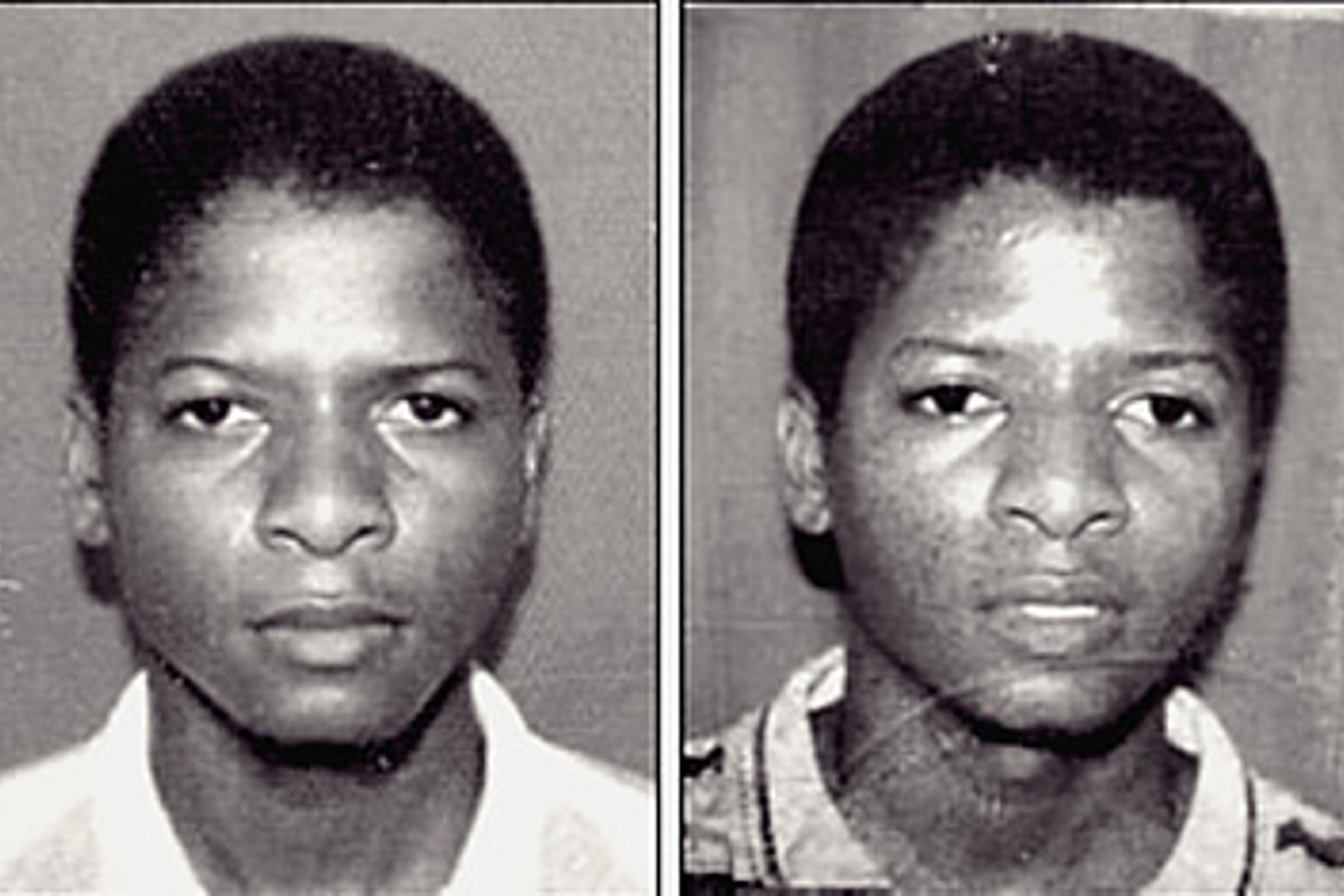
Ahmed Ghailani
 Tanzania
Tanzanian national convicted for role in 1998 U.S. embassy bombings
Also known as: Ahmed Khalfan Ghailani
Birthday
March 14, 1974
Birth Sign
Pisces
Birthplace
Zanzibar Islands, Tanzania
Age
52 years old
About
Ahmed Khalfan Ghailani is a Tanzanian national serving a life sentence for his role in the 1998 bombings of U.S. embassies in Kenya and Tanzania, attacks that killed 224 people and injured thousands. He is the first former Guantanamo Bay detainee to be tried in a U.S. civilian court, a trial that ended in a mixed verdict in 2010.
Ghailani's public identity is defined entirely by his conviction. He was a member of al-Qaeda and spent years on the FBI's Most Wanted Terrorists list before his capture in 2004. His case became a flashpoint in debates over how to handle terrorism suspects, with his acquittal on most charges fueling criticism of the civilian court system.
As of 2026, Ghailani remains incarcerated, his appeals exhausted. He has no known public presence or ongoing projects.
Early Life & Background
Ahmed Khalfan Ghailani was born on March 14, 1974, in the Zanzibar Islands, an archipelago off the coast of Tanzania. Details of his early life are sparse; he grew up in a region with a significant Muslim population and later became radicalized, eventually joining al-Qaeda. By the late 1990s, he was operating within the organization's network in East Africa.
In August 1998, al-Qaeda carried out simultaneous truck bombings at the U.S. embassies in Nairobi, Kenya, and Dar es Salaam, Tanzania. Ghailani was identified as a key conspirator in the plot, allegedly involved in purchasing the truck used in the Tanzania attack and in assembling the bomb. Following the attacks, he went into hiding, moving between several countries in Africa and the Middle East.
In October 2001, he was among the first individuals placed on the FBI's Most Wanted Terrorists list, which was created in the aftermath of the September 11 attacks. His photo and alias circulated widely, but he evaded capture for nearly three years.
Career Growth
Ghailani's notoriety stems not from a career but from his capture and trial. On July 25, 2004, Pakistani security forces, working with U.S. intelligence, arrested him in Gujarat, Pakistan. He was then held in secret CIA detention facilities before being transferred to Guantanamo Bay in 2006.
In 2008, the U.S. Office of Military Commissions charged him with ten counts of terrorism and war crimes, including murder and attacking civilians. However, in 2009, the Obama administration moved his case to federal court in New York, marking the first civilian trial of a Guantanamo detainee.
The trial began in October 2010. On November 17, 2010, a jury found him guilty of one count of conspiracy to destroy U.S. property with explosives, but acquitted him of 284 other charges, including all murder counts. On January 25, 2011, Judge Lewis A. Kaplan sentenced him to life in prison, a decision upheld by a federal appeals court in 2013.
Career Timeline
Public Image & Style
Ahmed Ghailani's public image is that of a convicted terrorist, a figure associated with one of the deadliest attacks in U.S. history. In the media, he is often described as a former Guantanamo detainee and al-Qaeda operative. His trial, however, cast him in a more complex light: he appeared in court in civilian clothes, often looking subdued, and his acquittal on most charges led some to view him as a symbol of the challenges of prosecuting terrorism cases in civilian courts. Supporters of the civilian system pointed to the life sentence as proof of its effectiveness, while critics argued the verdict showed its weaknesses.
Ghailani has no known public persona beyond the courtroom. He has not given interviews or made statements, and he has no social media presence. His name surfaces primarily in legal and political discussions about terrorism and justice.
Fame & Fandom
Ahmed Ghailani commands a specific, grim niche in the cultural memory of global terrorism and legal history. There is no fanbase, no organized following, and no community of admirers rallying around his name. The entities that engage with his legacy are strictly adversarial: law enforcement agencies, international courts, human rights organizations, and journalists covering the fallout of the 1998 embassy bombings. His story is one of tragedy and judicial controversy rather than adulation or viral mythology. He has never interacted with fans, nor have there been any chart pushes or streaming efforts to elevate his profile beyond the headlines of criminal justice. The only moments associated with him are verified historical events, the coordinated attacks on U.S. embassies in Nairobi and Dar es Salaam, his capture in Pakistan, and the subsequent legal battles that defined his public identity. While he appears frequently in true crime discourse as a cautionary figure, this attention stems from the gravity of his crimes and the complex legal precedents set by his trial, not from celebrity worship. Despite the absence of a traditional fan culture, his notoriety remains potent within specific professional spheres. In August 2026, the 82nd most famous person in True Crime according to the iFANN Global Fame Rankings, Ghailani holds a steady position among those whose lives have become central case studies in modern jurisprudence.
Interesting Facts and Legends
Ahmed Khalfan Ghailani was the first individual tried in a U.S. civilian court after being held at Guantanamo Bay. He faced a staggering array of charges, resulting in an acquittal on 284 counts, including 224 counts of murder corresponding to each victim of the embassy bombings. The proceedings were expensive, costing an estimated $20 million due to heightened security measures in lower Manhattan. A pivotal moment occurred when a key witness, identified through coerced interrogation, was barred from testifying, a ruling that significantly shaped the final verdict. Ultimately, Ghailani secured the only conviction in a civilian court for the 1998 embassy bombings, while other conspirators faced military commissions or trials abroad. His sentencing in January 2011 resulted in life imprisonment without parole. The U.S. Court of Appeals upheld this conviction in October 2013, cementing the legal outcome of his decades-long pursuit.
Family & Personal Life
There is no public information about Ahmed Ghailani's family. He has not spoken publicly about his parents, siblings, or any spouse or children. His personal life remains entirely out of the public record, and no details have emerged from his trial or detention that shed light on his family background.
Notable Connections
Ahmed Ghailani is associated with al-Qaeda, the terrorist network that orchestrated the 1998 embassy bombings. His case is linked to the broader legal and political response to terrorism in the United States, including the Guantanamo Bay detention camp and the use of civilian courts for terror trials.
Relationships & Dating History
Salary, Net Worth In 2026
$0
iFANN Editorial Team estimate
iFANN currently estimates Ahmed Ghailani's net worth at $0. As a prisoner serving a life sentence, he possesses no income or personal assets. His legal defense during the high-profile trial was funded entirely by the U.S. government. Any financial resources he may have accumulated prior to his capture in 2004 remain undocumented and unverified. There is no public record of an estate or financial holdings associated with him. His economic reality is defined by incarceration, leaving his effective net worth at zero.
Awards & Accolades
Known For
1998 U.S. embassy bombings
1998 · Convicted conspirator
Keywords
Sources
Quick Facts
- Profession
- Convicted terrorist
- Born
- March 14, 1974
- Birthplace
- Zanzibar Islands, Tanzania
- Gender
- Male
- Birth Sign
- Pisces
Personal Details
- Full Name
- Ahmed Khalfan Ghailani
Frequently Asked Questions
Who is Ahmed Ghailani?
What was Ahmed Ghailani found guilty of?
When was Ahmed Ghailani sentenced?
Where was Ahmed Ghailani born?
What was the significance of Ahmed Ghailani's trial?
Join the community
fans discussing