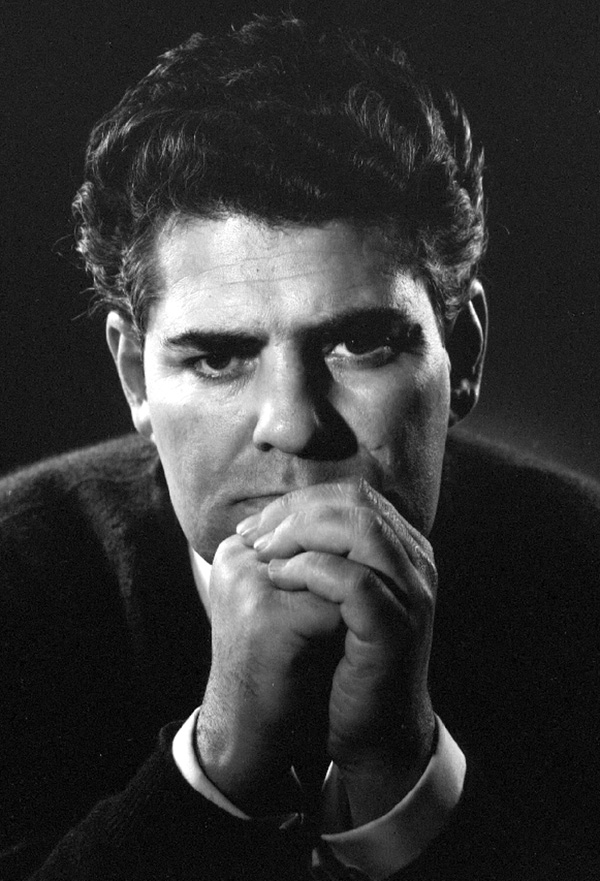
Ahmad Shamlou
 Iran
Also known as: A. Bamdad
Birthday
December 12, 1925
Birth Sign
Sagittarius
Birthplace
Tehran, Iran
Age
Died at 74
About
Ahmad Shamlou was an Iranian poet, journalist, and linguist who became a towering figure in modern Persian literature. Widely regarded as the second most significant poet in modern Iranian history after Nima Yooshij, he dedicated his life to reshaping the literary landscape through innovation and a fierce commitment to freedom. Born in Tehran in 1925, he developed a distinctive style that blended classical imagery with everyday language, challenging established norms while remaining deeply rooted in Persian tradition. His work earned him the title "Master Poet of Freedom," reflecting his lifelong advocacy for human rights and his use of poetry as a tool against authoritarianism.
Shamlou's influence extended far beyond his own writings. He translated numerous French works into Persian, edited classical texts, and authored plays and screenplays. His most ambitious project was the thirteen-volume Ketab-e Koucheh (The Book of Alley), a comprehensive exploration of Iranian folklore. He passed away on July 24, 2000, leaving behind a rich body of work that continues to resonate with readers worldwide, ensuring his place as one of the greatest poets of the 20th century.
Early Life & Background
Ahmad Shamlou was born on December 12, 1925, in Tehran, Iran, into a family immersed in the rich tapestry of Persian culture. His early years were spent in the bustling capital, where he attended school and developed a deep fascination with language and literature. Unlike many of his contemporaries who adhered strictly to traditional forms, Shamlou felt a strong pull toward the emerging "New Poetry" movement initiated by Nima Yooshij. This shift allowed him to forge a path that would eventually separate him from the conservative literary establishment.
Before achieving widespread recognition, Shamlou worked as a journalist and contributed to various literary journals and newspapers. These early roles honed his skills in writing and editing while exposing him to the social and political currents of the time. He began writing poetry under the pen name "A. Bamdad" during this period, experimenting with form and content. His decision to break away from rigid poetic structures and embrace a more accessible, conversational tone marked the beginning of his unique artistic voice. By the late 1940s, he had already established himself as a rising talent ready to challenge the status quo.
Career Growth
Shamlou's breakthrough came with the publication of his early works, which challenged the established norms of Persian poetry. Throughout his career, he produced a prolific output of poetry collections, plays, prose, and translations. One of his most significant achievements was the creation of the thirteen-volume Ketab-e Koucheh, a massive undertaking that explored Iranian folklore and language in unprecedented depth. He also translated many French literary works into Persian, introducing new influences to Iranian readers and enriching the local literary canon.
His poem "In This Blind Alley" became emblematic of his legacy, resonating deeply with audiences during times of political turmoil. Shamlou's ability to bridge the gap between classical traditions and contemporary expression made him a central figure in modern Persian literature. Despite facing censorship and restrictions during the 1980s, he maintained a strong presence in literary circles. Even in his later years, when health issues limited his public appearances, he continued to write and translate. His work remains a vital part of Iran's cultural heritage, studied and performed globally.
Career Timeline
Public Image & Style
Shamlou is portrayed in the media and literary circles as a visionary poet and a champion of freedom. His content, characterized by complex imagery and accessible language, continues to inspire generations of readers and writers. He avoided the spotlight despite his fame, focusing instead on his craft and the message within his work. His reputation as a dissident voice grew alongside his literary success, making him a symbol of resistance against authoritarianism. Critics praise his ability to blend the familiar with the abstract, creating striking paradoxes that challenge readers while remaining emotionally resonant.
Fame & Fandom (iFAMOUS Rankings)
Shamlou's admirers have never adopted a formal collective identity like the organized fanbases of pop music; instead, his following remains a diffuse yet deeply embedded network of Iranian poetry readers, literary scholars, and cultural nationalists who simply call themselves friends or lovers of Shamlou. This audience sustains his legacy not through coordinated social media campaigns but through institutional reverence, reciting his verses at political gatherings, memorials, and even moments of national trauma where his words serve as a vessel for collective grief. A defining aspect of this devotion is the politically charged nature of their rituals, particularly the annual commemorations at his grave which authorities have repeatedly attempted to suppress, turning simple acts of remembrance into profound gestures of cultural defiance.
The reach of his influence extends far beyond Iran's borders, resonating with global audiences through translations and academic engagement that span generations. His status as a pivotal figure in modern literature is quantified by the iFANN Global Fame Rankings. In October 2026, he holds the position of the 43rd most famous person in Iran, a placement holding steady from the previous cycle. He was also featured at No. 43 in the September 2026 iFAMOUS Rankings.
Interesting Facts and Legends
Ahmad Shamlou wrote under the pen name "A. Bamdad" during his early career while establishing himself as a master of complex yet accessible imagery. Fans still retell the story of an incident in 2018 where Iranian authorities blocked a public gathering at his burial site, an event that cemented his posthumous legend as a figure of resistance whose memory the state fears. Another enduring narrative frames him as the "Master Poet of Freedom," a title reflecting his lifelong advocacy for human rights and his use of poetry as a weapon against authoritarianism. His poem "In This Blind Alley" became emblematic of this legacy after a 2010 PBS retrospective highlighted its power. The resonance of his work continues today, evidenced when families of victims of the 2020 Ukraine International Airlines tragedy featured his poetry in virtual ceremonies to honor the dead.
Notable Quotes
“Poetry is the voice of the soul.”
“I am the poet of the alley.”
Family & Personal Life
Ahmad Shamlou was married twice. His first wife was Aida Sarkisian, and his second wife was Tusi Hayeri Mazandarani. Details regarding the specific dates of these marriages or how they met are not extensively documented in public sources. As a private individual, Shamlou kept much of his personal life out of the public eye. By the time of his death in 2000, he was widowed, having lost his second wife prior to his own passing. There is no record of any children or subsequent relationships after his second marriage. He remained focused on his craft rather than personal gain throughout his life.
Notable Connections
Relationships & Dating History
Ahmad Shamlou was married twice during his lifetime. His first wife was Aida Sarkisian, though details about their relationship and the duration of their marriage are not extensively documented in public sources. Following this union, he married Tusi Hayeri Mazandarani, who became his second wife. Specific dates for either marriage or information on how they met are scarce, as Shamlou preferred to keep his personal life private. By the time of his death in 2000, he was widowed, having lost his second wife prior to his own passing. There is no record of any subsequent relationships or children from either marriage.
- MarriedAida SarkisianFirst wife; details of the marriage are private.
- MarriedTusi Hayeri Mazandarani? - before 2000Second wife; died before Shamlou.
Death & Aftermath
Died
July 24, 2000 (aged 74)
Death Place
Karaj, Iran
Cause of Death
Complications from a long-term illness
On July 24, 2000, Ahmad Shamlou passed away in Karaj, Iran, at the age of 74 following a prolonged battle with illness. The literary world received the news as the end of an era for modern Persian verse, marking the loss of a figure widely considered the most influential poet of his generation after Nima Yooshij. While his funeral was conducted as a private affair attended by close family and select friends at Behesht-e Zahra cemetery, the political climate of the time meant that large public gatherings were often restricted for figures of his stature. Tributes poured in immediately from peers and institutions who recognized him as the "Master Poet of Freedom," celebrating a voice that had consistently stood against oppression through his innovative use of everyday language and complex imagery.
In the years since his death, his legacy has faced periodic challenges when security officials blocked access to his grave site to prevent commemorative gatherings on anniversaries in 2018 and 2019. These attempts to suppress remembrance only amplified the resonance of his work, turning simple acts of mourning into profound gestures of cultural defiance. His estate continues to manage over 70 books that remain in print, generating steady revenue through sales and licensing deals. Translations by Niloufar Talebi have brought his poetry to new international audiences, including a 2025 release of elegies featuring five of his poems. The enduring power of his writing was highlighted in 2020 when families of victims of the Ukraine International Airlines tragedy featured his verses in virtual ceremonies to honor the dead.
Net Worth (Estate Value)
$2 Million
iFANN Editorial Team estimate
As a deceased individual, Ahmad Shamlou's net worth is represented by the value of his estate. The iFANN Editorial Team estimates his estate's current value at approximately $2 million based on ongoing revenue streams. His estate continues to generate income through the sale of over 70 books that remain in print, along with licensing deals and translations. Notable recent activity includes the 2025 release of a book of elegies by translator Niloufar Talebi, which features five of Shamlou's poems. The estate is managed to preserve his legacy while ensuring financial sustainability for future projects. The steady demand for his work in both Iran and international markets contributes to the estate's continued growth.
Awards & Accolades
View 3 records, honours and achievementsKnown For
Ketab-e Koucheh
1960s · Author
In This Blind Alley
1970s · Poet
Keywords
Sources
Quick Facts
- Profession
- linguist, poet, journalist
- Born
- December 12, 1925
- Birthplace
- Tehran, Iran
- Died
- July 24, 2000
- Death Place
- Karaj, Iran
- Gender
- Male
- Spouse
- Aida Sarkisian, Tusi Hayeri Mazandarani
- Birth Sign
- Sagittarius
Personal Details
- Full Name
- Ahmad Shamlou
- Spouse
- Aida Sarkisian, Tusi Hayeri Mazandarani
- Children
- Education
- Schooling in Tehran
Frequently Asked Questions
What was Ahmad Shamlou's full name?
When and where did Ahmad Shamlou die?
Who were Ahmad Shamlou's spouses?
What is Ahmad Shamlou's most famous poem?
Is Ahmad Shamlou still relevant today?
Similar People
Join the community
fans discussing