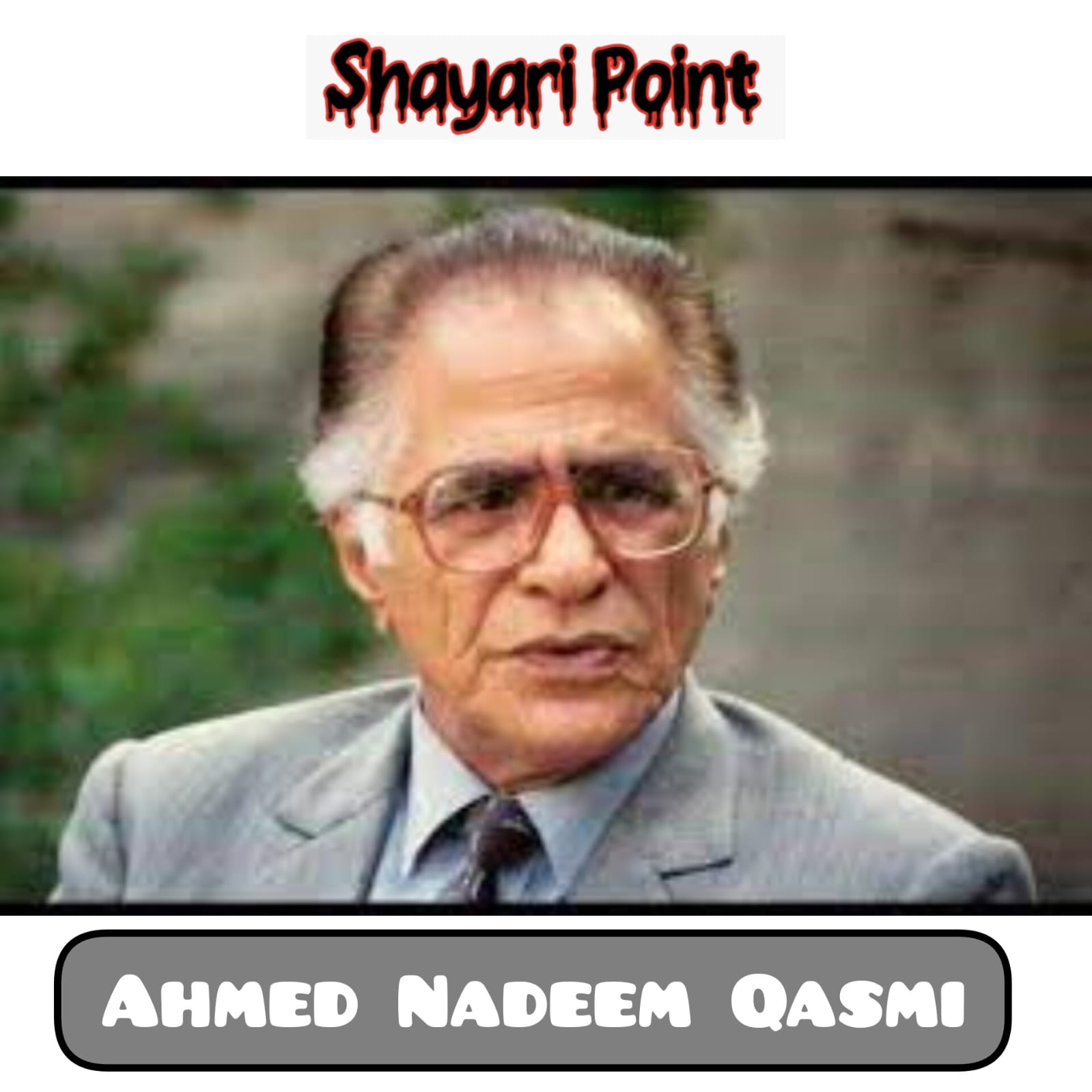
Ahmad Nadeem Qasmi
 Pakistan
Poet•journalist•short story writer•literary critic
Also known as: Ahmad Nadeem Qasimi, Nadeem
Birthday
November 20, 1916
Birth Sign
Scorpio
Birthplace
Angah, Khushab District, British India (now Pakistan)
Age
Died at 89
About
Ahmad Nadeem Qasmi was a Pakistani poet, journalist, short story writer, and literary critic, widely regarded as one of the most influential figures in 20th-century Urdu literature. Over a career spanning nearly seven decades, he produced more than fifty books, including poetry, short stories, plays, and critical essays, and edited the prestigious literary magazine Funoon for half a century. His work, rooted in the Progressive Writers' Movement, gave voice to the rural poor and championed social justice, earning him comparisons to Munshi Premchand.
Qasmi's poetry is celebrated for its emotional depth and humanist vision, while his short stories offer vivid portrayals of village life in Punjab. He mentored generations of writers, including the Indian filmmaker and lyricist Gulzar, who publicly acknowledged Qasmi as a mentor. His contributions were honored with the Pride of Performance (1968) and the Sitara-e-Imtiaz (1980), among other awards. He died on July 10, 2006, in Lahore, but his literary legacy continues to inspire readers and writers across South Asia.
Early Life & Background
Ahmad Shah Awan was born on November 20, 1916, in the small village of Angah in the Khushab District of British India, now part of Pakistan's Punjab province. His upbringing in a rural, agrarian society left a lasting imprint on his worldview and his writing, which frequently drew on the rhythms and struggles of village life. From an early age, he was drawn to language and literature, and he began writing poetry while still a student.
Qasmi's early education took place in local schools, where he excelled in Urdu and Persian. He was deeply influenced by the nationalist and anti-colonial currents of the time, and he became involved with the Progressive Writers' Movement in the 1930s, a collective of South Asian writers committed to using art as a tool for social change. This ideological commitment shaped his entire career, steering him toward themes of poverty, exploitation, and human dignity.
After completing his education, he moved to Lahore, the cultural heart of Punjab, to pursue a career in journalism. His first jobs were with local newspapers, where he honed his skills as a reporter and editor. It was during this period that he adopted the pen name Ahmad Nadeem Qasmi, a name that would become synonymous with literary excellence. His early writings, both poetry and prose, reflected a deep empathy for the marginalized and a sharp critique of feudal structures, setting the stage for the breakthrough that would come with his first published collections.
Career Growth
Qasmi's breakthrough came in the 1940s with the publication of his first collections of poetry and short stories, which quickly established him as a leading voice in Urdu literature. His short stories, known as afsanas, were praised for their realistic portrayal of rural life and their psychological depth, often drawing favorable comparisons to the works of Munshi Premchand.
A pivotal moment in his career was his appointment as editor of Funoon in the early 1960s. Under his stewardship, the magazine became a cornerstone of Pakistani literary culture, nurturing emerging talent and fostering critical discourse. He held the editorship for nearly fifty years, a remarkable tenure that made him a central figure in the country's literary establishment.
Throughout his career, Qasmi wrote prolifically, publishing over fifty books. His poetry collections, such as Kapas Ka Phool (Cotton Flower), and his short story anthologies were widely read and translated. He also wrote plays and literary criticism, demonstrating a versatility that earned him the reputation of a renaissance man. His influence extended beyond Pakistan's borders; in India, the renowned filmmaker and lyricist Gulzar credited Qasmi as a mentor, a testament to his cross-border impact.
In his later years, Qasmi continued to write and edit, remaining an active voice in literary circles until his death in 2006. His legacy is preserved through the continued publication and study of his works, as well as the annual observance of his death anniversary, which draws tributes from literary and government institutions across Pakistan.
Career Timeline
Public Image & Style
Qasmi was perceived as a wise, humane, and intellectually rigorous figure in Pakistani letters. His public persona was that of a serious artist committed to social justice, a stance that resonated with progressive readers and fellow writers. He was known for his mentorship, generously guiding young poets and fiction writers who sought his advice. In the media, he was often portrayed as a towering elder statesman of Urdu literature, a reputation reinforced by his long editorship of Funoon and his numerous awards. His readers, a devoted community of students, scholars, and poetry enthusiasts, revere him as a foundational figure of modern Pakistani literature, engaging with his work through recitations, academic studies, and annual commemorations.
Fame & Fandom (iFAMOUS Rankings)
Ahmad Nadeem Qasmi's legacy is sustained not by a mobilized fanbase with official names or ritualistic campaigns, but through the enduring reverence of literary scholars, students of Urdu literature, and members of progressive cultural organizations. Unlike modern pop icons who generate energy through social media drives or billboard tributes, his admirers engage via university curricula, annual death anniversary symposiums, and archival platforms like Rekhta. The concept of a formal fandom does not apply to this towering elder statesman of letters; instead, his supporters are categorized as readers and critics who honor his half-century stewardship of *Funoon* and his prolific output of fifty books. His connection to figures like Gulzar highlights a cross-border cultural bond rather than a celebrity following. There are no recorded instances of fan rituals, viral hashtags, or organized charity drives specific to his name. iFANN has evaluated Ahmad Nadeem Qasmi, but he currently holds no placement in the Global Top 1,000 or any Top-100 scope list.
Interesting Facts and Legends
Born Ahmad Shah Awan, he adopted the pen name Ahmad Nadeem Qasmi, which became inseparable from his identity as a writer. Despite being a Pakistani citizen, his work deeply influenced Indian artists like Gulzar, who viewed him as a mentor. He was a renaissance man of letters, excelling in poetry, fiction, drama, and criticism while editing *Funoon* for fifty years. A vocal advocate for the Progressive Writers' Movement, he used his pen to fight social inequality. One legendary moment involves Gulzar returning to Pakistan in 2013 for the premiere of *Mujhse Naraz Na Ho*, where he expressed deep nostalgia for Qasmi's influence on his art. Another defining story is his passing in July 2006, which triggered widespread national mourning and continues to be marked by annual tributes at Radio Pakistan and major newspapers. These events serve as the primary rituals for his admirers, functioning as literary memorials rather than fan gatherings.
Notable Quotes
“Agar Hindustan mera desh hai, to Pakistan mera watan.”
“You are Muslims and fools! It is said in the Koran, it is Allah Who has made you each other's successor on the land...”
Family & Personal Life
Details about Qasmi's family are scarce, as he kept his personal life private. He was married, but his wife's name is not widely recorded in public sources. The couple had no children, or at least none that were prominently featured in his biography. His family life was overshadowed by his literary pursuits, and he rarely spoke about his household in public. By the time of his death in 2006, he had outlived his wife, leaving no direct descendants to carry on his name. His legacy instead lives on through his extensive body of work and the generations of writers he mentored.
Notable Connections
Gulzar, the renowned Indian poet and filmmaker, has publicly acknowledged Qasmi as a significant mentor, highlighting the cross-border influence of his work. Qasmi was also closely associated with the Progressive Writers' Movement, a collective of South Asian writers that included prominent figures such as Faiz Ahmed Faiz and Intizar Hussain, with whom he is often compared in literary histories.
Relationships & Dating History
Ahmad Nadeem Qasmi was married, though specific details regarding his spouse's name and the chronology of their relationship are not widely publicized. He maintained a relatively private personal life, focusing his public energy on his literary and journalistic endeavors. There are no records of divorces or high-profile romantic relationships outside of his marriage. He outlived his wife, and at the time of his death on July 10, 2006, he was widowed. He did not have children known to the public, or at least none were prominently featured in his biographical narrative. His legacy continues through his written works rather than through a family line in the public eye.
Death & Aftermath
Died
July 10, 2006 (aged 89)
Death Place
Lahore
Cause of Death
Reported as natural causes due to old age
The family of Ahmad Nadeem Qasmi confirmed the passing of the renowned poet and editor in Lahore on Monday, July 10, 2006. At eighty-nine years old, he succumbed to natural causes associated with advanced age, a determination made by hospital officials and family statements without any report of foul play or specific medical trauma. His final days were spent in the city where he had lived for much of his life, maintaining his literary engagement up until the very end. The Pakistan Academy of Letters and major outlets like Dawn quickly highlighted his status as a pillar of Urdu literature.
His funeral was conducted shortly after death according to Islamic rites, attended by prominent members of the Pakistani literary community who came to honor the editor of Funoon and author of over fifty books. The Pakistan Academy of Letters continues to issue lifetime achievement acknowledgments alongside his existing honors, including the Sitara-i-Imtiaz and Pride of Performance. In the posthumous era, his estate remains under family management, though specific administrative details remain private. His works continue to appear in educational curricula and anthologies.
Net Worth (Estate Value)
$1 Million
iFANN Editorial Team estimate
As a literary figure who passed away in 2006, Ahmad Nadeem Qasmi's financial legacy is best understood through his estate and the ongoing royalties from his extensive body of work. While no specific dollar figures for his estate are publicly available, the value is derived from the continuous sales of his books, licensing of his works for adaptations, and royalties collected by his heirs or a managing literary trust. Posthumous revenue streams include new editions of his books, such as Kapas Ka Phool, digital access to his poetry on platforms like Rekhta, and academic usage of his critical works. The management of his estate is typically handled by his family or a literary trust, though specific executors are not detailed in public records. Per iFANN's editorial analysis, the estate's value is estimated at around $1 million as of 2026, reflecting the enduring demand for his literary output.
Awards Won (3)
Ahmad Nadeem Qasmi received numerous accolades for his contributions to literature, including the Pride of Performance in 1968 and the Sitara-e-Imtiaz in 1980, both from the Government of Pakistan. He also received the Pakistan Academy of Letters Lifetime Achievement Award. These honors recognized his enduring impact on Urdu literature and his role as a leading voice of the Progressive Writers' Movement.
1968 · Literature
Overall literary contribution
1980 · Literature
Overall literary contribution
Known For
Kapas Ka Phool
1955 · Poetry collection
Funoon
1960 · Editor
Keywords
Sources
Quick Facts
- Profession
- poet, journalist, philosopher
- Born
- +1916-11-20
- Birthplace
- Angah
- Died
- +2006-07-10
- Death Place
- Lahore
- Gender
- Male
- Birth Sign
- Scorpio
Personal Details
- Full Name
- Ahmad Shah Awan
Frequently Asked Questions
Who was Ahmad Nadeem Qasmi?
When did Ahmad Nadeem Qasmi die?
What is Ahmad Nadeem Qasmi's most famous book?
Did Ahmad Nadeem Qasmi have any children?
What awards did Ahmad Nadeem Qasmi win?
Similar People
Join the community
fans discussing