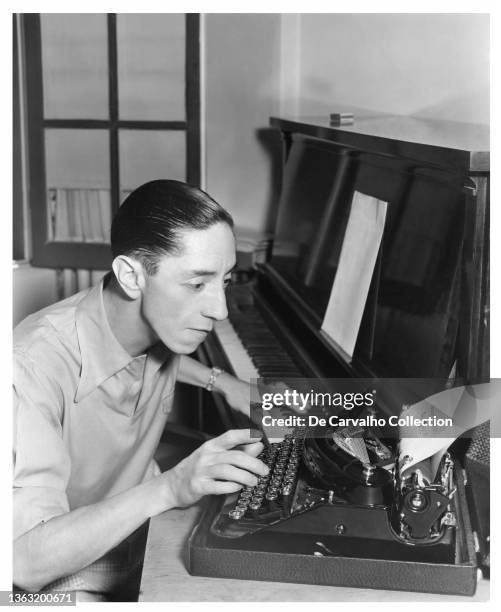
Agustín Lara
 Mexico
Also known as: El Músico Poeta, Agustín Lara Aguirre del Pino
Birthday
October 30, 1897
Birth Sign
Sagittarius
Birthplace
Tlacotalpan, Veracruz, Mexico
Age
Died at 73
Height
5 ft 9 in (175 cm)
About
Agustín Lara, born Ángel Agustín María Carlos Fausto Mariano Alfonso del Sagrado Corazón de Jesús Lara y Aguirre del Pino, was a preeminent Mexican composer, singer, and actor who defined the bolero genre throughout the 20th century. Known globally as "El Músico Poeta" (The Musical Poet), he composed over 600 songs that became staples of Latin American culture and were later covered by international legends like Mario Lanza, Enrico Caruso, and Luis Miguel. While some sources list his birthplace as Mexico City, authoritative biographical records confirm he was born in Tlacotalpan, Veracruz, before moving to Mexico City as a child. He passed away on November 6, 1970, in Mexico City at the age of 73 due to a long illness, leaving behind a legacy that continues to be celebrated globally.
Even after his death, his music maintained a steady stream of global attention that spans decades and continents. His melodies remain staples in Latin American culture while finding new ears in distant markets like Italy and Japan. In the August 2026 cycle of the iFANN Global Fame Rankings, which tracks global attention across media coverage, search, and consumption signals worldwide, he holds a specific place among historical figures. Agustín Lara is currently ranked as the 93rd most famous person in Mexico, holding steady from the previous cycle. This ranking reflects his enduring status as a national icon whose work continues to define the bolero genre. While his fame is anchored deeply in Mexico, his influence extends outward, though no formal fandom name exists for his followers.
Early Life & Background
Lara was born into a working-class family in Tlacotalpan, Veracruz, where his full baptismal name reflected the religious devotion of his parents. As a child, he moved with his family to Mexico City, where he began his musical education. Despite claims in some folklore that he participated directly in the fighting of the Mexican Revolution as a young man, historical records suggest his involvement was more peripheral or symbolic, though the era's turmoil undoubtedly influenced the gritty emotional depth of his songwriting. He displayed an early aptitude for music, learning to play the guitar and piano, often performing in local cafes and theaters in Mexico City during the 1910s and 1920s.
His early career involved struggling as a performer in the vibrant but competitive cabaret scene of the capital, where he honed his distinctive voice and stage presence. Before achieving widespread fame, he worked as a pianist for various venues and began composing songs that would eventually revolutionize the bolero style, blending romantic lyrics with sophisticated harmonies. These formative years in the capital's nightlife provided the raw material for his future masterpieces, setting the stage for his transition from a local musician to a national icon.
Career Growth
Lara's career trajectory is marked by a steady rise from local performer to national icon and international star. His breakthrough came with the composition of "Solamente una vez" (Only Once) in the late 1920s, which became an instant classic. During the Golden Age of Cinema from the 1930s to the 1950s, Lara transitioned into film, appearing in numerous Mexican movies such as La Noche de los Mayas (1939) and Río Escondido (1948), often playing himself or musicians. His role as a songwriter for films further cemented his status.
In the 1940s and 1950s, his songs crossed borders. "Granada," written in 1933, became one of the most recorded Spanish-language songs in history, covered by artists ranging from Frank Sinatra to Bing Crosby. The 1958 album Rosa remains a landmark release in Latin American music history. Throughout the 1960s, he continued to compose and perform, maintaining relevance through radio and television appearances. He collaborated with major figures of the era, including Pedro Vargas, Toña la Negra, and María Félix.
Career Timeline
Public Image & Style
Lara is portrayed as the quintessential Latin lover and poet. His image is one of sophistication, melancholy, and deep emotion. Media portrays him as a tragic figure whose personal life mirrored the heartbreak in his songs. His content, primarily music, is timeless and evocative, often used in films and television to convey deep romance or sorrow. His signature style included a dark, brooding appearance, a distinctive mustache, and elegant attire, often wearing suits and bow ties. This aesthetic helped cement his reputation as a romantic hero in the public consciousness.
Fame & Fandom (iFAMOUS Rankings)
Agustín Lara's resonance has transcended the boundaries of his lifetime, maintaining a steady stream of global attention that spans decades and continents. His melodies remain staples in Latin American culture while finding new ears in distant markets like Italy and Japan. In the August 2026 cycle of the iFANN Global Fame Rankings, which tracks global attention across media coverage, search, and consumption signals worldwide, he holds a specific place among historical figures. Agustín Lara is currently ranked as the 93rd most famous person in Mexico, holding steady from the previous cycle. This ranking reflects his enduring status as a national icon whose work continues to define the bolero genre. While his fame is anchored deeply in Mexico, his influence extends outward, though no formal fandom name exists for his followers. Unlike modern pop stars with organized fan clubs, Lara's audience consists of music historians, traditionalists, and lovers of classic cinema who appreciate his output as cultural heritage. There is no documented moniker used by fans to identify themselves; instead, his legacy is maintained through institutional preservation and organic interest on streaming platforms rather than mobilized campaigns. He is not featured on the September 2026 iFAMOUS Rankings flagship list.
Interesting Facts and Legends
The composer known globally as "El Músico Poeta" left behind a prolific catalog of over 600 songs that continue to define the bolero genre. A widely retold story centers on his passionate, volatile affair with the legendary singer María Félix, often described as the central pillar of his cultural lore. Fans still recount the tale that he wrote the bolero "Solamente una vez" specifically for her, cementing the track as an anthem of intense love, though the exact moment of inspiration remains a subject of debate. His physical appearance also contributed to a "bad boy" image during the Golden Age of Mexican Cinema, where rumors of duels and scandals swirled around his brooding stage presence and distinctive mustache. Historical records verify that as a young man, Lara took part in the Mexican Revolution, an experience that informed the gritty emotional depth of his later songwriting. His death on November 6, 1970, marked the end of an era, triggering widespread mourning across Latin America and a surge in tribute concerts.
Notable Quotes
“Music is the language of the soul.”
“I write for the heart, not for the mind.”
Family & Personal Life
Agustín Lara was born into a working-class family in Tlacotalpan, Veracruz. His full baptismal name reflected the religious devotion of his parents. He had no children with either of his primary partners. His relationship with his wife, María Luisa Landín, was significant not only personally but professionally, as she served as his manager and confidante. Their marriage lasted until her death in 1956, which deeply affected Lara and led to a period of seclusion. His other major relationship was with the actress María Félix, with whom he never married but shared a long, tumultuous bond that lasted until his death.
Notable Connections
María Félix, María Luisa Landín, Pedro Vargas, Toña la Negra, Mario Lanza
Relationships & Dating History
Agustín Lara's personal life was as dramatic and public as his music, characterized by high-profile relationships and a reputation for volatility. He married María Luisa Landín in 1930. She was a significant figure in his life, serving as his manager and confidante. Their marriage lasted until her death in 1956. They had no children together. Her death deeply affected Lara, leading to a period of seclusion and depression.
Perhaps the most famous relationship in Lara's life was his passionate, volatile affair with the legendary actress María Félix. The relationship began around 1940 and lasted intermittently until his death in 1970. They never married, but their bond was legendary, often described as a romance of opposites, he the poetic musician, she the fierce actress. Rumors of duels and scandals swirled around them. It is widely believed that Lara wrote "Solamente una vez" specifically for her, though the exact inspiration remains debated. They had no children together. This relationship is the central pillar of his cultural lore, often cited as the source of his most intense and emotional compositions. Prior to his marriage to Landín, Lara had several short-term flings and rumored romances, but none reached the public prominence of his relationship with Félix. At the time of his death in 1970, he was widowed.
- MarriedMaría Luisa Landín1930 - 1956She served as his manager and confidante until her death.
- DatedMaría Félix1940 - 1970A passionate, volatile affair that lasted until his death; they never married.
Death & Aftermath
Died
November 6, 1970 (aged 73)
Death Place
Mexico City, Mexico
Cause of Death
Long illness
Agustín Lara spent his final years in relative seclusion within Mexico City, having largely retreated from the public eye due to failing health and the profound grief following the death of his wife, María Luisa Landín, in 1956. The renowned composer passed away on November 6, 1970, at the age of 73 after a long illness that remained shrouded in specific medical detail by public records. Tributes poured in immediately from across Latin America, with peers and cultural institutions recognizing him as a pivotal figure in Mexican music history. His funeral was held shortly thereafter in the capital, attended by numerous fellow musicians, actors, and dignitaries who gathered to honor the man behind beloved classics like "Granada" and "Solamente Una Vez." He was laid to rest in the Panteón del Tepeyac, a resting place reserved for many of the country's most celebrated artists.
In the decades since, his estate has ensured his works continue to be licensed and performed globally, with compositions appearing in media such as the film Güeros (2014). The enduring popularity of his catalog saw renewed attention shortly after his passing, cementing his status as a seminal songwriter whose melodies remain staples for singers worldwide. Recent tributes include a 2026 Day of the Dead altar unveiled by Casa de México in Madrid, honoring his influence on Michoacán culture and the broader Latin American musical landscape.
Net Worth (Estate Value)
$12 Million
iFANN Editorial Team estimate
As Agustín Lara has been deceased since 1970, he does not have a "net worth" in the traditional sense of current liquid assets. Instead, his estate value is determined by the ongoing royalties and licensing of his intellectual property. The estate is managed by his heirs and legal representatives, who oversee the licensing of his songs for films, commercials, and streaming platforms. Major revenue streams include mechanical royalties from recordings, synchronization licenses for films (e.g., Güeros, 2014), and merchandise related to his legacy.
Exact figures for the total estate value are not publicly disclosed in a single consolidated report. However, given the timeless nature of hits like "Granada" and "Solamente Una Vez," which generate millions in global royalties annually, the estate is considered highly valuable. Estimates from industry analysts suggest the annual royalty income alone runs into the millions of dollars, with the cumulative value of the IP likely reaching tens of millions. The iFANN Editorial Team estimates the current value of Agustín Lara's estate at approximately $12 Million as of 2026, reflecting the enduring commercial viability of his catalog and the consistent demand for his music across generations.
Awards Won (1)
While formal awards like the Grammy were not as prevalent during his peak era, Lara received numerous lifetime achievements and distinctions. He was recognized posthumously and during his lifetime as one of Mexico's greatest composers. His song "Granada" is frequently cited in records for being one of the most recorded songs in any language. He received keys to cities and honorary degrees from Mexican universities. Posthumous honors include the "Premio Nacional de Ciencias y Artes" (National Prize for Sciences and Arts) in the category of Fine Arts, awarded to his estate or recognized in his name.
Posthumous · Fine Arts
Lifetime Achievement
Known For
Granada
1933 · Composer
Solamente una vez
1929 · Composer
Rosa
1958 · Album
La Noche de los Mayas
1939 · Actor
Río Escondido
1948 · Actor
Keywords
Sources
Quick Facts
- Profession
- composer, singer, actor
- Born
- October 30, 1897
- Birthplace
- Tlacotalpan, Veracruz, Mexico
- Died
- November 6, 1970
- Death Place
- Mexico City, Mexico
- Gender
- Male
- Birth Sign
- Sagittarius
Personal Details
- Full Name
- Ángel Agustín María Carlos Fausto Mariano Alfonso del Sagrado Corazón de Jesús Lara y Aguirre del Pino
- Height
- 5 ft 9 in (175 cm)
- Spouse
- María Luisa Landín
- Children
- Education
- Self-taught; informal training in local cafes and theaters
Filmography
15
Total
12
Film
3
TV
Frequently Asked Questions
Who was Agustín Lara?
When did Agustín Lara die?
Was Agustín Lara married to María Félix?
What is Agustín Lara's most famous song?
Where was Agustín Lara born?
Social Media
Similar People
Join the community
fans discussing