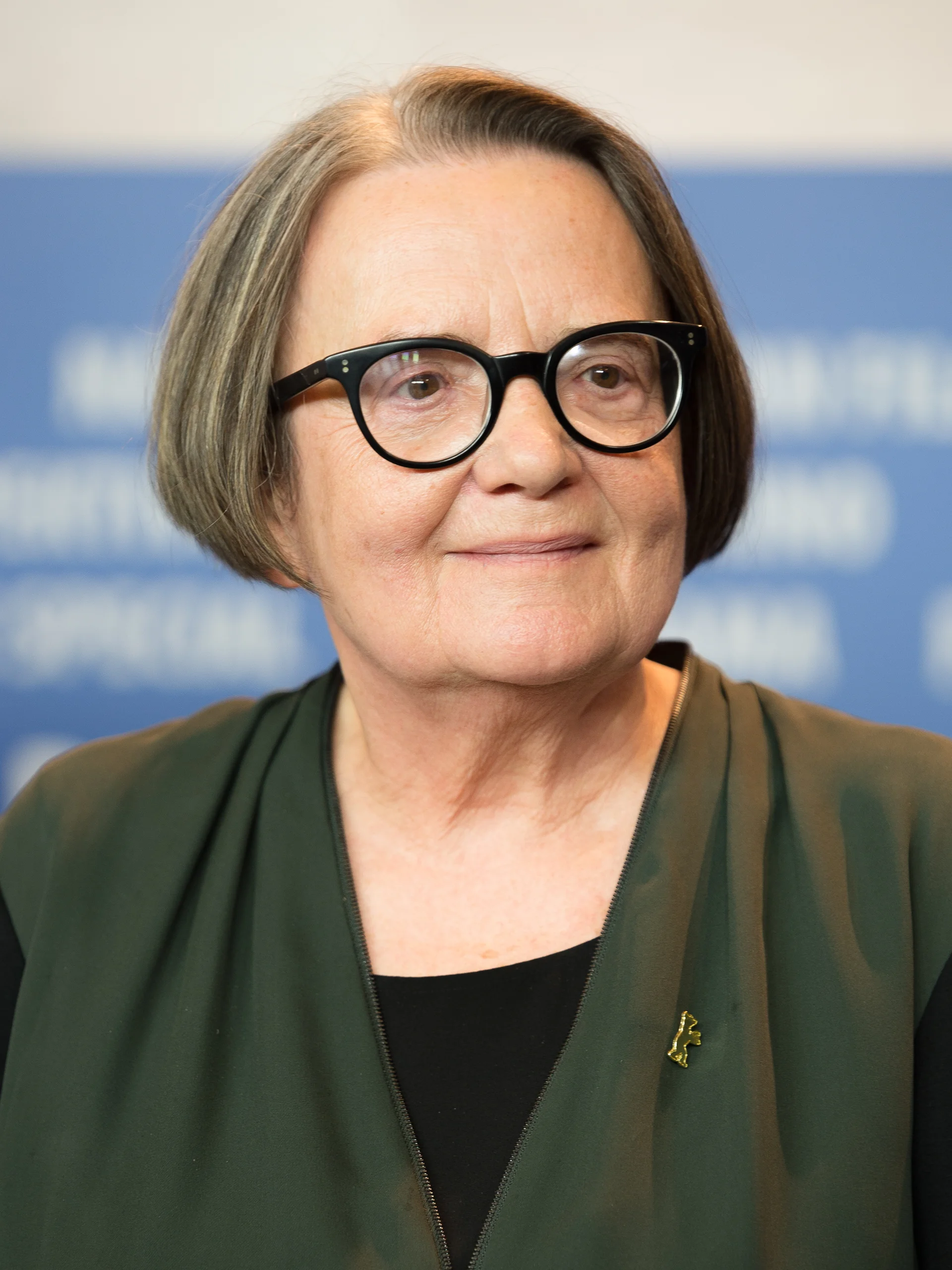
Agnieszka Holland
 Poland
film director•screenwriter•theatre director
Birthday
November 28, 1948
Birth Sign
Sagittarius
Birthplace
Warsaw, Poland
Age
77 years old
About
Agnieszka Holland is a Polish film and television director and screenwriter whose work has left a deep mark on European cinema. She is known for politically charged films that explore the individual experience within historical turmoil, from the Holocaust to the refugee crisis.
Born in Warsaw in 1948, she started as an assistant to Krzysztof Zanussi and Andrzej Wajda before relocating to France in 1981. Her major works include Europa Europa, The Secret Garden, In Darkness, and Green Border, which have earned her a Golden Globe, three Oscar nominations, a Silver Bear, and a Venice Jury Prize. She also served as president of the European Film Academy starting in 2020.
As of 2026, Holland remains active, with her latest film Franz (2026) and an upcoming Marlene Dietrich biopic in development. Her films are known for their moral complexity and empathy for individuals caught in ideological machinery.
Early Life & Background
Agnieszka Holland grew up in Warsaw in a household that mixed Catholic and Jewish heritage. Her father, Henryk Holland, was a journalist and sociologist expelled from the Polish United Workers' Party for his critical stance. He died by suicide in 1961 when she was thirteen, an event that shaped her worldview. Her mother, Irena Rybczyńska-Holland, a Catholic journalist, later served in the Polish parliament. The family's political engagement and mixed heritage gave Holland an early understanding of how ideology can tear lives apart.
She developed an interest in cinema as a teenager, drawn to the moral questions of post-war Europe. She studied at the FAMU film school in Prague, graduating in 1971. The Czech New Wave, with its politically engaged filmmaking, left a lasting impression. Back in Poland, she worked as an assistant director to Krzysztof Zanussi, then under the mentorship of Andrzej Wajda, who became her most important influence. Wajda taught her that cinema is a moral act, a lesson she has carried through her career.
In 1981, just before martial law was declared in Poland, Holland emigrated to France. She later said she left not because she wanted to, but because the choice was between silence and exile. This move allowed her to work internationally while staying focused on Polish and Central European themes.
Career Growth
Holland's feature debut, Provincial Actors (1979), won the FIPRESCI Prize at Cannes. She followed with A Lonely Woman (1981), also critically acclaimed. Her international breakthrough came with Europa Europa (1990), the true story of Solomon Perel, a Jewish boy who survived the Holocaust by posing as a Hitler Youth. The film won the Golden Globe for Best Foreign Language Film and earned her an Oscar nomination for Best Adapted Screenplay. It was famously rejected by German film funders, so she financed it through French and German television.
She then directed The Secret Garden (1993) for Warner Bros., a lush adaptation that brought her mainstream Hollywood success. Her Holocaust drama In Darkness (2011) earned a third Oscar nomination for Best Foreign Language Film. In 2017, Spoor won the Alfred Bauer Prize at Berlin. Green Border (2023) took the Special Jury Prize at Venice and sparked political controversy in Poland, with the justice minister calling for her to be stripped of state honors. She refused to back down, calling the film a cry of despair.
Beyond features, Holland directed episodes of The Wire and Treme, showing her range across television. She was elected president of the European Film Academy in 2020. Her most recent feature, Franz (2026), is an unconventional biopic about Franz Kafka, and she is preparing Berlinweh – Yearning for a Home, a Marlene Dietrich biopic, with production announced in June 2026.
Career Timeline
Public Image & Style
Holland's public image is that of a fiercely independent, politically engaged auteur who has never compromised her artistic vision for commercial success. The press often describes her as daring and politically committed, one of the most consistently challenging voices in global cinema. Her films are characterized by moral complexity, historical rigor, and a deep empathy for individuals caught in ideological machinery. Her aesthetic signature includes naturalistic performances, handheld camerawork in recent films, and a preference for muted, desaturated color palettes in historical dramas. There is no official fandom name; her audience consists primarily of art-house cinema enthusiasts, film festival attendees, and academic film studies communities. Fan culture around her work centers on festival screenings, retrospective series, and academic conferences on Polish and European cinema.
Fame & Fandom
Agnieszka Holland commands a devoted following among cinephiles, film critics, and industry professionals rather than a mass consumer base capable of organizing chart pushes or birthday billboards. Her audience engages with her work through the reception of its political weight and historical rigor, lacking the interactive rituals or self-identifying labels common to pop culture icons. There is no formal name for this fanbase, nor are there documented instances of fans shutting down streets or launching charitable campaigns in her honor. The relationship remains defined by the intellectual resonance of her films, from the moral complexity of *Europa Europa* to the contemporary firestorm surrounding *Green Border*. In August 2026, the iFANN Global Fame Engine evaluated her standing across global metrics including media coverage and consumption signals worldwide. Agnieszka Holland has been evaluated but does not currently hold a placement in the published rankings, including the Global Top 1,000 or any Top-100 scope list. She does not hold a placement in any published Top-100 scope lists or specific genre rankings at this time. While she lacks a numerical rank on the current charts, her enduring presence in international art-house cinema ensures her profile remains stable among those tracking significant cultural figures. The evaluation reflects a status where influence is deep but niche, distinct from the viral intensity required for top-tier ranking placements. Her legacy continues to be built on critical acclaim and professional respect rather than the metrics that drive mass-market fame.
Interesting Facts and Legends
Holland's father committed suicide in 1961, an event that deeply affected her and surfaces thematically throughout her filmography. Originally trained in Czech filmmaking at FAMU, she belongs to the generation shaped by the Czech New Wave. Her daughter Katarzyna Adamík is also a filmmaker who has written screenplays for several of her projects. *Europa Europa* was famously rejected by the German film industry during funding; Holland secured financing through French and German television instead. She was part of the Polish Film School circle around Andrzej Wajda, though her work often subverts that movement's heroic nationalism for ambiguous moral portraits. A widely retold story regarding her legacy focuses on her three Academy Award nominations for Best Foreign Language Film: first for *Angry Harvest* in 1985, second for *Europa Europa* in 1990, and third for *In Darkness* in 2012. The narrative of *Europa Europa*, based on Solomon Perel, stands as a reflection of her ability to handle sensitive historical trauma with nuance. Recent developments add to her modern lore, including the announcement of a biopic on Marlene Dietrich titled *Berlinweh – Yearning for a Home*. This project generates significant anticipation among film historians given her history with biographical dramas. She was also honored with the Mikeldi of Honour at the Zinebi festival, further cementing her status as a respected voice in international cinema.
Notable Quotes
“I made this film as a cry of despair. I could not remain silent.”
“He taught me that cinema is not just entertainment, it is a moral act. I have tried to live up to that lesson my whole life.”
“I left Poland not because I wanted to, but because I had to. The choice was between silence and exile, and I chose exile.”
Family & Personal Life
Agnieszka Holland was born to Henryk Holland, a journalist and sociologist, and Irena Rybczyńska-Holland, a Catholic journalist and activist. Her father was expelled from the Polish United Workers' Party for his critical stance and died by suicide in 1961. Her mother later served in the Polish parliament. Holland married Slovak cinematographer Laco Adamík, and they remained together for decades until his death in 2023. Their daughter, Katarzyna Adamík, born in 1972, is a screenwriter and director who has collaborated with her mother on several projects. Holland maintains residences in Prague and Warsaw.
Notable Connections
Andrzej Wajda was her mentor and early employer, and Krzysztof Zanussi also gave her early opportunities. Her daughter, Katarzyna Adamík, is a screenwriter and frequent collaborator. Her late husband, Laco Adamík, was a Slovak cinematographer. She maintained a friendship with Solomon Perel, the subject of Europa Europa, until his death in 2023.
Relationships & Dating History
Agnieszka Holland married Slovak cinematographer Laco Adamík, and the couple remained together for decades. Their daughter, Katarzyna Adamík, was born in 1972 and later became a screenwriter and director. The marriage was a long and stable partnership, with Adamík supporting her career. No other public romantic relationships have been documented. Laco Adamík passed away in 2023 in Prague, and Holland has not been publicly linked to any new partner since. As of 2026, she is widowed.
- MarriedLaco Adamík? - 2023Married for decades until his death in 2023.
Salary, Net Worth In 2026
$10 Million
iFANN Editorial Team estimate
Per iFANN's editorial analysis, Agnieszka Holland's net worth in 2026 is estimated at $10 Million. This figure derives from decades of directing and screenwriting fees across European and American productions. While she is not a commercial blockbuster director, her consistent work in the art-house circuit and television has built a solid financial foundation. Her income streams include directing fees for European co-productions, typically ranging from €200,000 to €500,000 per feature, with higher fees for US projects like *The Secret Garden* and television work on *The Wire* and *Treme*. She also earns from screenwriting credits, residuals from film distribution and streaming, and her role as president of the European Film Academy, which provides a modest salary. Holland maintains residences in Prague and Warsaw, though specific property values are not public. Her net worth has grown steadily over the years, reflecting her long career and continued activity. Recent projects like *Franz* (2026) and the upcoming *Berlinweh – Yearning for a Home* add to her earning potential. While exact figures are not publicly documented, her financial status aligns with her standing as a respected European filmmaker.
Awards Won (5)
Agnieszka Holland has won a Golden Globe for Europa Europa, the Alfred Bauer Prize at Berlin for Spoor, the Special Jury Prize at Venice for Green Border, and the FIPRESCI Prize at Cannes for Provincial Actors. She has also won the Grand Prix at the Gdynia Film Festival four times and the Lux Audience Award for Green Border. Her films have earned three Oscar nominations.
1992 · Golden Globe Awards
Europa Europa
2023 · Venice Film Festival
Green Border
Known For
Europa Europa
1990 · Director and screenwriter
The Secret Garden
1993 · Director
In Darkness
2011 · Director
Green Border
2023 · Director and screenwriter
Spoor
2017 · Director
Keywords
Sources
Quick Facts
- Profession
- film director, screenwriter, theatre director
- Born
- November 28, 1948
- Birthplace
- Warsaw, Poland
- Gender
- Female
- Spouse
- Laco Adamík (deceased)
- Birth Sign
- Sagittarius
- Children
- 1
- Education
- FAMU, Prague
Personal Details
- Full Name
- Agnieszka Holland
- Spouse
- Laco Adamík
- Children
- 1
- Education
- FAMU, Prague (graduated 1971)
Filmography
52
Total
38
Film
14
TV
Frequently Asked Questions
Is Agnieszka Holland married?
How many Oscar nominations does Agnieszka Holland have?
What is Agnieszka Holland's most famous film?
Does Agnieszka Holland have children?
What is Agnieszka Holland's net worth?
Join the community
fans discussing