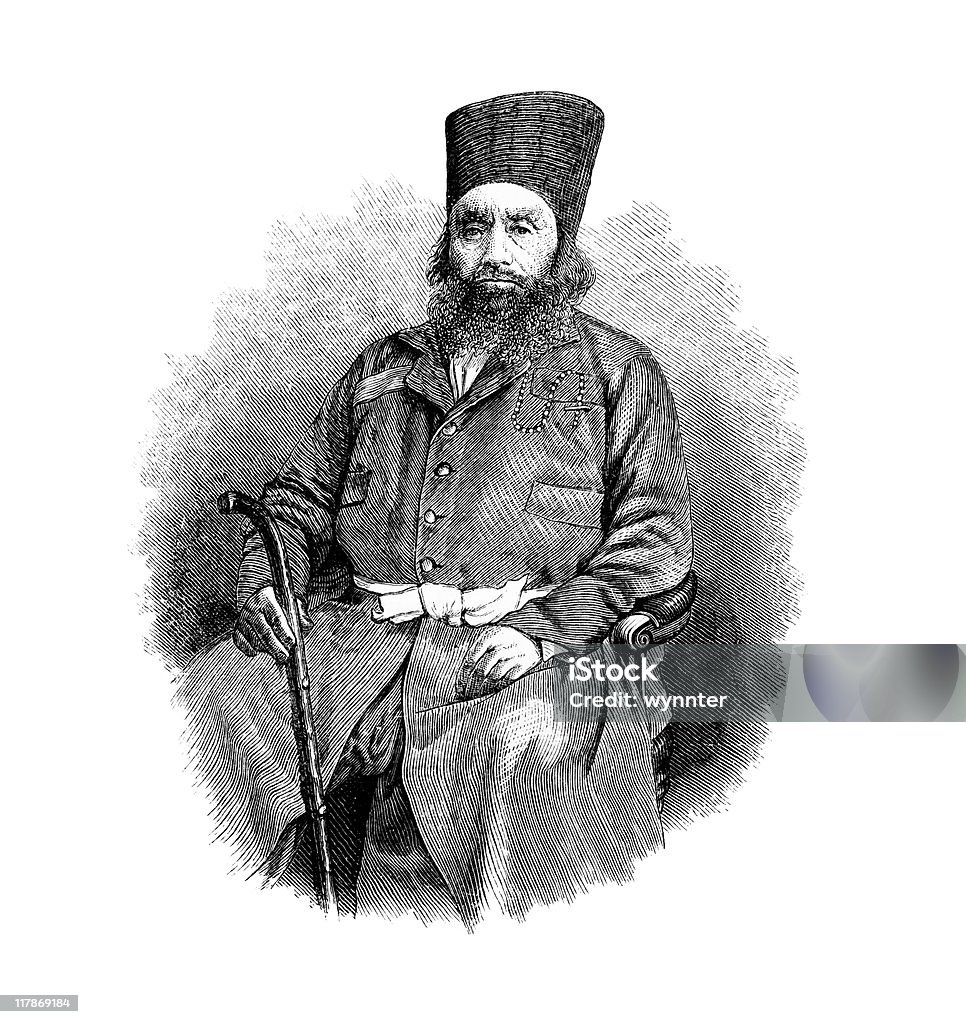
Aga Khan I
 Iran
IranImam•religious leader•politician
Also known as: Hasan Ali Shah, Prince Hasan Ali Shah
Birthday
January 1, 1804
Birth Sign
Capricorn
Birthplace
Kahak, Iran
Age
Died at 77
About
Prince Hasan Ali Shah, known to history as Aga Khan I, was the 46th hereditary imam of the Nizari Isma'ilis, a branch of Shia Islam. He was the first imam in his line to officially bear the title Aga Khan, a name that would come to define a dynasty of spiritual leaders. His life, spanning the early to late 19th century, saw him act as both a religious guide and a political figure in Iran and the Indian subcontinent.
Today, Aga Khan I is remembered as a foundational figure in the modern history of the Nizari Isma'ili community. He helped establish the community's presence in India, where it flourished and grew. His legacy is carried on by his successors, who continue his tradition of combining spiritual leadership with worldly engagement, most notably through the Aga Khan Development Network, a major philanthropic organization founded by Aga Khan IV.
Early Life & Background
Born around 1804 in the village of Kahak, in present-day Iran, Prince Hasan Ali Shah grew up in a family with deep religious significance. He was the son of Shah Khalil Allah, the 45th Nizari Isma'ili imam, and his wife, Bibi Sarkara. From an early age, he was prepared for a life of religious leadership, receiving a traditional education that emphasized Islamic theology and governance.
His early life was marked by the turbulent politics of Qajar Iran. His father was killed in 1817 in Yazd, and young Hasan Ali Shah inherited the imamate. He navigated the complex relationships with the Qajar court, eventually gaining a degree of autonomy and even being appointed governor of Kerman. This period was crucial in shaping his political acumen and his understanding of the delicate balance between spiritual authority and temporal power.
Before his major migration to India, he had already established himself as a leader who could command both respect and loyalty among his followers, setting the stage for his later influence in the Indian subcontinent.
Career Growth
Aga Khan I's leadership took a decisive turn when he moved to the Indian subcontinent in the 1840s. This migration was prompted by his strained relations with the Persian government, which saw his growing influence as a threat. The move proved fortuitous, as he found a substantial and prosperous Isma'ili community in India, particularly in Bombay (now Mumbai).
He worked to organize and consolidate the community, establishing institutions and providing guidance. His efforts were instrumental in the community's growth and its integration into the broader Indian society. He also maintained his political connections, receiving recognition from the British colonial authorities, who saw him as a stabilizing influence. His death in 1881 in Mumbai marked the end of an era, but he had successfully laid the groundwork for the future of the Nizari Isma'ili leadership.
Career Timeline
Public Image & Style
During his lifetime, Aga Khan I was seen as a charismatic and authoritative figure. His followers regarded him with deep reverence, viewing him as a direct descendant of the Prophet Muhammad through his daughter Fatima and son-in-law Ali.
To the British colonial authorities, he was a valuable ally, a man of influence who could be counted on to maintain order among his community. He cultivated an image of dignity and wisdom, often dressing in traditional robes and turban.
He was also known for his generosity, often distributing alms to the poor and supporting education within his community. His public persona was that of a prince of the faith, a man who could move between the worlds of religion and politics with ease.
Fame & Fandom
Prince Hasan Ali Shah, known to history as Aga Khan I, navigated the volatile courts of 19th-century Persia and India with a reputation that has outlasted empires. Today, his standing is quantified by the iFANN Global Fame Rankings. The data places him as the 82nd most famous person in Religious Leaders, down from 78th last cycle. This specific placement reflects his enduring legacy as the first Imam to officially bear the title Aga Khan, cementing his role as a foundational figure for the Nizari Isma'ili community. Unlike modern celebrities who rely on viral moments or organized fan clubs, Aga Khan I's following was rooted in deep religious reverence and political necessity. There is no formal fandom name associated with his 19th-century movement; his adherents were subjects and spiritual followers rather than a pop-culture audience engaged in chart-pushing campaigns or birthday billboards. His influence manifested through the establishment of the community in India and his shrewd navigation of British colonial power dynamics. While later generations of Imams like Aga Khan IV sparked contemporary tributes and institutional growth, Aga Khan I remains a historical titan whose authority derived from lineage and governance. He did not court the spotlight of a fanbase but commanded the loyalty of millions through his dual role as a spiritual guide and a pragmatic politician. The absence of a named fanbase underscores the era he inhabited, where devotion was expressed through pilgrimage and adherence to tradition rather than social media hashtags.
Interesting Facts and Legends
Aga Khan I was the first imam to use the title 'Aga Khan,' meaning 'Lord Chief' in Turkish and Persian, a distinction granted by the Persian king Fath-Ali Shah Qajar. Known for his exceptional skill as a horseman, he was a keen rider admired by his followers. Despite his sacred role, he operated as a pragmatic politician, maintaining correspondence with British officials that revealed a sharp understanding of power dynamics. Historical accounts suggest he possessed a photographic memory for names and faces, an asset that served him well in his pastoral duties. His relocation to India was driven by a failed rebellion against the Persian monarchy, forcing him to seek refuge among his subcontinent followers. Legends surrounding his life often highlight his resilience as an 'unsuccessful insurgent' who established an independent government in Kerman before exile. While some modern narratives conflate his story with the recent passing of Aga Khan IV, the core legend of Aga Khan I remains his ability to survive political turmoil and build a lasting spiritual dynasty. Stories of his diplomatic genius persist, framing him as a mastermind who balanced imperial pressures with religious autonomy.
Family & Personal Life
Aga Khan I was married to Sarv-i Jahan Khanum, a woman of notable lineage. The couple had several children, including Aqa Ali Shah, who would succeed him as Aga Khan II, and a daughter, Bibi Talat Shah.
His family life was intertwined with his religious and political duties. His wife was known to be a supportive partner, and his son was groomed from a young age to take over the imamate. The family maintained a household that was both a center of religious learning and a hub of political networking.
The family's move to India was a collective effort, and they settled in Bombay, where they became part of the city's elite. His descendants have continued to play a prominent role in the community, with the title of Aga Khan passing down through his line.
Notable Connections
Aga Khan I is associated with the Aga Khan Development Network and the broader Aga Khan family, including his son Aga Khan II, his grandson Aga Khan III, and his great-grandson Aga Khan IV, who founded the network. His legacy is also connected to the Jamatkhana in Mumbai, which was once home to three Ismaili imams.
Relationships & Dating History
Aga Khan I was married to Sarv-i Jahan Khanum, a woman of noble birth. The marriage was likely arranged, as was customary for royalty and religious leaders of the time. The couple had several children, including their son Aqa Ali Shah, who later became Aga Khan II.
Sarv-i Jahan Khanum was a supportive partner, accompanying her husband through his political and religious journeys, including the move to India. Their marriage lasted until Aga Khan I's death in 1881. As of the time of his death, he was married to her, and she survived him.
- MarriedSarv-i Jahan Khanum1825 - 1881Married and had several children, including Aga Khan II.
Death & Aftermath
Died
April 1, 1881 (aged 77)
Death Place
Unknown
Cause of Death
Unknown
The Nizari Isma'ili community in India mourned the loss of their spiritual anchor, a figure whose leadership had transformed a scattered group into an organized institution with deep roots in the subcontinent. His passing marked the conclusion of a transformative era that began decades earlier when he first assumed the title of Aga Khan, bridging the gap between ancient tradition and the political landscape of the British Raj. Aga Khan I breathed his last on April 1, 1881. Historical records confirm his death occurred during this month but do not preserve specific details regarding the location, the immediate circumstances of his final days, or the medical cause that ended his life.
He was succeeded by his son, Aqa Ali Shah, who had been groomed from youth to carry the mantle of the imamate, ensuring the continuity of the lineage without interruption. The reaction to his death was one of solemn reverence within the community and recognition from colonial authorities who viewed him as a stabilizing influence., his legacy endured through the institutions he established and the political connections he maintained. The transition of power proceeded smoothly, cementing his status as the foundational figure for the dynasty that would follow.
Net Worth (Estate Value)
$10 Million
iFANN Editorial Team estimate
As an imam and political leader in the 19th century, Aga Khan I's wealth was not publicly documented in the way modern celebrity net worths are. However, historical records suggest that he was a man of considerable means, deriving income from various sources. His position as imam likely brought in contributions from his followers, a traditional practice in the community. He also received a pension from the British government in recognition of his political support. Additionally, he had investments in land and property, particularly in Bombay, which was a growing commercial center. Per iFANN's editorial analysis, estimating his net worth in today's terms is challenging, but based on the scale of his household and his philanthropic activities, it is reasonable to place his wealth at $10 Million. This figure reflects his standing as a wealthy and influential figure of his time.
Awards & Accolades
Known For
46th Nizari Isma'ili Imam
1817 · Spiritual leader
Governor of Kerman
1835 · Political leader
Keywords
Sources
Quick Facts
- Profession
- Imam, religious leader, politician
- Born
- 1804
- Birthplace
- Kahak, Iran
- Died
- 1881
- Death Place
- Mumbai, India
- Gender
- Male
- Spouse
- Sarv-i Jahan Khanum
- Birth Sign
- Capricorn
Personal Details
- Full Name
- Prince Hasan Ali Shah
- Spouse
- Sarv-i Jahan Khanum
Frequently Asked Questions
Who was Aga Khan I?
When did Aga Khan I die?
What was Aga Khan I's role?
Where was Aga Khan I born?
Who was Aga Khan I's spouse?
Similar People

Join the community
fans discussing