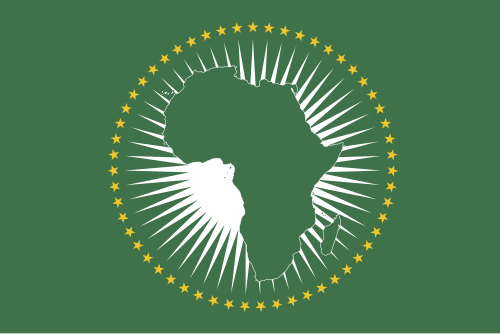
African Union
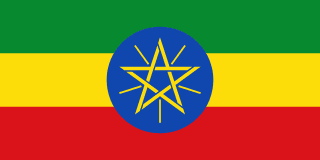 Ethiopia
"An Integrated, Prosperous and Peaceful Africa"
About
The African Union (AU) is a continental intergovernmental organization comprising 55 member states that together represent nearly every country on the African continent. Officially launched in July 2002 in Durban, South Africa, the AU succeeded the Organisation of African Unity (OAU), which had been founded in 1963. The OAU's primary missions were decolonization and ending apartheid, but by the late 1990s, African leaders recognized the need for a body focused on deeper integration, economic development, and continental unity. The AU's vision is an integrated, prosperous, and peaceful Africa, driven by its own citizens and representing a dynamic force on the global stage.
The AU operates through several key organs. The Assembly of Heads of State and Government is the supreme policy-making body. The Executive Council coordinates decisions on common interests. The Peace and Security Council (PSC) manages conflict prevention and resolution. The African Union Commission (AUC), headquartered in Addis Ababa, Ethiopia, serves as the secretariat and administrative engine, led by a Chairperson. The AU also includes the Pan-African Parliament, the Economic, Social & Cultural Council (ECOSOCC), and the African Court on Human and Peoples' Rights. The Chairperson of the AU is a rotating annual position held by a head of state, while the AUC Chairperson is a fixed-term elected role.
The AU's work spans peace and security, political affairs, infrastructure, energy, trade, agriculture, education, health, and science and technology. It has deployed peacekeeping missions in Somalia, Sudan, and the Sahel, and drives continental initiatives like the African Continental Free Trade Area (AfCFTA). With a population of over 1.4 billion across its member states, the AU is the world's largest regional organization by land area and membership.
Mission
The AU's mission is to accelerate the process of continental integration, promote sustainable development, and achieve peace and security across Africa. It aims to build a united and prosperous continent where democratic governance, human rights, and the rule of law are upheld. The organization works to eliminate remaining vestiges of colonialism and apartheid, coordinate harmonization of policies among member states, and promote international cooperation within the framework of the United Nations.
History
The African Union's roots lie in the Organisation of African Unity (OAU), founded on May 25, 1963 in Addis Ababa by 32 independent African states. The OAU focused on decolonization, ending apartheid, and promoting solidarity. By the 1990s, with most of Africa free from colonial rule, leaders saw the need for a more integrated body capable of tackling economic challenges, conflicts, and globalization. In September 1999, the OAU's Extraordinary Session in Sirte, Libya, called for establishing an African Union. The Constitutive Act was adopted in Lomé, Togo, in July 2000 and entered into force in May 2001.
The AU was officially launched on July 9, 2002, in Durban, South Africa, with Thabo Mbeki as its first Chairperson. The new organization inherited the OAU's assets and liabilities but adopted a broader mandate, including the right to intervene in member states in grave circumstances. The Peace and Security Council was established in 2004, and the African Court on Human and Peoples' Rights became operational in 2006. In 2005, the United States formally recognized the AU, and in 2006 opened a diplomatic mission, the first non-African country to do so. President Barack Obama addressed the AU headquarters in 2015, the first sitting U.S. president to do so.
Financially, the AU has long struggled with dependence on external donors. In 2015, the Assembly adopted a decision to fund 100% of the peace and security budget and 75% of the operational budget from member contributions, but implementation has been slow. Institutional reforms launched in 2016 under Rwandan President Paul Kagame led to a streamlined Commission structure and stricter financial management. The African Continental Free Trade Area (AfCFTA), launched in 2018, stands as the AU's most ambitious economic integration project, aiming to create a single continental market.
Subdivisions
African Union Commission
The secretariat and administrative organ, headed by a Chairperson, responsible for day-to-day operations and implementing decisions.
Peace and Security Council
A standing decision-making organ for conflict prevention, management, and resolution, operational since 2004.
Pan-African Parliament
A legislative body intended to ensure citizen participation and oversight of AU activities.
African Court on Human and Peoples' Rights
A judicial body established to protect human rights across the continent.
Economic, Social & Cultural Council (ECOSOCC)
An advisory organ representing civil society, professional groups, and the private sector.
Notable People
Nkosazana Dlamini-Zuma
Chairperson of the African Union Commission · 2012-2017
First woman to lead the AUC; extended term after election deadlock.
Moussa Faki Mahamat
Chairperson of the African Union Commission · 2017-present
Led institutional reforms and pushed for financial self-reliance.
Idriss Déby
Chairperson of the African Union · 2016
Chadian president who held the annual rotating chair during a period of security crises.
Milestones
1963
Founding of the Organisation of African Unity (OAU) in Addis Ababa.
2000
Adoption of the Constitutive Act of the African Union in Lomé, Togo.
2002
Official launch of the African Union in Durban, South Africa.
2004
Establishment of the Peace and Security Council.
2005
United States formally recognizes the African Union.
2015
President Barack Obama becomes first sitting U.S. president to address the AU.
2018
Launch of the African Continental Free Trade Area (AfCFTA).
Departments
Sources
Organization Info
- Founded
- 2002-07-09
- Headquarters
- Addis Ababa, Ethiopia
- Country
- Ethiopia
- Chairperson of the African Union Commission
- Moussa Faki Mahamat
- Type
- Government
- Member States
- 55
- Official Languages
- Arabic, English, French, Portuguese, Spanish, Swahili
- Approved Budget 2024
- $605.8 million
Financials
- Budget
- 605756610
- Employees
- 2000
Official Website
au.int
Join the community
fans discussing