Africa Cup of Nations
"The Premier African Football Championship"
9+
Editions
1,100,000+
Peak Attendance
About
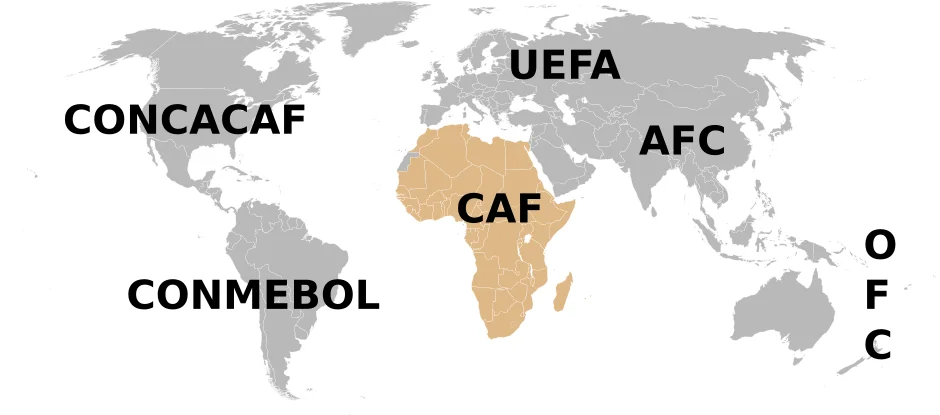
The Africa Cup of Nations, universally known as AFCON, is the top international men's football tournament in Africa. Organized by the Confederation of African Football (CAF), it brings together the continent's best national teams every two years. Since its modest start in 1957 with just three teams, AFCON has grown into a 24-nation spectacle that captures global attention. The tournament features a group stage followed by a knockout phase, with matches played across multiple host cities. AFCON is more than a football competition; it is a celebration of African culture, unity, and sporting excellence. The event has launched legends like Samuel Eto'o, Didier Drogba, and Mohamed Salah onto the world stage, and its passionate crowds, colorful stadiums, and unpredictable outcomes make it one of football's most thrilling events.
History
CAF was founded on February 8, 1957, by Egypt, Ethiopia, Sudan, and South Africa. Just days later, the first Africa Cup of Nations kicked off in Khartoum, Sudan. South Africa was disqualified due to apartheid, leaving only three teams. Egypt beat Ethiopia 4-0 in the final to claim the Abdel Aziz Abdallah Salem Trophy. The tournament was held irregularly until 1968, when it settled into a biennial rhythm. From an initial three teams, the field expanded to eight in 1968, 12 in 1992, 16 in 1996, and 24 in 2019. In 2013, the schedule shifted to odd-numbered years to avoid clashing with the FIFA World Cup. In 2025, CAF announced that starting in 2028, AFCON will become a quadrennial event held in even-numbered years.
Notable Editions
1957
Inaugural tournament in Khartoum, Sudan, with only three teams; Egypt won the first title.
1978
Ghana won its fourth title and was awarded the original trophy permanently.
2000
Cameroon won its third title in a row, earning the African Unity Cup permanently.
2012
Zambia won its first title, beating Ivory Coast in a penalty shootout in Libreville, Gabon.
2013
First edition held in an odd-numbered year; Nigeria won its third title.
Past Champions
| Year | Name |
|---|---|
| 1957 | Egypt |
| 1959 | Egypt |
| 1962 | Ethiopia |
| 1963 | Ghana |
| 1965 | Ghana |
| 1968 | DR Congo |
| 1970 | Sudan |
| 1972 | Congo |
| 1974 | DR Congo |
| 1976 | Morocco |
Notable Moments
1957
First AFCON Champion
Egypt defeated Ethiopia 4-0 in the first ever final in Khartoum.
1978
Ghana Keeps the Trophy
Ghana won its fourth title and was awarded the original Abdel Aziz Abdallah Salem Trophy permanently.
1992
Longest Penalty Shootout
Ivory Coast beat Ghana 11-10 in a 24-penalty marathon final.
1996
South Africa's Home Triumph
South Africa won its first title on home soil, beating Tunisia 2-0.
2000
Cameroon's Three-Peat
Cameroon won its third consecutive title, claiming the African Unity Cup permanently.
2012
Zambia's Fairy Tale
Zambia won its first AFCON, beating heavily favored Ivory Coast on penalties, just 19 years after a plane crash killed most of the national team.
2019
Algeria Ends Drought
Algeria won its second title after 29 years, defeating Senegal 1-0.
2021
Senegal's First Title
Senegal won its first AFCON, beating Egypt on penalties with Sadio Mané scoring the winning spot kick.
2023
Ivory Coast's Home Glory
Ivory Coast won its third title on home soil, coming from behind to beat Nigeria 2-1.
2025
Record Attendance and Controversial Final
The tournament set a record with over 1.1 million spectators. The final ended in controversy as Senegal walked off, leading to Morocco being declared champions by forfeit.
Cultural Impact
AFCON is a powerful expression of African identity and pride. Born in the decolonization era, it embodied Pan-African ideals of unity. The tournament brings together diverse nations, and its matches are communal events where families, neighbors, and even strangers gather around televisions or in stadiums. The music, dancing, and colorful attire in the stands are as much a part of AFCON as the football. The event has launched global superstars, from Roger Milla to Mohamed Salah, and has given African players a platform to shine. AFCON also influences African politics; victories have been used to foster national unity, and hosting the tournament is a source of prestige. The competition's growing global viewership reflects Africa's rising influence in world football.
Controversies
AFCON's scheduling has long been a flashpoint. The tournament takes place in January and February, right in the middle of the European club season. Top African players must leave their clubs for weeks, often causing friction with managers. Former CAF President Issa Hayatou resisted moving the tournament, arguing it was Africa's right to set its own calendar. The 2025 final drew sharp criticism when Senegal walked off the pitch in protest of a refereeing decision, and CAF later awarded the title to Morocco by forfeit, sparking debate about the handling of the incident. Political tensions have also flared, such as when Algeria and Morocco faced off amid diplomatic strains.
Broadcast Partners
Sponsors
Related Events
Keywords
Sources
Event Info
- Sport
- Football
- Frequency
- Biennial
- Founded
- 1957
- Organizer
- Confederation of African Football
Join the community
fans discussing