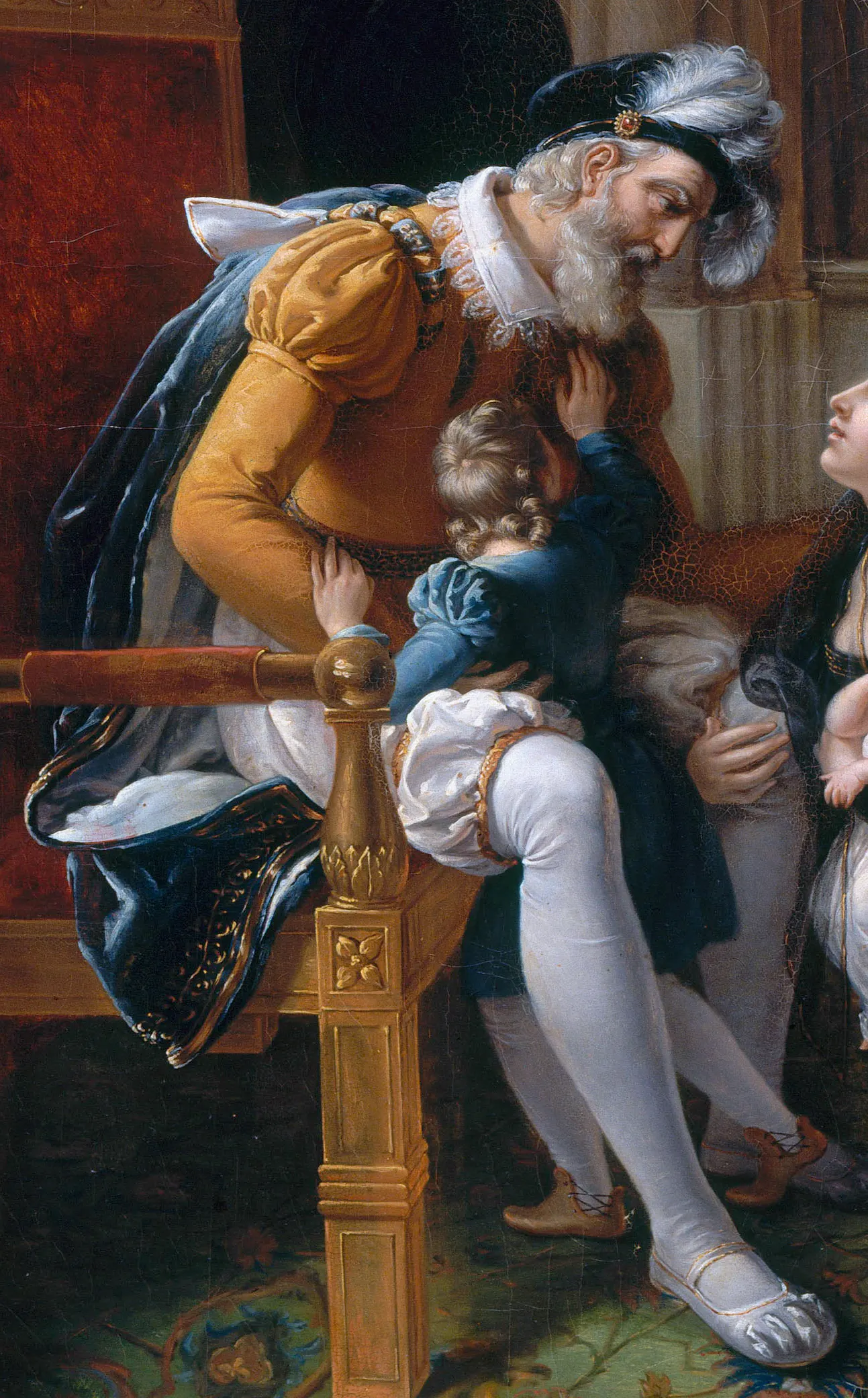
Afonso I of Portugal
 Portugal
Also known as: Afonso Henriques, O Conquistador, O Fundador, O Magno
Birthday
July 25, 1109
Birth Sign
Sagittarius
Birthplace
Guimarães, County of Portugal
Age
Died at 76
About
Dom Afonso I, born Afonso Henriques, was the first King of Portugal, reigning from July 26, 1139, until his death on December 6, 1185. Known by the epithets "the Conqueror," "the Founder," and "the Great," he established the independent Kingdom of Portugal and doubled its territory through the Reconquista. He transformed the County of Portugal into a sovereign nation, securing recognition from both the Kingdom of León and the Papacy.
Afonso is remembered as a pivotal figure in European history who successfully carved out a new state from the fragmented political landscape of medieval Iberia. His reign was defined by relentless military campaigns against the Moors and strategic diplomatic maneuvers that solidified Portugal's borders. He died in Coimbra, leaving behind a unified kingdom that would endure for centuries under the House of Burgundy.
Early Life & Background
Afonso Henriques entered the world around 1109 in Guimarães, a town that would later be revered as the cradle of the Portuguese nation. He was the illegitimate son of Henry of Burgundy, Count of Portugal, and Theresa of León, daughter of Emperor Alfonso VI of León and Castile. His birth occurred within the turbulent context of the County of Portugal, a borderland region constantly contested between Christian kingdoms and Muslim territories.
When Afonso was only three years old, his father Henry died in 1112, leaving Theresa to rule alone. Her reign quickly became unstable due to her romantic relationship with Fernando Pérez de Traba, a Galician nobleman. This affair alienated the Portuguese nobility, who feared that their county would be absorbed into the Kingdom of León. The tension escalated into open conflict, setting the stage for a dramatic family struggle that would define Afonso's early life.
By 1128, the nineteen-year-old Afonso had matured into a capable leader who rallied the discontented nobles against his mother. He led a revolt that culminated in the Battle of São Mamede near Guimarães. In this decisive engagement, Afonso defeated Theresa's forces, forcing her into exile and seizing sole control of the county. This victory marked the beginning of his independent rule and set him on the path to becoming a king rather than a mere count.
Career Growth
The true beginning of Afonso's reign as a sovereign ruler came on July 26, 1139, following a legendary victory over the Almoravids at the Battle of Ourique. According to tradition, Christ appeared to him during the battle, promising victory and legitimacy. Whether myth or reality, Afonso used this moment to declare himself King of Portugal, renouncing his suzerainty over the Kingdom of León.
His military career was characterized by aggressive expansion southward. In 1143, the Treaty of Zamora formally recognized his title as King and acknowledged Portugal's independence from León, though full papal recognition would take decades. The most significant turning point arrived in 1147 when Afonso, aided by a contingent of Crusaders en route to the Holy Land, captured the strategic cities of Santarém and Lisbon. These victories doubled the size of the kingdom and secured vital ports along the Atlantic coast.
Decades of campaigning continued as he pushed the frontier further south. In 1179, Pope Alexander III issued the bull Manifestis Probatum, officially recognizing Portugal as an independent kingdom and Afonso as its rightful king. This papal endorsement solidified his status on the international stage. Throughout his long reign, he also focused on internal consolidation, establishing administrative structures and fostering the growth of towns like Guimarães and Évora.
Career Timeline
Public Image & Style
Afonso I is portrayed in Portuguese culture as the archetype of the brave, pious, and determined leader. He is seen as the architect of national unity and the defender of the faith. His image is one of strength and resolve, often depicted holding a sword or a shield, symbolizing his role as a warrior-king.
Historical accounts describe him as a man of intense will who refused to bow to any earthly authority but God. This defiance of feudal norms earned him respect among his contemporaries and fear among his rivals. His reputation as a fierce commander and shrewd diplomat has endured for nearly nine hundred years.
Fame & Fandom (iFAMOUS Rankings)
iFANN has not yet collected fame data for this person. As a medieval monarch living nearly a millennium ago, he does not appear in modern global fame rankings based on contemporary digital signals or search interest metrics.
While there is no organized fandom in the modern sense, Afonso I commands a devoted following among historians, students, and Portuguese nationalists who revere him as the father of the nation. Cultural events, such as the celebration of the anniversary of the Battle of São Mamede or the founding of the kingdom, draw large crowds, particularly in Guimarães and Lisbon. His story is taught in schools across Portugal, ensuring that each generation learns about the man who built the country.
Interesting Facts and Legends
The legend of the Miracle of Ourique remains one of the most enduring stories in Portuguese folklore. It claims that during the Battle of Ourique in 1139, Christ appeared to Afonso in a vision, telling him that God was with him and that he would conquer all his enemies. This miraculous intervention was later used by the monarchy to legitimize the new kingdom's divine right to rule.
Afonso was known to be literate, a rare trait for warriors of his time. He maintained correspondence with the Pope and other European rulers, demonstrating a sophisticated understanding of diplomacy alongside his martial prowess. His ability to write and read allowed him to manage complex alliances and assert his sovereignty in written decrees.
The capture of Lisbon in 1147 stands out as a unique event in medieval history. It was one of the few times a major European city fell to a crusading army that was originally bound for the Holy Land. The cooperation between the Portuguese king and the Northern European Crusaders showcased a rare moment of cross-cultural religious alliance.
Notable Quotes
“I will not bow to anyone but God.”
“I am the King of Portugal.”
Family & Personal Life
Afonso was born to Henry of Burgundy and Theresa of León, rulers of the County of Portugal. His mother's influence dominated his early childhood until he rebelled against her rule in 1128. He had a close relationship with his father's lineage, which provided him with the Burgundian bloodline that would dominate Portuguese royalty for two centuries.
In 1146, Afonso married Maud of Savoy, the daughter of Humbert III, Count of Savoy. This marriage was a strategic alliance designed to strengthen ties with powerful European houses. Together they had several children, including his heir Sancho I, as well as sons named Afonso, Pedro, and Diogo, and daughters Teresa and Sancha. Maud died around 1157, leaving Afonso widowed for the remainder of his life.
Notable Connections
Relationships & Dating History
Afonso I's marital life was defined by political necessity and dynastic strategy rather than modern romance. In 1146, he married Maud of Savoy, the daughter of Humbert III, Count of Savoy. This union was intended to secure alliances with powerful European houses and legitimize his claim to the throne. The marriage produced several children, including his successor Sancho I, as well as other sons and daughters who played roles in the royal court.
Maud of Savoy died around 1157, leaving Afonso widowed for the remainder of his thirty-year reign as king. There are no credible historical records of other romantic partners or affairs confirmed by sources from the period. Any claims regarding extramarital relationships remain speculative folklore. He remained faithful to the memory of his wife until his own death in 1185.
- MarriedMaud of Savoy1146 - 1157Marriage arranged for political alliance; produced heir Sancho I
Death & Aftermath
Died
December 6, 1185 (aged 76)
Death Place
Coimbra, Portugal
Cause of Death
Natural causes (old age)
Afonso I passed away on December 6, 1185, in the city of Coimbra at the age of approximately seventy-six. Historical chronicles from the period do not specify a particular illness or sudden event that led to his death, attributing it instead to natural causes associated with advanced age. He had ruled for nearly half a century, transforming a disputed county into a recognized kingdom, and his passing marked the end of a foundational era in Portuguese history.
His funeral was held with great solemnity at the Monastery of Santa Cruz in Coimbra, an institution he had founded himself to serve as the royal pantheon. The monastery remains a significant historical site today, housing the tombs of several Portuguese monarchs. There were no disputes over succession or legal investigations following his death; the transition of power proceeded smoothly to his son, Sancho I, who had been crowned co-ruler in 1174 to ensure stability.
The public reaction to his death reflected the deep reverence the Portuguese people held for him. He was mourned not just as a king but as the father of the nation. His legacy was immediately cemented in the national consciousness, with chroniclers portraying him as a pious warrior who had secured the country's independence through divine favor. Over the centuries, his image has remained central to Portuguese identity, celebrated in literature, art, and national holidays that commemorate the founding of the kingdom.
Net Worth (Estate Value)
$0
iFANN Editorial Team estimate
As a medieval monarch who lived nearly 900 years ago, Afonso I does not have a net worth in the modern financial sense. His wealth consisted of land, feudal revenues, and the spoils of war. These assets were part of the royal domain and were managed by the crown, not an individual estate. Therefore, no financial estimates, asset breakdowns, or estate valuations exist for him.
Awards & Accolades
View 6 records, honours and achievementsKnown For
Founding of Portugal
1139 · First King
Conquest of Lisbon
1147 · Monarch
Keywords
Sources
Quick Facts
- Profession
- sovereign, writer, warrior
- Born
- July 25, 1109
- Birthplace
- Guimarães
- Died
- December 6, 1185
- Death Place
- Coimbra
- Gender
- Male
- Spouse
- Maud of Savoy
- Birth Sign
- Sagittarius
Personal Details
- Full Name
- Afonso Henriques
- Spouse
- Maud of Savoy
- Children
- Sancho I, Afonso, Pedro, Diogo, Teresa, Sancha
- Education
- Military training and courtly education under the Burgundian household
Frequently Asked Questions
Who was Afonso I of Portugal?
When was Afonso I of Portugal born?
How did Afonso I die?
What is Afonso I's most famous achievement?
Who was Afonso I of Portugal married to?
Similar People
Join the community
fans discussing