
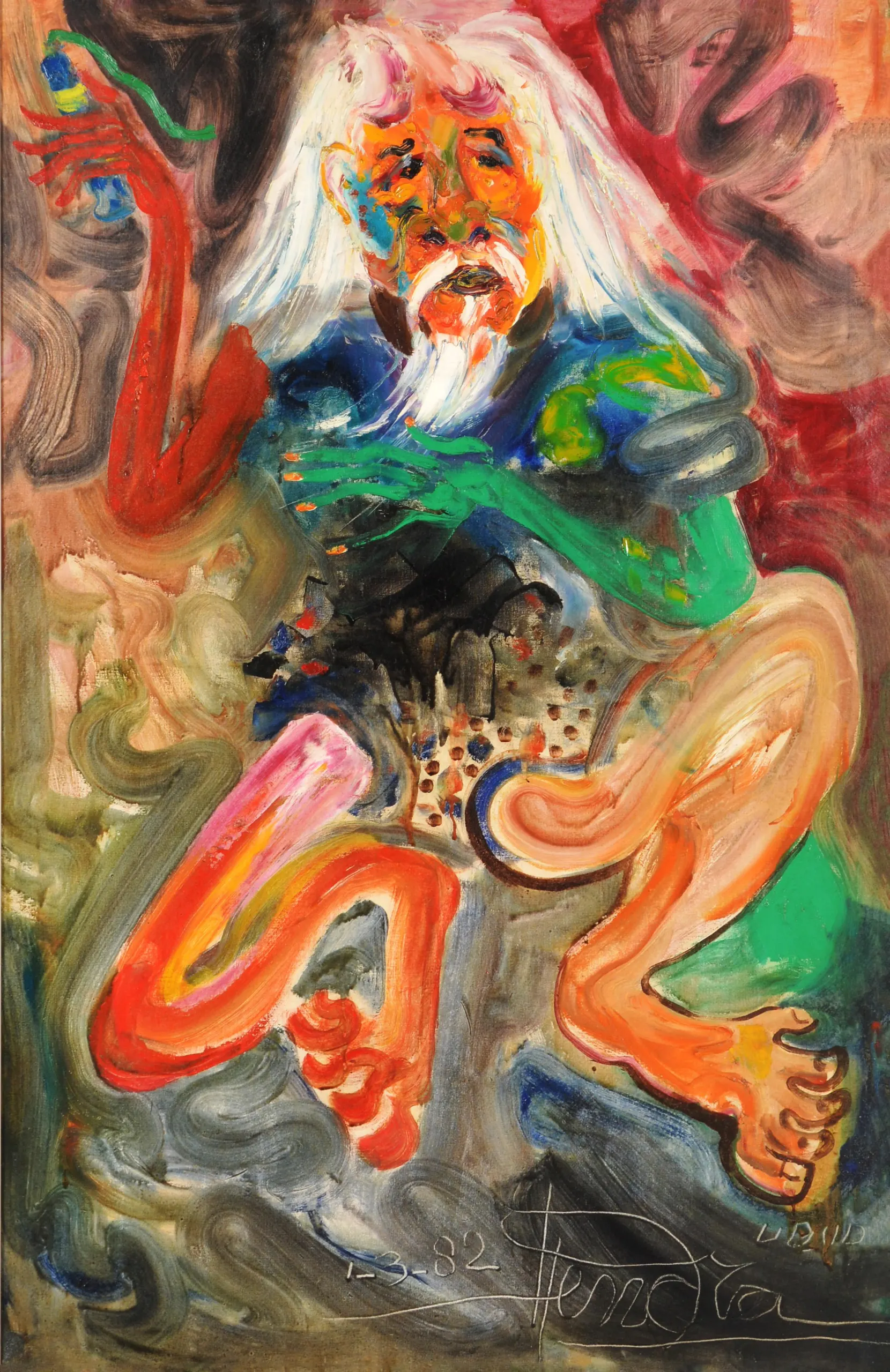
Affandi
 Indonesia
Also known as: Kusuma Affandi, Afa, Affrandi, K Affandi
Birthday
May 18, 1907
Birth Sign
Taurus
Birthplace
Cirebon, West Java, Indonesia
Age
Died at 83
About
Affandi, born Kusuma Affandi, was an Indonesian painter widely regarded as the father of modern painting in Indonesia. He achieved worldwide recognition as a master of Expressionism, known for a raw and emotional style that defied conventional techniques. The son of R. Koesoema, a surveyor at a local sugar factory, Affandi abandoned formal higher education to pursue art full-time. He is celebrated for his unique method of applying paint directly from tubes onto the canvas using his fingers and hands rather than brushes.
His career spanned decades of artistic innovation and political engagement during the struggle for Indonesian independence. Affandi married fellow artist Maryati, and their daughter Kartika followed in their footsteps to become a respected painter herself. He passed away in 1990, leaving behind a legacy maintained by the Museum Affandi in Yogyakarta, where his home and studio stand as a testament to his life's work.
Early Life & Background
Kusuma Affandi entered the world on May 18, 1907, in Cirebon, West Java, the son of R. Koesoema, who worked as a surveyor at a local sugar factory. Although he completed his secondary education in Jakarta, Affandi chose not to pursue further formal schooling, driven instead by an intense passion for visual expression. Largely self-taught, he began painting in 1934, developing a distinctive approach that would eventually redefine Indonesian art. His early years were marked by financial instability; he often painted while hungry, a period of hardship later documented in the 1983 documentary Affandi: Hungry To Paint.
Before achieving international acclaim, Affandi lived through significant historical upheavals, including the Japanese occupation and the Indonesian National Revolution. During the struggle for independence, he actively joined a guerrilla movement, adding a layer of revolutionary prestige to his biography. This period of service distinguished him from many contemporaries who remained neutral. In 1945, amidst these turbulent times, he designed and built a free-form house in Yogyakarta. This structure would later evolve into the Museum Affandi, preserving his memory and art for future generations.
Career Growth
Affandi's career success was defined by his bold, unconventional approach and subsequent international acclaim. He held numerous solo exhibitions throughout the 1950s across Europe and Asia, establishing himself as a leading figure in modern art. His breakthrough came with works like The Storm (1950) and a series of self-portraits that gained critical attention for their emotional depth. These pieces showcased his visceral texture and ability to capture suffering figures and intense landscapes.
Commercially, his works have consistently fetched high prices at major auctions, with pieces like Self Portrait (1977) and Sunflower (1978) selling for significant sums at Christie's and Sotheby's. His impact on the art world is profound, influencing generations of Indonesian artists and redefining the boundaries of expressionist painting in Southeast Asia. Decades after his death, his reputation remains strong, with his portraits featured in the prestigious Venice Biennale in 2024, cementing his legacy as a global icon of modern art.
Career Timeline
Public Image & Style
Affandi's public image was that of a rugged, passionate artist deeply connected to the struggles of ordinary people. His aesthetic was characterized by thick, swirling brushstrokes and intense emotional depth, achieved through his finger-painting technique. He viewed art as an extension of human emotion, believing it should be raw and unfiltered. This philosophy resonated with audiences who saw his work as a reflection of the human condition. His persona as a revolutionary artist added to his mystique, distinguishing him from more traditional painters of his time.
Fame & Fandom (iFAMOUS Rankings)
Affandi's enduring legacy rests not on the frenzied, organized fervor of a pop idol, but on the deep, institutional reverence held by art historians, collectors, and the Indonesian public. His fanbase lacks a formal, branded name like those found in modern music culture; instead, admirers are simply known as fans of Affandi or members of the broader community of Indonesian art lovers. This appreciation is channeled through physical pilgrimage to the Affandi Museum in Yogyakarta rather than digital campaigns or streaming pushes. The most significant tribute from this community was the Google Doodle released on May 15, 2017, which allowed a global audience to interact with his unique style.
iFANN has evaluated his standing within the global cultural landscape. Affandi is currently EVALUATED_UNRANKED in the Global Top 1,000, meaning he does not hold a specific placement in the published rankings despite being fully assessed by the engine. He also holds no position on any Top-100 scope list. While there are no documented fan-funded projects or viral chart-topping efforts, his reputation remains unshaken by time, anchored by auction houses and academic circles that continue to study his revolutionary techniques. He is not on the September 2026 iFAMOUS Rankings flagship list, reflecting his status as a historical titan whose fame is measured in museum visits and scholarly citations rather than real-time popularity metrics.
Interesting Facts and Legends
Affandi once refused to sell a masterpiece to a wealthy foreign buyer for one million dollars, declaring that his art belonged to Indonesia rather than private collectors abroad. This story has become a core part of his mythology, illustrating his deep connection to his homeland. His artistic signature was an idiosyncratic technique where he squeezed paint directly from tubes onto the canvas and applied it with his fingers and hands instead of brushes. This method created a raw texture that became his trademark, particularly in his depictions of suffering figures.
Beyond the studio, Affandi actively participated in the Indonesian National Revolution, joining a guerrilla movement during the struggle for independence. His self-portraits, especially the 1970 work, are considered legendary for their psychological insight. He painted dozens of intense self-portraits throughout his life, serving as windows into his psyche. The museum dedicated to him in Yogyakarta continues to attract visitors who wish to experience his unique environment firsthand.
Notable Quotes
“Art belongs to the people.”
“I squeeze the paint from the tube because I want to feel it.”
Family & Personal Life
Affandi married fellow artist Maryati, and they remained together until his death. Together they had one daughter, Kartika Affandi, who also became a respected painter in her own right. The family lived in Yogyakarta, where Affandi built his famous free-form house in 1945. This residence now serves as the Museum Affandi, housing his personal belongings and artworks. There are no public records of other romantic relationships or dating history beyond this marriage. The family unit was central to his life, with both his wife and daughter contributing to the artistic landscape of Indonesia.
Notable Connections
Relationships & Dating History
Affandi was married to fellow artist Maryati, and they remained together until his death in 1990. There are no public records of other romantic relationships or dating history beyond this marriage. Their union produced one daughter, Kartika Affandi, who also became a respected painter. The couple lived in Yogyakarta, where Affandi built his famous free-form house. As of 2026, Affandi is widowed, having been married to Maryati at the time of his death.
- MarriedMaryatiunknown - 1990Married until his death; she was also an artist.
Death & Aftermath
Died
May 23, 1990 (aged 83)
Death Place
Yogyakarta, Indonesia
Cause of Death
Unknown
Affandi died on May 23, 1990, in Yogyakarta at the age of 83. Official records do not specify the medical cause of his passing or provide detailed accounts of his final days, leaving the precise circumstances unconfirmed in public archives. Despite the lack of immediate documentation regarding funeral arrangements or tributes from peers, his legacy was rapidly institutionalized through the Museum Affandi in Yogyakarta, which serves as a permanent repository for his work and life story.
Decades after his death, his influence continued to resonate globally. A significant tribute occurred on May 16, 2017, when Google honored his 110th birthday with a Doodle that animated his signature technique of squeezing paint directly from tubes onto a canvas. His market presence also remained robust long after his passing, with works like Self Portrait (1977) and Sunflower (1978) fetching significant sums at major auctions including Christie's and Sotheby's. In 2024, the international art world further cemented his stature when his portraits were featured in the prestigious La Biennale di Venezia, proving that his expressive style transcended generations.
Net Worth (Estate Value)
$5 Million
iFANN Editorial Team estimate
The estate of Affandi continues to generate revenue through art sales, licensing deals, and merchandise managed by his family and the museum foundation. His works remain among the most sought-after in Southeast Asia, with pieces like Self Portrait (1977) and Sunflower (1978) fetching significant sums at major auctions including Christie's and Sotheby's. This figure reflects the ongoing demand for his work and the institutional support provided by the Museum Affandi.
Awards Won (1)
Affandi received numerous accolades throughout his life and posthumously. He was awarded the Bintang Mahaputera Adipradana (First Class Star of the Republic of Indonesia) in 1988, one of Indonesia's highest civilian honors. His induction into various art halls of fame and recognition by institutions like the Venice Biennale serve as significant milestones. His works have been featured in prestigious exhibitions worldwide, solidifying his status as a master of modern Indonesian art.
1988 · Civilian Honor
Lifetime Achievement
Known For
The Storm
1950 · Painting
Self Portrait
1977 · Painting
Sunflower
1978 · Painting
Keywords
Sources
Quick Facts
- Profession
- painter, artist
- Born
- May 18, 1907
- Birthplace
- Cirebon
- Died
- May 23, 1990
- Death Place
- Yogyakarta
- Gender
- Male
- Birth Sign
- Taurus
Personal Details
- Full Name
- Kusuma Affandi
- Spouse
- Maryati
- Children
- Kartika Affandi
- Education
- Secondary school in Jakarta
Frequently Asked Questions
Where was Affandi born?
What caused Affandi's death?
Who is Affandi's wife?
What is Affandi best known for?
Is Affandi still alive?
Similar People
Join the community
fans discussing