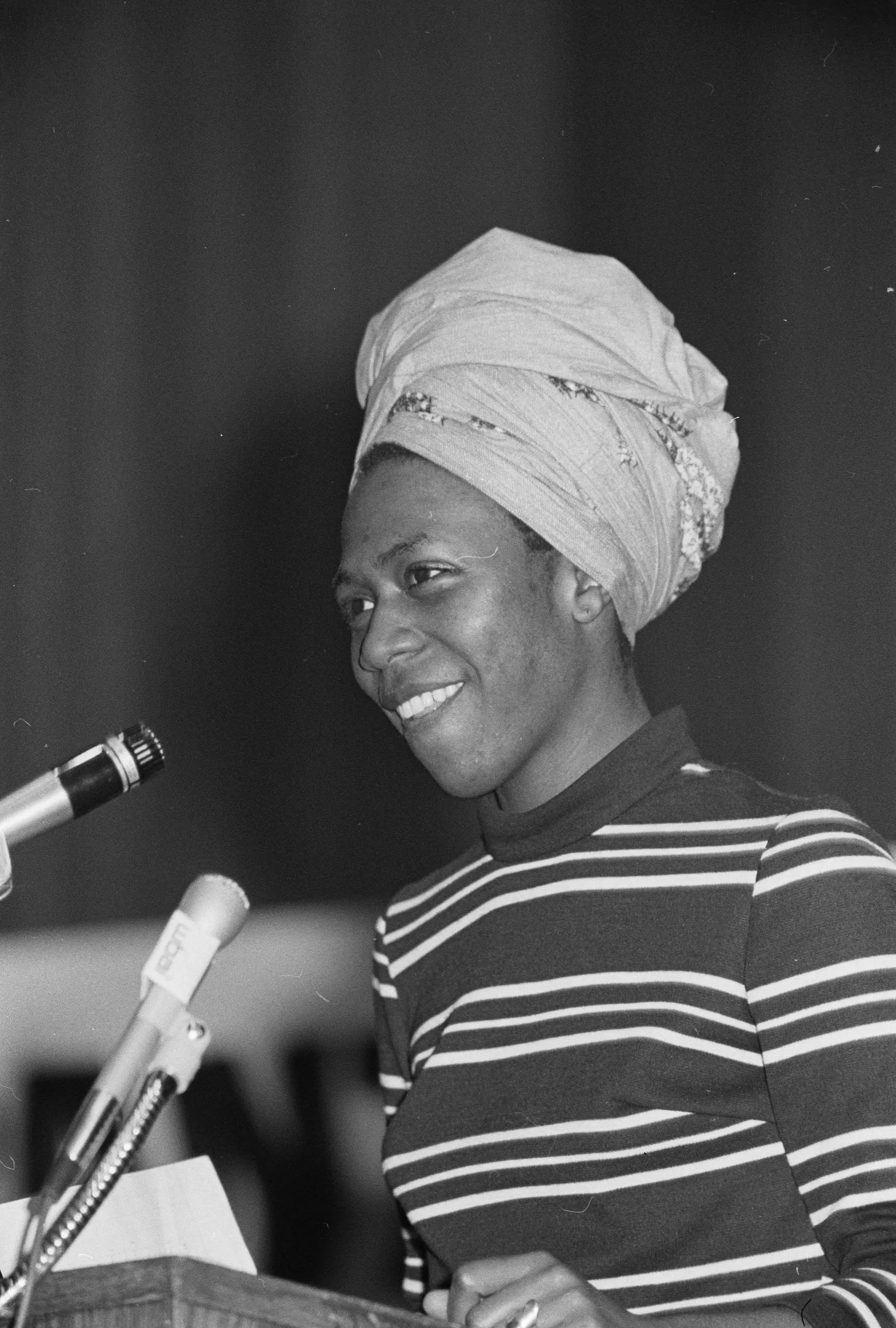
Afeni Shakur
 United States
activist•businessperson•civil rights advocate
Also known as: Alice Faye Williams, Afeni Shakur Davis
Birthday
January 10, 1947
Birth Sign
Capricorn
Birthplace
Lumberton, North Carolina, USA
Age
Died at 69
About
Afeni Shakur stands as a pivotal figure in American civil rights history and the guardian of one of hip-hop's most enduring legacies. Born Alice Faye Williams, she transformed into a symbol of resistance through her radical activism within the Black Panther Party and her historic legal victory in the 1971 Panther 21 conspiracy trial. Following the tragic murder of her son, Tupac Amaru Shakur, in 1996, she pivoted from grassroots organizing to becoming a powerful executive, steering his estate into a multi-million dollar enterprise that redefined posthumous artist management. She founded the Tupac Amaru Shakur Foundation to support youth arts education and established Amaru Entertainment to oversee licensing and releases. Known for her quiet dignity, fierce protectiveness, and sharp business acumen, she ensured her son's artistic integrity remained intact while generating substantial revenue. Her life was a testament to resilience, balancing political conviction with the stewardship of a cultural icon until her death in 2016.
Early Life & Background
Born Alice Faye Williams on January 10, 1947, in Lumberton, North Carolina, she grew up as the daughter of sharecroppers in a deeply segregated South where Jim Crow laws dictated daily life. These early experiences of racial injustice fueled her political consciousness long before she entered the national spotlight. As a teenager, she moved to New York City, attending high school and later enrolling at the City College of New York (CCNY). It was in this vibrant, turbulent environment of the late 1960s that she found her true calling. In 1968, she joined the Black Panther Party, adopting the name Afeni, which means "one who has awakened" in Swahili, marking a symbolic break from her birth identity. She threw herself into the Panthers' community programs, notably the free breakfast for children initiative, which fed thousands of kids across the nation. Her dedication brought her to the attention of law enforcement, leading to her arrest in 1969 at age 22. Along with 20 other members of the New York chapter, she was charged with conspiracy to bomb police stations, department stores, and schools. The case, known as the Panther 21, dragged on for nearly two years. During her pretrial detention, she gave birth to her son Tupac in June 1971. Representing herself without legal counsel, she delivered a closing argument lasting hours, declaring, "I am not a criminal. I am a victim of a racist system." In May 1971, after eight months of trial, the jury acquitted all defendants on all charges, cementing her reputation as a fierce defender of civil rights.
Career Growth
While primarily an activist before 1996, Afeni Shakur's career evolved dramatically following the murder of her son in September 1996. She transitioned from a grassroots organizer to a powerful executive in the music industry, taking control of his estate as executor. In 1997, she founded the Tupac Amaru Shakur Foundation, dedicated to supporting youth education and social justice initiatives. The following year, in 1998, she established Amaru Entertainment, Inc., serving as CEO. Under her leadership, the company released a string of commercially successful posthumous albums, including The Don Killuminati: The 7 Day Theory (1996), R U Still Down? (Remember Me) (1997), Until the End of Time (2001), Better Dayz (2002), and Loyal to the Game (2004). She also oversaw the release of the critically acclaimed documentary Tupac: Resurrection (2003), which was nominated for an Academy Award, and negotiated film rights for projects like All Eyez on Me (2017). Her business decisions kept Tupac's music in the charts and his image on merchandise, but she drew clear lines: she reportedly turned down deals she felt disrespected his artistry. By the time of her death, the estate was generating an estimated $30 million to $50 million annually. She successfully navigated the complexities of the music business, turning a tragic loss into a sustained empire that generated hundreds of millions of dollars while maintaining respect for her son's legacy.
Career Timeline
Public Image & Style
Afeni Shakur projected an image of quiet strength and unwavering resolve. She favored simple, practical clothing, often wearing headwraps or athletic wear, a style that reflected her roots in the Black Panther Party rather than any interest in celebrity fashion. In interviews, she spoke slowly and deliberately, choosing words with care and precision. The media frequently framed her as the grieving mother, but she resisted that label, insisting on being seen as a political thinker, a businesswoman, and a survivor. After Tupac's death, she became a guardian figure in hip-hop, someone younger artists looked to for wisdom and guidance. She was rarely photographed at industry events, preferring to work behind the scenes to protect her son's legacy. That reluctance to chase the spotlight only deepened the respect she commanded among activists and musicians alike. Her demeanor was one of dignified silence, broken only when she chose to speak with conviction about justice, family, or the preservation of Tupac's memory.
Fame & Fandom (iFAMOUS Rankings)
There is no official fandom name for Afeni Shakur herself, as she was not a pop star, but fans of Tupac Shakur have adopted her as a matriarchal figure. Devotees often refer to her as "Queen Afeni" or "The Matriarch," honoring her role in preserving her son's legacy. Every January 10, her birthday, and May 2, the anniversary of her death, social media fills with tributes to her activism and her tireless work in protecting Tupac's image. Fan-driven charity drives routinely raise money for the Tupac Amaru Shakur Foundation in her name, continuing the mission of youth empowerment she championed. Her courtroom speech from the 1971 trial circulates widely among young activists as a masterclass in self-representation and defiance against systemic oppression. While she never cultivated a public following through traditional celebrity channels, she ended up with one anyway, built entirely on gratitude, shared history, and admiration for her resilience. Fan campaigns often highlight her journey from a single mother battling addiction to a CEO managing a billion-dollar legacy, inspiring generations to value both family and justice.
Interesting Facts and Legends
She was one of the few people to successfully represent herself in a federal conspiracy trial, and her closing argument is still taught in law schools today as a model of self-defense. She changed her name to Afeni upon joining the Black Panther Party, a symbolic break from her birth name that marked her new political identity. After her breast cancer diagnosis, she became an outspoken advocate for early detection in Black communities, urging women to get regular screenings. Tupac's 1995 hit Dear Mama was written as a tribute to her struggle, describing her as a "mama" who raised him alone while battling addiction and poverty; it remains one of the most beloved hip-hop songs about a mother. A story fans still retell: during the Panther 21 trial, she cross-examined a prosecution witness so effectively that the courtroom gallery burst into applause. She was also known for her sharp sense of humor, once joking that raising Tupac prepared her for anything the music industry could throw at her. Despite her fame, she was notoriously private, rarely giving interviews and avoiding the Hollywood spotlight, preferring to let her actions speak louder than words.
Notable Quotes
“I am not a criminal. I am a victim of a racist system.”
“Tupac was my son, and he was my greatest teacher.”
“We must fight for our children, because they are the future.”
Family & Personal Life
Afeni Shakur raised her two children, Tupac and Sekyiwa Omari Shakur, largely on her own amidst poverty and personal struggles with drug addiction before achieving sobriety in the late 1980s. Her first husband was Mutulu Shakur, a leader in the Black Liberation Army; they married in the early 1970s. Though they had no biological children together, Mutulu served as a father figure to Tupac during their marriage. Their relationship ended when Mutulu went underground in the 1980s to avoid arrest for his role in the 1981 Brink's robbery; he remained a fugitive until his capture in 1986. After Mutulu disappeared, Afeni married Lumumba Shakur (born William Thomas), a fellow Black Panther activist, in 1975. Together, they had a daughter, Sekyiwa Omari Shakur, born in 1976. The couple divorced in the late 1970s or early 1980s. Afeni never remarried after that divorce. In her later years, she lived quietly in Greenbrae, California, surrounded by her daughter and grandchildren. She maintained a close bond with her family despite the intense public scrutiny surrounding her son's fame and her own legal history.
Notable Connections
Relationships & Dating History
Afeni Shakur's romantic life was deeply intertwined with her political activism. In the late 1960s, she met Mutulu Shakur, a fellow revolutionary and leader in the Black Liberation Army. They married in the early 1970s, forming a partnership rooted in shared ideals. The marriage effectively ended when Mutulu went underground in the 1980s to avoid arrest for his role in the 1981 Brink's robbery; he was captured in 1986. There were no children from this union, though Mutulu helped raise Tupac. After Mutulu went into hiding, Afeni married Lumumba Shakur (born William Thomas), a Black Panther activist, in 1975. They had a daughter, Sekyiwa Omari Shakur, in 1976, before divorcing in the late 1970s or early 1980s. She did not have any other publicly documented relationships after that divorce. At the time of her death in 2016, she was unmarried and living alone in Greenbrae, California. Her personal life was defined by her commitment to the Black liberation movement and her role as a single mother raising two children through difficult times.
- MarriedMutulu Shakur1970 - 1980Married in the early 1970s; the relationship ended when he went underground to avoid arrest, and they later divorced.
- MarriedLumumba Shakur1975 - 1980Married in 1975; they had a daughter, Sekyiwa, in 1976, and divorced in the late 1970s or early 1980s.
Death & Aftermath
Died
May 2, 2016 (aged 69)
Death Place
Greenbrae, California, USA
Cause of Death
Complications from breast cancer (natural causes)
Afeni Shakur died on May 2, 2016, at her home in Greenbrae, California, at the age of 69. The Marin County coroner ruled the death natural, citing complications from breast cancer, a disease she had been treated for over several years. Some early reports mentioned a possible heart attack, but the official finding pointed to her cancer battle. Word spread quickly through hip-hop and civil rights circles, prompting an outpouring of grief. Snoop Dogg, Dr. Dre, and Jay-Z were among those who publicly mourned her, each emphasizing her grit and resilience. A private funeral was held, and she was buried beside her son Tupac at Forest Lawn Memorial Park in Glendale, California, a plot that draws visitors year-round. Her daughter, Sekyiwa Shakur, stepped into a larger role at the Tupac Amaru Shakur Foundation and Amaru Entertainment after her mother's death. The estate kept releasing music and licensing deals, and its annual revenue stayed in the tens of millions. In the years since, Afeni has been portrayed on screen, most notably by Danai Gurira in All Eyez on Me (2017), introducing her story to a new generation. Tributes continue to pour in, solidifying her status as a matriarch of both the civil rights movement and hip-hop culture.
Net Worth (Estate Value)
$6 Million
iFANN Editorial Team estimate
Afeni Shakur's personal fortune was built on stewardship rather than performance. As CEO of Amaru Entertainment and executor of Tupac's estate, she drew a salary and a share of the profits from posthumous albums, licensing, and merchandise. Industry estimates at the time of her death placed her personal wealth in the $2 million to $10 million range, with some sources suggesting it reached $10 million by 2016 due to her long tenure as the primary decision-maker. The iFANN Editorial Team's analysis points to roughly $6 million as of recent assessments. The Tupac estate itself, which she managed but did not personally own outright, has been valued between $150 million and $200 million in recent years, generating an estimated $30 million to $50 million annually through streaming, merchandise, and licensing deals. Her own real estate holdings in California and her executive compensation made up the bulk of her personal wealth. Unlike many celebrities, her wealth came from managing intellectual property rather than creating content directly. After her death, her estate passed to her daughter and the foundation she created, ensuring the continued financial stability of the Shakur legacy and the funding of youth programs.
Awards Won (1)
Afeni Shakur received recognition for her activism and her stewardship of Tupac's legacy. She was honored by the NAACP Image Awards for her work preserving African American culture. The Tupac Amaru Shakur Foundation, which she founded, has received numerous community service awards. She was also posthumously recognized by various hip-hop organizations for her contributions to the culture.
2016 · Lifetime Achievement
Preserving African American culture
Known For
Black Panther Party activism
1968 · Member and organizer
Panther 21 trial self-representation
1971 · Defendant representing herself
Tupac Amaru Shakur Foundation
1997 · Founder
Amaru Entertainment, Inc.
1998 · CEO
Keywords
Sources
Quick Facts
- Profession
- activist, businessperson, civil rights advocate
- Born
- January 10, 1947
- Birthplace
- Lumberton, North Carolina, USA
- Died
- May 2, 2016
- Death Place
- Greenbrae, California, USA
- Gender
- Female
- Spouse
- Lumumba Shakur, Mutulu Shakur
- Birth Sign
- Capricorn
Personal Details
- Full Name
- Alice Faye Williams
- Spouse
- Lumumba Shakur, Mutulu Shakur
- Children
- Tupac Amaru Shakur, Sekyiwa Omari Shakur
- Education
- City College of New York (attended)
Filmography
2
Total
1
Film
1
TV
Frequently Asked Questions
How did Afeni Shakur die?
What was Afeni Shakur's net worth?
Who did Afeni Shakur leave her money to?
Was Afeni Shakur a Black Panther?
What is Afeni Shakur known for?
Social Media
Similar People

Join the community
fans discussing