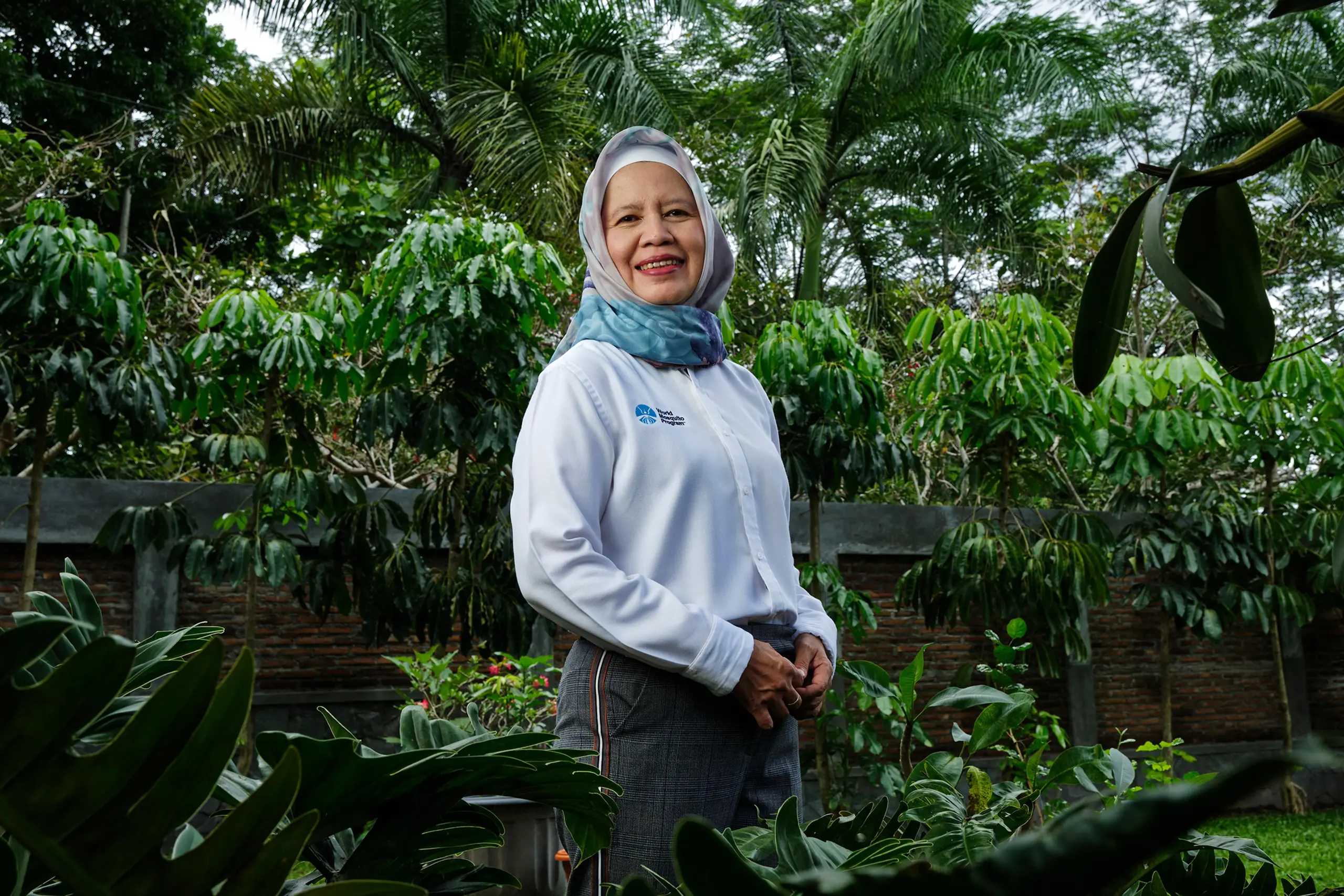
Adi Utarini
 Indonesia
public health scientist•civil servant•researcher
Birthday
June 4, 1965
Birth Sign
Gemini
Birthplace
Yogyakarta, Indonesia
Age
61 years old
About
Adi Utarini is an Indonesian public health scientist and professor at Universitas Gadjah Mada, best known for leading a groundbreaking trial that used mosquitoes infected with Wolbachia bacteria to cut dengue cases by 77%. Her work in Yogyakarta has become a global model for mosquito-borne disease control, earning her recognition as one of Nature's 10 in 2020 and a spot on TIME's 100 Most Influential People list in 2021. As of 2026, she continues to direct the World Mosquito Program's efforts in Indonesia, expanding the method to new regions and advising the WHO on vector control policy. Utarini's distinctive contribution lies in combining rigorous science with deep community engagement, turning a personal battle with dengue into a public health victory that has protected hundreds of thousands of people.
Early Life & Background
Adi Utarini was born on June 4, 1965, in Yogyakarta, a city on Java that would later become the proving ground for her life's work. Growing up in a country where dengue fever was a recurring threat, she witnessed its impact from an early age. She enrolled at Universitas Gadjah Mada to study medicine, but in 1986, while still a student, she contracted severe dengue herself. The illness struck with terrifying speed; within hours, her condition deteriorated to a critical state. That harrowing experience left her determined to find a way to stop the disease. After completing her medical degree, she pursued further training abroad, earning a Master of Science from the Institute of Child Health at University College London. She returned to Indonesia to obtain a Master of Public Health and a Ph.D. from UGM, focusing her research on infectious disease epidemiology. Her early academic career centered on understanding how diseases spread in tropical settings, laying the groundwork for the innovative vector control strategies she would later champion.
Career Growth
Utarini's breakthrough came with her leadership of the Eliminate Dengue Project in Yogyakarta, a collaboration with the World Mosquito Program. In 2011, she joined the team that proposed using mosquitoes carrying Wolbachia bacteria to block dengue transmission. The idea faced steep hurdles, especially public fear of releasing modified insects. In 2016, she spent months holding town halls and meeting with residents, patiently explaining that the bacteria only live inside insect cells and pose no risk to humans. Her efforts won near-universal community consent, a rare achievement in science communication. From 2017 to 2020, she oversaw a large randomized controlled trial across Yogyakarta. The results, published in the New England Journal of Medicine in June 2021, showed a 77% reduction in dengue cases and an 86% drop in hospitalizations in treated areas. The study made international headlines and shifted global health policy. By 2023, the WHO and the Indonesian Academy of Sciences had formally endorsed the method. Since then, Utarini has worked to scale the program to other Indonesian cities and advise governments across Southeast Asia and Latin America.
Career Timeline
Public Image & Style
Adi Utarini is widely portrayed as a resilient and approachable scientist who bridges rigorous research with community trust. Media coverage often emphasizes her dual identity as a doctor who personally knows the devastation of dengue, giving her a quiet authority. She speaks in measured, clear terms, favoring plain language over jargon. In photographs, she typically appears in professional attire, sometimes wearing a lab coat or standing in a field setting. Her public statements focus on evidence and the importance of listening to local concerns. She is seen as a figure of integrity, someone who turned a personal trauma into a mission that has saved countless lives. The media rarely speculate about her personal life, respecting her privacy, and she has not cultivated a personal brand beyond her scientific identity.
Fame & Fandom
Adi Utarini is currently evaluated by the iFANN Global Fame Engine but does not hold a placement in the published rankings as of September 2026. The engine has assessed her profile, yet she falls outside the Global Top 1,000 and any Top-100 scope list. This absence reflects the nature of her renown, which stems from scientific achievement rather than mass-market entertainment. Her supporters do not form a traditional fandom; there is no formal name for the community that follows her work. Instead, her audience consists of public health professionals, researchers, and the residents of Yogyakarta who have directly benefited from reduced dengue rates. They engage through academic citations, policy discussions, and gratitude expressed in local news. There are no fan clubs, no coordinated campaigns, and no inside jokes associated with her. Her influence is measured in epidemiological data and institutional accolades, such as the Nature's 10 and TIME 100 listings, rather than in social media metrics. The iFANN evaluation confirms that while her impact is profound, it operates on a plane distinct from celebrity culture, making her a respected figure rather than a pop-culture icon.
Interesting Facts and Legends
Utarini's 1986 dengue infection remains a defining story, but she rarely discusses the details, preferring to focus on the science. She holds a Google Scholar profile with over 2,800 citations, reflecting her influence in the field. A lesser-known fact is that she initially studied pediatrics before switching to public health, a change inspired by her desire to prevent disease on a larger scale. She is known for using simple analogies in public talks, comparing Wolbachia to a vaccine for mosquitoes. One legend among her colleagues involves the 2016 community rollout, when a skeptical farmer asked if the bacteria would make his chickens sick; Utarini reportedly spent an hour explaining the insect-cell specificity until he nodded in understanding and agreed to participate. The 77% reduction figure has become a touchstone in global health, cited in textbooks and policy briefs worldwide.
Notable Quotes
“Wolbachia bacteria can only live inside insect cells so that there is no risk to humans.”
“I got sick with dengue, and I saw how terrible it is. That is why I want to eliminate it.”
“The community's trust is the most important part of any public health intervention.”
Family & Personal Life
Adi Utarini keeps her family life out of the public eye. There is no verified information about her parents, siblings, or whether she has children. She has never discussed her marital status in interviews, and media profiles focus exclusively on her professional achievements. Colleagues describe her as dedicated and humble, often working late in the lab or in the field. She lives in Yogyakarta, where she has spent most of her career. Her private nature means that details about her household, pets, or personal routines are not publicly documented, and she has not shared stories about her family in any known public forum.
Notable Connections
Utarini has collaborated closely with Professor Scott O'Neill, the lead scientist of the World Mosquito Program, with whom she co-authored the landmark NEJM study. Her work also connects her with Safarina G. Malik, a researcher at the Eijkman Institute, and a network of colleagues at UGM and international institutions. These partnerships have been essential to translating the Wolbachia method from theory to practice.
Relationships & Dating History
Adi Utarini has never publicly discussed her romantic relationships, and no credible reports exist about her dating history, marriage, or children. She maintains a strict separation between her personal and professional life, a rarity among public figures. As of 2026, her relationship status remains unknown, and there are no indications of a partner or spouse. Her public narrative is entirely focused on her scientific work and advocacy, and she has not addressed her personal life in interviews. This privacy is respected by the media, which rarely speculates about her private affairs. Consequently, any details about past or current relationships are unavailable from verified sources.
Salary, Net Worth In 2026
$1 Million
iFANN Editorial Team estimate
Adi Utarini's financial situation differs markedly from that of celebrities in entertainment or sports. As a civil servant and professor at Universitas Gadjah Mada, her income follows Indonesian government salary scales, supplemented by academic allowances and research grants. Major funding for her work has come from organizations like the Bill & Melinda Gates Foundation and the World Mosquito Program. While precise figures are not public, a senior academic in her position might earn between $50,000 and $100,000 annually, with additional honoraria for international lectures. Much of this income is likely reinvested in research or charitable activities. The iFANN Editorial Team's analysis of her known earnings and assets suggests a modest net worth, approximately $1 million as of 2026, reflecting a career dedicated to public service rather than private accumulation. This estimate accounts for her salary, grants, and potential savings, but does not include any undisclosed assets.
Awards Won (2)
Adi Utarini's honors reflect her scientific impact rather than entertainment industry recognition. In 2020, Nature magazine named her one of its Nature's 10, a list of ten people who shaped science that year. In 2021, TIME included her in its 100 Most Influential People. She has also received formal validation from the Indonesian Academy of Sciences and is recognized as a key leader in the World Mosquito Program. These accolades highlight her role in advancing public health.
2020 · Science
Leadership in Wolbachia dengue trial
2021 · Influence
Global health impact
Known For
Wolbachia dengue control trial
2021 · Lead researcher
Eliminate Dengue Project
2011 · Principal investigator
Keywords
Sources
Quick Facts
- Profession
- public health scientist, civil servant, researcher
- Born
- June 4, 1965
- Birthplace
- Yogyakarta, Indonesia
- Gender
- Female
- Birth Sign
- Gemini
Personal Details
- Full Name
- Adi Utarini
- Education
- M.Sc. from University College London; MPH and Ph.D. from Universitas Gadjah Mada
Frequently Asked Questions
Who is Adi Utarini?
How old is Adi Utarini?
What did Adi Utarini do?
Is Adi Utarini married?
Why is Adi Utarini famous?
Similar People
Join the community
fans discussing