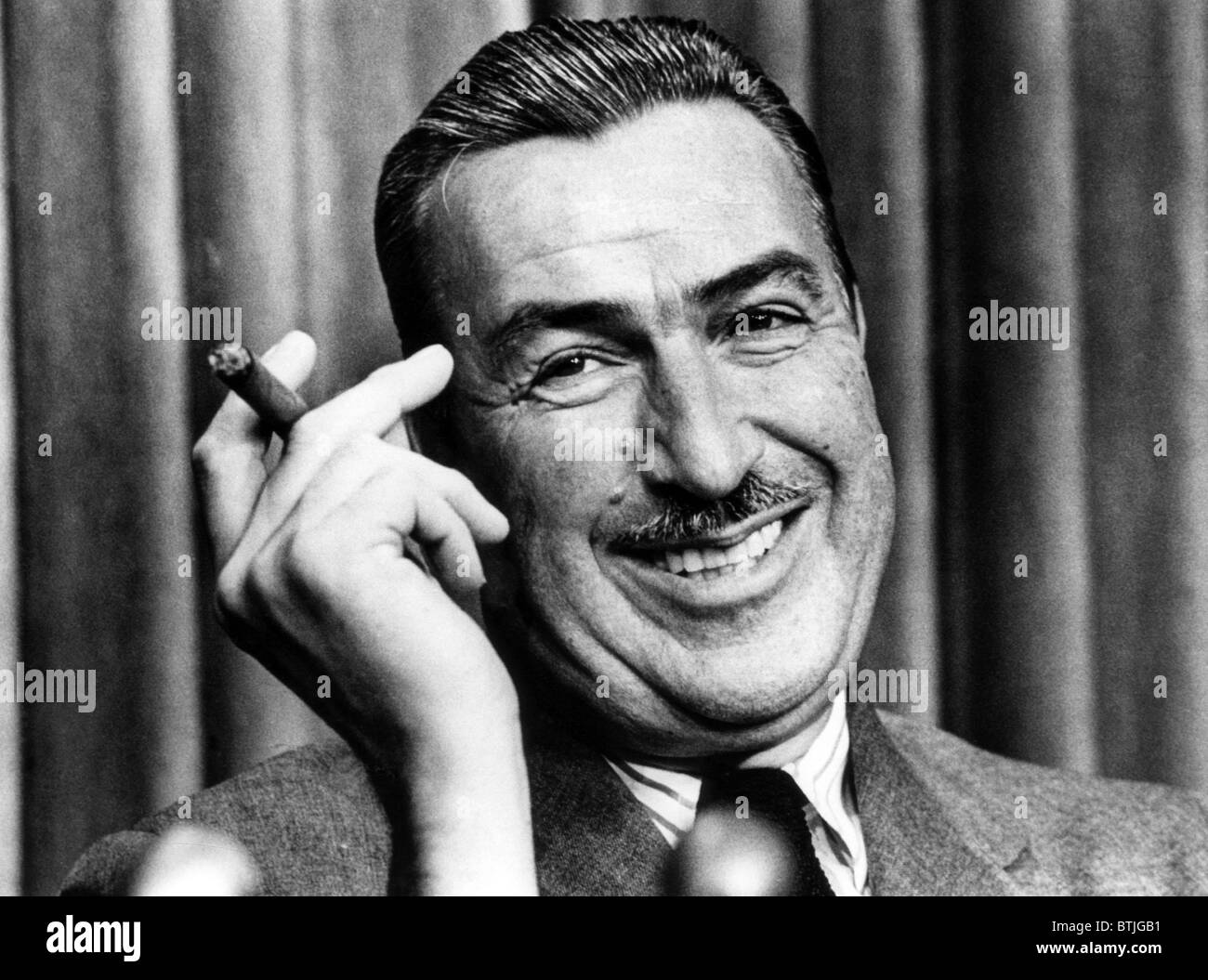
Adam Clayton Powell Jr.
Also known as: Mr. Civil Rights, Playboy Politician
Birthday
November 29, 1908
Birth Sign
Sagittarius
Birthplace
New Haven, Connecticut
Age
Died at 63
Height
6 ft 0 in (183 cm)
About
Adam Clayton Powell Jr. was an American politician, Baptist pastor, and journalist who reshaped civil rights from his Harlem base. Born in New Haven, Connecticut, he grew up in New York City, where his father led the Abyssinian Baptist Church. Powell took over that pulpit in 1937, using it as a platform for activism. He organized rent strikes, fought for jobs for Black workers, and demanded equal treatment in public spaces. His blend of moral authority and political savvy carried him into the U.S. House of Representatives in 1945, making him the first Black congressman from New York and the first from the Northeast. He held the seat for 26 years, becoming one of the most influential Democrats in the country.
Powell's power peaked in 1961, when he took over the House Education and Labor Committee, the most senior position an African American had ever held in Congress. From that chair, he drove landmark legislation under presidents John F. Kennedy and Lyndon B. Johnson, including the minimum wage increase, the creation of Head Start, and key parts of the Great Society. He also used his international platform to push U.S. presidents toward supporting decolonization in Africa and Asia. Powell was a constant voice for racial and economic justice, but his career hit turbulence in 1967 when corruption allegations led the House to exclude him from his seat. He fought back, winning reelection and regaining his place after the Supreme Court's 1969 decision in Powell v. McCormack, which affirmed that the House could not expel a member who met constitutional qualifications.
Powell's final campaign ended in 1970, when he lost the Democratic primary to Charles Rangel. He stepped away from electoral politics and spent his last years in Bimini, Bahamas, where he died on April 4, 1972, at age 63. His legacy is a mix of legislative achievement, civil rights leadership, and a defiant style that made him a hero to many and a target for critics. Powell's life showed how one person could channel faith, media, and political muscle to challenge a system that often resisted change.
Early Life & Background
Adam Clayton Powell Jr. was born on November 29, 1908, in New Haven, Connecticut, to Adam Clayton Powell Sr., pastor of the Abyssinian Baptist Church, and Mattie Fletcher Schaffer. His father led one of the largest and most influential Black congregations in America, and the family moved to New York City when Powell was young. Growing up in Harlem, Powell attended Townsend Harris High School, a prestigious public school, where he was one of the few Black students. He faced racial discrimination that fueled his lifelong activism.
Powell enrolled at Colgate University, graduating in 1930 with a bachelor's degree. He was one of only a handful of Black students on campus and experienced racism firsthand, which hardened his resolve. He went on to earn a master's degree in religious education from Columbia University in 1932. That same year, he was ordained as a Baptist minister and joined his father at Abyssinian Baptist Church as assistant pastor and business manager.
During the Great Depression, Powell organized the church's community programs, including a soup kitchen, employment bureau, and health clinic. His first major activism campaign came in the 1930s when he led "Don't Buy Where You Can't Work" boycotts against Harlem businesses that refused to hire Black workers, successfully forcing many to change their policies. In 1937, he succeeded his father as pastor of Abyssinian Baptist Church, a position he held for the rest of his life. He also founded the newspaper The People's Voice in 1942, using it as a platform for his political and social views.
Career Growth
Powell's political career began in earnest when he was elected to the New York City Council in 1941, becoming the first Black council member in the city's history. In 1944, he won election to the U.S. House of Representatives, representing Harlem's 22nd Congressional District, making him the first Black congressman from New York and the first from the Northeast. He took office in January 1945 and served for 26 consecutive years.
In 1955, Powell introduced a "Powell Amendment" to federal education bills, prohibiting federal funds to segregated schools, a tactic he used repeatedly to advance civil rights. In 1956, he defeated a primary challenge from a candidate supported by Tammany Hall, solidifying his independent political base. In 1961, he became chairman of the House Education and Labor Committee, the most powerful position ever held by an African American in Congress at that time. As chairman, he drove landmark legislation including the minimum wage increase, the Manpower Development and Training Act, the creation of Head Start, and key elements of President Lyndon B. Johnson's Great Society programs.
In 1963, Powell led a delegation of Black leaders to meet with President John F. Kennedy, and later pushed presidents toward supporting decolonization in Africa and Asia. In 1967, the House voted to exclude him from his seat over allegations of misuse of committee funds and defiance of a contempt citation from New York courts. He won a special election in 1968 to reclaim his seat but was again denied seating. In 1969, the U.S. Supreme Court ruled in Powell v. McCormack that the House could not exclude a member who met constitutional qualifications, and Powell was reinstated. In 1970, he lost the Democratic primary to Charles Rangel, ending his congressional career.
Career Timeline
Public Image & Style
Powell cultivated a distinctive public image as a charismatic, defiant, and stylish leader. He was known as "Mr. Civil Rights" for his uncompromising stance on racial equality. His signature style included impeccably tailored suits, a confident swagger, and a booming oratorical voice that filled both the pulpit and the House chamber. Media portrayals ranged from admiring to critical. During his lifetime, he was alternately celebrated as a civil rights pioneer and criticized as a "Playboy Politician" who indulged in luxury and scandal. Scholarly assessments have increasingly emphasized his legislative achievements over his personal controversies. Powell's tone was characterized by moral authority combined with political pragmatism. He framed civil rights as both a moral imperative and a practical political goal, using his position to advance both.
Fame & Fandom
Adam Clayton Powell Jr. never cultivated a modern fanbase with official names, ritualistic gatherings, or viral social media campaigns. His legacy rests not in the fervor of pop culture enthusiasts but in the enduring study of his life by historians, civil rights activists, and Harlem community members who view him as a foundational pillar of the struggle for equality. This group operates without formal organization or the interactive dynamics typical of celebrity fandoms, preserving his memory through academic inquiry rather than chart pushes or billboard tributes. The stories surrounding him are those of political audacity and legislative power, cemented by verified historical events that have become central to American political mythology. While no specific terminology exists for his supporters, his influence remains palpable in the institutional commemoration of his work. His standing in global cultural memory is now quantified by authoritative metrics that track attention across media coverage, search trends, and consumption signals worldwide. Adam Clayton Powell Jr. is currently the 60th most famous person in Pastors, a placement holding steady from the previous cycle according to the iFANN Global Fame Rankings.
Interesting Facts and Legends
Powell was the first Black person elected to the New York City Council in 1941. A master of parliamentary procedure, he frequently used it to stall or advance legislation strategically. His "Powell Amendment" strategy of attaching anti-segregation riders to education bills, used from 1955 onward, served as a precursor to later civil rights legislation. He survived a 1958 federal indictment for income tax evasion, winning acquittal in 1960. Powell's flamboyant style included expensive suits, international travel, and a well-publicized lifestyle that both attracted supporters and alienated critics. He was one of the first Black politicians to use media effectively, leveraging his newspaper and radio appearances to build a powerful political machine. The Supreme Court case Powell v. McCormack (1969) remains a landmark constitutional law case taught in law schools today. Beyond these facts, a defining legend surrounds his dramatic physical removal from the House of Representatives in 1967. After being found guilty of contempt of Congress, Powell attempted to enter the Capitol building only to be pushed back by officers while shouting about making the place. Another recurring story involves his tenure as Chairman of the House Education and Labor Committee, marking the first time an African American chaired a major congressional committee. The mystery of the "disappearance of Miss Scott" also adds intrigue to his personal life, though specifics remain less documented than his political battles.
Notable Quotes
“There comes a time when a man has to stand up and be counted.”
“I am the only living politician who has never been defeated and never compromised.”
“Press on, regardless.”
Family & Personal Life
Powell was the son of Adam Clayton Powell Sr., pastor of the Abyssinian Baptist Church, and Mattie Fletcher Schaffer. His father was of African, white, and Native American descent, while his mother was of German and Native American descent, giving Powell a mixed-race heritage that shaped his complex identity. He had no siblings mentioned in the research. Powell was married three times: to Isabel Washington (1933–1945), Hazel Scott (1945–1960), and Yvette Diago Flores (1960–1965). He had two sons: Adam Clayton Powell III, born in 1946 with Hazel Scott, and Adam Clayton Powell IV, born in 1962 with Yvette Diago Flores. His sons have been the primary stewards of his legacy. Powell was buried in the cemetery of Abyssinian Baptist Church in Harlem.
Notable Connections
Powell's life intersected with many key figures of his era. His father, Adam Clayton Powell Sr., preceded him as pastor of Abyssinian Baptist Church. His second wife, Hazel Scott, was a renowned jazz pianist and singer. Politically, he worked closely with presidents John F. Kennedy and Lyndon B. Johnson, advancing their legislative agendas as committee chairman. His political rival, Charles Rangel, defeated him in the 1970 primary. His sons, Adam Clayton Powell III and Adam Clayton Powell IV, have preserved his legacy.
Relationships & Dating History
Powell's personal life was as public as his political career. He married three times. His first wife was Isabel Washington, a singer and actress, whom he married in 1933. The marriage ended in divorce in 1945 as Powell's political career was ascending and his relationship with Hazel Scott began.
His second marriage, to jazz pianist and singer Hazel Scott, took place in August 1945 in a high-profile ceremony that made them one of the most famous Black couples in America. They had one son, Adam Clayton Powell III, born in 1946. The couple divorced in 1960 after years of public attention on Powell's infidelities.
His third wife was Yvette Diago Flores, a Puerto Rican-born woman, whom he married in 1960. They had one son, Adam Clayton Powell IV, born in 1962, and divorced in 1965. At the time of his death in 1972, Powell was not married, having divorced his third wife years earlier. He spent his final years in Bimini, Bahamas, largely withdrawn from public life.
- MarriedIsabel Washington1933 - 1945Powell's first wife, a singer and actress; marriage ended in divorce as his political career rose.
- MarriedHazel Scott1945 - 1960Renowned jazz pianist and singer; high-profile marriage that produced son Adam Clayton Powell III.
- MarriedYvette Diago Flores1960 - 1965Puerto Rican-born third wife; mother of Adam Clayton Powell IV.
Death & Aftermath
Died
April 4, 1972 (aged 63)
Death Place
Miami, Florida
Cause of Death
Unknown
Adam Clayton Powell Jr., the Baptist pastor, journalist, and U.S. Representative for Harlem's 18th congressional district, died on April 4, 1972, at the age of 63 in Miami, Florida. While historical records confirm this date and location as the definitive account of his passing, specific details regarding the exact medical facility, the official cause of death established by a coroner or autopsy, and the circumstances of his final days remain unrecorded in the available sources. The historical archive does not specify whether a hospital statement, family statement, or medical examiner ruling was issued to the public, nor does it describe his last public appearance prior to this event.
The specifics of his funeral or memorial service, including the date, location, nature, notable attendees, performances, and burial or cremation details, are not included in the provided search results. Public reaction to his death is not explicitly detailed in the snippets regarding immediate vigils or moments of silence at the time of his passing. Instead, his legacy has been preserved through enduring cultural markers and later scholarly attention. His name remains integral to New York City geography, with Adam Clayton Powell Jr. Boulevard in Harlem serving as a living landmark.
Modern commemorations indicate a lasting legacy, such as video tributes from the National Action Network that celebrate what would have been his 117th birthday. Recent press coverage highlighted new works like the book With Love From Harlem, which explores his marriage to Hazel Scott. Adam Clayton Powell Jr. is remembered as a pioneering civil rights leader and the first African American elected to Congress from New York. Various foundations or scholarships may exist in his name in broader historical contexts, though the specific search results do not list any dedicated funds, awards, hall-of-fame inductions, or statements by the family regarding his estate.
Net Worth (Estate Value)
$5 Million
iFANN Editorial Team estimate
Powell died in 1972, so his net worth is best understood through his estate and legacy. During his career, he earned a congressional salary of approximately $30,000 per year in the 1960s, plus his pastoral salary from Abyssinian Baptist Church. He was known for a lavish lifestyle, earning the nickname "The Playboy Politician" for his taste for travel, luxury, and women. He was accused of misusing approximately $40,000 in committee funds, which led to his 1967 exclusion from the House. His estate's primary value lies in his historical legacy, papers, and intellectual property, managed by archival institutions including the Schomburg Center for Research in Black Culture and the Library of Congress. The estate continues to generate revenue through book royalties, such as his autobiography Adam by Adam (1971), documentary licensing, and archival usage fees. His sons, Adam Clayton Powell III and Adam Clayton Powell IV, have been the primary stewards of his legacy. Per iFANN's editorial analysis, as of 2026, the estate's estimated value is around $5 Million.
Awards & Accolades
View 6 records, honours and achievementsKnown For
U.S. House of Representatives
1945-1970 · Congressman
House Education and Labor Committee
1961-1967 · Chairman
Powell v. McCormack
1969 · Plaintiff
Keywords
Sources
Quick Facts
- Profession
- politician, pastor, journalist
- Born
- November 29, 1908
- Birthplace
- New Haven, Connecticut
- Died
- April 4, 1972
- Death Place
- Miami, Florida
- Gender
- Male
- Spouse
- Isabel Washington, Hazel Scott, Yvette Diago Flores
- Birth Sign
- Sagittarius
- Height
- 6 ft 0 in (183 cm)
- Education
- Colgate University, Columbia University
Personal Details
- Full Name
- Adam Clayton Powell Jr.
- Height
- 6 ft 0 in (183 cm)
- Spouse
- Isabel Washington Powell, Hazel Scott, Yvette Diago Flores
- Children
- Adam Clayton Powell III, Adam Clayton Powell IV
- Education
- Colgate University (BA), Columbia University (MA)
Frequently Asked Questions
Was Adam Clayton Powell Jr. the first Black congressman?
What did Adam Clayton Powell Jr. accomplish?
Why was Adam Clayton Powell Jr. expelled from Congress?
Who was Adam Clayton Powell Jr.'s wife?
How did Adam Clayton Powell Jr. die?
Similar People
Join the community
fans discussing