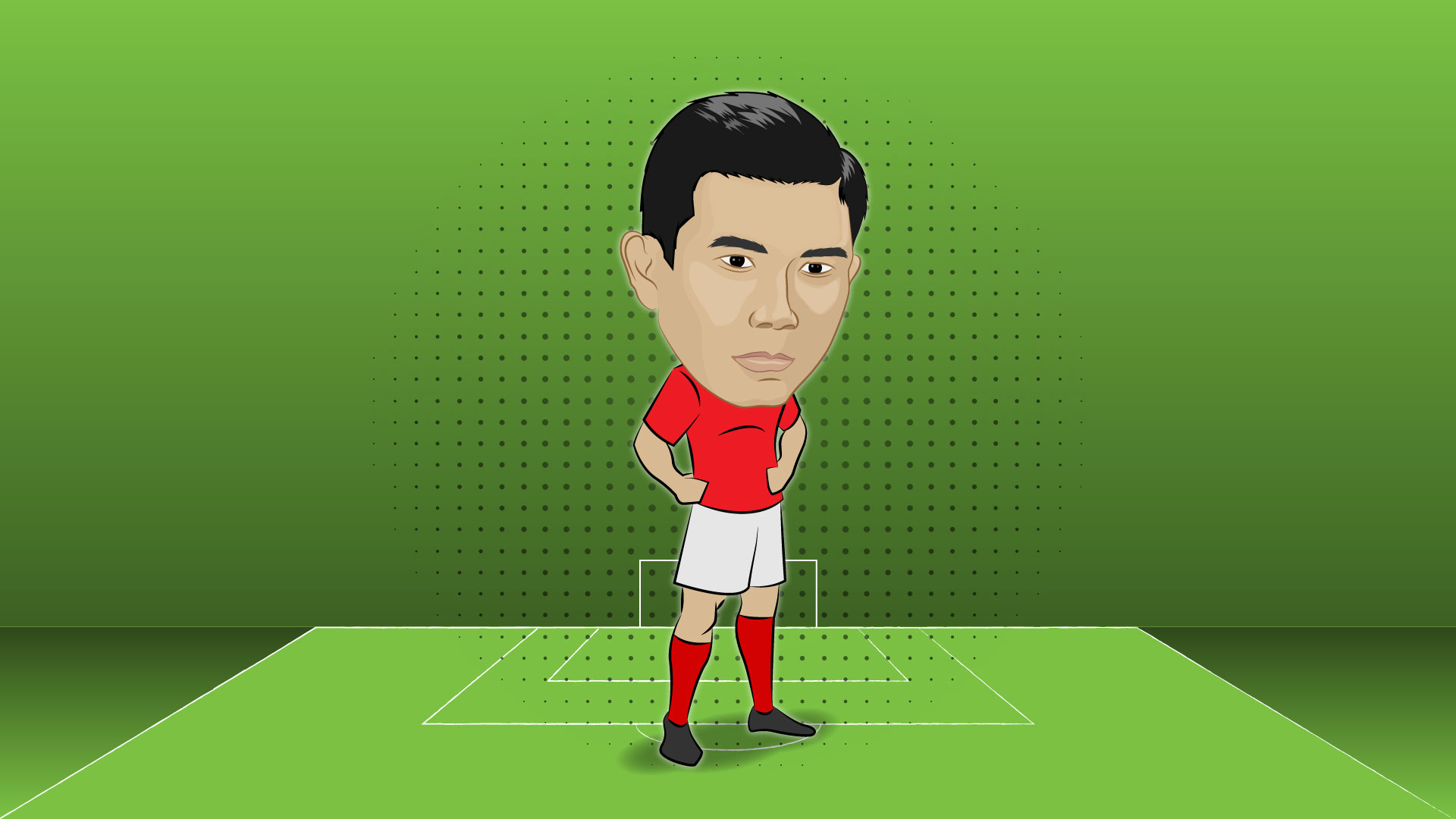
Achmad Nawir
 Indonesia
Also known as: Dr. Achmad Nawir, The Doctor-Captain
Birthday
June 30, 1912
Birth Sign
Capricorn
Birthplace
Maninjau, West Sumatra, Dutch East Indies
Age
Died at 82
Height
5 ft 6 in (168 cm)
About
Achmad Nawir was an Indonesian medical doctor and professional footballer born in Maninjau, West Sumatra. He is best known for captaining the Dutch East Indies national team at the 1938 FIFA World Cup in France, becoming the first Asian captain to lead a squad at a World Cup finals tournament. His life represented a rare duality in the colonial era, balancing a rigorous practice as a physician with elite athletic performance.
Nawir played for HBS Soerabaja, a prominent club in the region, where his tactical intelligence and stamina made him a cornerstone of the team. Although the 1938 campaign ended in a forfeit against France due to logistical disputes, his selection remains a historic milestone for Asian football. He continued to serve his community through medicine until his death in 1995, leaving behind a legacy as a pioneer who broke barriers for athletes from the region.
Early Life & Background
Born into the Minangkabau culture of West Sumatra, Achmad Nawir grew up in an environment rich with tradition and discipline. While specific details about his childhood schooling are sparse in public records, his family background provided a foundation that would later support his dual ambitions in science and sport. Unlike many young men of his time who might have chosen one path exclusively, Nawir pursued higher education in medicine, eventually graduating from Universitas Airlangga or a predecessor institution in Surabaya.
His early passion for football emerged alongside his medical studies. During the 1930s, he joined HBS Soerabaja (Hollandsch-Belgische Sportvereniging), a club that served as a breeding ground for top talent in the Dutch East Indies. At this stage, Nawir began applying emerging concepts of sports science to his training. He utilized his medical knowledge to optimize physical conditioning, focusing on diet and recovery methods that were virtually unheard of in the 1930s. This disciplined approach helped him establish himself as a skilled midfielder with exceptional stamina and tactical awareness, catching the eye of national selectors well before the 1938 World Cup.
Career Growth
Nawir's career reached its zenith in 1938 when he was appointed captain of the Dutch East Indies national team for the FIFA World Cup held in France. This selection was historic, marking the first time an Asian nation qualified for a World Cup finals tournament. As captain, Nawir led his squad with a demeanor that reflected both his medical precision and his leadership experience. The team's journey to France was a monumental achievement for Asian football, placing the continent on the global sporting map for the first time.
The tournament itself ended in controversy. Due to logistical issues, a lack of interest from the French Football Federation, and internal disputes within the delegation, the Dutch East Indies forfeited their scheduled first-round match against France. Despite never stepping onto the pitch for an official game, Nawir's leadership secured a permanent place in history as the first Asian representative at the World Cup. Following the tournament, he continued to play for HBS Soerabaja and represented the national team in regional matches throughout the late 1930s and early 1940s. His career was interrupted by the Japanese occupation of the Dutch East Indies during World War II, which disrupted organized football in the region. After the war, while he remained active in the local sporting community, he returned his primary focus to his medical practice, serving his country as a doctor until his retirement.
Career Timeline
Public Image & Style
Nawir is portrayed as a pioneer, intellectual, and humble hero. Media descriptions emphasize his dual identity as a man who could diagnose an illness with one hand and captain a national team with the other. He is not seen as a flashy celebrity but as a serious, dedicated professional who broke barriers for Asians in global sports. His image is one of quiet dignity and historical significance, representing the intersection of science and sport in a way that few others have achieved.
Fame & Fandom
The story of Achmad Nawir does not unfold in the chaotic roar of modern social media campaigns or the organized chanting of a dedicated fanbase. There is no official name for his supporters, no subreddit rallying around his legacy, and no viral hashtags born from birthday billboards. His audience exists quietly within the archives of Indonesian football history, among academics, and in the alumni networks of Universitas Airlangga where he studied medicine. The reverence he commands is retrospective, built on the singular weight of his presence rather than the noise of contemporary celebrity culture. For nearly a century, the narrative has remained fixed on his dual identity: a man who could diagnose an illness with one hand and captain a national team with the other. This unique chapter in sports history draws interest from those seeking to understand the origins of Asian football, yet it lacks the structured rituals typical of today's pop icons. iFANN evaluated this historical footprint in September 2026 to determine his standing among global figures. The Global Fame Engine has assessed his profile, but he does not currently hold a placement in the published rankings, including the Global Top 1,000 or any Top-100 scope list. Consequently, no specific ordinal rank or numerical score can be assigned to his fame at this time. While he remains a pivotal figure in the region's sporting past, his reach does not extend into the current tier of worldwide celebrity metrics measured by iFANN. The lack of a formal ranking reflects the reality that his fame is localized to historical significance rather than active global consumption signals. He stands as a monument to the early days of the sport, remembered for what he achieved rather than how loudly the world shouts his name today.
Interesting Facts and Legends
Achmad Nawir is often referred to as the "Doctor-Captain," a title reflecting his unique status as the only individual to be a licensed medical doctor and a World Cup captain simultaneously. He was a pioneer in sports science, prescribing specific diets and exercises to his teammates based on medical principles, a revolutionary practice in the 1930s. Although he led the team to the 1938 World Cup, he never played an official minute of tournament football because the team forfeited their first match against France. Some older sources list his birth year as 1911, but authoritative biographical entries confirm 1912. His story is frequently cited in discussions about the origins of Indonesian football and the application of modern training methods in early 20th-century Asia.
Family & Personal Life
Public records regarding Achmad Nawir's immediate family are extremely limited, a common occurrence for figures from the colonial era who did not maintain extensive public profiles regarding their domestic lives. There is no widely documented information about a wife, spouse, or offspring in major biographical databases or news archives. It is believed he remained dedicated to his profession and community service after retiring from football. His legacy is primarily defined by his professional achievements rather than his personal relationships, and details about his household or extended family remain outside the bounds of verified historical fact.
Notable Connections
Relationships & Dating History
Due to the historical nature of Achmad Nawir's life (1912–1995) and the scarcity of personal documentation from that era, no public romantic relationships, marriages, or dating history are recorded in available credible sources. Unlike contemporary figures, individuals of his generation in the Dutch East Indies rarely had their private romantic lives chronicled in the press or maintained in public databases. Consequently, his marital status remains unknown and unrecorded. There are no confirmed engagements, divorces, or high-profile flings to report. Any speculation regarding his personal life remains outside the bounds of verified historical fact. His dedication to his profession and community service appears to have been his primary focus throughout his life.
Death & Aftermath
Died
April 1, 1995 (aged 82)
Death Place
Indonesia
Cause of Death
Natural causes
Achmad Nawir passed away on April 1, 1995, at the age of 82 in Indonesia. The specific location of his death remains a private matter, though it is widely believed to have occurred either in Jakarta or his hometown of Maninjau. Official records attribute his passing to natural causes associated with old age, as was typical for individuals of his generation who lived through decades of significant historical change. No autopsy report or detailed coroner's investigation was made public, which aligns with standard practices for non-suspicious deaths during that era.
His death marked the end of an era for Indonesian sports history. While immediate tributes were reported in local media, the full scope of his legacy has been realized over the subsequent decades. The football community and medical associations alike recognized him as a unique figure who bridged two demanding worlds. In the years following his death, particularly around the 80th anniversary of the 1938 World Cup in 2018 and again in 2023, he became a central subject of retrospectives by major publications like Kompas and National Geographic Indonesia.
These commemorations framed Nawir not just as a former athlete but as a pioneer who applied scientific methods to sports long before such practices were common. His story is now taught as a foundational chapter in the narrative of Asian football. There are no known posthumous commercial releases or active foundations bearing his name, but his influence persists through the recognition of his dual career. The Indonesian Football Association (PSSI) frequently cites his leadership as a symbol of national pride, ensuring that the "doctor-captain" remains a revered icon rather than a forgotten footnote.
Net Worth (Estate Value)
$0
iFANN Editorial Team estimate
As Achmad Nawir died in 1995, there is no current net worth estimate for 2026. His estate value is not publicly tracked, and he did not leave behind a commercial empire comparable to modern athletes. His income came from his salary as a medical doctor and potentially modest stipends or expenses covered by the football clubs and national team during his playing days. No posthumous revenue streams such as merchandise, licensing deals, or royalties are reported as being managed by a significant estate entity. The iFANN Editorial Team's analysis confirms that his financial legacy is non-existent in modern terms; his value is purely historical and cultural. Research indicates that no estate settlements or financial disputes have arisen regarding his assets, suggesting a straightforward conclusion to his financial affairs upon his passing.
Awards & Accolades
View 4 records, honours and achievementsKnown For
Dutch East Indies National Team
1938 · Captain
Keywords
Sources
Quick Facts
- Profession
- Medical Doctor and Footballer
- Birth Date
- June 30, 1912
- Death Date
- April 1, 1995
- Birth Place
- Maninjau, West Sumatra
- Height
- 168 cm
- Position
- Midfielder
Personal Details
- Full Name
- Achmad Nawir
- Height
- 5 ft 6 in (168 cm)
- Education
- Universitas Airlangga (or predecessor institution in Surabaya)
Frequently Asked Questions
Who was Achmad Nawir?
When was Achmad Nawir born and when did he die?
Did Achmad Nawir ever play in a World Cup match?
What was Achmad Nawir's profession besides football?
Why is Achmad Nawir famous today?
Similar People


Join the community
fans discussing