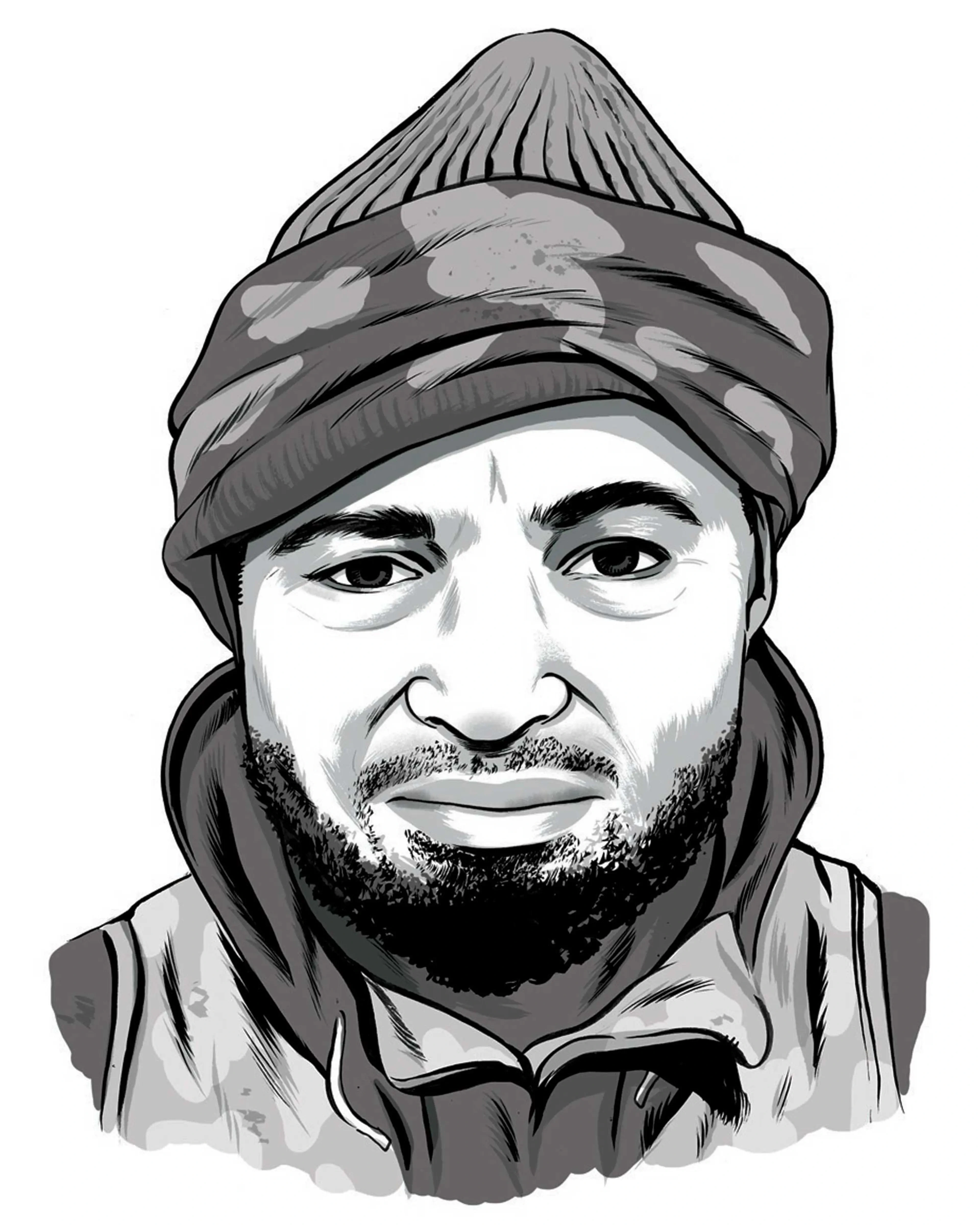
Abubakar Shekau
 Nigeria
Also known as: Darul Akeem wa Zamunda Tawheed, Darul Tawheed
Birthday
March 23, 1973
Birth Sign
Sagittarius
Birthplace
Shekau, Borno State, Nigeria
Age
Died at 48
About
Abubakar Shekau was a Nigerian militant who led the extremist organization Boko Haram from 2009 until his death in 2021. Born in the village of Shekau in northeastern Nigeria, he rose through the ranks to become the group's most feared commander. He initially served as the deputy to Mohammed Yusuf but assumed full leadership after Yusuf was killed by police in July 2009. Under Shekau's command, the insurgency escalated into one of the deadliest conflicts in modern African history, characterized by widespread bombings, mass kidnappings, and the systematic use of child soldiers.
His tenure was defined by extreme brutality and a volatile relationship with the Islamic State of Iraq and the Levant (ISIL). While he pledged allegiance to ISIL in 2015, internal disagreements over tactics and leadership eventually led to a violent split in 2016. This fracture created a civil war within the insurgency, pitting Shekau's hardline faction against the more strategically focused Islamic State West Africa Province (ISWAP). Despite multiple official announcements of his death between 2015 and 2020, Shekau frequently reappeared in audio and video messages, cultivating a mythos of invincibility that kept him at the center of global security concerns for over a decade.
Early Life & Background
Abubakar Shekau was born on March 23, 1973, in the small town of Shekau, located in the Borno State of northeastern Nigeria. The region where he grew up has long been marked by poverty, political instability, and a deep-seated distrust of the federal government. These conditions created fertile ground for radicalization among local youth. Before he became a household name for all the wrong reasons, Shekau was known locally as a strict and fiery preacher. He adhered to a rigid interpretation of Sharia law and quickly gained a reputation for his uncompromising stance on religious orthodoxy.
He joined the nascent Boko Haram movement when it was founded by Mohammed Yusuf in the early 2000s. Initially operating under Yusuf's direction, Shekau served as his deputy and military commander. Unlike many other figures who sought legitimacy or political negotiation, Shekau pushed for immediate and total violence against the Nigerian state. His role involved training recruits and organizing attacks against police stations and government buildings. By the time Yusuf was arrested and killed in custody in July 2009, Shekau had already established himself as the group's most aggressive operational leader. His survival of the subsequent police crackdown allowed him to immediately seize control of the splinter faction that would become Boko Haram.
Career Growth
Following the death of Mohammed Yusuf in July 2009, Abubakar Shekau took charge of Boko Haram and immediately launched a campaign of terror across northern Nigeria. His leadership marked a sharp escalation in violence compared to the group's earlier years. In 2010 and 2011, he orchestrated a wave of suicide bombings targeting Western-style institutions, police stations, and civilian gatherings in cities like Abuja and Kano. The group became infamous for its recruitment of children and its use of young women as bombers.
A defining moment occurred in April 2014 when Shekau ordered the kidnapping of 276 schoolgirls from Chibok. The event triggered a massive international outcry and the #BringBackOurGirls campaign. Shekau released videos claiming the girls would be sold into slavery or forced marriage, cementing his status as a global pariah. In May 2015, he publicly pledged allegiance to the Islamic State of Iraq and the Levant (ISIL), renaming his faction the Islamic State West Africa Province. However, this alliance was short-lived.
By 2016, tensions with central ISIL leadership reached a breaking point. They attempted to replace Shekau due to his indiscriminate killing of Muslim civilians, which violated their strategic goals. Shekau rejected their order, leading to a violent schism. He retained control of the core Boko Haram faction while a rival group formed ISWAP under former lieutenant Abu Musab al-Barnawi. For the next five years, Shekau led a fractured and increasingly isolated faction, facing constant pressure from both the Nigerian military and ISWAP. Despite numerous reports of his death, he continued to issue propaganda until his final days.
Career Timeline
Public Image & Style
Shekau cultivated a persona of religious zealotry and unyielding defiance. His public appearances were limited to grainy audio recordings and low-quality videos where he often wore traditional clerical robes and a beard. His rhetoric was consistently apocalyptic, framing the conflict as a holy war against the Nigerian state and the West. Media outlets portrayed him as the face of extremism in Africa, a figure whose brutality knew no bounds. He was known for his erratic behavior and willingness to target fellow Muslims, which alienated him from some allies within the broader jihadist movement. His image was one of a man who refused to die, surviving every attempt to eliminate him and using each resurrection to taunt his enemies.
Fame & Fandom
Abubakar Shekau commanded a terrifying following rather than a fanbase. There is no formal name for his supporters, nor any organized community of enthusiasts celebrating his life or legacy. The attention he drew was ideological and operational, rooted in the brutal machinery of Boko Haram. His propaganda videos served as recruitment tools, spreading fear across Nigeria and beyond, but these were acts of war, not fan interactions. No birthday billboards, charity drives, or streaming campaigns ever emerged to honor him. Instead, his reputation became a grim legend defined by violence and survival. He cultivated an image of invincibility through repeated death hoaxes, taunting Nigerian authorities whenever they announced his demise. This pattern of appearing alive after official reports of his death created a mythos that fascinated security analysts and journalists alike. The global media frenzy surrounding his final days only deepened this strange fascination. Despite the darkness of his actions, his name remains a significant marker in the landscape of modern extremism. Abubakar Shekau is currently the 42nd most famous person from Nigeria, according to the iFANN Global Fame Rankings.
Interesting Facts and Legends
Abubakar Shekau earned a notorious nickname among Nigerians for surviving seven different official death announcements between 2015 and 2020. Each time authorities declared him dead, he would reappear in an audio or video message to prove otherwise, fueling speculation that he used doubles or secret tunnels to evade capture. This pattern of survival created a legend of invincibility that persisted until his actual death in 2021. The single most defining incident of his reign was the 2014 Chibok schoolgirl abduction. In a chilling video, he stated the girls would be sold into slavery, a statement that galvanized global outrage and drew attention to the crisis in Northeast Nigeria.
Shortly before his death, Shekau released a rare audio message that differed from his usual propaganda. Scholars described it as a reflection on his impending doom and the state of the insurgency. Recent reports from 2026 suggest that one of his sons has emerged within the ranks of Boko Haram, hinting at a potential dynastic continuation of the insurgency. Unlike many high-profile figures, Shekau never maintained a public image centered on family life or celebrity status. Intelligence reports indicate he may have had children, but specific details regarding his wife or the names of any children remain classified or unconfirmed by credible open-source reporting.
Notable Quotes
“We will continue to fight until the last drop of blood.”
“The girls will be sold into slavery if they are not converted.”
Family & Personal Life
Abubakar Shekau was a private individual regarding his personal relationships. There is no public record of marriages, engagements, or romantic partners. Unlike many high-profile figures, he did not maintain a public image centered on family life or celebrity status. Intelligence reports suggest he may have had children, and recent 2026 reports indicate that one of his sons has emerged within the ranks of Boko Haram, suggesting a potential dynastic continuation of the insurgency. However, specific details regarding his wife or the names of any children remain classified or unconfirmed by credible open-source reporting. Consequently, there is no dating history to report; he remained single or kept his family life entirely out of the public eye throughout his life.
Notable Connections
Abubakar Shekau is primarily associated with the extremist group Boko Haram, which he led for over a decade. He was also linked to the Islamic State of Iraq and the Levant (ISIL) through his brief pledge of allegiance in 2015. His operations were deeply connected to the Lake Chad Basin region, where his forces conducted raids across Nigeria, Niger, Chad, and Cameroon. He worked alongside various commanders within the insurgency, including those who later broke away to form the Islamic State West Africa Province (ISWAP).
Relationships & Dating History
Abubakar Shekau was a private individual regarding his personal relationships. There is no public record of marriages, engagements, or romantic partners. Unlike many high-profile figures, he did not maintain a public image centered on family life or celebrity status. Intelligence reports suggest he may have had children, and recent 2026 reports indicate that one of his sons has emerged within the ranks of Boko Haram, suggesting a potential dynastic continuation of the insurgency. However, specific details regarding his wife or the names of any children remain classified or unconfirmed by credible open-source reporting. Consequently, there is no dating history to report; he remained single or kept his family life entirely out of the public eye throughout his life.
Death & Aftermath
Died
May 19, 2021 (aged 48)
Death Place
Sambisa Forest, Nigeria
Cause of Death
Suicide by self-detonation
Abubakar Shekau, the Nigerian militant leader of Boko Haram, died on May 19, 2021, at approximately 3:00 PM local time. He was born on March 23, 1973, making him 48 years old at the time of his death. The circumstances of his death were confirmed by multiple government and intelligence sources as a suicide detonation rather than a combat kill or natural cause. According to an internal report from Nigeria's National Intelligence Agency released shortly after the incident, Shekau detonated explosives strapped to his body when rival fighters from the Islamic State West Africa Province (ISWAP), a splinter group within Boko Haram, attempted to capture or kill him in the Sambisa Forest region of northeastern Nigeria.
This account was corroborated by Chad's President Idriss Déby, who announced that Shekau had been killed in an explosion during a confrontation with ISWAP forces, and by African Union officials who cited similar details regarding the location and nature of the event. The specific place of death is widely reported as the Sambisa Forest, near the border of Nigeria and Chad, though exact coordinates have not been publicly disclosed due to ongoing security operations. His final public appearance was an audio message released on May 15, 2021, just four days before his death, in which he addressed his followers, warned against betrayal, and reiterated his loyalty to ISIS while criticizing ISWAP leaders for what he described as heresy and disloyalty.
This message served as his last known communication before the fatal confrontation. His death was met with official relief by the Nigerian government and international security agencies. The Islamic State West Africa Province (ISWAP) subsequently assumed control of the faction previously led by Shekau, marking a strategic shift in the group's operations without any formal acknowledgment of Shekau's legacy beyond his role in the group's history.
Net Worth (Estate Value)
$0
iFANN Editorial Team estimate
As a militant leader operating outside the formal economy, Abubakar Shekau did not accumulate personal wealth in the traditional sense. His financial resources came from extortion, looting, and illicit trade within the territories controlled by Boko Haram. Unlike celebrities or business tycoons, he did not own real estate, stocks, or luxury assets. The group's funds were used to purchase weapons, pay fighters, and sustain the insurgency. Following his death in 2021, the value of his personal estate remains negligible. Any assets he held were likely seized by military forces or lost during the chaos of his final days. The financial trajectory of his faction shifted significantly after his death, with ISWAP taking over the majority of revenue streams from taxation and kidnapping ransoms.
Awards & Accolades
View 1 records, honours and achievementsKnown For
Boko Haram Insurgency
2009 · Leader
Chibok Kidnapping
2014 · Commander
Keywords
Sources
Quick Facts
- Profession
- military personnel
- Born
- March 23, 1973
- Birthplace
- Shekau, Borno State, Nigeria
- Died
- May 19, 2021
- Death Place
- Sambisa Forest, Nigeria
- Gender
- Male
- Birth Sign
- Sagittarius
Personal Details
- Full Name
- Abubakar Mohammed Shekau
Frequently Asked Questions
Who was Abubakar Shekau?
How did Abubakar Shekau die?
Was Abubakar Shekau really dead?
Did Abubakar Shekau have children?
What happened to Boko Haram after Shekau's death?
Similar People
Join the community
fans discussing