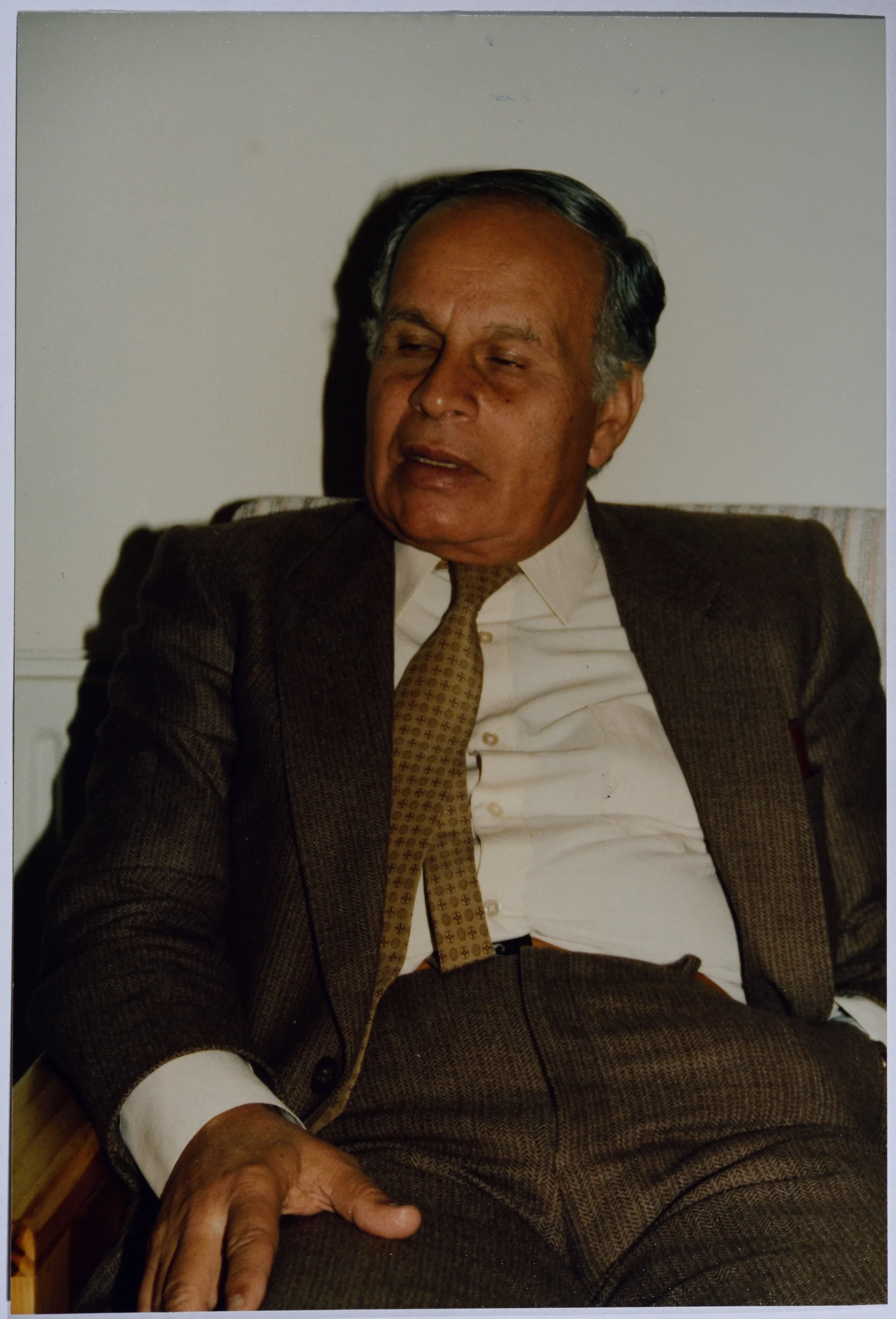
Abu Taher
 Bangladesh
politician•military personnel•soldier
Also known as: Colonel Abu Taher, Mohammad Abu Taher
Birthday
November 14, 1938
Birth Sign
Scorpio
Birthplace
Badarpur, Assam, India
Age
Died at 37
About
Mohammad Abu Taher was a Bangladeshi military officer and left-wing politician, remembered as a war hero and revolutionary. Born on 14 November 1938 in Badarpur, then in Assam, India, he served in the Pakistan Army before defecting to the Mukti Bahini during the 1971 Bangladesh Liberation War. As sector commander of Sector 11, he led guerrilla operations and earned the Bir Uttom, Bangladesh's second-highest gallantry award. After independence, he joined the Jatiya Samajtantrik Dal and orchestrated a coup in November 1975 that freed Ziaur Rahman from house arrest. He was executed the following year, but his trial was declared illegal by Bangladesh's High Court in 2011, posthumously vindicating him.
Early Life & Background
Taher grew up in Badarpur, a town that later became part of Assam, India. Details of his early life remain scarce, but he joined the Pakistan Army and rose to the rank of major in the elite Special Services Group (SSG). He was reportedly one of the few Bangladeshi officers with American military training, a background that shaped his tactical skills.
His life changed course in 1971. As the Bangladesh Liberation War erupted, Taher defected from the Pakistan Army and crossed into India for training. He underwent a week of screening in Dehradun before being sent to Kolkata, where he was ordered to report to Sector 11 of the Mukti Bahini, then under Major Ziaur Rahman. Taher soon took over as sector commander, leading guerrilla operations until November 1971.
Career Growth
Taher's military career peaked during the war. As commander of Sector 11, he led guerrilla operations against Pakistani forces, earning the Bir Uttom for his bravery. A severe leg injury during the war required amputation, and he was discharged from military service in India.
After independence, he returned to Bangladesh and was given a nominal army post, but he quickly moved into politics. Joining the Jatiya Samajtantrik Dal, a left-wing party, he became a key figure in the turbulent politics of 1975. On 7 November 1975, he orchestrated a coup that freed Ziaur Rahman from house arrest and reinstated him as army chief. The aftermath proved fatal. Taher was arrested, tried for treason and murder, and executed on 21 July 1976. His trial was later declared illegal by the High Court in 2011.
Career Timeline
Public Image & Style
Colonel Abu Taher is remembered in Bangladesh as a revolutionary left-wing figure and war hero. The NDTV profile describes him as 'a war hero who challenged the military hierarchy.' The Moneycontrol opinion piece characterizes him as 'Bangladesh's forgotten hero amid its turbulent history.' He continues to be commemorated by factions of the Jatiya Samajtantrik Dal, the party he joined after independence. His legacy is that of a complex figure, a decorated war hero who became a political revolutionary and was executed for his role in a coup.
Fame & Fandom (iFAMOUS Rankings)
Colonel Mohammad Abu Taher remains a figure of historical gravity rather than pop-culture celebrity, with his legacy anchored in the annals of Bangladesh's liberation struggle and subsequent political turbulence. Unlike entertainers who cultivate dedicated followings through viral moments or fan-funded projects, his remembrance is conducted through solemn state commemorations and political observances by specific factions. Supporters gather annually to mark the anniversary of his execution, an event known as Colonel Taher Killing Day, which serves as a ritual of historical reflection rather than a fan celebration involving chants, merchandise, or social media campaigns. The name carries weight in political discourse and military history, but it lacks the organized infrastructure of a fandom; there are no official fan clubs, no fan-named groups, and no documented rituals that extend beyond the boundaries of political solidarity. His story is one of martyrdom and revolutionary defiance, remembered by historians and activists rather than a mass audience seeking entertainment. While some contemporary commentary has labeled him a forgotten hero, this designation reflects a gap in popular historical memory rather than the existence of a hidden cult following. No single public figure named Abu Taher possesses the viral moments, charismatic performances, or mythological status required to generate a distinct fanbase in the modern sense. Consequently, the audience for his legacy consists of those engaged with South Asian political history and the specific narrative of the 1970s, operating without the formal structures typical of celebrity culture. iFANN has evaluated the global standing of Colonel Abu Taher based on available data regarding historical recognition and digital footprint. The evaluation confirms that he does not currently hold a placement in the Global Top 1,000 or any Top-100 scope list published by the engine. He is currently unranked in the global hierarchy of fame, and no formal fandom name is documented in iFANN data.
Interesting Facts and Legends
Mohammad Abu Taher was among the select few Bangladeshi officers to receive American military training while serving in the Pakistan Army's Special Services Group. Following a severe leg injury sustained during combat, he was discharged from service in India rather than returning to East Pakistan. His involvement in the coup of November 7, 1975, created a historical paradox: the operation he orchestrated to free Ziaur Rahman inadvertently saved the very man who would later order his execution. A trial declared illegal by Bangladesh's High Court in 2011, thirty-five years after his death, posthumously vindicated his actions. Contemporary observers frequently describe him as a forgotten hero whose contributions were overshadowed by the turbulent politics of the era. Historical records note that his execution sparked an annual observance known as Colonel Taher Killing Day, where supporters commemorate his sacrifice. This day stands as the primary ritual associated with his name, distinguishing his legacy from the ephemeral trends of modern celebrity culture.
Family & Personal Life
Notable Connections
Relationships & Dating History
Death & Aftermath
Died
July 21, 1976 (aged 37)
Death Place
Dhaka, Bangladesh
Cause of Death
Execution by firing squad
Colonel Abu Taher spent his final months in detention following the political upheaval that marked Bangladesh in late 1975. He was caught in the subsequent power struggles within the military regime. On July 21, 1976, at the age of thirty-seven, he was executed by firing squad while held in custody, an act carried out. The circumstances surrounding his death remain part of the chaotic purges that followed the assassination of Sheikh Mujibur Rahman, with historical records confirming the date and nature of the execution but lacking specific details regarding the exact location of the killing within Dhaka. Decades later, the illegality of the trial leading to his execution was acknowledged when the High Court of Bangladesh declared the proceedings void in 2011, offering a posthumous vindication of his rights.
His death was met with grief and outrage among the army and the general populace, cementing his status as a martyr for the nation's liberation history. Following the execution, Colonel Taher was buried in the Bir Sreshtho Martyrs' Cemetery in Dhaka, likely within a private or semi-private military ceremony given the sensitive political climate of the era. He is remembered through official military histories and encyclopedias, where his service as a Sector Commander are recorded as foundational elements of his legacy.
Net Worth (Estate Value)
$1 Million
iFANN Editorial Team estimate
Colonel Abu Taher left no personal fortune upon his death in 1976, and his estate holds no commercial value. His legacy remains strictly historical and political rather than financial. Per iFANN's editorial analysis, the net worth of Colonel Abu Taher is estimated at $1 Million.
Awards Won (1)
Abu Taher received the Bir Uttom, Bangladesh's second-highest gallantry award, for his actions during the Bangladesh Liberation War in 1971. This remains his only documented award.
1971 · Gallantry
Bangladesh Liberation War
Known For
Bangladesh Liberation War
1971 · Sector Commander, Sector 11
7 November 1975 coup
1975 · Orchestrator
Keywords
Sources
Quick Facts
- Profession
- politician, military personnel, soldier
- Born
- +1938-11-14
- Birthplace
- Badarpur
- Died
- +1976-07-21
- Death Place
- Dhaka
- Gender
- Male
- Birth Sign
- Scorpio
Frequently Asked Questions
Who was Colonel Abu Taher?
How did Abu Taher die?
What was Abu Taher's role in the 1975 coup?
What awards did Abu Taher receive?
Was Abu Taher's trial fair?
Join the community
fans discussing