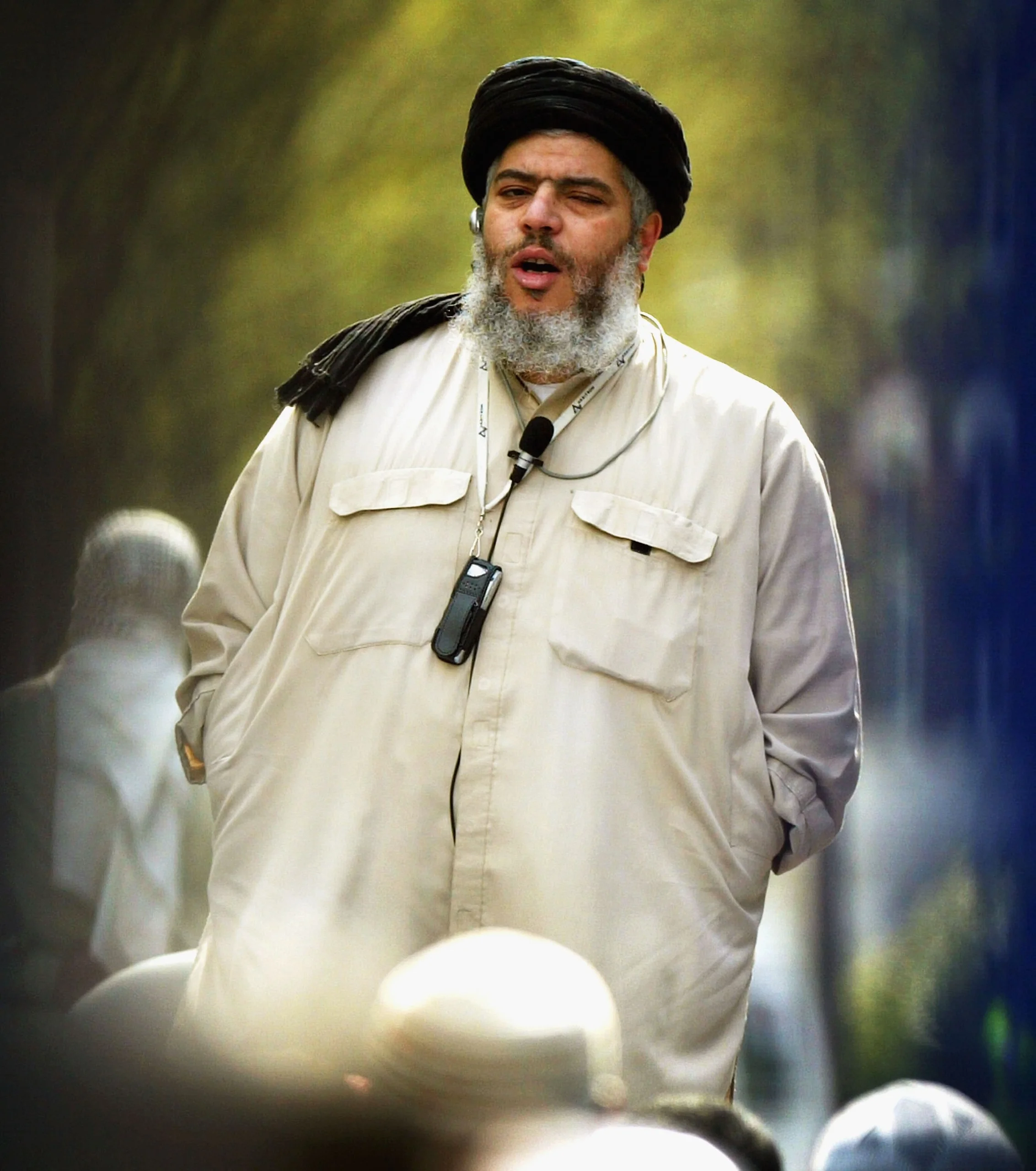
Abu Hamza al-Masri
 Egypt
EgyptAlso known as: Captain Hook
Birthday
April 15, 1958
Birth Sign
Aries
Birthplace
Alexandria, Egypt
Age
68 years old
About
Mustafa Kamel Mustafa, widely known as Abu Hamza al-Masri, is an Egyptian-British cleric and former civil engineer. He gained notoriety for his sermons at London's Finsbury Park Mosque, where he promoted Islamic fundamentalist views. His public profile was also marked by his use of prosthetic hooks instead of hands, earning him the nickname "Captain Hook" from the British press. After years of legal battles and extradition to the United States, he was convicted on terrorism charges in 2014. As of 2026, Abu Hamza is serving a life sentence in a U.S. federal prison, having been incarcerated since his conviction. His story remains a significant, if controversial, chapter in discussions around radicalization and international law enforcement efforts against terrorism.
Early Life & Background
Mustafa Kamel Mustafa first entered the world in Alexandria, Egypt, during 1958. He spent his early life and education in his homeland, eventually training and working as a civil engineer. This initial career path saw him engaged in various construction projects, which at one point led him to work outside of Egypt, including a period in Pakistan. It was during the 1980s that a life-altering accident occurred, resulting in the loss of both his hands and an eye. While the specific details surrounding this event have been recounted differently over time, he attributed it to an incident involving explosives. Following this profound personal change, Mustafa Kamel Mustafa made the pivotal decision to relocate to the United Kingdom, settling in London. There, his focus shifted dramatically from engineering, and he began to immerse himself in religious studies and community activities. He became particularly involved with the Finsbury Park Mosque, an institution in North London that served as a hub for certain segments of the Muslim community. Over time, he grew into a prominent figure within the mosque, gradually becoming its imam. This period, before his sermons gained widespread notoriety and controversy, was crucial in shaping his radical viewpoints and establishing his public presence within religious circles in London, laying the groundwork for his future as a widely recognized, albeit divisive, cleric.
Career Growth
Abu Hamza al-Masri's public career shifted dramatically when he became the imam of the Finsbury Park Mosque in London. His inflammatory sermons, which began to attract significant attention, often called for jihad and expressed support for extremist causes. These activities eventually drew the attention of authorities. In 2004, British law enforcement arrested him following an extradition request from the United States. While fighting extradition, he faced charges in the UK for inciting violence and racial hatred. A British court convicted him on these charges in 2006, leading to a seven-year prison sentence. Following an extensive eight-year legal battle, he was finally extradited from the UK to the United States in October 2012. There, he faced a range of serious terrorism-related charges, including involvement in a deadly hostage crisis in Yemen during the late 1990s and efforts to set up a terrorism training camp in Oregon. His trial began in New York in April 2014, culminating in a jury conviction on eleven terrorism charges on May 8, 2014. A federal judge in Manhattan sentenced him to life imprisonment without the possibility of parole on January 9, 2015.
Career Timeline
Public Image & Style
Abu Hamza al-Masri's public image was largely shaped by his controversial role as a cleric and his distinctive physical appearance. His sermons from the Finsbury Park Mosque were widely reported, painting a picture of a fiery orator who openly espoused extremist views. The media often focused on his prosthetic hooks, a result of an accident, which led to the widespread nickname "Captain Hook." This moniker, while sensationalist, became a defining aspect of his public identity in the British press. His persona was that of an unyielding figure, seemingly unapologetic in his radical ideology. For those who followed his teachings, he was seen as a strong, albeit divisive, voice within certain fundamentalist circles. His public presence was consistently linked to the propagation of hardline interpretations of Islam and calls for action, creating an image that resonated with a specific, radicalized segment of the population while alienating the broader public.
Fame & Fandom
The public consciousness surrounding Abu Hamza al-Masri is defined not by adoration but by a chilling, inescapable notoriety that transcends typical celebrity metrics. While many figures cultivate devoted followings, his audience consists of observers fixated on the legal drama and radical rhetoric that marked his tenure as an imam at London's Finsbury Park Mosque. There is no formal name for this group; the 'fanbase' is simply the global public tracking a high-profile terrorist case. His story remains a dark chapter in modern history, where the fascination lies in the intersection of physical disability, extremist ideology, and international justice rather than any artistic or cultural contribution.
Despite the grim nature of his legacy, his presence registers with significant weight across global attention channels. This reach places him the 68th most famous person in Religious Leaders, a standing he has maintained steadily from the previous cycle within the iFANN Global Fame Rankings. The data reflects a sustained level of interest driven by media coverage of his trial, extradition battles, and conviction, ensuring his profile remains prominent in discussions regarding religious extremism and security. Such rankings capture the enduring impact of his actions on public discourse worldwide.
Interesting Facts and Legends
Mustafa Kamel Mustafa, known to the world as Abu Hamza al-Masri, lost both of his hands and an eye during an accident in the 1980s while working on a construction project involving explosives in Pakistan. Before entering the pulpit, he trained as a civil engineer, a background that often surprises those who only know his later years as a controversial cleric. When first brought to the United States to face charges, he entered a plea of not guilty in federal court. During his time leading the Finsbury Park Mosque, several individuals who would later become notorious in their own right, including Zacarias Moussaoui and Richard Reid, were known to attend his sermons. Later in life, he served as a key government witness in a separate terrorism trial in the United States.
The cultural memory of Abu Hamza is anchored by specific, verified events rather than folklore. One enduring image is that of the hook-handed cleric, a visual identity formed after he described losing his limbs and eye to an electrical accident during his U.S. trial in May 2014. Another pivotal moment involves his recruitment activities at the Finsbury Park Mosque, where he allegedly recruited Muslims for Al-Qaeda, drawing in future terrorists like Moussaoui. The culmination of his notoriety occurred on May 19, 2014, when a Manhattan Federal Court found him guilty of eleven terrorism charges, including conspiring to establish a training camp in the United States. This led to a life sentence handed down on January 9, 2015, following a prolonged legal battle over his extradition from Britain.
Notable Connections
Abu Hamza al-Masri's time at the Finsbury Park Mosque brought him into contact with individuals who later became infamous for terrorism-related activities. Notably, Zacarias Moussaoui, who was convicted for his role in the September 11 attacks, and Richard Reid, known as the "shoe bomber," were among those who attended his sermons. Beyond his own legal troubles, he also participated as a key government witness in a separate terrorism trial in the United States.
Relationships & Dating History
Awards & Accolades
Keywords
Sources
Quick Facts
- Profession
- cleric, civil engineer
- Born
- April 15, 1958
- Birthplace
- Alexandria, Egypt
- Gender
- Male
- Birth Sign
- Aries
- Nationality
- Egyptian-British
Personal Details
- Full Name
- Mustafa Kamel Mustafa
- Children
- Education
Frequently Asked Questions
Who is Abu Hamza al-Masri?
What was Abu Hamza al-Masri known for?
When was Abu Hamza al-Masri extradited to the US?
What was Abu Hamza al-Masri sentenced to?
Where did Abu Hamza al-Masri preach in London?
Join the community
fans discussing